Developing nations drown in debt, while workers sweat
View Online
Powered by Thomson Reuters Foundation logo
Context logo

Know better. Do better.

climate

Climate. Change.

News from the ground, in a warming world

By Megan Rowling | Just Transition Editor

Megan Rowling Photo

Hard on the heels of Pakistan's devastating floods, Storm Julia swept across Central America over the weekend, killing at least 25 people, as the annual meetings of the World Bank and the International Monetary Fund got underway. 

Pressure is rising on international financial institutions - including calls from the U.N. chief - to do far more to help developing countries grapple with a debt crisis exacerbated by the COVID-19 pandemic and disasters caused by extreme weather.

All tools in the box will be needed - from development bank trust funds to innovative instruments like debt-for-climate and nature swaps - alongside the donor funding coming via the U.N. climate negotiations.

But there's one unanswered question: Where will all the money come from? Public purses in wealthy nations are stretched as they deal with energy price hikes and COVID-19 bailout packages. As a result, eyes are turning to new ways of raising money from the private sector.

This week, our climate editor Laurie Goering rounds up the latest ideas on how to drum up cash to pay for the worsening loss and damage caused by warming impacts - a discussion that's set to heat up at the COP27 climate summit next month.

Potential sources range from a windfall tax on the profits of fossil firms to insurance schemes for the poor and levies on flying. If all else fails, those hardest hit could turn to the courts.

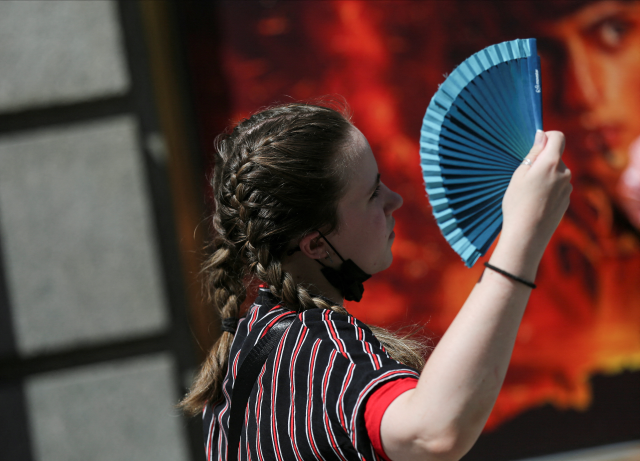
A woman uses a fan as she walks, during the second heatwave of the year, in Madrid, Spain, July 20, 2022

A woman uses a fan as she walks, during the second heatwave of the year, in Madrid, Spain, July 20, 2022. REUTERS/Isabel Infantes

The heat is still on

With autumn bringing relief from sizzling summer temperatures in large parts of Europe and North America, governments, companies and charities are thinking about how to deal with the extreme heat that is becoming the norm.

This week, the Red Cross and the U.N.'s humanitarian agency warned in a joint report that climate change is making heatwaves ever more dangerous, and said aggressive steps must be taken now to protect the most vulnerable people from heat disasters.

We take a look at an initiative in the United States, launched by aid group Americares, Harvard University and Massachusetts-based biotech firm Biogen, that provides tip sheets to patients at nine clinics to help them ward off the health effects of extreme heat.

Meanwhile, labour activists on both sides of the Atlantic are pushing for stronger regulations and laws to protect workers from heat, whether they're out sweeping the streets in the sun or driving delivery vans with no air-conditioning.

Our correspondents talked to the unions pushing governments to put measures in place fast, as well as the people dealing with the heat day-to-day.

"The only time they actually take it serious is when you tell them 'OK, I'm getting in the ambulance'," said one UPS driver.

Computers at the Jülich Supercomputing Centre in Jülich, Germany, June 10, 2022. Forschungszentrum Jülich/Sascha Kreklau/Handout via Thomson Reuters Foundation

Computers at the Jülich Supercomputing Centre in Jülich, Germany, June 10, 2022. Forschungszentrum Jülich/Sascha Kreklau/Handout via Thomson Reuters Foundation

‘Digital twins’ to tackle disasters

As a hotter world brings a graver threat of disasters, could new technology help us better understand the risks we're facing and advance efforts to make key services - like power and telecoms - more robust?

Jack Graham explores the trend for using "digital twins", based on artificial intelligence and computer modelling, to simulate how threats might play out in real-life places.

Some think it's just a "fancy new name" for data science that has been around for years - but whatever your view, businesses are getting in on the act and using the information to analyse and rate climate risks to assets around the world.

And do check out the latest in our series on how the world might look at 1.5 degrees Celsius of warming. This week Roli Srivastava reports from western India on how rural women are selling or pawning their gold to buy fodder to keep their livestock alive, as crops suffer from heat and drought.

This week's top picks

Climate-hit businesses pin hopes on Bangladesh's new plan to adapt

The plan aims to buffer the country against floods, cyclones and more, but small business owners worry they will be overlooked

Lebanese solar energy scams hold back push for green power

As households look to green electricity as a cheap source of power, fraudsters are selling clapped-out solar panels as new

Inner city schools must face up to rising heat, fast

Smart changes, such as more shade, nature and water, can help

What new job titles do cities need to tackle climate change?

Here are the five people to hire to create real, effective climate action

China's clean air campaign holds lessons for global climate action

Involving ordinary people in transparent climate action is one way to combat a recent surge in coal production


Read all of our coverage here

Thank you for reading!

Let us know how you feel about this newsletter

If you liked it, please send to a friend or tweet it out

Send us your feedback