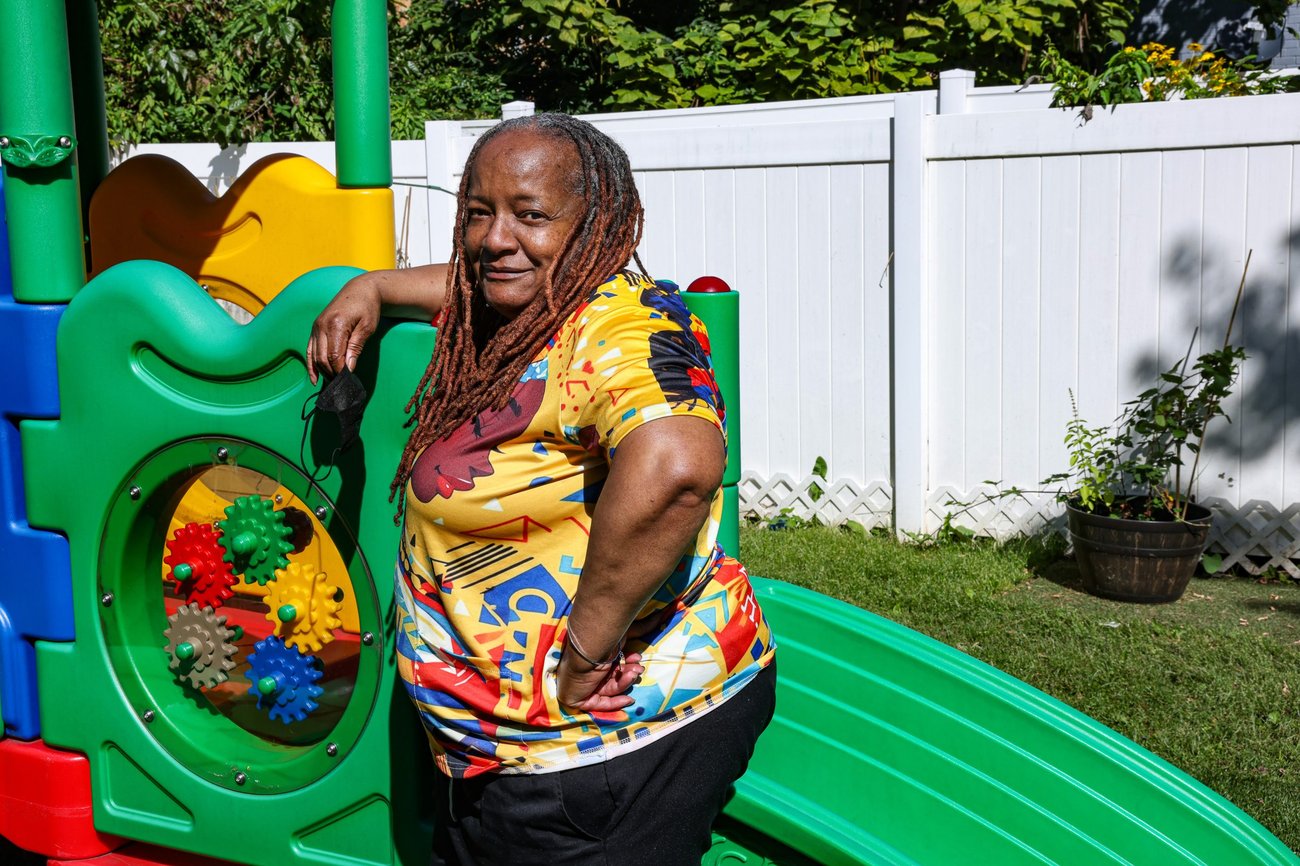
For over 20 years, Sylvia Crews has worked in early childhood education, spending the last decade running her own home-based center. After buying a home in Washington, D.C., in 2015, she launched LTH Infants and Toddlers Center — an abbreviation for “loving, tender home” — shortly after. She is licensed to care for up to nine children ranging from 6 weeks to 3 1/2 years old, overseeing four employees.
Crews said she wants to work “as long as the Lord will allow me to,” but she does worry about the likelihood of younger workers entering the sector.
“At a point, I know I’ll have to stop,” said Crews, 67. But as for the next generation, “How do we get them involved? We need to bring them in,” she said.
More than half of licensed or registered home-based child care providers are over the age of 50, according to federal survey data of child care workers, while only 4 percent are 29 years old or younger. In contrast, at larger child care centers, about a third of employees are 29 or younger. The numbers are more balanced at home-based settings that aren’t registered or licensed. About 30 percent of these so-called “unlisted” providers are over 50, and a roughly equal percentage are 29 or younger.
“The aging part of the story, on its own, is not the problem,” said Katharine Sadowski, assistant professor of education at Stanford University’s Graduate School of Education. “But when you combine it with all the other pieces, about the composition of the workforce, of who we’ve relied on, it spells trouble.”
Child care centers, which include preschools, Head Start and prekindergarten, are the most frequently used option for nonparental care. Federal surveys found about 66 percent of children in nonparental care attend such programs. That compares to about 17 percent of children in a child care arrangement who were in home-based care.
But for many parents, home-based care is a vital alternative.
|