
Islam's Welcoming Not-for-Profit Organizations
by Majid Rafizadeh • October 17, 2026 at 5:00 am
A Muslim's duty, we were taught in the Middle East, is to promote and establish Islamic government. Failing to do so means one's religion and duty to Allah remain incomplete. Everyone must perform jihad (holy war; struggle in the cause of Islam) to impose Allah's law on the world's population. Everyone is a mujahid (fighter, from the word jihad). The promised end is one Islamic ruler under whom Allah's sovereignty is complete on Earth.
We were also taught that when, in an election, the choice is between a Muslim and a non-Muslim candidate, a Muslim must always vote for the Muslim. Voting for a non-Muslim is voting against Allah. Character does not matter. Ability does not matter. All that matters is religion.
In Islam, you cannot be a passive religious observer. The core of Muslim identity, we were taught, requires active struggle for the political project. The founder of the Islamic Republic of Iran in 1979, Ayatollah Ruhollah Khomeini, put it: "We shall export our revolution to the whole world. Until the cry 'There is no god but Allah' resounds over the whole world, there will be struggle [jihad]."
This doctrinal demand makes it hard to believe the claims of Islamist nonprofit organizations that they are purely charitable and apolitical. American taxpayers lavishly subsidize them through the Internal Revenue Service's 501(c)(3) tax-exempt status for charitable organizations.
According to the report, when the conduct of these groups was measured against IRS guidance on the ban against political campaign intervention by charities, the conduct detailed in the report closely tracks the agency's examples of prohibited activity. These activities include endorsing candidates, seeking campaign donations, circulating campaign materials, giving platforms to candidates without comparable access for opponents, and releasing scorecards or voting records timed to election seasons.
Americans are effectively underwriting institutions that instruct congregants on how God requires them to vote and then handing the microphone to favored candidates.
[T]he IRS possesses the legal tools, the evidence, and its own training materials, yet appears to lack the will to act.
The report's author, Mahyar Entezari, emphasized that every episode rests on video, audio, newsletters, convention materials, social media posts, and published accounts, but that "no organization has faced any consequence."
[US Representative Chip] stated it is absurd that groups with links to terrorism continue to receive tax benefits that effectively have American taxpayers subsidizing threats against themselves.
The MEF has urged the IRS and Treasury Department to scrutinize every organization named in the report, apply available taxes and revocation remedies, and review groups still soliciting deductible contributions.
The report points out that the IRS and Treasury Department have the statutes, the guidance, and the evidence before them. The question is whether they will enforce the law and act on anything.
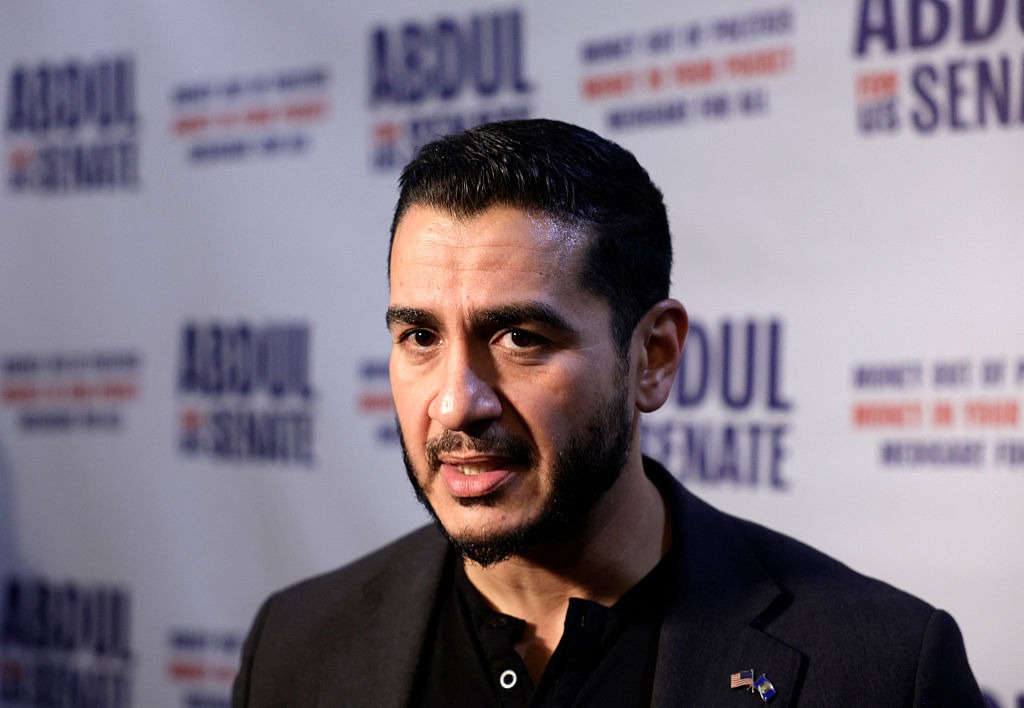
Growing up in Islamic societies in Iran and Syria, all of us could see that there is not even an iota of chance that any Islamist organization or mosque could exist as truly non-political or apolitical.
In schools and at university, we were taught that Islam differs fundamentally from other religions and spiritual practices. Whereas Christianity and Judaism allow for private faith and a separation between religion and state, Islam does not. From its inception in the seventh century, Islam was political. It was not a private spiritual matter. It was about creating a universal government run by Allah. Everything in society must be ordered by Sharia — what they call Allah's law or God's law.