Hello,
Welcome to our flagship newsletter, MarketBeat Daily Ratings.
We'll deliver the latest "Buy" and "Sell" ratings from Wall Street's top-rated analysts directly to your inbox each morning.
But first, we need you to do two quick things:
1. Hit reply, and send a simple "Yes." Just one word. This tells Google (and other emails providers) that you actually want to get our newsletter.
2. After that, this link to confirm your subscription. That will tell us that you received our welcome email and that we should start sending your daily report.
Confirm your subscription here.
After you have completed these two steps, we would like to gift you a free copy of one of our most popular investing reports: 7 Stocks to Buy and Hold Forever. You can download the report with this link.
Thank you again for subscribing. We look forward to being an important part of your investing journey

Matthew Paulson
Founder and CEO, MarketBeat.
P.S. If you didn’t intend to subscribe, no problem—you can unsubscribe with this link.
(ARReply-161)
Special Report Advanced Micro Devices Is Spending $8.2 Billion to Learn What AI Needs NextWritten by Nathan Reiff. Article Posted: 10/1/2026. 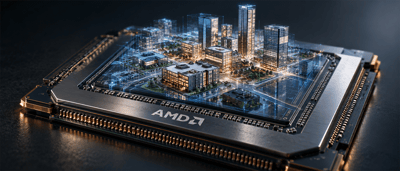
Key Points- AMD plans to acquire AI startup World Labs, founded by Fei-Fei Li, in an all-stock deal worth approximately $8.2 billion.
- AMD intends to use World Labs' research into evolving AI workloads to help design better chips, hardware and systems rather than compete directly in AI models.
- The all-stock structure will dilute existing AMD shareholders, and some AMD customers building their own AI models may view the acquisition as a competitive concern.
- Special Report: One Company Spared After Renewable Credits Get Cut.
For years, Advanced Micro Devices Inc. (NASDAQ: AMD) has remained in the shadow of larger rival NVIDIA Corp. (NASDAQ: NVDA), despite being valued at roughly $1 trillion. The smaller firm has focused on developing increasingly powerful AI chips in an effort to catch up to one of its biggest competitors. Now, however, AMD appears to be substantially expanding that strategy with a bet worth more than $8 billion.
AMD's plans to acquire World Labs, the AI startup launched by renowned computer scientist Fei-Fei Li, involve an all-stock transaction valued at approximately $8.2 billion, making it AMD's second-largest acquisition on record. The deal, which is projected to close by the end of the year if all goes according to plan, could have far-reaching effects on how the company approaches hardware, software and broader computing demands. What's less clear, however, is whether the move will help AMD sell more chips, at least in the short term.
The Hardware Strategy Behind the AI Acquisition
Bill Poulos is offering his Smart Trade Options Checklist at no cost today - normally priced at $29.97.
It's a single-page, seven-point filter designed to help traders identify weak setups before placing any options trade. Print it, keep it at your desk, and run it before every trade. The download link expires soon. Download your free copy of the Smart Trade Options Checklist now The easy interpretation for investors is that AMD is entering the AI model race. However, the company says its goal is to understand how AI workloads are evolving and use that information to shape its chipmaking roadmap. In other words, AMD is acquiring a model lab to help it build better AI hardware.
Hardware in the AI space can no longer win solely on raw performance, and AMD may continue to challenge NVIDIA's substantial advantage, which is built around its GPUs and Compute Unified Device Architecture (CUDA) software platform.
AMD is not positioning the World Labs deal as an attempt to compete head-to-head with OpenAI or Anthropic. Instead, it says the lab's research will provide insights that can help AMD design better hardware, software and systems for emerging AI workloads. NVIDIA still has a significant software lead, but integrating World Labs could help AMD compete on its own terms.
AMD's Relationship With World Labs Is Already Deep
World Labs has spent more than a year training and running models on AMD GPUs, and AMD invested in the company in February 2026. Li will remain closely involved in operations, joining AMD as executive vice president and chief scientist and reporting directly to AMD CEO Lisa Su. In that sense, the acquisition is an outgrowth of an existing partnership rather than a brand-new strategic pivot.
While this collaboration could help reduce integration risk, it still leaves investors facing uncertainty over dilution. AMD is paying for the acquisition in stock, so existing shareholders will face dilution. However, under the structure of the acquisition—the final share count will be calculated based on the volume-weighted average price of AMD shares over the trading days immediately preceding the deal's closing—it's unclear exactly how significantly investors will be affected. On the plus side, a stock purchase allows AMD to preserve its balance sheet and cash position, although existing shareholders will own a slightly smaller percentage of the company after the new shares are issued.
Will AMD’s Customers Welcome the Move?
Another unknown is how AMD's current customers—particularly those developing their own AI models—will react to the news. Many of the firm's clients are building proprietary AI models, and some may view the acquisition as a step too close to their own operations, making AMD a potential research competitor.
Still, AMD has emphasized that World Labs will help strengthen an open AI ecosystem, while World Labs says the combined organization intends to develop widely accessible open models. Of course, this depends on AMD maintaining that stance and on its customers remaining comfortable with the company's deeper move into model research.
It's unclear when the World Labs acquisition may lead to improved chips that appeal more to AMD's customers, but that timeline is likely to extend well into the future. The deal must close and the integration must be completed before AMD can gather and process the resulting data, determine how to adapt its chips and then build them. Many steps stand between the acquisition announcement and material changes to AMD's products, but the potential for marketable improvements appears significant. Otherwise, shareholders may view the deal primarily through the lens of its dilutive impact, particularly given that AMD shares are currently trading slightly above price targets. |