| Health Briefing · The Hill Report Alzheimer's Pathology Can Now Be Measured in a Blood Draw Four blood tests cleared since May 2025 estimate whether the brain carries Alzheimer's proteins, and the guidelines place them inside an evaluation that also looks for every other contributing cause, medicines included. Connor Hill · InsightfulWord · October 11 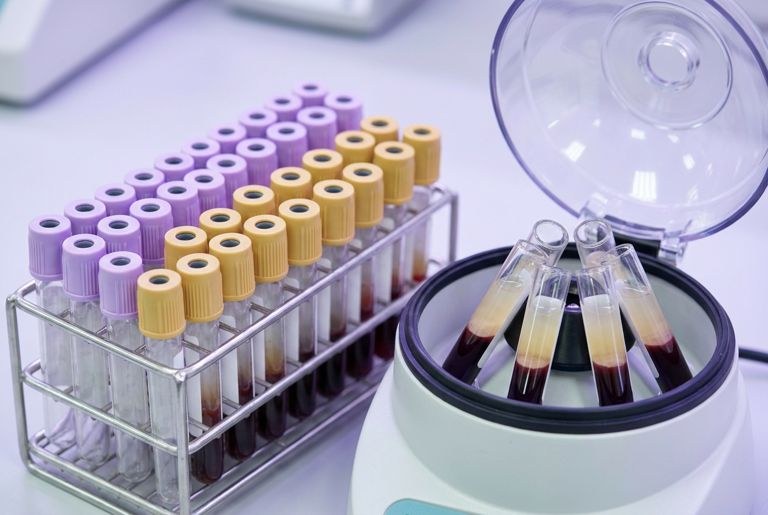 Key points | Sudden severe confusion can be delirium, a rapid change in brain function that certain medicines, including pain medicines, sedatives and anticholinergic drugs, can trigger. Sudden confusion with trouble speaking, one-sided weakness or a severe headache means calling 9-1-1. |
| The Food and Drug Administration has cleared four blood tests for Alzheimer's pathology since May 2025. In the agency's review of the first, 91.7% of positive results and 97.3% of negative results matched brain scans or spinal fluid. |
| The Alzheimer's Association's blood-test guideline sets above 90% sensitivity for any such test, with above 90% specificity required before a result can confirm rather than triage. |
| The association's diagnostic guideline lists "use of cognitively impairing medications" among the contributing conditions an evaluation must identify. Every cleared blood test is labeled as not a stand-alone diagnosis. |
|
A memory complaint after 50 has several possible sources, and a careful evaluation looks for all of them at once. Medicines are on that list in the professional guidance, alongside thyroid disease, vitamin deficiency, depression, strokes and other brain diseases. What has changed in the past 18 months is how the Alzheimer's part of the question is answered. Confirming it used to require a brain scan or a spinal tap. It can now begin with a blood sample, under rules that say exactly when the result counts. On the tape Oct 8 A newspaper report described a $26 million National Institutes of Health study, led from Pennsylvania, that will follow 330 carriers of a gene variant over five years at 14 sites to find early markers of frontotemporal dementia and ALS. Why it matters: frontotemporal dementia is one of the conditions a memory evaluation separates from Alzheimer's, and the study's purpose is markers that flag it before symptoms. |
Oct 7 Trade coverage described a Lancet Neurology study of 197 patients treated with an anti-amyloid drug, in which 34 of 130 blood proteins changed with the number of infusions, some in unexpected directions. Why it matters: the lead author said clinicians "should not automatically interpret these unexpected biomarker changes as a reason for alarm," a reminder that markers behave differently once treatment begins. |
Oct 7 A geriatric psychiatrist told a clinical publication that serious kidney failure is the most frequent confounder of Alzheimer's blood tests, producing false positives mainly for the pTau217 marker, and named morbid obesity as another. Why it matters: a blood result is read against the person's other conditions, not on its own. |
Oct 3 The same specialist said in an earlier interview that the tests are recommended only for people with objective cognitive impairment, after thyroid blood work, depression screening and brain imaging. Why it matters: in his description the blood test comes after the basic workup, not before it. |
Oct 8 A check of the Food and Drug Administration's press announcements from September 30 to October 8 found none on Alzheimer's tests or drugs. Why it matters: the most recent clearances located for this briefing were announced on August 21 and August 24. |
|
Before anything else The National Library of Medicine describes delirium as "sudden severe confusion due to rapid changes in brain function," lists certain pain medicines, sedatives and anticholinergic medicines among its triggers, and advises contacting a provider for any rapid change in mental status. The Centers for Disease Control and Prevention lists sudden confusion, trouble speaking, numbness or weakness on one side, trouble seeing or walking, and a sudden severe headache as stroke signs, and says to call 9-1-1 right away and note when symptoms began. Memory problems that persist for a few weeks are a reason to see a doctor. No prescribed medication should be started, stopped or changed except with the prescriber. |
| | | What the Diagnosis Now Rests On |
In June 2024 an Alzheimer's Association workgroup published revised criteria that define the disease biologically. Alzheimer's is "a biological process that begins with the appearance of Alzheimer's-related changes" in the brain; memory loss and other symptoms come later, and because other disorders produce similar symptoms, the clinical picture alone is not treated as diagnostic. The criteria name "Core 1" biomarkers, which directly reflect amyloid plaques or a modified form of the tau protein. They include amyloid PET scans, several spinal fluid ratios and "accurate" blood assays such as pTau217. An abnormal Core 1 result is enough to establish the biological diagnosis. Two limits come with that. The workgroup says biomarkers are currently intended for people with symptoms, and recommends against diagnostic testing in cognitively unimpaired people outside research. And the biological diagnosis is "meant to assist rather than supplant the clinical evaluation." That distinction matters for reading any result. A positive marker shows that Alzheimer's pathology is present. It is an association between protein and disease process, and it does not by itself establish that the pathology accounts for every symptom a person has, or exclude other conditions that coexist with it. | By the numbers | | 4 | Blood tests for Alzheimer's pathology cleared by the agency since May 2025 | | 499 | Plasma samples in the agency's review of the first cleared test | | 91.7% | Share of that test's positive results confirmed by PET or spinal fluid | | 97.3% | Share of its negative results confirmed negative | | Under 20% | Patients who received an indeterminate result in that review | | 1,142 | Adults with cognitive symptoms in the validation of the test cleared from age 40 |
| | | What the Blood Tests Measure |
The first clearance came on May 16, 2025. That test measures two proteins in plasma, pTau217 and beta-amyloid 1-42, and reports their ratio, which tracks the presence or absence of amyloid plaques. It is for adults 55 and older with signs and symptoms, in specialized care settings. The agency warned that false positives could lead to an inappropriate diagnosis and unnecessary treatment, and false negatives to delayed care. A second test, cleared in October 2025, measures a different marker, pTau181, and was the first cleared for primary care, as a rule-out test; its negative predictive value was 97.9% in a 312-person study. A third, announced August 21, 2026, combines amyloid and tau ratios into a score from 0 to 100 and is the first cleared from age 40, with positive and negative predictive values of 97.6% and 93.1%. A fourth, announced August 24, uses pTau217 alone and reports positive, intermediate or negative results. Every one is labeled for people with cognitive symptoms and as an aid, not a stand-alone diagnosis. The association's 2025 guideline sets the bar. A triage test needs above 90% sensitivity and above 75% specificity; its negatives rule out Alzheimer's pathology, but positives need PET or spinal fluid confirmation. A confirmatory test needs above 90% on both. | | 🧪 Lab Signal Above 90% The sensitivity and specificity the Alzheimer's Association guideline requires before a blood test can confirm Alzheimer's pathology on its own in specialty care. A test meeting only the triage standard, above 90% sensitivity and above 75% specificity, can rule the pathology out, but its positive results still go to a PET scan or spinal fluid analysis. |
| | | How Other Causes Are Separated |
The association's 2024 diagnostic guideline, with 19 recommendations, sets a three-step order. First establish how well the person is functioning. Then characterize the pattern of symptoms. Only then narrow the list of brain diseases or conditions that could be causing them. The second half of that process is where other causes are examined. Routine first-tier laboratory tests for all patients include thyroid-stimulating hormone, vitamin B12, homocysteine, a blood count and a metabolic panel. Structural brain imaging, MRI or CT, is recommended to look for strokes, tumors and other causes. The guideline lists "use of cognitively impairing medications" among potentially contributing conditions, and describes specialists using detailed assessment to "disentangle the adverse effects of prior or current treatments" from disease symptoms. Biomarkers come in for symptomatic patients in whom Alzheimer's is part of the differential. Spinal fluid and amyloid PET are advised where uncertainty remains. The guideline's language of contributing conditions allows for overlap: a person can have Alzheimer's pathology and a medication effect at the same time, which is why the medication review and the biomarker test sit in the same evaluation rather than replacing one another. | Where the tests are defined | | Food and Drug Administration, May 16, 2025 | First blood test cleared, pTau217 to beta-amyloid 1-42 ratioAdults 55 and older, specialized care | | Clearance, October 2025 | pTau181 rule-out test for primary care97.9% negative predictive value, 312 participants | | Clearance announced August 21, 2026 | Combined amyloid and tau probability scoreSymptomatic adults 40 and older | | Clearance announced August 24, 2026 | Single-marker pTau217 test, rule-in and rule-outAdults 55 and older, primary and specialty care |
One question for the desk When memory came up at a recent appointment, was the full medication list reviewed in the same visit as any blood test or scan? Hit reply — one line is enough. |
Worth stating plainly Alzheimer's pathology can now be estimated from a blood sample, using one of four cleared tests, each intended for people with symptoms and none a stand-alone diagnosis. Professional guidelines place the test inside an evaluation that also reviews medicines, laboratory results and brain imaging, because several causes can act together. Sudden confusion or stroke signs need emergency care, and medication changes belong with the prescriber. |
The short checklist | 1. | Call 9-1-1 for sudden confusion with trouble speaking, one-sided weakness or a severe headache. |
| 2. | Raise memory changes that persist for a few weeks with a doctor. |
| 3. | Bring a complete list of prescription and nonprescription medicines, and review it with the prescriber. |
| 4. | Ask whether thyroid, vitamin B12 and other first-tier tests and brain imaging have been done. |
| 5. | Ask whether a blood test was used to triage or to confirm, and what an intermediate result means. |
| 6. | Mention kidney disease or significant obesity when any blood result is discussed. |
|
| | Replies to this briefing reach a person, not a queue. Connor Hill reads every reply. | | |
Sources checked Verified October 08, 2026 Food and Drug Administration, FDA Clears First Blood Test Used in Diagnosing Alzheimer's Disease, May 16, 2025, and press announcements index checked through October 8, 2026 Alzheimer's Association, Revised Criteria for Diagnosis and Staging of Alzheimer's Disease, June 27, 2024, and Clinical Practice Guideline on Blood-Based Biomarkers in Specialty Care, 2025 Dickerson, Atri and colleagues, Alzheimer's Association DETeCD-ADRD clinical practice guideline, Alzheimer's and Dementia, 2024 NeurologyLive, pTau181 clearance report, October 14, 2025, and lecanemab plasma biomarker study report, October 7, 2026; Healio, August 21, 2026, and Medical News Today on the 2026 clearances Psychiatric Times interviews with George Grossberg, October 3 and October 7, 2026; The Spokesman-Review, NIH-funded frontotemporal dementia study, October 8, 2026 National Library of Medicine, MedlinePlus, Delirium; Centers for Disease Control and Prevention, Signs and Symptoms of Stroke; National Institute on Aging, Memory Problems, Forgetfulness, and Aging Connor Hill writes The Hill Report for InsightfulWord, a daily briefing on the machinery behind the numbers. |