Hello,
Welcome to our flagship newsletter, MarketBeat Daily Ratings.
We'll deliver the latest "Buy" and "Sell" ratings from Wall Street's top-rated analysts directly to your inbox each morning.
But first, we need you to do two quick things:
1. Hit reply, and send a simple "Yes." Just one word. This tells Google (and other emails providers) that you actually want to get our newsletter.
2. After that, this link to confirm your subscription. That will tell us that you received our welcome email and that we should start sending your daily report.
Confirm your subscription here.
After you have completed these two steps, we would like to gift you a free copy of one of our most popular investing reports: 7 Stocks to Buy and Hold Forever. You can download the report with this link.
Thank you again for subscribing. We look forward to being an important part of your investing journey

Matthew Paulson
Founder and CEO, MarketBeat.
P.S. If you didn’t intend to subscribe, no problem—you can unsubscribe with this link.
(ARReply-161)
This Week's Exclusive Story NVIDIA Just Strengthened the Case for Its Massive Stock Price UpsideAuthor: Thomas Hughes. Posted: 9/29/2026. 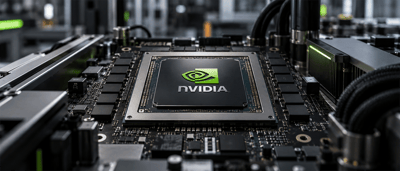
Key Points- NVIDIA announced a record $150 billion share buyback authorization, signaling confidence in future cash flow and limiting downside risk during price pullbacks.
- Strong Q2 results, including nearly $54 billion in adjusted net income and over $160 billion in liquidity, support sustained buybacks and dividend payments.
- Analysts view the buyback as a bullish signal, with consensus price targets implying 40% upside and a high-end range suggesting more than 100% upside.
- Special Report: The Untouched Energy Source Behind a New Eight Year Tax Break
NVIDIA (NASDAQ: NVDA) strengthened the case for significant share price upside by announcing a record-breaking $150 billion share buyback authorization. Backed by its cash flow and balance sheet, the buyback sends several bullish signals.
At face value, the authorization affirms NVIDIA’s confidence in its future cash flow, which, in turn, validates the AI buildout. In addition, investors can assume that downside will be limited during price pullbacks, as NVIDIA is likely to continue buying back shares when prices dip.
Rumors are circulating that Elon Musk is preparing to acquire three publicly traded companies.
Dr. Mark Skousen, who met Musk in person and called the SpaceX listing months early, says he has identified all three targets in what he calls Elon's $2.1 Trillion Hit List.
See the three companies before the rumors become headlines. Get the details on all three companies now The question is how much strength the authorization provides. Record or not, $150 billion is a drop in the bucket compared with NVIDIA’s $5.4 trillion valuation—about 2.7% of its market cap, to be exact.
However, the signal is that buybacks can be expected to continue at their current pace indefinitely. The total remaining authorization is valued at roughly 4% of the market cap, and further increases are likely.
NVIDIA’s share buybacks are significant, giving investors increasing quarterly leverage. Highlights from Q2 show that the share count reduction accelerated to about 1% on average over the trailing 12 months, a pace likely to continue in the coming quarters unless it accelerates further. Either way, the company can sustain its $19.7 billion Q2 pace for the foreseeable future, setting the stage for sustained and substantial share count reduction over time.
NVIDIA's Explosive Gains Are Over, Steady Compounding AheadInvestors and traders looking for big, triple-digit gains in under 12 months might want to look elsewhere, as NVIDIA’s days of producing those types of returns are likely over. However, investors looking for sustainable, incremental annual returns compounded by share-count leverage and dividends have a robust runway ahead.
While technical price action suggests upcoming moves will be short, potentially jerky, and likely followed by longer consolidations, the growth and valuation metrics suggest that investors will have many short-term stock price spurts to capitalize on. Long-term earnings forecasts suggest NVIDIA trades at a substantial discount to its potential; the stock is set up to advance by 400% over the next 10 years as it executes its strategy.

Is NVIDIA wasting money on share buybacks? No. NVIDIA’s AI dominance, built on GPUs but driven by CUDA, connectivity, and software services, provides robust cash flow. Q2 adjusted net income approached $54 billion, more than double the company’s capital returns, which include both buybacks and dividends. This profitability, along with trailing-12-month free cash flow, has enabled both aggressive acquisitions and responsible balance sheet management.
Balance sheet highlights help put any misgivings to rest, including more than $160 billion in cash, securities, and receivables. Liabilities and debt are also rising, but only marginally and in response to increased operational needs, with total liabilities well below the company’s liquidity position.
Analysts Cheer as NVIDIA’s Buyback Drives ConfidenceAnalysts welcomed NVIDIA’s buyback announcement, highlighting it as a sign of financial strength, a mechanism to ease concerns about AI spending, and a signal that management believes the stock remains undervalued. While no analysts revised their price targets immediately after the announcement, the commentary reaffirmed the trend, which includes increasing analyst coverage of the stock and high conviction in the Buy rating. The consensus forecasts 40% upside from late-September highs, but the trend matters more, pointing to a high-end target of $515 and more than 100% upside.
Among NVIDIA’s catalysts is the launch of its open-source Open Agent Safety Platform. It responds to the growing number of AI “incidents” and is intended to help developers stay ahead of the curve. The platform runs on two systems: The first lets users set and enforce controls, while the second serves as a watchdog that detects and intervenes with suspicious agents. The assumption is that incidents such as the one at Hugging Face could have been prevented; the outcome is that NVIDIA’s leadership position remains unassailable.
NVIDIA’s biggest risk is obsolescence. It is essential to AI today, but labs and hyperscalers are developing proprietary technology across the industry. One or more of them could disrupt the hardware or software stack, making NVIDIA one of many choices. Until then, hyperscalers continue to rely on NVIDIA hardware, with proprietary technology years, if not a decade, away from becoming available at scale. Proprietary technologies will one day exist alongside NVIDIA, helping differentiate hyperscalers without displacing NVIDIA from its moat.
The market gets the timing of AI monetization wrong: It comes in waves and plays out over years. The first wave is the initial buildout, which has been underway and is expected to continue. The second is the monetization of investments made over the past three years, which has begun for NVIDIA and companies such as Oracle (NYSE: ORCL) and is expected to gain momentum over the next three years. In this scenario, NVIDIA’s dependence on GPUs for growth fades over time in favor of the ancillary technologies built upon those GPUs, of which there are many. Key areas include automotive and robotics, as well as the implementation of physical AI. |