| Technology Briefing · The Hill Report A New Phone Needs a Federal Grant Before It Can Be Sold Every cellular handset marketed in the United States passes through federal certification for its radio emissions and body exposure, and a satellite-ready one also depends on spectrum its network is licensed to use. Connor Hill · InsightfulWord · October 09 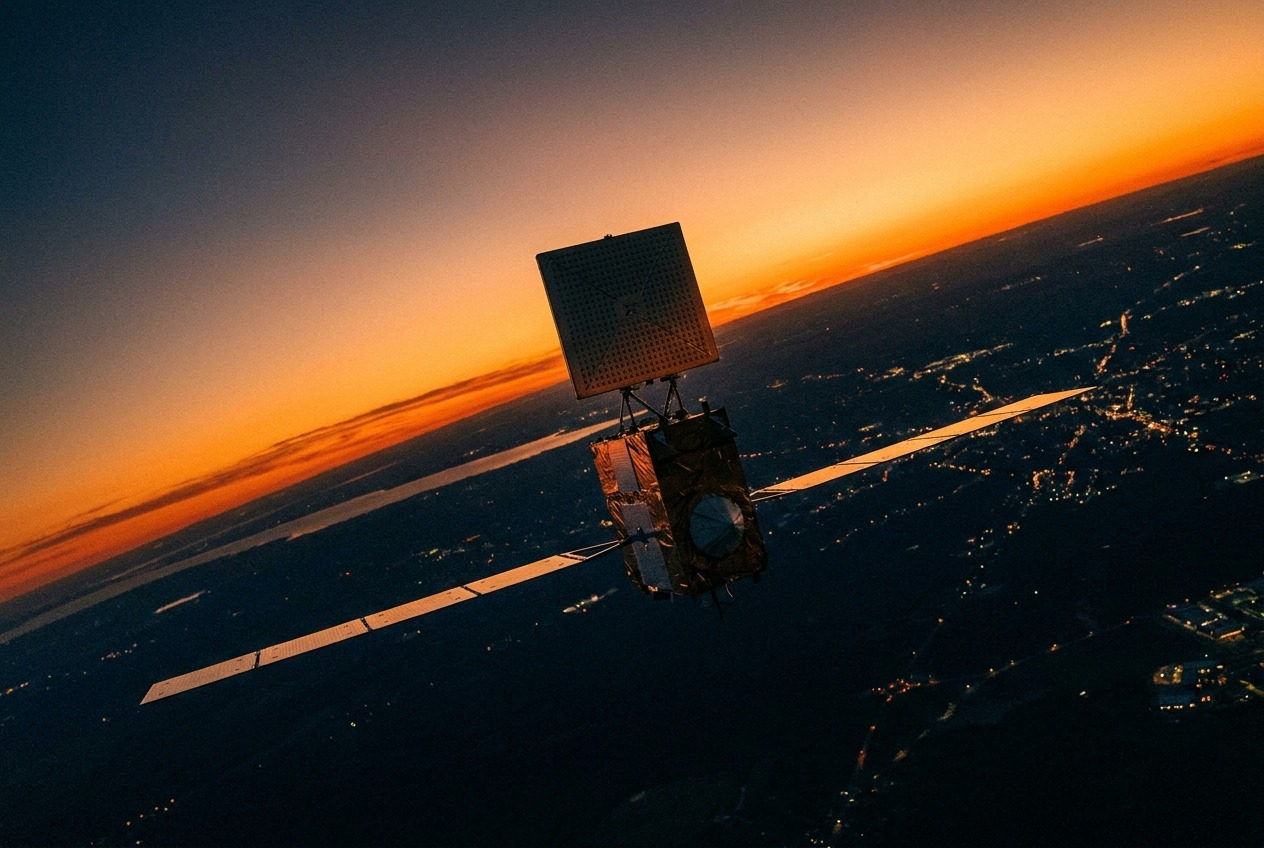 | Key points | | A cell phone must hold a grant of certification, issued by the Federal Communications Commission or a private Telecommunication Certification Body, before it is marketed; the testing must be done by an accredited, commission-recognized laboratory. | | | The exposure limit for the general public is 1.6 watts per kilogram, averaged over a one-gram cube of tissue, with 4 W/kg for hands, wrists, feet, ankles and ears. | | | On October 6, the commission approved SpaceX's system of 15,000 direct-to-device satellites; half must be in orbit by October 7, 2032. | | | On October 8, SpaceX agreed to acquire 14 MHz of paired 800 MHz spectrum, subject to commission approval. An October 29 meeting will weigh 482 MHz more for satellite-to-phone service. | | A handset is a radio transmitter held against the head. That fact, more than any design choice, decides the order of events for any new phone headed to the American market: test, certify, label, and only then sell. A phone that talks to satellites adds a second track. The network it reaches needs its own licenses, for the spacecraft and for the frequencies. Both tracks moved this week, and both leave dated, numbered records. | On the tape | Oct 6 The Federal Communications Commission approved SpaceX's request for 15,000 non-geostationary satellites for direct-to-device service in nine shells between 326 and 335 kilometers, Via Satellite and TechSpot reported. Why it matters: the grant sets dated milestones, half the satellites by October 7, 2032 and the rest by October 7, 2035, and a 15-year license term. | | Oct 7 Chairman Brendan Carr outlined the October 29 open meeting, including a proposal to make an additional 482 MHz available for supplemental coverage from space. Why it matters: the item is a notice of proposed rulemaking, so it opens a comment round before any band is assigned. | | Oct 7 The same agenda proposes auctioning 25 MHz in the 1675 to 1695 MHz and 2020 to 2025 MHz bands, which could support satellite, terrestrial or hybrid service. Why it matters: "Our proposal to auction 25 MHz of prime spectrum will continue to create tremendous economic value for the American people," Carr said. | | Oct 7 A companion item would require device testing and certification to take place in the United States or in countries with reciprocal agreements, with a transition to December 1, 2028. Why it matters: Carr said "less than 4% of all electronic devices are tested in labs located inside the U.S." | | Oct 8 SpaceX agreed to acquire 14 MHz of paired 800 MHz spectrum from Grain Management, subject to commission approval, Via Satellite reported. Why it matters: the company described the band as "a coverage layer that ensures Starlink Mobile's signal penetrates through obstacles, such as walls." | | | | | What Certification Requires | Federal rules define certification as "an equipment authorization approved by the Commission or issued by a Telecommunication Certification Body." The private certification bodies review an applicant's test reports and technical exhibits on the commission's behalf. The testing itself has its own gate. Since July 13, 2016, all equipment approved under certification must be tested by an accredited laboratory that the commission recognizes. Before filing, the applicant needs a registration number and a grantee code. That code becomes half of the device's FCC ID. Under the labeling rule, the identifier pairs the permanent grantee code with an equipment product code chosen by the company, no longer than 14 characters. The ID printed on a phone, or shown in its settings, is the key to the public grant record, including test reports. The labs have become a policy lever. A 2025 order barred the commission from recognizing any certification body, test lab or accreditation body "owned by, controlled by, or subject to the direction of a prohibited entity," with control triggered at a 10% equity or voting stake. According to TV Technology, 29 labs lost recognition under those rules. The October 29 proposal would go further and tie recognition to reciprocal trade arrangements. A companion notice would seek comment on further steps to protect the integrity of the authorization process. Like every agenda item, both remain proposals until the commission votes and, where required, completes a comment round. The second test a handset must pass is specific absorption rate, the rate at which the body absorbs radio energy, in watts per kilogram. The commission's rules apply it to portable devices, defined as transmitters used away from fixed locations whose antennas are generally within 20 centimeters of the user's body. The limits for the general public are set out in one table. Whole-body exposure is capped at 0.08 W/kg. The localized peak, the figure printed in phone manuals, is 1.6 W/kg averaged over any one gram of tissue in the shape of a cube. Hands, wrists, feet, ankles and the outer ear may absorb up to 4 W/kg, averaged over ten grams. A satellite-capable phone faces the same rules. Its radio must reach spacecraft hundreds of kilometers away, but the exposure ceiling at the body does not change with the destination of the signal. | By the numbers | | 1.6 W/kg | Localized exposure limit for the public, averaged over one gram of tissue | | 0.08 W/kg | Whole-body exposure limit for the public | | 14 | Maximum characters in the equipment product code of an FCC ID | | 20 cm | Antenna distance that defines a portable device in the exposure rules | | 15,000 | Direct-to-device satellites approved for SpaceX on October 6 | | 482 MHz | Additional spectrum proposed for satellite-to-phone service | | | | The Spectrum a Satellite-Ready Phone Depends On | The framework for linking satellites to ordinary phones dates to March 14, 2024, when the commission unanimously adopted rules for supplemental coverage from space. They let a satellite operator lease spectrum from a mobile carrier and serve that carrier's subscribers where towers do not reach. SpaceX then bought its own spectrum. On September 8, 2025, EchoStar agreed to sell its AWS-4 and H-block licenses for about $17 billion, up to $8.5 billion in cash and up to $8.5 billion in SpaceX stock, plus about $2 billion of interest payments on EchoStar debt through November 2027. TechSpot reported that the October 6 grant included a waiver letting SpaceX offer service without a terrestrial leasing partner. The grant carries conditions. SpaceX's authority over the EchoStar spectrum depends on a second step, the transfer of licenses held in trust, expected on or about November 30, 2027. The commission deferred operations in the 2020 to 2025 MHz uplink band, and deferred the 20.2 to 21.2 GHz and 30.0 to 31.0 GHz bands because of heavy federal use. Reporting is built into the license as well. According to Light Reading, the 15-year term starts when the first new satellite reaches its authorized orbit, and SpaceX must file semi-annual reports each January 1 and July 1 covering deployment, removals and reentries. Those reports become part of the public record. Elon Musk has described the handset side. In June, Advanced Television reported, he said that phones able to use the newly acquired spectrum "will probably start shipping in around two years," and that satellites and phones would be "able to handshake easily." Light Reading reported that SpaceX targets up to 150 Mbit/s on its second-generation satellites, against 4 Mbit/s today on more than 650 in service. | | 📡 Spectrum Signal 15,000 The number of direct-to-device satellites the Federal Communications Commission approved for SpaceX on October 6, in nine shells between 326 and 335 kilometers. Half must be in orbit by October 7, 2032. The satellites are the network side of a satellite-ready phone; the handset side still runs through certification, an FCC ID and the 1.6 W/kg exposure limit. | | Where the satellite-to-phone approvals stand | | SpaceX direct-to-device system | 15,000 satellites, 326 to 335 kmApproved October 6, 2026 | | SpaceX and Grain Management | 14 MHz paired at 800 MHzAnnounced October 8, 2026; approval pending | | Supplemental coverage proposal | 482 MHz additionalVote set for October 29, 2026 | | SpaceX and EchoStar | AWS-4 and H-block, about $17 billionSecond step expected about November 30, 2027 | | One question for the desk When a new phone is announced, does the coverage mention whether it already holds an FCC ID, and would that detail change how the announcement reads? Hit reply — one line is enough. | | Worth stating plainly A phone sold in the United States must first be tested in a recognized lab, certified by the commission or a private certification body, and labeled with an FCC ID, and it must meet a 1.6 W/kg exposure limit. A phone that reaches satellites also relies on network licenses. SpaceX received approval for 15,000 direct-to-device satellites on October 6 and agreed to buy 800 MHz spectrum on October 8, while the commission prepares to consider 482 MHz more. | | The short checklist | 1. | Look up a device's FCC ID in the public grant database to see its test reports. | | 2. | Read the grantee code, the first part of the ID, to identify the applicant. | | 3. | Check the stated SAR value against the 1.6 W/kg limit for the head and body. | | 4. | Distinguish a handset's certification from the satellite network's license. | | 5. | Watch the October 29 meeting for the 482 MHz proposal and the test-lab rules. | | 6. | Track the November 30, 2027 date for the EchoStar license transfer. | | | | | Replies to this briefing reach a person, not a queue. Connor Hill reads every reply. | | | Sources checked Verified October 08, 2026 Code of Federal Regulations, Title 47, sections 1.1310, 2.907, 2.926 and 2.1093, and the Federal Communications Commission equipment authorization page Via Satellite, Light Reading and TechSpot on the commission's direct-to-device grant, October 7, 2026 TV Technology, Telecoms Tech News and Cord Cutters News on the October 29 open meeting agenda, October 7 and 8, 2026 Via Satellite on SpaceX's 800 MHz spectrum agreement, October 8, 2026 EchoStar exhibit to a current report on Form 8-K, September 8, 2025, and Advanced Television on Musk's remarks, June 29, 2026 Broadband Breakfast on the supplemental coverage from space vote, March 14, 2024, and Wiley Rein alert on the 2025 test lab order, June 4, 2025 Connor Hill writes The Hill Report for InsightfulWord, a daily briefing on the machinery behind the numbers. |