| Unsubscribe |
Dear Reader,
Thirteen bullets ripped through an Indianapolis Councilman's front door while his family slept.
All because the week prior, he publicly backed the rezoning of a data center.
And events like this may even start happening in your hometown.
That's because, all across America, there's been violence, protest, lawsuits, cancelled projects, and campaigns to impose statewide moratoria to stop AI's impact on cities and small towns across the nation.
In fact, at midnight on November 4...
I believe it's all going to come to a head.
And if you're not prepared...
It could have devastating effects on your wealth and investments.
My research shows that one single money move could prove the difference between seeing your wealth grow exponentially...
Or losing more than half of it or more, in the next six months.
Regards,
Whitney Tilson
Editor, Stansberry’s Investment Advisory
Former Hedge Fund Manager
Co-Founder, Teach for America
Harvard MBA
P.S. To help you prepare, inside this presentation I'm giving away one stock recommendation for free that I believe you should consider buying before election day...
... And one you'll want to sell immediately, too.
DraftKings Falls 7.6%: Is Kalshi's NFL Lead Really That Big?
Written by Chris Markoch. Date Posted: 9/24/2026.

Key Points
- DraftKings shares fell 7.6% after Needham data showed Kalshi captured 76% of NFL Week One prediction market volume versus DraftKings' DKeX at about 3%.
- When adjusted to consumer-equivalent handle, Kalshi's share drops to 67%, and its Week One activity does not dwarf DraftKings' existing sportsbook franchise.
- Kalshi faces growing legal risk after Ninth Circuit rulings suggesting its sports contracts may violate gaming law, while DraftKings holds licenses across dozens of states.
- Special Report: Grand Canyon Discovery Reshapes America's Energy Tax Credits.
DraftKings Inc. (NASDAQ: DKNG) shares fell 7.6% on Sept. 17 after data from the first week of the National Football League season was released. Needham cited data showing that the prediction market platform Kalshi captured 76% of NFL Week One prediction-market volume. That was in sharp contrast to DraftKings' own prediction-market exchange, DKeX, which captured approximately 3%.
That data helps explain why DKNG is down more than 39% in 2026 and more than 51% over the last 12 months.
This New Trading Engine Spots Moves Before the Charts Do (Ad)
K.I.R.A. is a new trading engine built to flag market setups before they show up on standard charts.
Former hedge fund trader Lance Ippolito says it identifies early moves and lets traders set their own risk level instead of guessing.
Claim free access to K.I.R.A. and see it in actionSports betting was supposed to be a tailwind, but the emergence of prediction markets has turned out to be the black swan many sports betting platforms didn't see coming—or didn't take seriously enough.
However, it's important for investors to understand what Needham's headline number is actually measuring. It counts exchange trading volume, not sportsbook handle.
Those two figures aren't comparable on a dollar-for-dollar basis. When Needham converted the data to a consumer-equivalent basis, Kalshi's share dropped nine percentage points.
That doesn't let DraftKings off the hook. Still, the sell-off priced in a lopsided outcome that the underlying data doesn't fully support. DraftKings' exchange is only months old, and Kalshi's legal footing became shakier during the same week the data was released.
What the 76% Figure Actually Measures
Needham tracked $14.6 billion in sports and parlay prediction-market volume across eight exchanges in Week One. That matched the first 14 weeks of the 2025 NFL season combined. Kalshi accounted for about three-quarters of that volume.
The distinction lies in how exchange volume is counted. A prediction contract can change hands more than once, and every trade adds to the reported volume. A sportsbook bet, by contrast, counts once, when the customer places it.
Professional traders amplify the effect. They post bids and offers constantly and rebalance as prices move. That churn inflates notional volume without adding new customer dollars. DraftKings estimates that 80% to 90% of sports prediction volume in sportsbook states comes from professional syndicates and institutional traders.
On an Adjusted Basis, the Gap Narrows
Needham estimated $2.1 billion in consumer-equivalent handle, which cut Kalshi's share to 67%. DKeX remained near 3%. That's still a dominant position for Kalshi, but the smaller denominator changes the scale of the threat.
Understanding that scale requires context about DraftKings' core business. In Q2 2026, the company's combined Sports Consumer Volume, which covers sportsbook bets and prediction contracts, was $13.1 billion. That quarter included no NFL games. Spread evenly, that works out to roughly $1 billion per week.
Kalshi's adjusted Week One activity comes to about $1.4 billion. That's meaningful competition, but it isn't a figure that dwarfs DraftKings' existing franchise.
Needham also flagged a blind spot: The firm cautioned that the data may understate DraftKings' activity because some customer flow reaches exchanges run by other companies. CEO Jason Robins has said DraftKings markets are live on three trading exchanges.
DKeX Is Months Old, Not Years
Timing matters as well. DraftKings launched Predictions in December 2025 in 38 states and has since expanded to 48. Its proprietary exchange, DKeX, launched on June 26.
The early growth curve is steep. Annualized prediction volume rose from $2.3 billion in April to $11 billion in July. More than 600,000 customers have used the product this year, and adoption has exceeded internal expectations.
But the market leader isn't standing still. Kalshi now undercuts the sportsbooks on price, a reversal from a year ago. Data from Citizens found that Kalshi's Week One implied vig (that is, profit) was 4.32%, below FanDuel's 4.44% and DraftKings' 4.51%. Last season, Kalshi's vig ran 30 to 40 basis points higher than both sportsbooks.
The sportsbooks maintained their edge where margins are richest, however. Kalshi's implied vig on combined favorite-and-over bets reached 23.8%, compared with 22% at DraftKings and FanDuel, which is owned by Flutter Entertainment (NYSE: FLUT). Stifel also highlighted DraftKings' parlay strengths. Citizens' customer-wallet analysis found that cannibalization of regulated sports betting is not worsening and may be easing.
Kalshi's Legal Risk Is Growing
There's another factor to consider: Kalshi's legal overhang. On Sept. 16, the Ninth Circuit held that two California tribes are likely to succeed in claiming that Kalshi's sports contracts violate federal Indian gaming law. That was two days before the sell-off.
The court held that a wager occurs where the bettor stands, not where the exchange's servers are located. That reasoning gives any tribe with a gaming ordinance a path to federal court.
That ruling came on the heels of the Ninth Circuit's August decision, which held that sports-event contracts likely constitute bets and that federal commodities law doesn't preempt Nevada's regulation.
Kalshi's CEO has acknowledged the uncertainty. Tarek Mansour said the August ruling "added more legal uncertainty than there was before."
DraftKings isn't immune, since it also runs a prediction product. But it holds sportsbook licenses across dozens of states. If courts push prediction markets under gaming law, a licensed operator is better positioned than a pure exchange.
Is DraftKings Stock a Buy After the Kalshi Sell-Off?
None of the noise surrounding this headline changes the fact that perception is often reality when it comes to a stock's short-term fortunes. The DKNG chart shows a stock trading well below its 200-day moving average near $26.24. The MACD sits in negative territory. Shares were already down nearly 40% in 2026 before the latest leg lower.
Bears have legitimate points. DKeX's share held near 3% under both measures, while Kalshi prices single-game contracts more cheaply. It's unclear how DraftKings will hold up in the prediction-market space.
Despite the headwinds, analysts remain bullish on DKNG. The consensus price target of $34.36 implies upside of about 62%. Investors only have to look at the earnings outlook to understand why. Analysts are forecasting earnings growth of more than 146% over the next 12 months. That isn't being priced into the stock.
Yet the sell-off rested on a figure that overstated Kalshi's grip. On an adjusted basis, the lead is smaller. DraftKings' exchange is in its first football season, and Kalshi faces courts that increasingly characterize its product as gambling. Investors who sold on the 76% headline priced in a finished race. The data suggests it has barely started.
5 Stocks Showing Why Pricing Power Matters More Than Government Money
Written by Bridget Bennett. Date Posted: 9/29/2026.
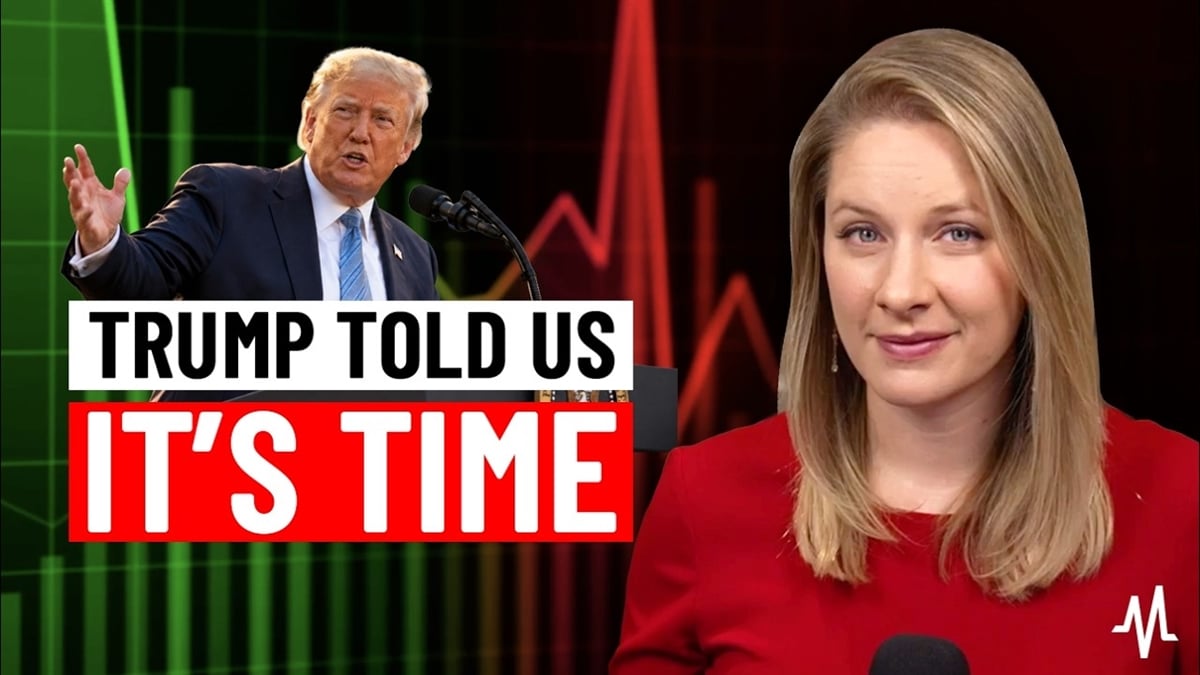
Key Points
- Altimetry's Joel Litman and Robert Spivey argue that a federal stake signals a company that could not attract private capital on its own.
- MP Materials and Lithium Americas carry negative uniform returns on assets and valuations that assume near-total market capture.
- GE Vernova, KeyCorp and ProPetro Holding sit on the deregulation side of the same trend, spanning turbines, bank consolidation and behind-the-meter power.
- Special Report: Grand Canyon Discovery Reshapes America's Energy Tax Credits.
Washington has been writing checks. Equity stakes, loan guarantees and price floors have landed across dozens of companies, from chipmakers to junior miners, and investors keep treating those announcements as buy signals.
The price action has argued otherwise. Several names tied to federal capital are down sharply from where the headlines found them.
Here’s Why Trump Won’t End The Iran War (Ad)
Trump has called an Iran deal close 38 times since the war began, yet the fighting keeps flaring back up.
One day it's a ceasefire, the next it's bombs again. The back and forth may be masking a bigger story most investors are missing.
See the real reason this conflict may never fully end.
Uncover the real reason Trump may never end this warThat disconnect frames a five-stock conversation on MarketBeat, covering two companies to avoid and three positioned on the opposite side of the same trend: deregulation rather than direct government ownership.
What a Federal Stake Says About a Company's Access to Capital
Joel Litman, chief investment strategist at Altimetry, and Robert Spivey, the firm's director of research, view government ownership as regulation on steroids rather than an endorsement.
The logic is blunt. A business earning a credible return can raise private money. A company that needs the federal government to underwrite it is saying something about the returns it generates on its own, according to Litman. That applies whether the recipient is a small miner or a company as large as Intel (NASDAQ: INTC).
Altimetry's cautionary example is not China. It is France, where decades of state involvement produced a roster of protected national champions and almost no economic profit. Across the firm's database of more than 32,000 global companies, corporate France generates roughly $100 million in true economic profit, according to Litman, compared with approximately $1.6 trillion to $2 trillion for U.S. public companies.
Bigger is not better. A larger unprofitable company is still an unprofitable company, and federal capital can fund the former without fixing the latter.
MP Materials Is a Necessary Business Priced Like a Monopoly
MP Materials Corp. (NYSE: MP) is the first name on the avoid list. The Department of Defense took a 15% equity stake and signed a 10-year magnet offtake contract with price-floor protections set at $110 per kilogram of neodymium-praseodymium oxide. Shares trade near $45, roughly half the record close of $98.65 last October.
Spivey's objection is arithmetic. MP currently generates a negative uniform return on assets.
To justify the current price, he calculates that the company needs roughly three times the average miner's profitability per unit of ore, along with the lion's share of U.S. rare earth demand at that price floor.
That's a bet on a government-granted monopoly holding for years. The problem is that if rare earths remain expensive, someone will find a cheaper way to produce them.
Litman draws the cleaner distinction: A necessary business and a good stock are different questions. Utilities are essential, too, and most earn mid-single-digit returns on assets year after year.
Lithium Americas Faces the Junior Miner Timeline Problem
Lithium Americas Corp. (NYSE: LAC) lands on the list for similar reasons.
Thacker Pass is underwritten by a $2.23 billion Department of Energy loan. In January 2026, the DOE also received warrants for a 5% equity stake in the company, plus a 5% economic stake in the project joint venture.
Mechanical completion is targeted for late 2027. Revenue is still zero.
Spivey's answer to the five-year bull case is patience. If the mine works, waiting for proof costs investors the first move, not the move that matters.
GE Vernova's Backlog Is the Pricing Power Story
The buy side is following deregulation instead, and GE Vernova (NYSE: GEV) leads that group.
Backlog reached $176 billion in the second quarter, while gas equipment backlog and slot reservation agreements climbed from 100 to 116 gigawatts. Management is guiding to at least 125 gigawatts by the end of 2026. New equipment has been priced 10% to 20% above the levels at which the existing book was written. Every unit installed brings a decade of servicing revenue with it.
Spivey notes that the business went from a 3% to 5% return on assets at its spinout to nearly 20% last year, roughly double the corporate average.
The stock has traded sideways since the summer along with the rest of the AI power complex. Spivey sees that as an entry opportunity, though more volatility is likely first.
Bank Deregulation Gives KeyCorp 2 Levers
KeyCorp (NYSE: KEY) is the financials pick. Kevin Warsh took office as Fed chair on May 22, 2026, and Vice Chair for Supervision Michelle Bowman has been signaling capital-rule changes. Spivey says those rules pushed banks out of lending and left quantitative easing to do the work.
The second lever is consolidation. Regulators have used the management component of the CAMELS rating as a subjective veto on bank deals. Pulling back that authority would open the pipeline.
Key earns roughly 10% on equity, which is low for the group, and the market is modeling that figure to remain flat.
Commercial and industrial loans grew by $2.1 billion last quarter, led by utilities, power and renewables. Return on tangible common equity cleared 13%, against a 15% target for late 2027.
On rates, Spivey flips the usual worry. Long-term yields are higher largely because corporations are borrowing to invest, which widens the spread and fills the loan book at the same time.
ProPetro Turned Frack Fleets Into Data Center Power
ProPetro Holding Corp. (NYSE: PUMP) is the least obvious name. Its core business is completion fleets in the Permian, and management realized that hauling mobile power to a remote site is the same job whether the customer drills wells or trains models.
PROPWR has roughly 350 megawatts committed under contract, with assets operating at a Midwest hyperscaler data center. It is one of the first behind-the-meter power providers serving a project at that scale.
The market prices ProPetro's uniform return on assets at roughly 5%, about its cost of capital, compared with 15% to 20% during strong completion cycles. Crude near $90, with the Strait of Hormuz conflict in its eighth month, keeps the forward curve well above the mid-$60s level at which shale producers need to hedge.
Pricing Power Is the Dividing Line
All five names sit inside the same macro story of reindustrialization, power demand and energy security. The distinction is who had to ask for the money. MP Materials and Lithium Americas have their economics set in Washington, through a price floor and a loan agreement. The other three set theirs at the point of sale, and that's the number worth tracking.
Investors who want the full research behind these calls can access Joel Litman and Rob Spivey's energy research and stock recommendations at Altimetry.
This email is a sponsored email provided by Stansberry Research, a third-party advertiser of DividendStocks.com and MarketBeat.
This ad is sent on behalf of Stansberry Research, 1125 N Charles St, Baltimore, MD 21201. If you would like to optout from receiving offers from Stansberry Research please click here.
If you have questions about your subscription, please feel free to email MarketBeat's South Dakota based support team at [email protected].
If you no longer wish to receive email from DividendStocks.com, you can unsubscribe.
© 2006-2026 MarketBeat Media, LLC. All rights reserved.
345 North Reid Place, Sixth Floor, Sioux Falls, SD 57103. United States..