| THE HILL REPORT An Anonymous Building Has a Named Agreement Large facilities are built by entities with uninformative names, and the document that identifies who is behind one is usually a local incentive agreement approved in a public meeting. Connor Hill · InsightfulWord · October 03 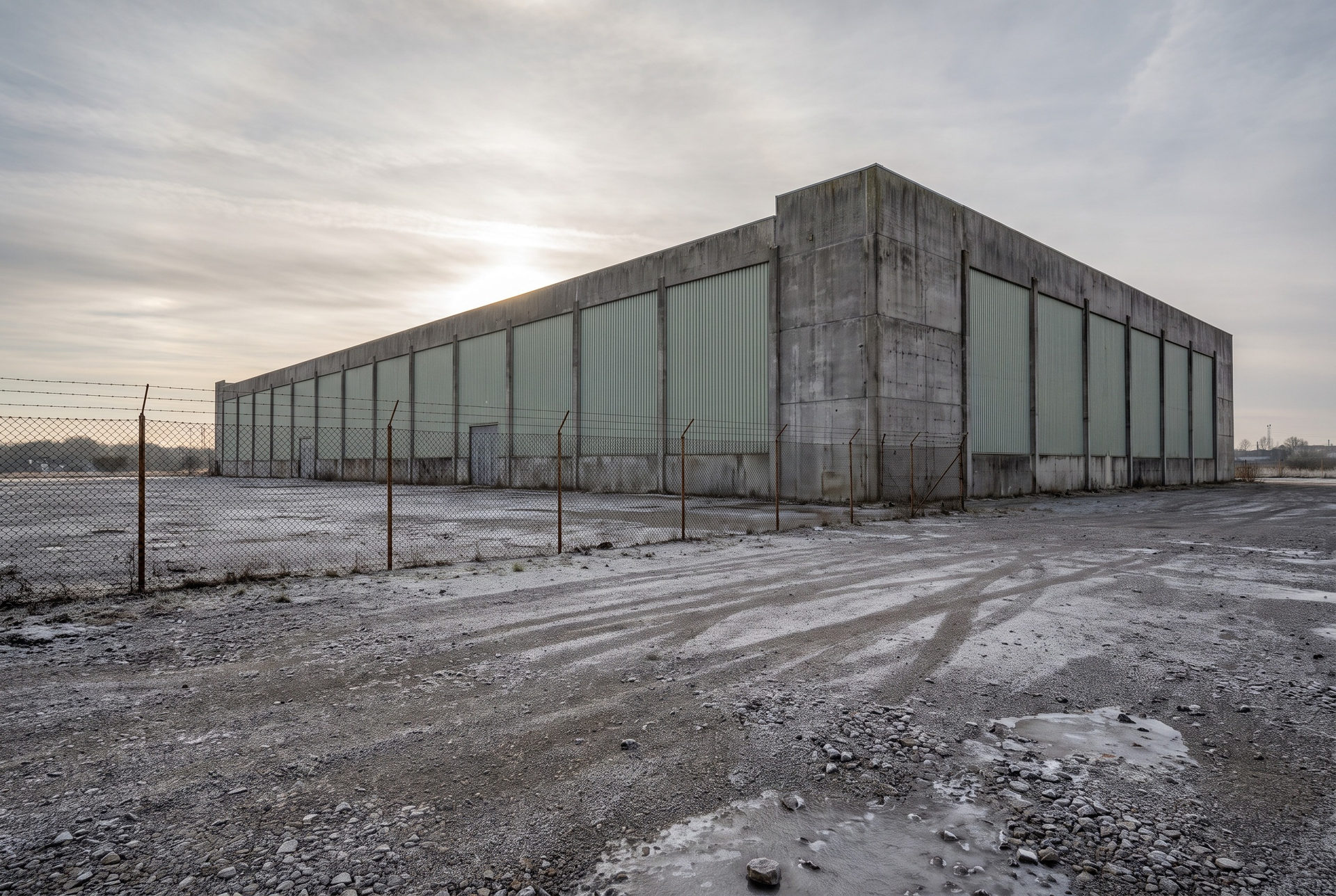 Very large buildings are routinely developed under names that reveal nothing, and the practice is deliberate rather than sinister. A limited liability company is formed for the project, frequently named after a street, a bird or a letter of the alphabet, and it is that entity which buys the land, applies for permits and signs the utility agreements. The practice is also a reasonable signal of size on its own. A developer does not incorporate a dedicated entity and negotiate confidentiality for a small building, so the machinery itself implies the scale before any number is public. The purpose is ordinary: to keep land prices from moving, to avoid signaling a strategy to competitors, and to isolate liability. The result is that a photograph of a facility, and even a plot of its address, identifies nothing about who is behind it or what it will do. What does identify it is paperwork, and the most revealing single document is usually an incentive agreement with a local government. Those agreements exist because large facilities are courted with property tax abatements, and an abatement is a grant of public money that has to be approved in public. Since 2016 an accounting standard has required state and local governments and school districts to disclose in their financial statements the revenue they forgo through such agreements, including revenue lost through abatements granted by other governments. That disclosure obligation sits alongside the agreements themselves, which are negotiated by economic development boards, voted on at council or commission meetings, and recorded in minutes. Which means the sequence that identifies an anonymous building usually runs: minutes, agreement, permit file, utility filing — in that order, and all of it free. | What this piece checks | | Why large facilities are built under uninformative corporate names | | | Which local records identify the occupant and the scale of a project | | | What the permit and utility files add that an incentive agreement does not | | Why the Name on the Deed Says Nothing The structure is standard practice and tells a reader something about scale rather than about secrecy. | 🏛 Policy Signal Statement 77 Since 2016 an accounting standard has required state governments, most local governments and school districts in the United States to disclose tax abatement agreements in their annual financial statements, including the amount of revenue reduced or forgone as a result. Each taxing jurisdiction must report its own share, including revenue it loses passively through abatements granted by another government. The standard was created so that the cost side of an incentive appears somewhere official rather than only the promised benefits; compliance is uneven, and advocacy organizations maintain databases compiled from the disclosures that do appear. Source: Governmental Accounting Standards Board Statement No. 77; Good Jobs First tax abatement disclosure resources. | | Support or oppose: should local incentive agreements be required to name the ultimate parent company rather than the project entity? Supporters argue that residents are being asked to forgo tax revenue and are entitled to know to whom, that the parent's identity is routinely known to officials under confidentiality agreements anyway, and that anonymity shifts bargaining power entirely to the applicant. Opponents answer that competitive site selection genuinely depends on confidentiality, that communities insisting on early disclosure are simply skipped, and that the parent is disclosed before any money is actually abated. Which position is stronger? Hit reply — one line is enough. | A project entity is formed in a state with cheap and fast incorporation, often one that does not require members to be named in public filings. Land is then acquired by that entity, which is what appears in the county recorder's index and in subsequent assessment records. Option agreements precede purchase in most cases, and they are frequently recorded as memoranda rather than as deeds, which is why a site can be effectively committed months before any transfer appears in the index. Because the entity is new and the name is uninformative, early coverage of a large site frequently cannot say who is building it, and that is the intended effect. Registered agents are the thin thread that sometimes runs back further. A project entity must name an agent for service of process, and the same agent appearing across several entities in different counties is often the first visible link between them. The disclosure usually arrives when public money does. An abatement, a grant or an infrastructure commitment requires a vote, and the applicant is identified to the body taking it. Even where a code name is used in the public agenda, the agreement itself typically names a guarantor or parent, because a municipality will not grant a concession to a shell with no assets. State incentive programs add a second layer above the county. Where a state grant or credit is involved, its award is announced by an economic development agency and frequently reported annually against the commitments made, which is a separate record from anything local. And the obligations run both ways. Agreements commonly include investment minimums, job counts and wage floors, with clawback provisions if they are missed, which makes them the clearest public statement of what the project is meant to be. What the Local Records Contain Four record sets, each held by a different office, describe a facility before it opens. Each of them answers a different question, and none of them answers all of it, which is why reading one and stopping produces most of the confident errors in this area. The planning file is the most detailed. Site plans, elevations, square footage, parking counts and traffic studies are submitted for approval and are public once filed. The building permit record gives declared construction value, which is the single best early proxy for the scale of an investment. Environmental permits describe operations rather than structures. An air permit names the emission sources and their rated capacities; a water withdrawal or discharge permit states volumes. Rezoning is where the sharpest disclosure often happens, because a change of permitted use is argued in public against neighbors who ask precise questions and receive answers on the record. Utility filings are the most informative of all for anything energy-intensive, because a large new load requires a service agreement, and in many states the terms or the existence of such agreements become part of a regulatory docket. Water and wastewater capacity letters belong in the same group and are easy to overlook. A municipality confirms in writing that it can serve a given volume, and that letter states a number the applicant asked for. Assessment records close the loop afterward, showing the valuation actually assigned and whether an abatement is being applied against it. Reading those four together usually answers what the building is, how big it is, what it consumes and who committed to it, without any inside knowledge at all. What the Public Record Does Not Settle Several things that matter most are genuinely absent, and knowing which is part of using the record well. The occupant's business case is not in it. An agreement states investment and jobs, not profitability, contracts or demand. Financing is absent as well. Whether a facility is funded on a balance sheet, through a joint venture or through a lease structure changes who actually owns the economics, and none of it appears in a county file. Timing is weakly covered. Permits lapse, construction stalls and announced phases are abandoned without any document recording the decision. Equipment detail is usually absent. A permit describes capacities and emissions rather than the specific technology or supplier inside the building. Employment reality is only partly captured. Job commitments in an agreement are targets with clawbacks attached, and the subsequent compliance reports, where they exist at all, are filed on a slower cycle than anyone follows. Contracts with customers are private, which means the revenue side of a facility almost never appears in local records at all. And ownership can change without a trace in the county file, since selling the parent company transfers the facility without any deed being recorded. Public company disclosure fills part of the gap in the opposite direction. Where a listed firm is involved, capital commitments and lease obligations appear in its periodic reports, which can be matched against a site by size and timing even when no address is named. Which is why the local record is excellent for establishing what exists and poor for establishing what it is worth to anyone. | | Worth stating plainly — what a photograph of a facility establishes An image of a large building establishes that a large building exists at that location. It does not establish the occupant, the use, the investment, the employment, the energy consumption, the operating status, or whether any public company has an interest in it. Each of those facts sits in a different office — the recorder, the planning department, the environmental agency, the utility regulator — and each is available on request or online. Nothing here is a comment on any specific company, facility, project or security, and none of it is a recommendation or investment advice. | What Would Identify a Project Properly Six documents describe a facility better than any footage of it. The meeting minutes at which an incentive or rezoning was approved, which usually name the applicant and the terms. The incentive agreement itself, with its investment minimum, job commitment and clawback provisions. The building permit, with declared construction value and square footage. The environmental permit application, which describes what will operate inside and at what rated capacity. The utility service agreement or the interconnection request, which states the load and the requested in-service date. And the government's own annual financial statement, which discloses the revenue forgone under abatements in force. | The short checklist | 1 | Start with the county recorder and the planning department rather than with coverage of a site. | | 2 | Treat an uninformative entity name as ordinary practice rather than as evidence of anything. | | 3 | Read the incentive agreement for commitments and clawbacks, which state what the project is meant to be. | | 4 | Use declared construction value as the earliest reliable measure of scale. | | 5 | Check the utility or interconnection filing for anything energy-intensive, since load is the hardest fact to disguise. | | 6 | Separate what the record establishes from what it cannot: occupancy and scale, yes; economics, no. | | Aerial and satellite imagery is worth using for one specific purpose rather than as evidence in itself: dated imagery establishes when ground was broken and how construction has progressed, which is a timeline that no document states directly. Public comment periods deserve one practical note. Most of these approvals carry a window in which residents may file written comment, and the filings submitted during it are themselves public and frequently contain the most specific technical objections available anywhere. The composite point is that an anonymous facility is anonymous only in its name, that the documents identifying it are held by local offices and a utility regulator, that an accounting standard requires governments to disclose the revenue they give up for it, and that none of that requires a video to explain. | The file, not the footage Large facilities are built by project entities with uninformative names, and the records that identify them sit with the county recorder, the planning department, the environmental regulator and the utility commission. Governments have been required since 2016 to disclose the revenue they forgo through abatements. When a building is presented as about to reshape the country, which of those files has been read? Connor Hill reads every reply. | | Sponsored Content Worth a look this week | Sources checked Verified October 02, 2026 | | Environmental Protection Agency — Enforcement and Compliance History Online, permits and facility records — https://echo.epa.gov/ | Connor Hill · InsightfulWord |