| Unsubscribe |
Fellow Investor,
The biggest energy deadline in American history...
Just aimed its full firepower at ONE company.
See, on July 4th, the One Big Beautiful Bill Act killed the federal tax credits that powered alternative energy for years.
But here's what almost nobody knows:
When the White House killed credits for solar, wind, EVs, and every other renewable energy source in America…
They left one untouched.
Not only that - they reclassified it alongside oil and nuclear...
And gave it eight years of credits.
Because in June 2025, a drilling crew working near the Grand Canyon...
Unearthed a well of clean energy producing almost 8 times the output of the largest oil well in Saudi Arabia...
Capable of powering civilization for two million years.
Right here on American soil.
Everything changed that day.
Google signed a 15-year contract...
Bill Gates wrote a $100 million check.
And on July 4th, the government handed this energy source its biggest advantage ever.
One company owns the entire chain.
Time is running out to be an "early investor."
I recommend placing your trade at tomorrow's market open.
Go here now for the Grand Canyon breakthrough ticker >>
"The Buck Stops Here,"
Dylan Jovine, CEO and Founder
Behind the Markets
SpaceX Defies Gravity With a Nasdaq-100 Double-Weighting Boost
By Jeffrey Neal Johnson. Originally Published: 9/15/2026.

Key Points
- Expanding float from expired lockups will more than double SpaceX's Nasdaq-100 weighting, forcing index funds to buy $15.5 billion to $22 billion in shares by Sept. 18.
- SpaceX posted strong second-quarter growth with revenue up 91.9% year-over-year, but its roughly 106x price-to-sales multiple reflects a demanding valuation against Treasury yields near 4.79%.
- Historical precedent from SpaceX's July index entry and upcoming lockup expirations of over 2.3 billion shares suggest caution against expecting a sustained price surge from the rebalance.
- Special Report: One Company Spared After Renewable Credits Get Cut.
For investors tracking technology trends and aerospace investments, a notable event is unfolding on Wall Street.
On Friday, Sept. 18, index-tracking funds will make one of the quarter's largest programmatic portfolio adjustments. As post-IPO lockups expire and more of SpaceX's (NASDAQ: SPCX) shares become freely tradable, the company's weighting in the Nasdaq-100 will more than double at the quarterly rebalance.
WATCH THIS BEFORE DECEMBER 8th!! (Ad)
James Altucher says a quiet government filing could reveal Elon Musk's biggest move yet, and almost nobody has noticed it.
Altucher believes the filing could matter to as many as 1,806,000 Americans in the years ahead. He explains why Musk buried it and what it could mean, free of charge.
Watch the free breakdown before December 8th to learn moreFor individual investors, this adjustment provides a transparent view of how modern markets function. Index funds such as Invesco QQQ Trust (NASDAQ: QQQ), with more than $470 billion in assets, must allocate billions of dollars at the closing bell, regardless of near-term headlines or market sentiment. Examining how this required capital reallocation interacts with the expanding space economy can help investors distinguish short-term trading mechanics from fundamental business value.
Nasdaq-100 Lifts the Launchpad for SpaceX
To understand this capital reallocation, investors need to examine the Nasdaq-100 Index's governing framework. When SpaceX completed its initial public offering on June 12, 2026, raising $75 billion at $135 per share, it entered public trading with a closely held share base.
The index administrator applies a float-capping rule when the public float comprises less than 33.3% of total shares. Under this guideline, the index calculates the weighting based on three times the freely tradable float rather than the company's full market capitalization.
When SpaceX joined the benchmark on July 7, 2026, this constraint capped its representation at about 1.28%, placing it 19th in index weight despite a market valuation near $2 trillion.
That cap has now widened. Two post-offering lockup periods expired on Aug. 6 and Aug. 20, releasing more than 1.2 billion shares. Major venture backers and long-term funds retained their stakes, allowing the tradable supply to expand without triggering secondary-market selling. This increase in float met the index's eligibility rules, lifting SpaceX's projected weighting to about 2.82% ahead of the official rebalancing on Monday, Sept. 21.
For index-tracking exchange-traded funds managing about $1.7 trillion benchmarked to the Nasdaq-100, this rebalance is automatic. Funds must buy between $15.5 billion and $22 billion of SpaceX shares, concentrating purchase orders during the closing cross on Sept. 18 to limit tracking error.
Commercial Space Reaches Escape Velocity
Index rebalancing may drive short-term buying and selling, but the commercial space sector is riding a much longer wave of growth. The orbital economy is shifting from experimental rocket flights to vital global infrastructure. Modern businesses and government agencies increasingly treat low Earth orbit (LEO) satellite networks as indispensable communications utilities.
National security procurement provides an ongoing foundation for this industry expansion. Modernization initiatives within the Space Development Agency (SDA) consistently direct defense capital to distributed LEO constellations for missile tracking and encrypted tactical communications. Commercial direct-to-cell telecom connectivity is also expanding the market by connecting ordinary smartphones directly to space-based infrastructure.
Orbital edge computing is emerging as another growth area for the industry. Space systems are beginning to incorporate dedicated data processors, including systems planned around NVIDIA (NASDAQ: NVDA) architecture.
Processing data in orbit before downlinking reduces signal latency and creates opportunities for higher-margin software business models. For investors focused on long-term themes, the ongoing buildout of space logistics and communications represents a compelling trend.
Gravity Catches Up With Operating Momentum
Assessing an individual business requires looking beyond broad sector tailwinds. SpaceX achieved operational progress in the second quarter of 2026, posting $7.81 billion in revenue, an increase of 91.9% year over year (YOY).
The company reported an earnings per share (EPS) loss of 9 cents, beating analyst expectations for a 26-cent loss. Balance sheet metrics remain steady, supported by a current ratio of 5.12, a quick ratio of 4.99 and a conservative debt-to-equity ratio of 0.29.
Investors should weigh these operational milestones against a demanding valuation. Based on annual sales of about $18.67 billion, SpaceX trades at a price-to-sales multiple of roughly 106x. With 10-year Treasury yields hovering near 4.79%, high-multiple stocks face valuation compression if broader market multiples move lower.
Capital expenditures also remain substantial. Maintaining high launch frequencies, manufacturing Starlink user hardware and funding Starship flight testing absorb significant capital. Until operating cash flow comfortably outpaces infrastructure spending, SpaceX shares will remain sensitive to broader shifts in technology valuations.
Space Traffic Ahead: Dodging Reentry Heat on Rebalance Day
Mandatory index buying against a closely held share base has led some market analysts to anticipate a mechanical price surge heading into Sept. 18. Even with substantial passive capital flows on the horizon, historical market patterns suggest caution toward front-running strategies.
When SpaceX entered the index on July 7, passive indexers absorbed about $4.3 billion in forced purchases, yet SpaceX shares fell more than 6% that day. Institutional liquidity providers and short-term traders who accumulated shares before the event used the closing liquidity to unwind their positions. A similar situation could occur if speculative buying becomes overcrowded before Friday's closing bell.
Future share unlocks introduce another layer of supply. More than 2.3 billion restricted shares are scheduled to exit lockup restrictions in late October and mid-November, after third-quarter results. This substantial volume of potential stock could limit upward price progress beyond the current $146-to-$152 trading range.
Charting Your Course in the Orbital Tech Frontier
The upcoming rebalancing event provides a useful opportunity to study market mechanics in real time. Investors with a constructive outlook on the space economy might explore diversified aerospace contractors or satellite equipment suppliers trading at lower valuation multiples than SpaceX.
For investors interested in SpaceX, a patient stance may be prudent. Waiting for the market to absorb the Sept. 18 index-rebalance volume and observing how SpaceX navigates its autumn lockup expirations should offer a clearer, more balanced view of long-term entry levels.
The AI Bottleneck Is Not Chips Anymore and 3 Pipeline Stocks Are Cashing In
By Bridget Bennett. Originally Published: 9/20/2026.
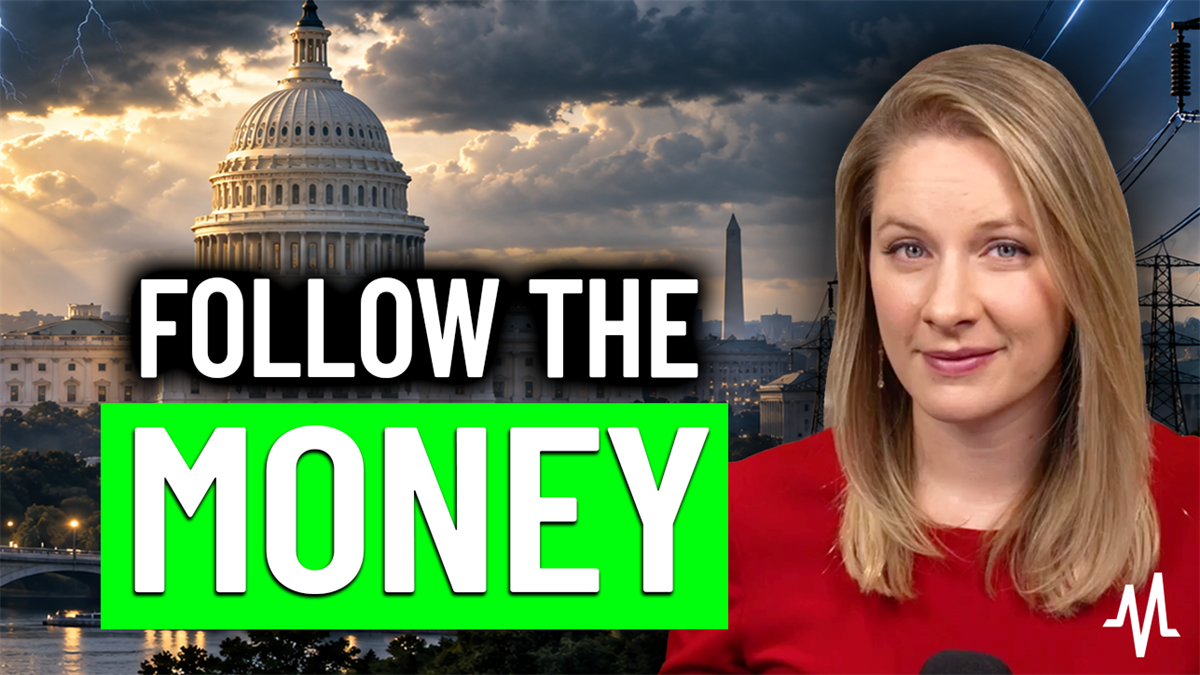
Key Points
- Hyperscalers including Meta Platforms and Microsoft are contracting directly for natural gas power rather than waiting years for a utility interconnection
- Enterprise Products Partners and Energy Transfer collect most of their revenue on fee-based contracts, which softens the impact of swings in gas prices
- Williams Companies is structured as a corporation rather than a partnership, pairing a lower yield with more price movement
- Special Report: One Company Spared After Renewable Credits Get Cut.
The bottleneck in artificial intelligence stopped being chips a while ago. It is electricity, and the companies closing that gap fastest are not necessarily the ones getting the most airtime.
Nuclear and geothermal own the headlines. Natural gas owns the contracts.
The crypto number that caught my eye (Ad)
The week that the Clarity Act vote failed, 98 of the 100 coins in CoinDesk's benchmark crypto index closed higher. That is not a Bitcoin rally… that's the entire market moving at once.
Solana ran 10%. XRP gained 7%. Hyperliquid jumped over 12%. Layer-2 names like Starknet and Arbitrum climbed more than 17% in a single day. Zoom out and it gets clearer. Over the past month, Ethereum is up 35%. Solana is up 41%.
That kind of breadth… money spreading across hundreds of coins instead of crowding into one… is what the beginning of an altcoin cycle looks like.
Reveal my #1 crypto under $1 now.That is the case Behind the Markets founder Dylan Jovine shared. While the market debates what will power the grid in 2035, natural gas midstream operators are already trenching pipe, parking turbines along data center fence lines and signing 10- and 20-year supply deals with the best-capitalized customers on earth. As Jovine put it, every tech revolution is, at its core, an energy revolution.
Three names anchor his list: Williams Companies (NYSE: WMB), Enterprise Products Partners (NYSE: EPD) and Energy Transfer (NYSE: ET).
Hyperscalers Are Routing Around the Utility Grid
When Meta Platforms (NASDAQ: META) needed power in central Ohio, the interconnection queue offered a multiyear wait. Meta went around it.
Williams is building the Socrates North and South projects in New Albany, representing roughly 400 megawatts of behind-the-meter gas generation fed by dedicated pipelines and covered by a 10-year power purchase agreement.
Microsoft (NASDAQ: MSFT) pursued a larger version of the same strategy, signing a 20-year agreement with Chevron (NYSE: CVX) for Project Kilby in Reeves County, Texas. The co-located gas plant is targeting about 2.67 gigawatts, with first power expected in 2028.
Picture what that actually looks like on the ground: a trench, a pipe tied into the nearest transmission line, metering stations along the fence line and rows of gas turbines the size of shipping containers, each one essentially a jet engine bolted to a flatbed. It is a parallel power system built on assets midstream companies already own. NVIDIA (NASDAQ: NVDA) CEO Jensen Huang has repeatedly said that the constraint is energy, not compute. Gas is what is available now.
Enterprise Products Pairs a Record Quarter With a 5.8% Yield
Enterprise is not a stock in the ordinary sense. It is a publicly traded partnership, and the tax structure is a large part of why its distribution is so generous: units yield roughly 5.8% on a $2.24 annualized distribution.
The number that matters is not the yield, though. It is the coverage behind it. Operational distributable cash flow hit a record $2.3 billion last quarter, covering the distribution by 1.9 times.
That distinction is where income investors can get hurt. A high yield looks identical on a screen whether the business can fund it or not, and companies that cannot are usually carrying too much debt or generating too little cash flow to survive a bad year. Enterprise is not in that position. Jovine also pointed to roughly 82% of the partnership's contracts being fee-based, which ties results to volumes moved rather than to the price of the molecule.
Energy Transfer Is Getting Repriced on Cash Flow, Not Hope
Energy Transfer's quarter told a similar story, with more momentum behind it. Distributable cash flow jumped 32% year over year to $2.59 billion, and unitholders collected the nineteenth consecutive distribution increase, bringing the payment to 34 cents per unit and producing a yield near 6.4%.
Jovine's view is that this is a repricing rather than a melt-up. If the cash reaching owners rises by roughly a third, the units following it higher is arithmetic, not enthusiasm.
What supports the next leg is the contract structure. These are not products sold quarter to quarter at whatever the market will bear. They are 10- and 20-year agreements with counterparties among the largest companies in the world, and fee-based contracts on both the supply and delivery sides leave the operator collecting a spread whether gas prices rise, fall or go nowhere.
Williams Trades Yield for Growth Investors Can See
Williams is a conventional corporation, so the yield is lower, near 2.9%. What it offers instead is torque, along with a little more volatility.
Second-quarter net income rose 51%. The company also closed the Momentum Midstream acquisition for up to $5.5 billion and raised its long-term EBITDA growth target to more than 11% annually through 2030.
Consider what that growth rate means for a company this old. Williams spent decades as a consolidator, buying competitors and cutting costs to produce mid-single-digit expansion.
Data center demand handed it something it has not had in a generation: organic customers arriving with signed contracts and seeking capacity Williams already controls.
Permitting Is the Real Swing Factor Here
The upside case rests on scarcity. Few new long-haul gas pipelines get built in the United States, which turns existing capacity into a genuine moat. Long-term contracts with investment-grade counterparties then convert that moat into decades of contracted revenue.
The risk sits in the same place. Siting boards, local opposition to data centers and permitting delays can push projects to the right, while the spending required to pursue this demand is heavy and increasingly debt-funded.
Washington is leaning the other way for now. Alan Armstrong, who ran Williams from 2011 through 2025, was appointed to the U.S. Senate in March 2026 and has named infrastructure permitting as his top priority through the end of his term in January 2027. Jovine, who has met with House Energy and Commerce Committee Chairman Brett Guthrie, said the competitive race with China is keeping energy policy unusually bipartisan within working groups, whatever the tone in public.
For investors, the tell is not the price of natural gas. Watch new contract announcements and distribution coverage, because those are what move these names.
This email is a paid sponsorship sent on behalf of Behind the Markets, a third-party advertiser of The Early Bird and MarketBeat.
If you need assistance with your subscription, feel free to email our U.S. based support team at [email protected].
If you no longer wish to receive email from The Early Bird, you can unsubscribe.
© 2006-2026 MarketBeat Media, LLC. All rights protected.
345 N Reid Pl., Suite 620, Sioux Falls, S.D. 57103. USA..