Hello,
Welcome to our flagship newsletter, MarketBeat Daily Ratings.
We'll deliver the latest "Buy" and "Sell" ratings from Wall Street's top-rated analysts directly to your inbox each morning.
But first, we need you to do two quick things:
1. Hit reply, and send a simple "Yes." Just one word. This tells Google (and other emails providers) that you actually want to get our newsletter.
2. After that, this link to confirm your subscription. That will tell us that you received our welcome email and that we should start sending your daily report.
Confirm your subscription here.
After you have completed these two steps, we would like to gift you a free copy of one of our most popular investing reports: 7 Stocks to Buy and Hold Forever. You can download the report with this link.
Thank you again for subscribing. We look forward to being an important part of your investing journey

Matthew Paulson
Founder and CEO, MarketBeat.
P.S. If you didn’t intend to subscribe, no problem—you can unsubscribe with this link.
(ARReply-161)
This Week's Featured Story Paramount Skydance Clears a Major Warner Bros. Discovery Hurdle—Here's What Comes NextBy Jeffrey Neal Johnson. Article Published: 9/22/2026. 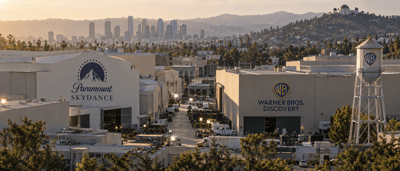
Key Points- Paramount Skydance has settled the state antitrust challenge and a separate Writers Guild lawsuit that had been holding up its Warner Bros. Discovery acquisition.
- Warner Bros. Discovery surged to within cents of the $31 cash offer after the settlement, while Paramount Skydance closed lower despite heavy trading.
- Regulatory uncertainty has faded, but Paramount Skydance still faces substantial leverage, integration demands and binding production commitments after closing.
- Special Report: Everyone wanted SpaceX. Smart money wants this.
When state regulators intervened in July 2026 to block Paramount Skydance's acquisition of Warner Bros. Discovery, investors expected a lengthy courtroom fight. Instead, a multistate antitrust settlement announced on Sept. 21 removed the main legal barrier confronting the approximately $111 billion transaction. Markets responded immediately. Warner Bros. Discovery (NASDAQ: WBD) moved toward its 52-week peak, while Paramount Skydance (NASDAQ: PSKY) saw heavy trading volume.
For investors tracking the entertainment sector, the core question is no longer whether regulators will halt the combination outright. Attention has shifted to what Paramount Skydance conceded to reach an agreement, how the combined business plans to manage its balance-sheet leverage, and whether current market prices leave room for future returns. Understanding those variables begins with the regulatory clearance and the substantial commercial scale it unlocks.
Greenlighting a $66 Billion Media Script
Silver is up more than 50 percent over the past year, yet interest has faded since its January record.
The metal gave back roughly half that move and most traders moved on to other trades.
One explorer kept its drill rig running through the pullback, working the site while attention was elsewhere. See what this silver explorer has been drilling for The multistate settlement resolves litigation brought by state attorneys general, along with the Writers Guild. By finalizing the agreement ahead of the Sept. 30, 2026, deadline, Paramount Skydance avoids contractual ticking fees that would have penalized the buyer hundreds of millions of dollars for closing delays.
Beyond lifting the immediate legal cloud, the transaction creates an entertainment entity with roughly $66.06 billion in annual revenue. That figure combines Warner Bros. Discovery's approximately $37.30 billion business with Paramount Skydance's roughly $28.76 billion top line.
In modern media, distribution reach is critical to survival. Combining the Max and Paramount+ streaming platforms addresses the industry's persistent challenge of fragmented direct-to-consumer (DTC) footprints. Consolidating subscriber bases could encourage greater platform engagement, reduce churn, and provide a clearer path toward positive earnings before interest, taxes, depreciation, and amortization (EBITDA). Uniting both studio lots under a single corporate leadership structure also positions Chief Executive Officer David Ellison to gain substantial leverage over theatrical scheduling and global content licensing.
Script Notes From Regulators: What the Concessions Demand
Regulatory clearance required tangible concessions. State officials imposed several binding operational conditions designed to preserve regional employment and industry diversity:
Production Commitments: Paramount Skydance agreed to invest an additional $1.5 billion in domestic production over the next five years. The combined studio must release at least 30 movies theatrically per year, expanding to 32 titles by the third year. Missing these benchmarks would trigger a mandatory divestiture of Miramax Studios.
Studio Footprint Protections: Paramount Skydance pledged to maintain active operations at both the Melrose Avenue lot in Hollywood and the Warner Bros. lot in Burbank for at least five years.
Independent News Oversight: Independent editorial boards will oversee CBS News and CNN to protect journalistic integrity.
Labor and Platform Guarantees: The agreement allocates $47.5 million to an industry worker fund and safeguards distribution for free, ad-supported streaming television platforms, specifically Pluto TV.
While these terms restrict aggressive headcount reductions and prevent real estate sales, they preserve the underlying production engines. Rather than impairing long-term earnings capacity, the mandated production quotas are designed to ensure a reliable stream of intellectual property that supports theatrical box office, home entertainment, and streaming engagement.
Re-Engineering Debt Across 2 Studios
Managing the capital structure remains the primary operational hurdle for the combined business. Paramount Skydance carries a debt-to-equity ratio of about 1.13, while Warner Bros. Discovery maintains a ratio of approximately 0.90. To address legacy liabilities, Paramount Skydance extended the expiration dates for its outstanding debt exchange and tender offers on Sept. 21, 2026.
Debt tenders are a standard financial mechanism that allows an acquirer to retire or refinance existing bonds under standardized terms. By extending these deadlines, management gains time to align maturities and covenants, reducing the risk of credit-rating downgrades or debt acceleration.
Operating cash flow provides crucial support during this integration phase. Warner Bros. Discovery generates around $8.17 per share in cash flow, while Paramount Skydance produces approximately $12.87 per share. These cash flows offer a financial cushion to service the combined debt load while meeting the settlement's $1.5 billion domestic production mandate.
Warner Nears Parity While Paramount Offers Value
Following the settlement, trading patterns revealed a clear split in how the market values each entity.
Warner Bros. Discovery gained 10.79% on Sept. 21 to close at $30.80, with more than 234 million shares changing hands—over 13 times its average daily volume of approximately 17.96 million shares. The stock reached an intraday high of about $30.92, hovering near the upper end of Wall Street's high-price target of $32. This compressed arbitrage spread suggests institutional desks see a very high likelihood of deal completion.
Paramount Skydance tells a different story. Paramount Skydance's stock price reached an intraday high of about $11.49 before closing lower at roughly $9.91, down 2.94% on the session. Paramount Skydance trades at a discount across several traditional metrics, including a price-to-sales multiple of roughly 0.39 and a price-to-book valuation of about 0.85. The company also offers a dividend yield of just over 2%.
Elevated short interest and an analyst consensus rating of Reduce point to market skepticism about integration costs. Yet, with projected earnings growth near 39.3%, this valuation gap appears to reflect market caution rather than broken fundamentals.
What the New Studio Powerhouse Means for Portfolios
The remaining path to deal completion involves execution rather than regulatory resistance. Management must conclude outstanding debt tenders, finalize administrative filings, and coordinate distribution networks. Potential risks remain, including a macroeconomic slowdown in linear television advertising and the logistical challenges of unifying two corporate cultures.
Market pricing suggests Warner Bros. Discovery shares have largely captured the transaction's direct financial benefits. For investors monitoring the sector, Paramount Skydance offers an interesting profile. Those watching long-term media consolidation may assess whether Paramount Skydance's discounted book value provides an attractive entry point as the combined studio unlocks operational scale. |