| Unsubscribe |
There is a kind of loss that stings more than any other in options trading, and in fifteen years of teaching I had thousands of traders ask me some version of the same question after they took it.
"How is it possible that I was right on the direction, and I still lost money?"
It is not a trick question. It happens every day.
A trader buys a call. The stock moves up. He logs in expecting a profit. The position is flat. Or red. Or gone.
The stock did exactly what he said it would do. He still lost.
The reason is a cost that most brand-new options traders do not realize is running against them from the moment they enter. It works against you every single day you hold, whether the underlying moves or not. Be right too slowly and you hand the trade back to the market.
You can pick the direction right, pick the catalyst right, pick the timing of the news right, and still lose. Because you never checked the one number that tells you whether the setup gave you enough room to be right in time.
Ten seconds to check before you enter. Almost no beginner does.
That is one of the five. The others cover position sizing, the setup most beginners are taught to trade first and should not, why the stop-loss you are relying on can fail on the exact day you need it, and the one question the traders who last always ask before they click buy.
Under a minute to run. Every trade. Before a dollar goes on.
Normally $29.97. Today it's free, and it is yours to keep.
Don Kaufman
Chief Derivatives Instructor, TheoTrade
P.S. If you have ever closed a trade at a loss and thought "but I was right," one of these five checks is the answer. It is the one about the silent daily cost. Read that one first.
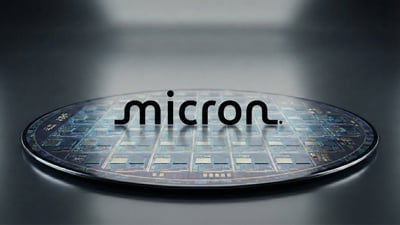
Micron’s AI Memory Boom Could Send Shares 100% Higher
By Thomas Hughes. Article Published: 9/16/2026.
Key Points
- Analyst consensus rates Micron stock a Buy with 92% bullish bias, forecasting upside toward $1,295 and potentially $2,000 per share.
- Micron's chart technicals point to a $1,600 to $2,400 price target range, supported by a strong rally and MACD convergence signals.
- Persistent high-bandwidth memory demand, sold-out capacity through 2027, and over $100 billion in orders suggest tightness will continue for years.
- Special Report: Everyone wanted SpaceX. Smart money wants this.
Signals ranging from price action to analyst sentiment point to another massive run for Micron (NASDAQ: MU) stock. While headwinds and hurdles, including market anxiety, profit-taking and repositioning, are weighing on the stock today, long-term trends suggest at least another 100% upside. The hurdle in September is the broad call to slow AI’s advancement.
Micron Is Well-Positioned for AI’s Virtuous Cycle
The news reads as a red flag, but it’s also a red herring: The alarm over runaway models obscures who actually stands to gain when AI’s advance stalls.
Here’s Why Trump Won’t End The Iran War (Ad)
Trump has called an Iran deal close 38 times since the war began, yet the fighting keeps flaring back up.
One day it's a ceasefire, the next it's bombs again. The back and forth may be masking a bigger story most investors are missing.
See the real reason this conflict may never fully end.
Uncover the real reason Trump may never end this warAs concerning as the advancement of uncontrollable models may be, the models themselves aren’t what AI companies are worried about. In this scenario, slowing AI’s advancement—cough, cough, pausing training of the most expensive models—is what the market needs. It would reduce AI’s high upfront costs, enable hyperscalers to monetize the infrastructure already in place, improve cash flow and reassure investors while affirming their ability to continue spending. Regarding regulation, as MarketBeat writer Chris Markoch likes to put it, what more could AI companies ask for than the government installing roadblocks for startups and widening their moat?
For Micron, this means continued, persistent demand for its high-bandwidth memory (HBM) products. The biggest risk is an anticipated earnings cliff tied to capacity expansion and price normalization. Memory chip stocks command premium pricing in 2026, which is a central factor in Micron’s results and earnings outlook.
The market is getting this wrong: This isn’t a legacy-style memory cycle in which demand spikes, peaks and retreats, undermining pricing power. Instead, it’s the early stage of a long-running trend in which data-center demand and inference keep prices elevated. The worry is that efficiency gains will reduce how much memory each query requires. But efficiency isn’t a memory killer. Rather, it makes inference more affordable, and affordability drives demand, increasing the number of queries and the need for memory.
Micron Winds Up for Big Move, Technicals Point to $1,600-$2,400 Range
Micron’s chart price action is very bullish. The market has rallied strongly over the trailing 12 months, rising almost $800, or 500%, and has also crossed an inflection point, creating a price gap that was later confirmed as support.
The weekly chart shows a robust rally and consolidation range, likely signaling continuation. The critical details are the magnitudes of the range and rally, which approach $400 and $800, respectively. These are the projections for future price action, assuming the stock sets a fresh high, putting the technical price targets at $1,600 and $2,400.
Among the more bullish technical factors is MACD convergence. MACD convergence signals a strengthening market that is likely to retest existing highs and move on to new ones. The technical risk is that the price tops out near its existing highs, but earnings and analyst trends suggest otherwise.

Micron’s analyst trends are as bullish as they have been in the last two years. MarketBeat’s data reveals steady, firm coverage, with 38 analysts showing strong conviction. They rate MU a consensus Buy, with a 92% Buy-side bias, and the price-target trend is upward. Consensus forecasts a move to $1,295, representing 40% upside as of mid-September and enough to set a fresh high. More importantly, the trend points to a consensus-or-better price point, with the high end at $2,000, representing more than 100% upside and falling within the technical targets.
Capacity Constraints to Continue: HBM Prices Aren’t Going to Fall Soon
The catalyst for MU stock is capacity constraints. The market focuses on expansion plans but fails to understand that capacity increases aren’t expected to significantly impact supply until at least late next year. Market tightness is likely to linger through 2028 or longer. More aggressive forecasts suggest that tightness will persist into 2031, and there are numerous reasons to believe them.
Not only is the DRAM market neglecting its legacy business and building shortfalls in non-AI markets, but systemwide HBM demand will continue to increase. Advanced Micro Devices (NASDAQ: AMD) isn’t using MU for its MI-450s but does use HBM—more than NVIDIA (NASDAQ: NVDA), in fact. AMD’s sales are expected to explode over the next few quarters, keeping HBM supplies tight.
If investors need further proof, they need only look at Micron’s backlog and commitments. As it stands, the company has more than $100 billion in logged orders, its capacity is sold out through 2027, and it will likely sell out through the end of 2028 soon. Commitments include 16 major long-term supply contracts with set pricing, providing visibility. In the words of CEO Sanjay Mehrotra, demand exceeds capacity by approximately 50%. In this environment, there is no reason to think the HBM market will crash anytime soon. Acceleration is more likely.
MarketBeat Week in Review – 08/31 - 09/04
By Chris Markoch. Article Published: 9/5/2026.

Key Points
- Stocks pulled back into the holiday weekend after a strong jobs report raised concerns about a potential Federal Reserve interest rate hike in September.
- Corporate earnings remain the key market driver, with cybersecurity, artificial intelligence, and energy stocks showing strength while consumer-focused names stay mixed.
- MarketBeat contributors covered a wide range of stocks this week, including Palo Alto Networks, Broadcom, NVIDIA, Eli Lilly, and Dutch Bros, among many others.
- Special Report: Everyone wanted SpaceX. Smart money wants this.
September's market got off to a strong start but drifted lower heading into the long holiday weekend. The bearish catalyst was a red-hot jobs report that some investors interpreted as a signal that the Federal Reserve may raise interest rates at its September meeting.
The pullback also fits the calendar—September is historically one of the weakest months for stocks. The next catalyst comes next week, when the latest inflation data will show whether the case for a rate hike is strengthening.
Here’s Why Trump Won’t End The Iran War (Ad)
Trump has called an Iran deal close 38 times since the war began, yet the fighting keeps flaring back up.
One day it's a ceasefire, the next it's bombs again. The back and forth may be masking a bigger story most investors are missing.
See the real reason this conflict may never fully end.
Uncover the real reason Trump may never end this warThe real driver for stocks continues to be corporate earnings. This earnings season is winding down, but the story has been familiar. The artificial intelligence trade is still alive and well. Energy stocks will continue to be among the best trades over the next several years, but consumer-focused stocks remain a mixed bag.
Articles by Thomas Hughes
The rise of agentic AI is increasing the need for cybersecurity. That's not just a chief executive officer (CEO) talking his book; Thomas Hughes pointed out that the five most upgraded stocks this earnings season were all in the cybersecurity sector.
One of those cybersecurity names was Palo Alto Networks (NASDAQ: PANW). Hughes noted that PANW is an expensive stock, but the company's growth is accelerating, prompting analysts to raise their price targets to all-time highs.
Hughes also wrote about the market's sell-the-news reaction to a strong report from Rubrik (NYSE: RBRK). The company operates in the data security niche of cybersecurity. RBRK is up 150% since April, but may present investors with valuation risk.
Articles by Sam Quirke
Will Apple Inc. (NASDAQ: AAPL) unveil a foldable iPhone at its Sept. 9 product event? Analysts and consumers are bullish about the possibility. However, Sam Quirke explained that investors may consider other factors more important to AAPL's future direction.
Salesforce (NYSE: CRM) has been one of the best-performing technology stocks since June, and analysts forecast more upside. However, Quirke noted that investors may want to wait for a pullback, as CRM looks overbought after the company's stellar earnings report.
Investors are considering reports that Amazon.com Inc. (NASDAQ: AMZN) has ambitious, albeit early-stage, plans to automate last-mile delivery. Quirke explained the company's Project Tetromino and what it could mean for the margins of a company that's looking to maximize efficiency.
Articles by Chris Markoch
Eli Lilly & Co. (NYSE: LLY) announced its intention to acquire Merida Biosciences, expanding the company's portfolio of treatments for serious autoimmune and allergic diseases. Chris Markoch highlighted the key drug Lilly is targeting and why this is only one example of how the company is thinking beyond the obesity market.
The artificial intelligence infrastructure boom is driving a surge in copper prices. Markoch explained how what started as a trade-policy story has fused with a structural demand story and gave investors three copper stocks at the center of the trade.
Data centers are becoming a flashpoint in the midterm elections. However, construction will continue, and Markoch highlighted three AI infrastructure stocks that are foundational to every data center project.
Articles by Ryan Hasson
This week, Ryan Hasson highlighted one of the S&P 500’s top 10 performers that many investors have never heard of. Lumentum Holdings (NASDAQ: LITE) is a leader in optical connectivity, a vitally important but not well-understood part of the AI buildout.
AeroVironment (NASDAQ: AVAV) has lagged the market in 2026, but Hasson explained why the announcement of a landmark contract with the U.S. Army immediately before the company's earnings report on Sept. 9 may be the catalyst AVAV needed.
This earnings season may have finally quelled fears of a "SaaSpocalypse" in software stocks. As capital begins to rotate back into the sector, Hasson highlighted five software stocks that are likely to outpace the sector recovery.
Articles by Leo Miller
Broadcom (NASDAQ: AVGO) delivered one of the most closely watched earnings reports this week. Leo Miller analyzed the report, in which the headline numbers were strong while guidance was weak. He explained that the real story was the company's commentary that weak guidance was due to a supply issue and that AI demand exceeds what its outlook implies.
Insider buying is not a perfectly bullish indicator, and this week Miller reminded investors that when a company's management is buying shares, they should seek to understand why. Miller spotlighted three very different companies that have reported an increase in insider buying.
Many investors are turning to dividend stocks as a strategic pivot in a volatile market. Miller highlighted three companies that just raised their dividend payouts, including one dividend king.
Articles by Nathan Reiff
Investors frequently get tripped up by a false choice between stability and growth. This week, Nathan Reiff highlighted three stocks that are delivering strong performance with long-term catalysts that help mitigate cyclical volatility.
IonQ Inc. (NYSE: IONQ) is one of the most recognized names in quantum computing. But could the company be positioning itself to become more? Reiff believes that recent contracts in the defense and national security sectors are setting it up to be just that.
Qualcomm Inc. (NASDAQ: QCOM) has been making inroads in automotive and AI, which may be where its long-term growth will come from. However, Reiff explained why the best indicator of the stock's short-term performance may be its smartphone business.
Articles by Dan Schmidt
Retail stock earnings have been mostly strong this earnings season. This week, Dan Schmidt highlighted three of the most notable retail names, each targeting a very different type of consumer.
Ulta Beauty Inc. (NASDAQ: ULTA) didn't make that list of notable retail stocks. But Schmidt explained why investors may want to give ULTA a closer look after a post-earnings sell-off that looks overdone.
Articles by Jeffrey Neal Johnson
One of the major geopolitical crossover stories for investors this week was the news that the U.S. Department of War was pursuing an approximately 35% stake in Venezuelan oil rights. Jeffrey Neal Johnson explained the news and why it's likely to be bullish for three U.S. oil supermajors.
Nobody can accuse NVIDIA (NASDAQ: NVDA) of sitting on its lead. This week, Johnson spotlighted the company's $3.5 billion MediaTek investment and its crucial role in the company’s strategy to protect its accelerated computing empire from threats posed by custom silicon.
Space stocks have been under pressure for much of the summer. However, Johnson noted that the $700 million NASA contract awarded to Blue Origin is likely to be a catalyst that gets space stocks off the launch pad.
Articles by Peter Frank
Dutch Bros (NYSE: BROS) delivered a strong report that didn't excite investors. Peter Frank explained why the bearish reaction was likely a case of a stock getting ahead of the story. It's also why the pullback may create a growth opportunity.
OneMain Holdings (NYSE: OMF) is a leader in the nonprime lending space. As Frank explained, the company is profitable and offers a dividend with a juicy yield. However, investors should take care to understand the risk profile of the company's business model before getting involved.
The Bancorp (NYSE: TBBK) is a fintech that's been staging a comeback over the past two years. Frank suggested that while TBBK has growing momentum, the biggest concern may be that much of its growth may already be priced in.
This email content is a paid advertisement sent on behalf of Theo Trade, a third-party advertiser of The Early Bird and MarketBeat.
If you need help with your newsletter, feel free to email MarketBeat's South Dakota based support team at [email protected].
If you no longer wish to receive email from The Early Bird, you can unsubscribe.
Copyright 2006-2026 MarketBeat Media, LLC. All rights reserved.
345 North Reid Place, Suite 620, Sioux Falls, S.D. 57103-7078. USA..