Transportation policy is unusually prone to confusing means and ends. Planners often focus on promoting or preserving particular ways of moving people around, even though the mode of transportation is only a means to the actual goal: helping people get where they want to go as efficiently as possible.
The San Francisco Municipal Transportation Agency’s current transportation strategy provides an example of precisely the wrong way to think about these issues. One of its stated goals is to “create a complete and connected active transportation network that shifts trips from automobiles to walking, biking and other active transportation modes.”
Wisconsin should take a different approach. Transportation policy should begin with the people who use the system: where they want to go, how they want to get there and how those choices may change as new technologies become available. |
Research keeps on reinforcing the importance of family structure, so why aren’t we using the metric? |
Wisconsin collects enormous amounts of education data. We measure test scores, graduation rates, absenteeism, discipline, race, disability and family income. Yet one important factor remains largely missing from the state’s education dashboards: family structure.
That omission matters because Wisconsin has one of the most serious educational disparities in America. On the 2024 National Assessment of Educational Progress (NAEP), Wisconsin had the nation’s largest Black-white achievement gap in fourth-grade reading, a 45-point difference. We have spent years debating why this gap persists. Race, poverty, school resources, teacher quality and curriculum have all received attention. But another variable deserves consideration: the circumstances in which children spend thousands of hours outside the classroom.
|
|
|
|
Talk to your typical Wisconsinite and they will tell you Milwaukee is the past, Madison is the future. Milwaukee is shrinking, unsafe and broke, they will argue, while Madison is flush with people, turning out votes, and have you seen all of the new construction? I do not buy it. To keep Wisconsin strong, we need our champion cities to be at their very best. Sadly, Madison is failing to provide the quality of services its citizens deserve. |
|
| |
|
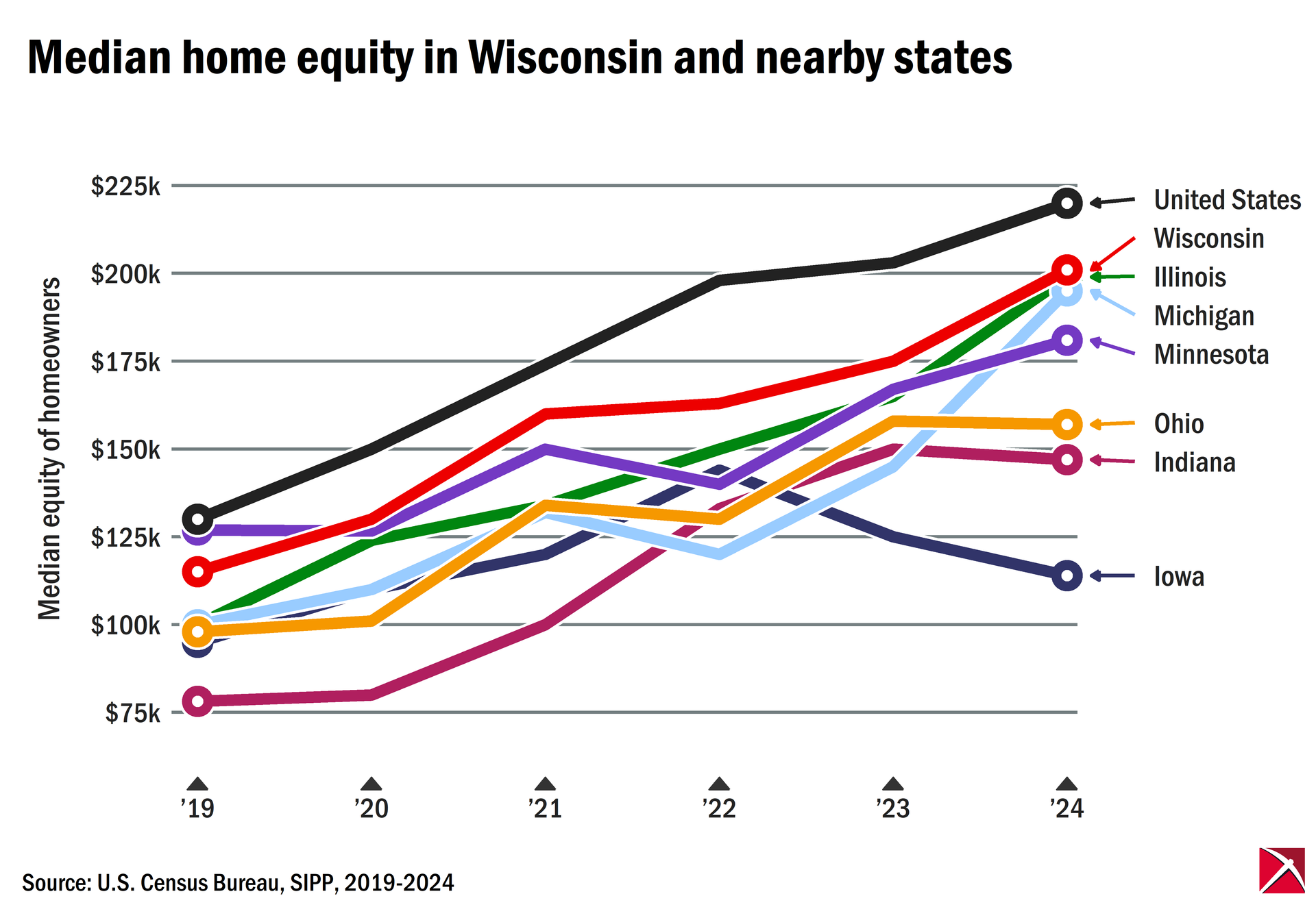
The median Wisconsin homeowning household had approximately $201,000 in equity in its home in 2024, data from the Census Bureau show.
Homeowner equity is defined as a house’s estimated value minus the debt that a household owes on it. Equity can rise as households pay down their mortgage principal or as the estimated home value rises. The figure tracks the median equity of homeowning households, including households whose equity is negative, but omits households who do not own a home, such as renters. |
Weekly survey: How much has median homeowner equity increased in Wisconsin since 2019 (nominal terms)?
|
|
|
|
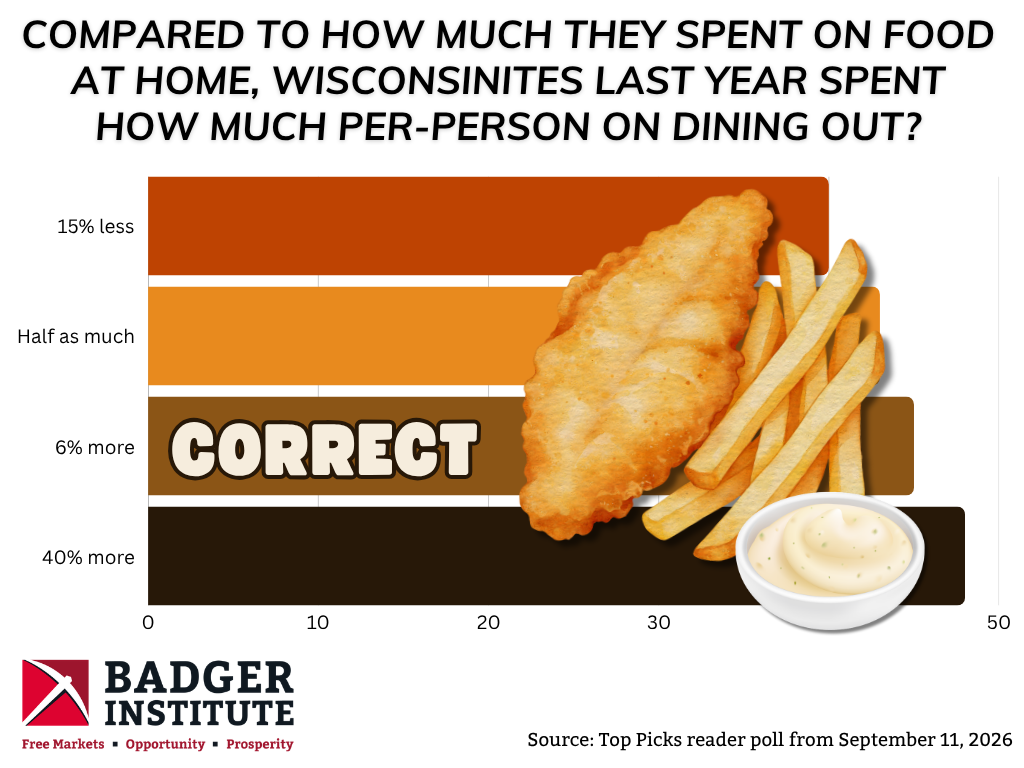
Previous survey question: |
Invest in the Badger Institute | |
|
|
|
The Badger Institute has long been at the forefront of the fight for school choice, right to work, welfare reform, tax restructuring, limited government, civil society and so much more. If you appreciate the Institute’s legacy and want to support free markets, opportunity and prosperity, please consider donating today. Your support will help the Institute continue to advocate for conservative principles now and in generations to come.
|
|
|
|
The Institute never has, and never will, accept government funding. We gratefully welcome your online donation or email Mike Nichols, President.
The Badger Institute is a 501(c)(3) tax-exempt nonprofit organization funded solely by the generosity of foundations, companies and individuals. |
|
|
|
Badger Institute
700 W. Virginia St., Suite 301
Milwaukee, WI 53204 |
|
|
|
|