Hello,
Welcome to our flagship newsletter, MarketBeat Daily Ratings.
We'll deliver the latest "Buy" and "Sell" ratings from Wall Street's top-rated analysts directly to your inbox each morning.
But first, we need you to do two quick things:
1. Hit reply, and send a simple "Yes." Just one word. This tells Google (and other emails providers) that you actually want to get our newsletter.
2. After that, this link to confirm your subscription. That will tell us that you received our welcome email and that we should start sending your daily report.
Confirm your subscription here.
After you have completed these two steps, we would like to gift you a free copy of one of our most popular investing reports: 7 Stocks to Buy and Hold Forever. You can download the report with this link.
Thank you again for subscribing. We look forward to being an important part of your investing journey

Matthew Paulson
Founder and CEO, MarketBeat.
P.S. If you didn’t intend to subscribe, no problem—you can unsubscribe with this link.
(ARReply-161)
Thursday's Exclusive Content Amazon’s Robot Push Raises a Bigger Question About Its Next Margin LeverAuthor: Sam Quirke. Article Published: 9/3/2026. 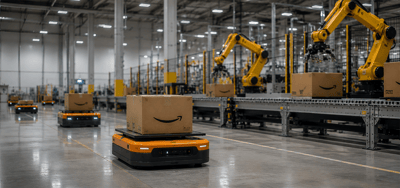
Key Points- Amazon is reportedly exploring Project Tetromino, an early-stage plan to automate delivery stations before packages reach drivers.
- The project could strengthen Amazon’s long-term logistics efficiency if robotics can reduce the cost of final-mile package handling.
- The stock remains under near-term pressure as investors weigh automation upside against capital spending, execution risk and labor scrutiny.
- Special Report: SpaceX is offering you shares. Don't take them.
Amazon.com Inc. (NASDAQ: AMZN) has built its empire on a relentless focus on doing things faster and cheaper, so news that it is quietly working to automate one of the last stubbornly manual parts of its operation should surprise no one. What may raise eyebrows is just how ambitious the plan appears to be.
The project, known internally as Tetromino, is reportedly an effort to bring AI and robotics to the final stretch of Amazon's delivery network: the complicated process of sorting packages and preparing them for the vans that carry them to customers' doors. It is precisely the kind of labor-intensive work that has so far resisted mechanization, and solving it could make the entire system significantly more efficient.
A small Colorado company has secured rights to technology that could prevent the U.S. public power grid from collapsing — and billionaire Sam Altman is now an investor.
This under-the-radar firm is drawing serious attention from those watching the energy infrastructure space closely. Click here to learn this company's name for free today The news arrives at a slightly awkward moment for the shares, which have slipped roughly 10% from the record high they reached last month and appear vulnerable to further declines. That backdrop makes the question especially relevant: Could a deeper push into automation be the kind of long-term catalyst the stock needs, or is it a distraction from more immediate concerns?
Project Tetromino Targets Amazon’s Last-Mile Cost Problem
According to reports based on an internal planning document, Tetromino aims to automate the challenging task of organizing packages and preparing them for delivery vehicles. This step still relies heavily on human labor. The document reportedly calls for a pilot facility in 2028, with the system processing packages at approximately 2.5 times the rate of Amazon's existing delivery stations.
It is important to emphasize that the project remains in its early stages, and Amazon has moved quickly to manage expectations. The company disputed the financial projections and timeline outlined in the reported internal document, describing Tetromino as a concept whose plans could change substantially. In other words, this is a glimpse of a potential direction rather than a finished blueprint.
Even so, the project fits a clear pattern. Amazon has said it expects to more than double the number of robotic arms across its network this year alone, and Tetromino would extend that effort into territory the company has not yet conquered. The ambition is unmistakable, even if the details remain unclear.
Automation Could Unlock Amazon’s Next Margin Lever
To understand why this matters for the stock, investors must consider the sheer scale of Amazon's e-commerce and logistics operation. Moving billions of packages around the world is enormously expensive, and much of that expense is tied to labor. Any reduction in the cost of handling each package can have an outsized impact when multiplied across such enormous volumes.
That is the heart of the bull case. If Amazon can automate a step that currently requires substantial manual work, it could lower its cost per package and generate more profit from its vast retail operation as volumes grow. With an installed base of more than a million robots, the company has both the scale and expertise to make automation a powerful competitive advantage.
There is a second, subtler benefit as well. A more automated network would not only reduce costs; it could also be rented out to other businesses. Amazon has been opening its logistics capabilities to outside merchants, and the more efficient that network becomes, the more profitably the company could monetize its capacity, potentially turning a cost center into a source of revenue.
Execution Risk Still Clouds the Robotics Bull Case
For all its promise, the project faces legitimate objections, beginning with the simple fact that it is far from a done deal. Automating the messy and unpredictable final steps of delivery is much more difficult than adding robots to a warehouse, and there is no guarantee Amazon will solve the problem—or that the savings will justify the cost if it does.
That raises a broader concern about spending. Amazon is pouring staggering sums into AI, robotics and infrastructure, and some investors worry that this persistent capital intensity could weigh on cash generation if the returns disappoint. Expensive equipment that fails to deliver lasting savings would be a poor trade, regardless of how impressive the technology may be.
Then there is the sensitive issue of jobs. Amazon insists that its automation efforts are designed to support workers rather than replace them. Still, reports based on internal documents suggest that greater use of robots could slow warehouse hiring over the coming decade. That will be a delicate balance to strike and could invite scrutiny as the technology expands.
AMZN Pullback Puts the Long-Term Catalyst in Focus
So what should investors make of it? On its own, a single early-stage project, however promising, will not transform a company the size of Amazon overnight. Given the disputed timeline, any meaningful benefits are years away at best.
Viewed more broadly, however, Tetromino offers a useful signal of where Amazon is headed. It underscores the company's long-term strategy of steadily reducing costs and improving efficiency across an already formidable logistics network—the kind of relentless self-improvement that has helped make Amazon so dominant.
For investors, the project is best viewed not as a reason to buy the shares today, but as a reminder of the powerful long-term forces still working in Amazon's favor. With the stock under near-term pressure, investors looking to build or add to a long-term position may have a fresh reason to be somewhat more bullish. |