Thursday, September 17, 2026 — Five stories that tell you where the power, the money, and the risk are moving: tech regulation, regional security, election-year messaging, Canada’s global pivot, and the infrastructure race behind electric freight.
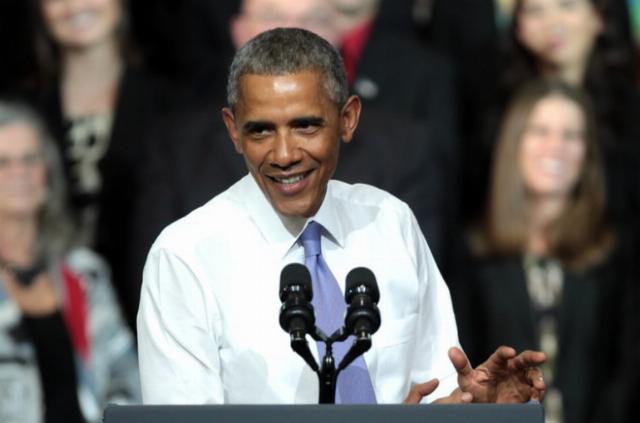
Image via American Thinker
Obama’s Back on the Mic, Selling Fear About AI
Barack Obama has resurfaced to warn America about artificial intelligence, and the tone is familiar: big talk, moral panic, and a not-so-subtle pitch for more centralized control. The pitch is dressed up as “safety” and “responsibility,” but it lands the same way his old policies did for folks who actually sign paychecks: more rules, more gatekeepers, and more power for the political class to decide what tools you can and can’t use.
AI is going to reorder office work, customer service, logistics, marketing, and even property operations. The question isn’t whether it’s disruptive. The question is who gets to harness it. If Washington responds by turning AI into a permission slip business, the winners will be the biggest incumbents with the biggest compliance departments, and everybody else will rent the future from them.
What’s missing from the fear-forward approach is the practical path: encourage competition, punish fraud, protect data, and keep the market open so small firms can adopt AI to get more productive. The conservative case should be pro-innovation and anti-monopoly, not pro-bureaucracy.
🏛 Wade's Take: Obama’s “AI fears” routine is a Trojan horse for more control, and I’ve seen this movie in real estate: the more complicated the rulebook gets, the more the little guy gets squeezed out. We should regulate outcomes like fraud and theft, not regulate tools like a nervous hall monitor. If you’re investing, bet on companies that help businesses deploy AI cheaply and safely, because the demand is real and the productivity gains are coming whether politicians like it or not.
📎 American Thinker
Rubio Works the Neighborhood: South America Allies, Drugs, and Stability
Secretary of State Marco Rubio is leaning into a hemispheric strategy built around right-leaning governments in South America, betting that stronger partnerships can blunt the flow of drugs, crime networks, and political disorder. It’s a clear shift from the usual Washington habit of talking big about “values” while letting cartels and transnational gangs expand like an unchecked wildfire.
For the U.S., this isn’t academic. Border pressure, fentanyl deaths, and urban crime are tied to supply chains that run through the hemisphere. If allied governments can coordinate enforcement, share intelligence, and stabilize their own streets, it reduces the downstream chaos that lands on American communities and budgets.
There’s also a commercial angle. Stable trading partners mean more reliable agriculture, mining inputs, and manufacturing lanes. When security improves, investment follows. When security collapses, capital flees and the U.S. ends up paying for the consequences one way or another.
🏛 Wade's Take: This is the kind of foreign policy I understand: secure the neighborhood first, then talk about the rest of the world. If cooperation reduces cartel power and improves stability, it’s a win for American families and a win for markets that hate uncertainty. The key is discipline: measurable results, real enforcement, and no blank checks to governments that can’t or won’t deliver.
📎 The American Conservative
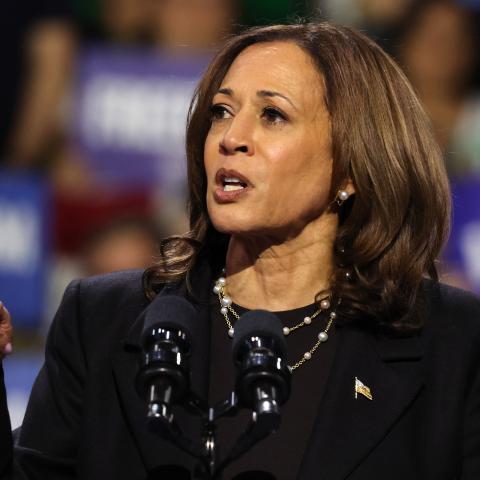
Image via Just the News
Kamala Harris Heads to Michigan to Boost El-Sayed and the Midterm Narrative
Former Vice President Kamala Harris is scheduled to campaign in Michigan alongside Democratic Senate nominee Abdul El-Sayed, centering a roundtable on disparities Black mothers face during and after pregnancy. It’s part policy spotlight, part turnout machine, and it tells you where Democrats believe they can still build a coalition: moral messaging paired with heavy institutional support.
Michigan is always a hinge state, and Senate races there tend to become nationalized fast. When a high-profile surrogate shows up, it’s less about one roundtable and more about fundraising, volunteer energy, and framing the election as a referendum on identity-driven issues rather than the cost-of-living math families do every week at the kitchen table.
None of this means the underlying health concerns aren’t real. But campaigns pick topics that mobilize voters and donors. The unanswered question is whether Democrats can keep voters focused on targeted programs while inflation, housing costs, and job security keep crowding into the conversation.
🏛 Wade's Take: When politicians lead with “disparities” talk, my antenna goes up for new spending and new mandates that rarely fix root problems. If Michigan voters want safer streets, cheaper groceries, and a shot at homeownership again, they should demand practical reforms: more doctors, more competition, fewer middlemen, and stronger family incomes. As an investor, I watch Michigan elections because they can swing regulatory and labor signals that ripple through manufacturing, logistics, and commercial real estate.
📎 Just the News

Image via The Hill
Canada Eyes EU “Associate Membership,” and That’s a Big Economic Tell
Canadian Prime Minister Mark Carney is welcoming an invitation for Canada to become the European Union’s first associate member. That’s a major geopolitical signal: Ottawa is looking for deeper institutional alignment with Europe at a moment when trade rules, defense postures, and industrial policy are getting more bloc-driven.
Associate membership isn’t just symbolism. It can shape regulatory standards, data rules, climate policy, and procurement. And if Canada starts harmonizing more of its system with Brussels, that can complicate North American business planning, especially for companies that operate across the U.S.-Canada border and rely on predictable frameworks.
For the U.S., this is a reminder that alliances and economic gravity can shift when America sends mixed signals. If our closest neighbor feels it needs a tighter European tether, Washington should read that as a competitiveness problem as much as a diplomatic one.
🏛 Wade's Take: I’m all for friends and allies, but the EU model is regulation-first and growth-second, and Canada flirting with that structure should concern anyone who wants a strong North American engine. If Canada imports more Brussels-style compliance, it raises costs that ultimately show up in prices and supply chains on our side too. The U.S. should respond by making North America the easiest place in the world to build, hire, and invest, not by copying Europe’s bureaucracy.
📎 The Hill
Tesla Partners on California Truck Charging as Electric Freight Gets Serious
Tesla is tapping Forum Mobility to build electric-truck charging stations in California, a sign that the commercial side of EV infrastructure is accelerating. Passenger EV charging is one thing. Freight charging is a different animal: bigger loads, tougher uptime requirements, tighter scheduling, and real estate constraints that make location and power access the whole ballgame.
If you’ve ever managed property or negotiated leases, you know the hidden story here is interconnection, transformers, permitting, and who pays for the utility upgrades. Truck charging needs megawatts, not nice intentions. That means developers, logistics parks, and industrial landlords are about to face a new wave of capital spending decisions and, in many cases, bargaining power shifts with utilities and local regulators.
California is pushing hard, so it’ll likely be the proving ground. If the model pencils out there, it can spread. If it doesn’t, taxpayers and ratepayers will end up backstopping “green” mandates that didn’t respect physics, timelines, or balance sheets.
🏛 Wade's Take: This is a real buildout with real money, and I respect that more than press-release politics. But the success of electric freight won’t be decided by slogans; it’ll be decided by grid capacity, permitting speed, and whether the economics work for fleets that live and die on cost per mile. If you’re investing, watch the picks-and-shovels: power management, industrial real estate near freight corridors, and companies that can deliver uptime without utility-rate shock.
📎 Reuters
That’s the map for today. Keep your eye on who’s trying to regulate the future, who’s building the infrastructure, and who’s quietly moving the trade and security lines that shape your costs back home. See you next issue — Wade Lawson, The Local Conservative
— Wade Lawson

