| Unsubscribe |
If you had $1,000,000 sitting in the stock market right now... you’d still be falling behind on basic household expenses...
Think about how insane that math is...
With the average U.S. cost of living climbing to $6,000 a month for basic needs...
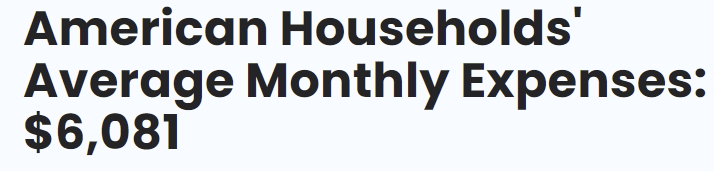
A traditional $1,000,000 portfolio generating a standard 7% annual return only produces $5,833 a month...
You could literally have a million bucks in the market... and still short $167 every single month just paying standard bills...
That’s why traditional buy-and-hold wealth building feels so broken right now...
It forces you to trade your entire life for an annual percentage point... while daily expenses demand immediate, reliable cash flow...
Researchers at Duke, Stanford, Notre Dame, and the Nasdaq Economic Advisory Board…

Have extensively studied a daily anomaly that flips this entire equation on its head.
Every afternoon at 2:00 PM Eastern, roughly $3.5 billion in net new institutional funds flood into the market...
As pension funds, 401(k) contributions, and major Wall Street firms deploy their cash before the closing bell, it creates a subtle, remarkably consistent afternoon price drift...
You don't need to guess where the market goes before the opening bell...
You don't fight time decay... and you never manage the position once you're in...
The trade goes in at 2:00 PM...
And two hours later, when the 4:00 PM closing bell rings, it’s completely over and settled automatically.
Look at what happened during a wildly volatile stretch back in June, when the Fed promised to keep interest rates higher for longer and traditional traders were getting chopped to pieces...
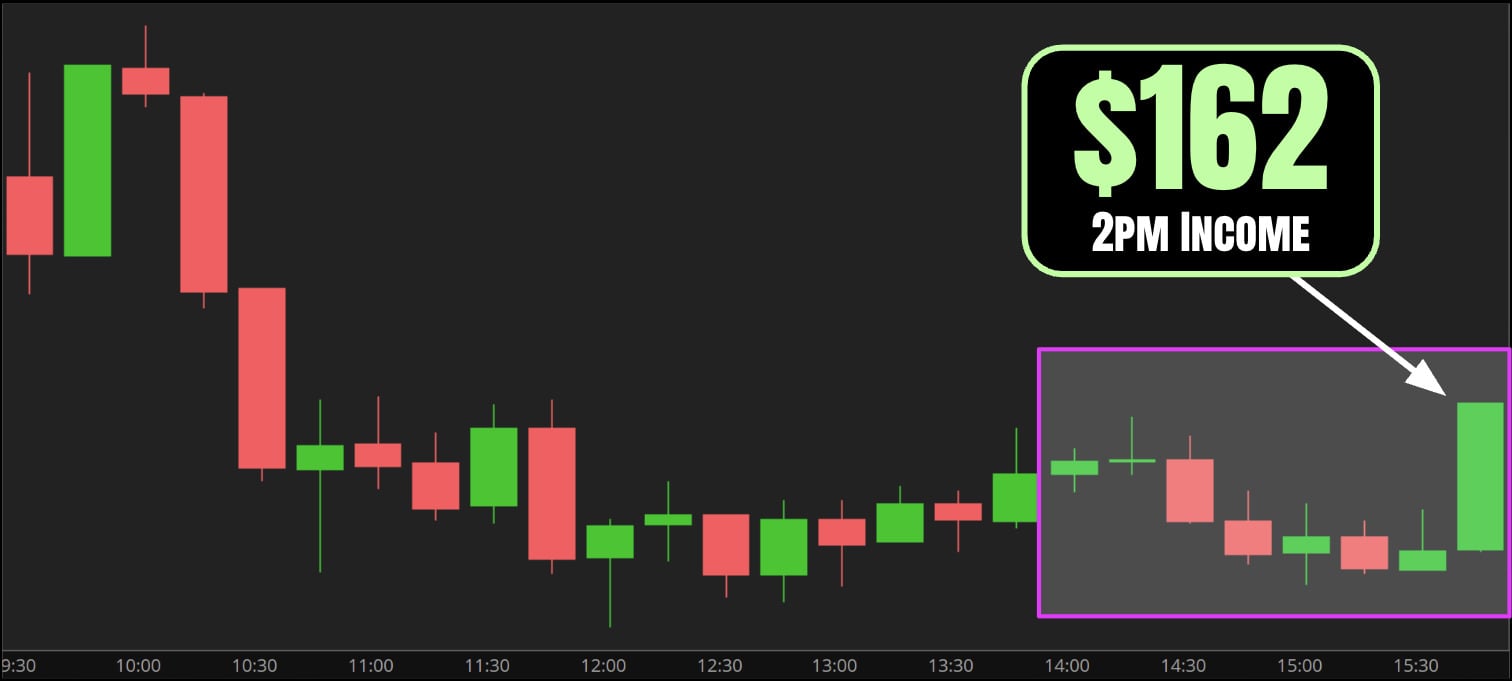
On Monday, June 22nd... anyone who set a basic $1,000 trade right at 2:00 PM watched the market chop around... yet locked in $162 by 4:00 PM…
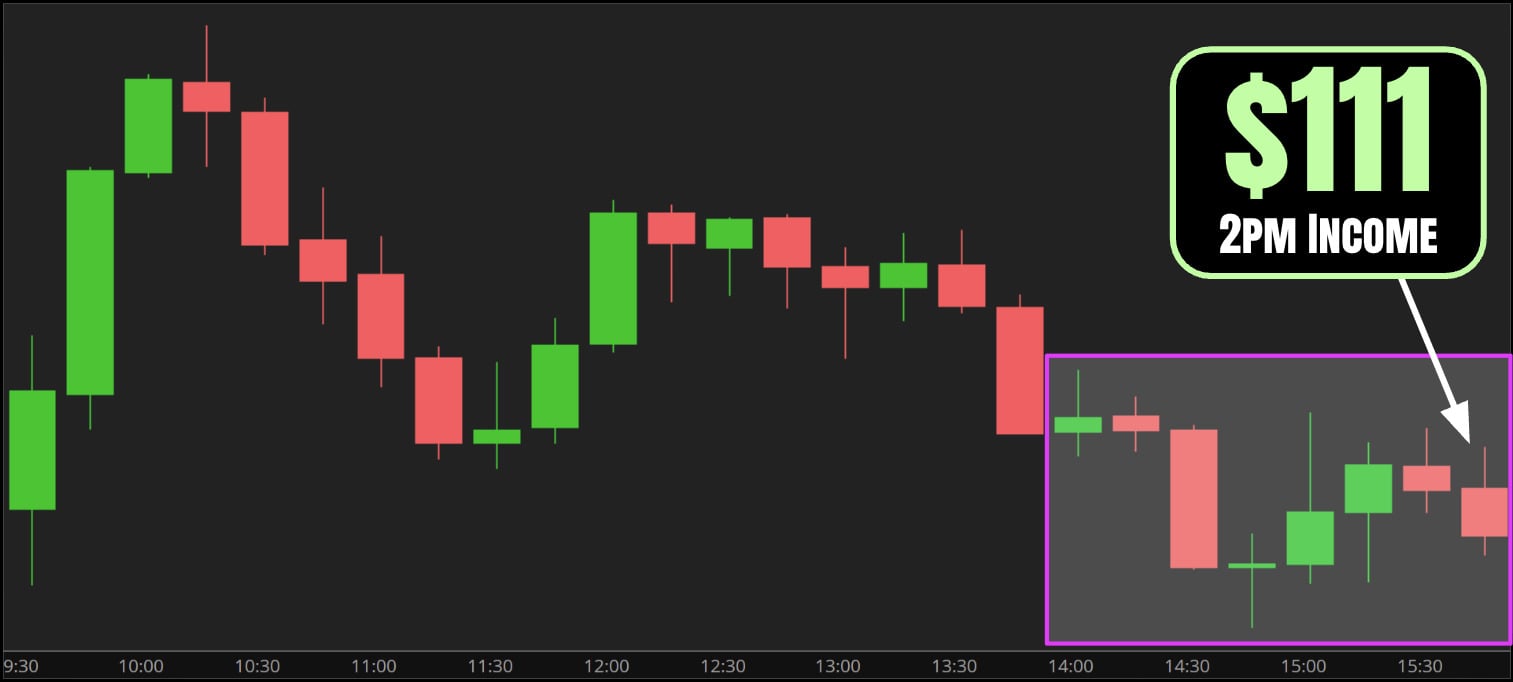
Tuesday, June 23rd... set the trade at 2:00 PM... markets slid lower... yet $111 settled into the account two hours later...
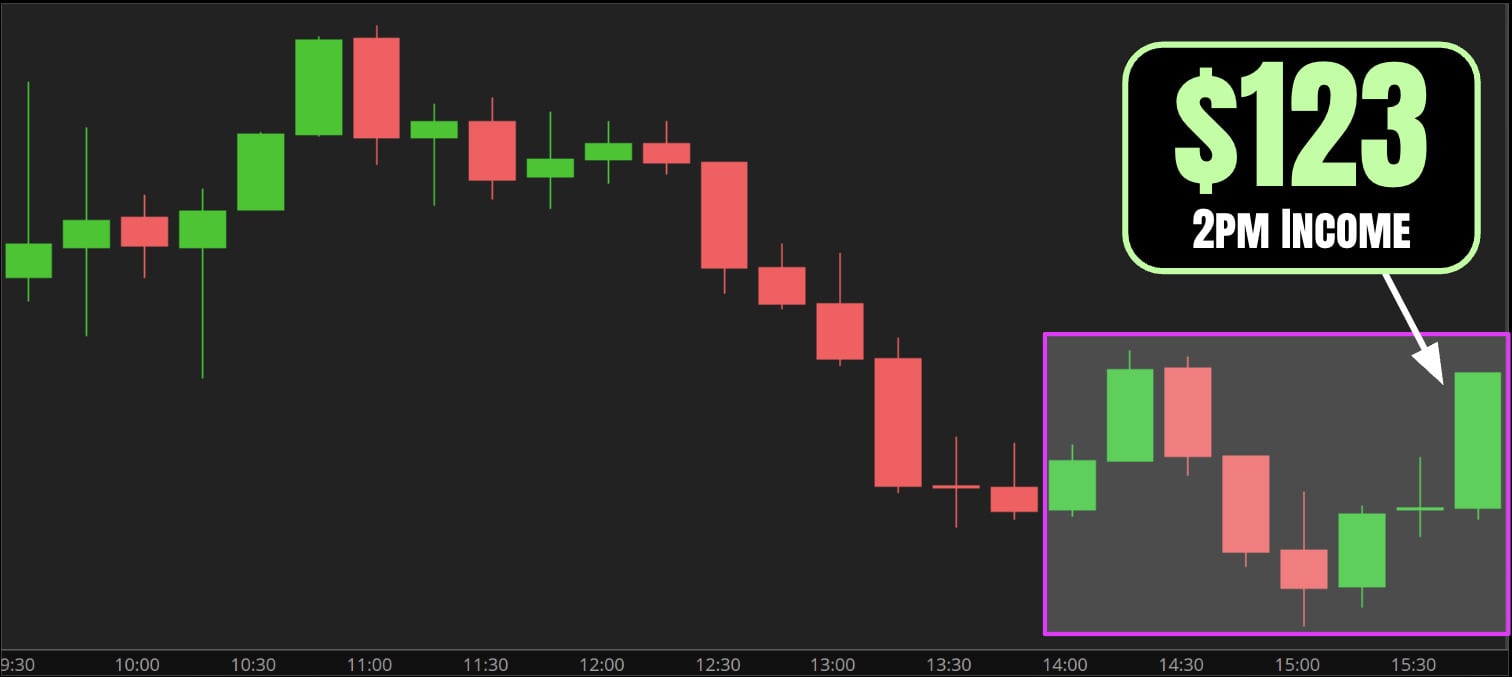
Wednesday, June 24th... $123 landed automatically by the closing bell…
Thursday, June 25th... $176 in afternoon cash flow...
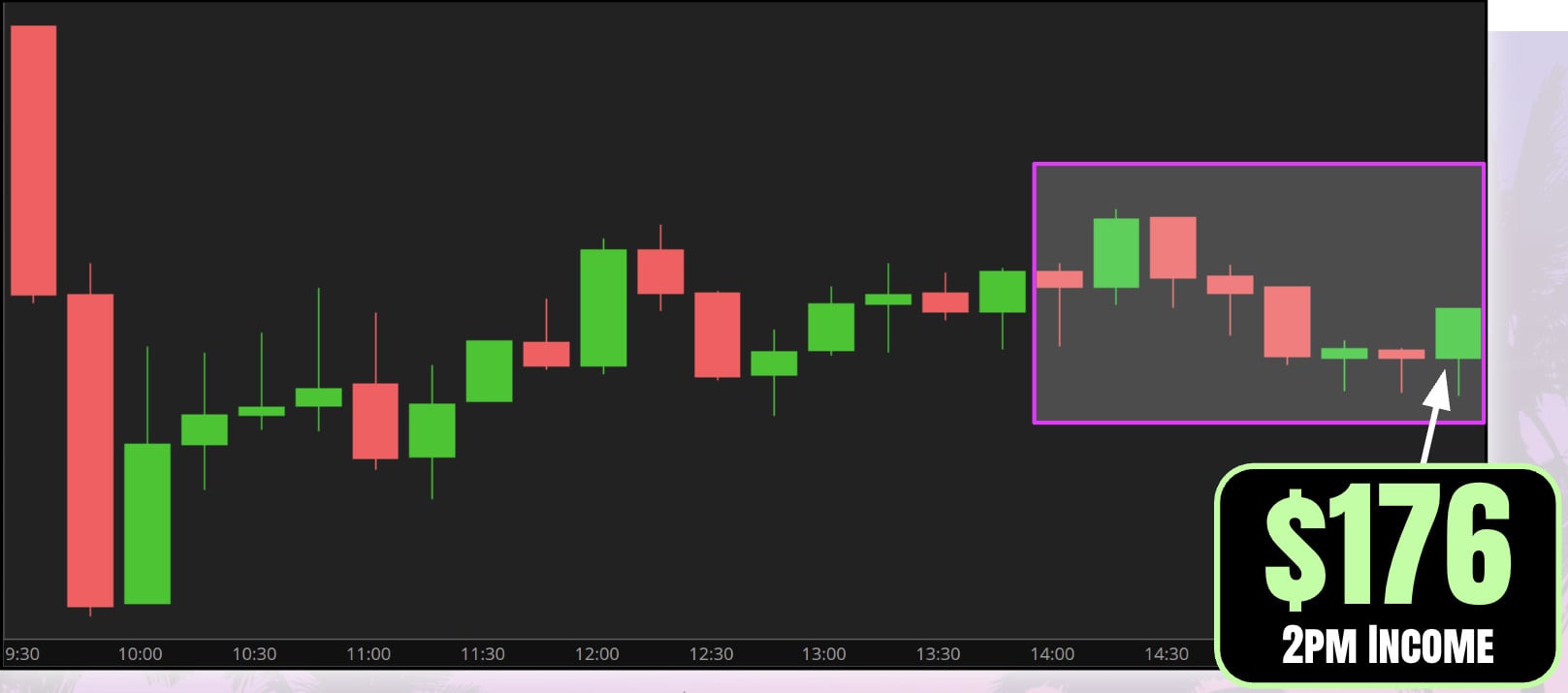
And on Friday, June 26th... as the broader market puked into the weekend, the 2 PM trade hit again for $123...
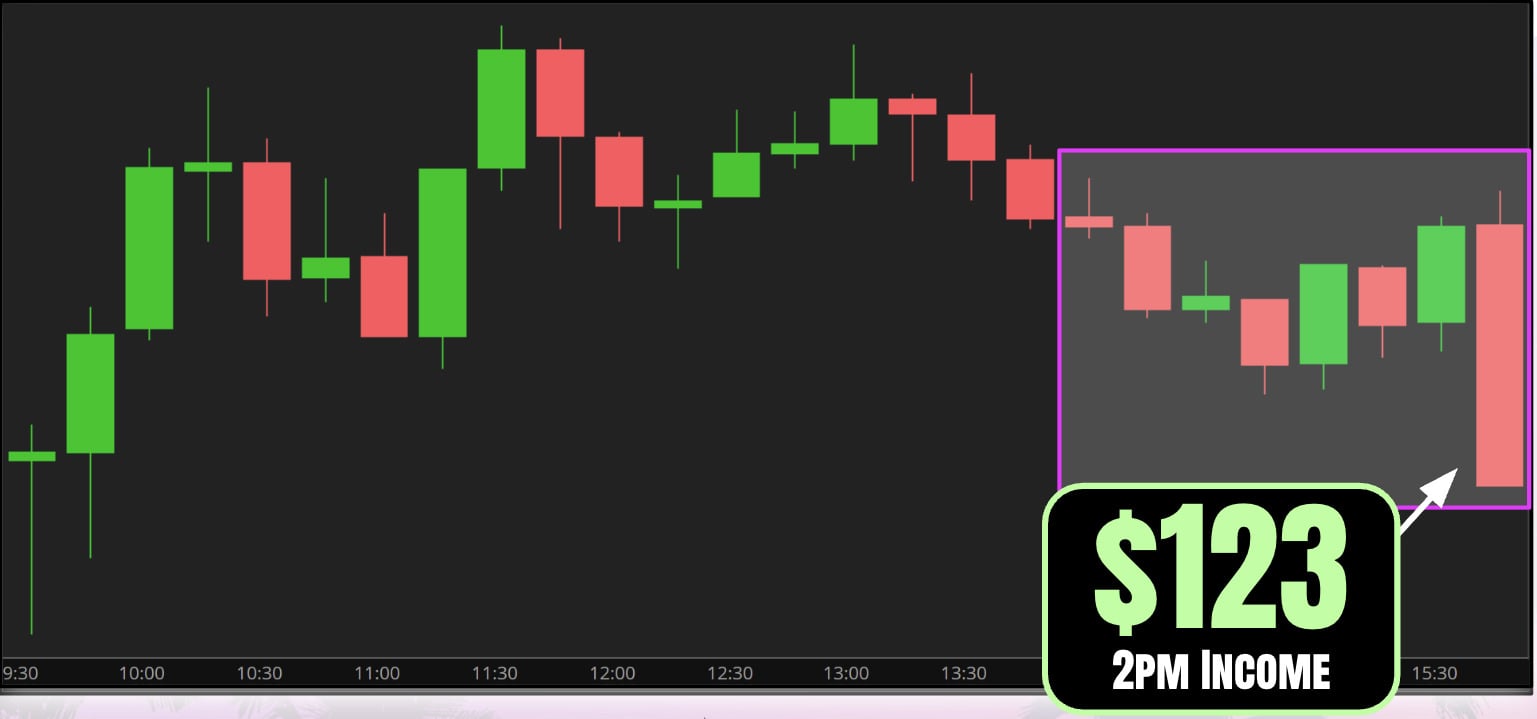
That was 5-for-5 across a single volatile week... taking about 30 seconds of execution each afternoon...
Across the entire month of June, taking one contract per trade accumulated $2,016 in net income.
For someone trading a $2,500 stake, June produced $5,04... and for a $5,000 starting position, it netted $10,083...
All from taking a few seconds at 2:00 PM Eastern... and letting the market's institutional volume settle the trade before dinner...
We are not going to be making reckless promises when it comes to trading, but…
Recently, Nate Tucci and I sat down for a private presentation to break down the exact data behind this 2:00 PM window... and how anyone with a standard brokerage account can start taking these trades.
Access to this briefing is currently public... but because we must protect trade execution quality for our community, access will be shut down without notice...
So, if you want in… Tap here to watch the complete 2 PM Income breakdown before it gets taken down.
By clicking the link above you agree to periodic updates from ProsperityPub and its partners (privacy policy)
See you inside,
Graham Lindman
Lithia’s Record Quarter Keeps the Bull Case Alive
Submitted by Peter Frank. First Published: 9/9/2026.

Key Points
- Lithia Motors reported record second-quarter revenue of $9.79 billion and adjusted EPS of $10.03, both topping analyst expectations.
- The company raised its quarterly dividend 23% to 70 cents per share and repurchased $242 million of stock while expanding its buyback authorization by $500 million.
- Analysts hold a Moderate Buy consensus with an average price target of $436.33, though risks include tariff exposure, acquisition integration, and quarterly earnings volatility.
- Special Report: Forget SpaceX. Buy the company Musk can't replace.
Car dealerships don’t get as much attention as car manufacturers, but perhaps they should.
Lithia Motors (NYSE: LAD) has grown into the largest automotive retailer in the United States, and shareholders have recently been enjoying the ride.
Jon Najarian's #1 Energy Trade for 2026 (Ad)
Jon Najarian says he's never been more excited about an energy opportunity. SpaceX just went public at over $2 trillion, with Anthropic and OpenAI preparing IPOs of their own.
But Najarian's top pick isn't an IPO. It's a small American company with a $6 billion market cap powering Elon Musk's newest venture, dubbed the Infinite Power Grid.
The full story is laid out in his newly released presentation.
Watch Jon Najarian's full breakdown of this energy trade now.The company, which operates as Lithia & Driveway, just delivered a record quarter. Shares are up nearly one-third over the past three months, and management says growth is just getting started. Analysts generally like the stock, with many recently raising their price targets.
But after a sharp run higher, investors might be wondering how much of that good news is already priced into the stock.
Autos Deliver Record Results
Founded 80 years ago, Lithia is the nation’s largest auto dealer by revenue and new-vehicle sales. From its beginnings in the Pacific Northwest, it has grown to 467 stores across the United States, Canada and the United Kingdom. The company is anchored by its Driveway online marketplace and its captive lender, Driveway Finance Corporation.
That presence was reflected in the company’s results. Second-quarter revenue, reported July 29, reached a record $9.79 billion, topping analysts’ estimates of $9.64 billion.
Adjusted diluted earnings per share (EPS) hit $10.03, up 9% from a year earlier. That compared with expectations of roughly $8.73. Management attributed the increase to steady new-vehicle margins, improving used-car profitability and a leaner cost structure. The increase came even as same-store revenue dipped slightly from 2025 levels, when tariff concerns drove a buying rush.
Overall, reported net income rose slightly to $261.6 million, while adjusted net income reached $227.6 million. That represented a margin of just 2.3%, a reminder that profit spreads remain thin in vehicle retailing, even for an industry leader. Adjusted EBITDA margin came in at a healthy 4.5%. New-vehicle margins declined to 5.9% from 6.7% a year earlier, but used-vehicle margins rose to 6.1%.
Finance Arm Helps Fuel Growth
Interestingly, one of the company’s leading growth engines is not on the sales lot at all. Driveway Finance Corporation, its in-house lending arm, originated a record $884 million in loans during the quarter, with a 17.5% penetration rate. Financing income more than doubled to $37 million.
Management has said it wants captive-finance penetration to eventually exceed 20% of vehicle sales, turning one-time transactions into recurring, countercyclical income. That ambition, paired with a long-standing goal of reducing selling, general and administrative (SG&A) expenses to below 60% of gross profit, forms the backbone of the bull case.
Returning Cash to Shareholders
Management has also been aggressive in returning cash to shareholders. The board raised the quarterly dividend 23%, to 70 cents per share from 57 cents. The company also repurchased $242 million of stock during the quarter, retiring about 3.7% of shares outstanding. A new authorization expanded its buyback capacity by another $500 million.
At an annual dividend of $2.80, the yield is less than 1%, signifying that buybacks, rather than dividends, remain management’s preferred method of returning capital.
Analysts Are Bullish But Not Unanimous
Analyst sentiment is positive but split. Coverage from 11 Wall Street firms produces a consensus rating of Moderate Buy, with an average price target of $436.33, implying upside of about 17%.
Six analysts rate Lithia a Buy, while five currently list it as a Hold. Targets ranging from a high of $500 to a low of $340 illustrate the range of expectations for the next 12 months.
Notably, six analysts have raised their targets since the earnings announcement. UBS downgraded the stock to Neutral from Buy in July, even as it lifted its price target to $440. That may signal that even the company’s supporters are debating how much good news is already reflected in the stock price.
The stock has indeed become more expensive recently, climbing about 28% over the past three months, although it is up only 13% since the start of the year. With recent prices near $373, the stock’s 52-week low came in March, when a month of tariff fears sent it as low as $239.78. Second-quarter earnings, however, had the opposite effect, propelling the stock to a recent high of $439.49 per share.
Risks Remain After the Rally
There are, of course, risks involved in the automotive sales business.
Skeptics might look back to the prior quarter, when first-quarter EPS dropped 46% to $4.28 for several reasons. The results, which missed consensus estimates, showed that Lithia’s earnings can swing from one quarter to the next.
Tariff exposure adds another concern, since much of the company’s inventory is manufactured abroad. The stock’s sensitivity to trade policy and consumer credit is therefore clear. In addition, a brisk acquisition pace, including recent dealership purchases in Oregon, Tennessee and Southern California, adds integration risk to the list of considerations.
Competition is also present despite Lithia’s leadership. The company operates alongside AutoNation (NYSE: AN), Penske Automotive (NYSE: PAG), Asbury Automotive (NYSE: ABG), Group 1 Automotive (NYSE: GPI) and online disruptor Carvana (NYSE: CVNA). All are pursuing the same buyers in a business where scale determines which companies can absorb software and financing investments.
Lithia Still Offers Upside
For investors, Lithia still looks like a reasonably priced way to own a piece of the American auto-retail business. The earnings beat, record financing income and rising dividend argue for patience with an existing stake.
The recent appointment of Scott Cooke, a 25-year Toyota Financial Services veteran, to oversee Driveway Finance might also signal that management is doubling down on its lending arm as the next chapter of growth.
But the industry tends to be cyclical, and operating leverage is a cost of doing business. The ride appears smooth for now, but the economy and interest rates can make any auto trip bumpy.
Feed to Feat: Can Meta Unlock the AI Agent Cash Machine?
Submitted by Jeffrey Neal Johnson. First Published: 9/11/2026.

Key Points
- Meta Platforms launched Muse, an autonomous personal agent that executes tasks like scheduling, travel planning, and bill payment rather than just generating text.
- The company built security safeguards, including isolated virtual machines, a Sentinel monitoring agent, and Stripe-powered virtual cards, to protect users who adopt Muse.
- Analysts hold a Moderate Buy consensus on Meta with an average price target of $787.54, as Muse's subscription model could diversify revenue beyond advertising.
- Special Report: Forget SpaceX. Buy the company Musk can't replace.
For years, investors have wondered how social media leaders would convert their substantial artificial intelligence spending into high-margin, recurring software revenue.
Meta Platforms, Inc. (NASDAQ: META) offered a tangible answer with Muse, a newly introduced autonomous personal agent designed to handle complex daily workflows.
Jon Najarian's #1 Energy Trade for 2026 (Ad)
Jon Najarian says he's never been more excited about an energy opportunity. SpaceX just went public at over $2 trillion, with Anthropic and OpenAI preparing IPOs of their own.
But Najarian's top pick isn't an IPO. It's a small American company with a $6 billion market cap powering Elon Musk's newest venture, dubbed the Infinite Power Grid.
The full story is laid out in his newly released presentation.
Watch Jon Najarian's full breakdown of this energy trade now.Rather than delivering another chatbot that produces blocks of text, this deployment marks a clear pivot from an advertising-dependent attention model toward functional execution software.
Investors following the technology industry are beginning to recognize that the software release could challenge traditional business models across Silicon Valley.
Beyond the Chatbox: Why Muse Does the Heavy Lifting
Most generative AI products operate as passive conversation partners. A person submits a query, and a large language model produces an answer or generates an image. Meta designed Muse to change that dynamic by executing actions directly in the digital space. Operating on the custom Muse Spark model, the agent organizes calendars, coordinates multi-city travel schedules, negotiates bills, and fills out forms across the web.
Instead of requiring constant oversight, Muse works in the background and prompts users when financial commitments or communications require formal approval. This shift moves the consumer relationship from manual search navigation to delegated management.
By evolving machine learning into an applied personal utility, Meta addresses persistent sources of daily friction for consumers. For shareholders, the release suggests that the money Meta has poured into specialized computing infrastructure is beginning to translate into commercially productive software that can expand the company’s footprint.
The Virtual Vault: How Secure VMs Protect Your Wallet
Integrating autonomous software into personal routines introduces security challenges. Entrusting algorithms with personal emails, account credentials, and bank information requires dependable data protection. Meta has addressed this concern by building an architecture designated as the Muse Secure VM.
Every user receives an isolated, cloud-based virtual machine with a dedicated browser instance. This sandboxed computer separates personal information from general web traffic. A dedicated security layer, known as the Sentinel agent, supervises the operating environment. Sentinel monitors outgoing network requests and blocks sensitive actions until the user provides explicit consent.
Payments are another pillar of the deployment. Meta Platforms partnered with Link by Stripe to conduct transactions through single-use virtual cards. This mechanism shields personal card numbers from merchants while providing automatic price protection and coverage for lost shipments.
Compatible integrations with credential managers such as 1Password allow the agent to access accounts without ever viewing users’ passwords. User data and activity within these virtual machines also remain separate from Meta’s digital advertising engines. That firewall between utility software and advertising operations provides the assurance necessary to encourage everyday use.
Skipping the Enterprise Queue: 3 Billion Direct Connections
Most business-software companies face lengthy sales processes. Securing institutional software-as-a-service contracts often takes nine to 18 months of IT reviews, security audits, and board-level budget approvals. Meta circumvents these commercial barriers by distributing Muse directly across its consumer network.
With more than three billion daily active people across its portfolio, Meta plans to deploy Muse through WhatsApp, Instagram, and web browsers. This immediate distribution could produce an exceptionally low customer acquisition cost (CAC). Rather than maintaining a large corporate sales organization, Meta can bring agent workflows directly to consumers where they already spend time.
This consumer-first strategy spells trouble for established search operators. Shares of Alphabet Inc. (NASDAQ: GOOGL) slipped around 2% following the Muse product debut. Search engines make money when users browse sponsored search links to find services or products.
When an autonomous agent gathers product details, evaluates prices, and completes transactions directly, it bypasses the search results page entirely. That behavioral shift creates headwind risks for search ad inventory while positioning Meta as an essential transaction hub.
From Feeds to Fees: Moving From Ad Fluctuations to SaaS
The market has historically valued Meta as an advertising business, applying a modest valuation multiple because of cyclical trends in ad spending. The company trades at a forward price-to-earnings (P/E) ratio of approximately 23 and a trailing P/E ratio of 25, with a price/earnings-to-growth (PEG) ratio of roughly 1.07.
Muse introduces paid subscription options alongside its baseline free tier, unlocking advanced tools for active users. Converting just 1% to 2% of the active user base into paying subscribers at $10 to $20 per month could generate billions of dollars in recurring software cash flow. Layering steady subscription revenue on top of advertising sales could justify multiple expansion toward the valuations of enterprise cloud peers, which often command forward multiples above 30 times earnings.
Prudent investors should account for operational headwinds. Provisioning dedicated cloud virtual machines for millions of users involves significant hosting and inference expenses. Those computing requirements could compress short-term margins before subscription revenue gains traction.
Consumer subscriptions also tend to experience higher churn rates than corporate software agreements. Meta’s recent quarterly filings showed year-over-year (YOY) top-line growth of about 28%, accompanied by an earnings shortfall tied to higher infrastructure outlays. Monitoring how effectively the executive team aligns computing expenses with subscription inflows will be central to the long-term thesis.
Charting the Pivot: Tracking the Next Software Frontier
Wall Street sentiment remains constructive on Meta’s long-term business model. Among 47 covering analysts, the consensus rating stands at Moderate Buy, with an average 12-month price target of $787.54, suggesting potential appreciation of roughly 20%. The $1,000 street-high price target signals strong institutional confidence in the software roadmap.
Investors interested in the technology sector may want to monitor early adoption rates and subscription conversions as Muse expands. Cautious investors might look for pullbacks toward recent support levels to assess risk-reward dynamics as Meta bridges the gap between ad-supported digital networks and recurring software execution.
This email content is a sponsored message provided by ProsperityPub, a third-party advertiser of Earnings360 and MarketBeat.
From 5/22 to 7/22 the backtested win rate was 90% with an average return net of winners and losers of 10% daily on risk, and the average winner paying $168 based on $1k starting stake. Every example is based on that same starting investment unless otherwise stated. The method has been traded live since July 15th, 2026 which you will see some real time examples of today. Through the first six weeks of the beta testing, it’s hit with a 94.7% win rate on LIVE trades with a 14.4% average return daily - net of winners and losers.
If you have questions about your newsletter, don't hesitate to email MarketBeat's U.S. based support team at [email protected].
If you no longer wish to receive email from Earnings360, you can unsubscribe.
Copyright 2006-2026 MarketBeat Media, LLC.
345 North Reid Place #620, Sioux Falls, S.D. 57103-7078. United States..