European gas storage sits near 67% capacity, below EU targets, as shipping constraints tighten supply. Equinor, Cheniere Energy, and Shell... ͏ ͏ ͏ ͏ ͏ ͏ ͏ ͏ ͏ ͏ ͏ ͏ ͏ ͏ ͏ ͏ ͏ ͏ ͏ ͏ ͏ ͏ ͏ ͏ ͏ ͏ ͏ ͏ ͏ ͏ ͏ ͏ ͏ ͏ ͏ ͏ ͏ ͏ ͏ ͏ ͏ ͏ ͏ ͏ ͏ ͏ ͏ ͏ ͏ ͏ ͏ ͏ ͏ ͏ ͏ ͏ ͏ ͏ ͏ ͏ ͏ ͏ ͏ ͏ ͏ ͏ ͏ ͏ ͏ ͏ ͏ ͏ ͏ ͏ ͏ ͏ ͏ ͏ ͏ ͏ ͏ ͏ ͏ ͏ ͏ ͏ ͏ ͏ ͏ ͏ ͏ ͏ ͏ ͏ ͏ ͏ ͏ ͏ ͏ ͏ |
| | Written by Jeffrey Neal Johnson 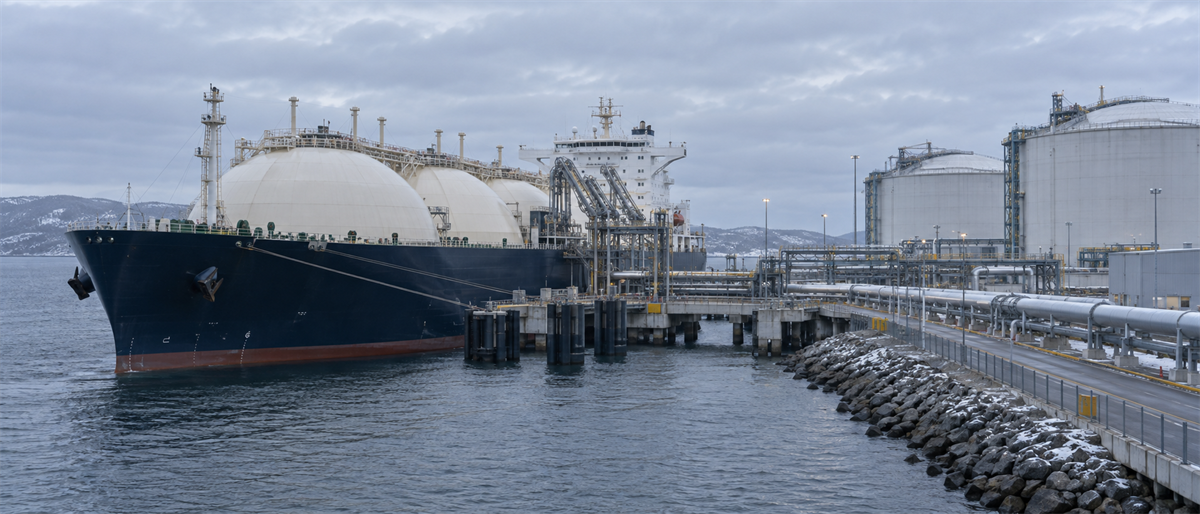
European natural gas inventories entered mid-September at approximately 67% of total capacity, well below the European Union target of 90% before winter. That deficit leaves power utilities and industrial factories vulnerable to sudden price spikes if an early cold front arrives.
Shipping delays and geopolitical tensions around the Strait of Hormuz continue to restrict deliveries from the Persian Gulf, closing off flexible spot relief. As transatlantic price spreads widen, producers with uncommitted pipeline networks and destination-flexible export cargoes are positioned to generate dependable cash flow. Investors tracking the energy sector can look toward three established producers supplying fuel where it is needed most.
Cold Storage: 67% Capacity Leaves Europe Out in the ColdEuropean underground gas storage sites held approximately 67% capacity heading into late September, representing around 772 terawatt-hours of stored energy. This volume trails the five-year seasonal average by roughly 17 percentage points, creating a shallow buffer before seasonal heating withdrawals begin in October. Refilling these underground caverns to meet official safety margins requires substantial import volumes, even as global supply remains tightly allocated.
Regional benchmark contracts reflect this tighter balance. Prompt month Dutch Title Transfer Facility (TTF) contracts trade between 55 euros and 60 euros (approx. $61 to $67) per megawatt-hour. In the United Kingdom, National Balancing Point contracts have advanced past 201 pence (approx. $2.65) per therm.
Shipping bottlenecks and extended force majeure declarations on Qatari export cargoes limit spot deliveries to European terminals. European utilities must compete against Asian buyers for uncommitted volumes, creating wide arbitrage opportunities for transatlantic and North Sea producers.
Equinor ASA: Tapping Norway's Direct Line to European CashAs Western Europe's leading direct pipeline supplier, Equinor ASA (NYSE: EQNR) occupies an advantageous position across the regional gas grid. Operating on the Norwegian continental shelf, Equinor transports dry natural gas directly into Northwestern Europe through underwater pipelines.
Because these deliveries move through fixed subsea pipes, Equinor avoids the liquefaction, marine freight, and regasification expenses that burden ocean-going tankers, allowing continental spot-price gains to flow straight to operating earnings.
Equinor shares trade around $45.70, up about 94% year to date. Valuation multiples remain contained, with a trailing price-to-earnings (P/E) ratio of approximately 12.5 compressing to a forward P/E of roughly 8.7. The company generates an operating cash flow of around $6.54 per share and maintains a conservative debt-to-equity ratio of 0.56, supported by a current ratio of 1.18.
Operating efficiency is evident in a pretax margin of 29.02% and a return on equity (ROE) of 23.60% on annual revenue of around $106.46 billion. Trailing 12-month net income reached approximately $5.04 billion. While the average analyst price target sits near $39.20, recent brokerage updates, including an increase in future earnings estimates by Erste Group, suggest analysts are adjusting forward models to reflect higher commodity realizations. Equinor expanded its share buyback program on Sept. 15, lifting treasury holdings to 0.81% while supporting a dividend yield of around 2.8%.
Cheniere Energy: Sailing Across the Pond With Premium U.S. FuelAcross the Atlantic, Cheniere Energy, Inc. (NYSE: LNG) serves as the primary export gateway for North American liquefied natural gas heading to European terminals. Through its Sabine Pass facility in Louisiana and Corpus Christi operations in Texas, Cheniere purchases domestic feedgas at Henry Hub pricing and processes it into export cargoes. When European gas trades at elevated premiums relative to domestic U.S. supply, Cheniere captures significant margins on uncontracted export volumes.
Cheniere demonstrated this operating leverage in its second-quarter earnings report, increasing revenue 23.5% year over year (YOY) and generating quarterly earnings per share (EPS) of $3.02.
Annual revenue totals approximately $21.49 billion, producing net income of roughly $5.33 billion, a net margin of 13.57%, and an ROE of 29.80%. Operating cash flow stands near $17.50 per share, leaving the price-to-cash flow ratio around 15.6.
Cheniere trades near $273 per share, with a forward P/E of around 17 versus a trailing P/E of 20. Wall Street analysts maintain a Moderate Buy consensus on the company, with an average price target of $305.65 across 20 research firms. An active $10 billion share repurchase program authorized in February 2026 supports balance sheet flexibility, allowing the retirement of up to 21.1% of outstanding shares.
International reliance on Cheniere's export terminals was underscored recently by commercial talks with QatarEnergy to secure long-term cargo agreements through 2031, demonstrating how global buyers look to Gulf Coast infrastructure for baseline fuel supplies.
Shell Plc: Steering Global Cargoes Into Europe's Deep PocketsGlobal energy producer Shell plc (NYSE: SHEL) pairs worldwide upstream production with an expansive liquefied natural gas trading desk. This network lets Shell redirect destination-flexible vessels across oceans, sending cargoes directly to European terminals, where prompt gas prices trade at the highest levels.
Shell shares trade around $99 with a total market capitalization near $276.5 billion. The valuation profile includes a trailing P/E of 10.9 and a forward P/E of about 9.1, accompanied by a price-to-cash flow ratio of 6.3 based on $15.70 per share in operating cash flow. Annual revenue sits near $296.60 billion, producing net income of around $17.84 billion and a net margin of 8.55%. Shell maintains balance sheet discipline, carrying a debt-to-equity ratio of 0.36 and a current ratio of 1.43.
Capital allocation remains focused on high-return gas and deepwater projects. On Sept. 10, Shell agreed to sell its interest in the Rhode Island State Energy Center to Constellation Energy (NASDAQ: CEG) for $715 million, divesting domestic power generation to focus capital on integrated gas operations. For income-seeking investors, Shell provides a dividend yield of about 3.16%, supplemented by an ongoing $3.5 billion share repurchase plan.
Weathering the Storm: Balancing Winter Heat Against Downside FreezeLow continental storage inventories and persistent international shipping constraints create a supportive backdrop for export-oriented energy suppliers. Even so, energy investing requires careful consideration of the risks.
Weather conditions remain the leading variable, because an unusually mild winter across Europe would reduce household heating demand, allowing storage inventories to normalize without sharp price rallies. European governments could also intervene with emergency caps on wholesale gas prices, or industrial manufacturing could slow output if electricity costs rise too quickly.
Investors evaluating the energy sector can approach this landscape based on specific portfolio objectives. Cheniere provides targeted exposure to transatlantic export margins, while Equinor and Shell offer lower valuation multiples, disciplined debt levels, and recurring shareholder distributions. Cautious investors might monitor early-winter weather and weekly storage withdrawal data throughout October before adding to existing positions.
 Read This Story Online Read This Story Online |  MI6 Software tracks a proprietary signal that flags the market's fastest-moving stocks, delivering every trade detail in one click.
Past trades turned $1,000 into $1,580, $1,807, and even $2,250 in under two hours - though results vary and not every signal wins.
Right now you can claim the next 1,000+ signals free, along with a full breakdown on exactly how to use them. Claim your free access to the next 1000 trade signals now |
| Written by Jessica Mitacek 
When it comes to investing, there is no one-size-fits-all approach. Strategies vary based on numerous factors, including but not limited to investors’ risk tolerance, net worth, and age. When it comes to stock-picking, that last one is important.
Conventional wisdom says that younger investors with longer horizons should focus on decades of exposure to growth stocks. Middle-aged investors may want to reduce their risk profile while seeking out a combination of growth and yield. Older investors tend to home in on income generation.
While higher-volatility growth sectors like tech and communication services don’t necessarily fit the bill, some sectors offer something for every investor regardless of their age. The healthcare sector is one of those. And after an unremarkable start to the year, that corner of the market has been on a tear in the second half.
Healthcare’s mix of high-growth drugmakers, defensive operators, and reliable dividend payers gives investors several ways to participate in the sector’s recent strength.
For Young Investors: Eli Lilly
Eli Lilly (NYSE: LLY), which was founded in 1876, may not be the first thing to come to mind when younger investors think of growth stocks.
Eli Lilly is the largest member of Big Pharma and the only one with a valuation north of $1 trillion.
But because of its dynamic portfolio of diabetes, cancer, Alzheimer’s, and obesity drugs, it acts like a growth stock.
Its lineup of obesity treatments is a particular driver of that growth. The company makes injectable Zepbound and Foundayo, a daily oral tablet for chronic weight management.
So far this year, LLY has underperformed the market. But since its year-to-date (YTD) low on April 29, shares have rallied nearly 34%. Over the past five years, the stock has gained around 390%.
Eli Lilly provides a modest dividend that yields 0.61%, or $6.92 per share annually, and has increased that payout for 11 consecutive years, with a five-year annualized growth rate of 15.18% and a healthy and sustainable payout ratio 23.22%.
While some of the GLP-1 growth is likely priced into the stocks of companies providing those drugs, there are years of increasing demand ahead for the industry. Grand View Research forecasts that the global obesity treatment market will undergo a compound annual growth rate (CAGR) of 22.3% from 2025 to 2030, while the global GLP-1 weight loss drug market will see an 18.5% CAGR during the same period.
Of the 30 analysts currently covering LLY, 25 assign it a Buy rating. Overall, the stock receives a consensus Moderate Buy rating and an average 12-month price target that suggests as much as 14% potential upside.
For Middle-Aged Investors: UnitedHealth Group
UnitedHealth Group (NYSE: UNH) has had a well-documented turnaround.
After shedding more than 60% from April 11, 2025, to its five-year low on Aug. 1, 2025, the stock has regained more than more than 60% since, including a market-beating 14% YTD performance so far in 2026.
The company’s Medicaid performance is improving. UnitedHealth expects margins closer to 1.1% loss rather than the previous 1.7% loss it projected, while management still expects 2026 to be the trough before moving toward breakeven or profitability in 2027
Regarding Medicare Advantage, CFO Wayne DeVeydt has said UnitedHealth’s first-half performance supported its expectation of landing in the upper half of its previously stated 2% to 4% margin range for the year.
Importantly, after its difficult 2025, the company has posted four consecutive earnings beats, and after reporting Q2 results on July 16, management raised full-year 2026 outlook to adjusted earnings per share (EPS) of $19.50 to $20 and higher operating earnings for both UnitedHealthcare and Optum Health after a stronger-than-expected quarter.
Of the 27 analysts covering UNH, 21 assign it a Buy rating. Overall, the stock receives a consensus Moderate Buy rating and an average 12-month price target that suggests more than 19% potential upside.
For middle-aged investors, its worth nothing that the that growth is combined with a steady dividend, which UnitedHealth has increased for 15 consecutive years. It yields 2.42%, or $9.28 per share annually. And while the payout ratio of nearly 60% could be a concern, UNH’s annualized five-year dividend growth rate is 12.57%.
For Older Investors: Johnson & Johnson
As far as healthcare stocks go, Johnson & Johnson (NYSE: JNJ) is often considered an ideal fit for an income investor’s portfolio.
Having achieved Dividend King status 14 years ago, JNJ yields 2.03%, or $5.36 per share annually.
Its payout ratio of 62.11% is somewhat elevated and its five-year annualized dividend growth rate of 5.25% isn’t as impressive as the other two stocks on this list.
But JNJ is the quintessential steady portfolio compounder. In addition to its dividend, the stock has posted a 28% YTD gain, and over the past five years, shares are up nearly 60%.
That combination of growth and reliable yield makes it a rarity in a defensive sector like healthcare, offering older investors the best of both worlds.
Of the 25 analysts currently covering JNJ, 19 assign it a Buy rating. Overall, it receives a consensus Moderate Buy rating alongside an average 12-month price target that suggests around 3.5% potential upside.
Read This Story Online |  Trump just signed a law requiring America's entire $382 trillion financial system to migrate to a new money network by April 2027. BlackRock CEO Larry Fink already calls it 'the next major evolution in market infrastructure.'
Our research has identified one small, overlooked position at the center of this policy-driven shift - already drawing quiet institutional buying from BNY Mellon, State Street, and JPMorgan. It currently trades for pennies relative to where institutional demand could push it. The Q3 2026 compliance deadline may be the last window before prices move. Click here to see the full research and the position name |
| Written by Jeffrey Neal Johnson 
Cross-border consolidation in the cannabis industry has moved from executive speculation into aggressive dealmaking. As regulatory hurdles begin to clear across North America and Europe, operators are moving quickly to strengthen their finances and expand globally.
Curaleaf Holdings, Inc. (OTCMKTS: CURLF) bypassed management resistance and took an acquisition proposal directly to Aurora Cannabis Inc. (NASDAQ: ACB) shareholders. By offering a cash-and-stock package valued at about $4 per share, Curaleaf is attempting to build an international commercial footprint spanning 17 countries.
For investors tracking capital flows and federal policy changes, this hostile bid signals that the era of fragmented regional cannabis operators may be coming to a close. The proposed deal also shows how industry leaders are using their financial strengths to gain scale ahead of expected federal reforms.
Curaleaf Goes to the GrassrootsThe deal commenced when Curaleaf went public with its formal tender offer, appealing directly to equity holders after private merger discussions stalled. The proposal offers 0.3463 Curaleaf common shares and 75 cents in cash for each Aurora Cannabis share tendered. Based on Aurora Cannabis's unaffected 30-day volume-weighted average price (VWAP) of $2.76 on Aug. 10, 2026, the bid implies a $4 per-share purchase price, a 45% acquisition premium.
Shareholder friction escalated on Sept. 14, 2026, when Curaleaf filed an application with the Alberta Securities Commission seeking an order to cease trading or halt Aurora Cannabis's active at-the-market (ATM) equity distribution facility. Curaleaf contends that Aurora Cannabis leadership is using continuous share issuances as a defensive maneuver to dilute voter concentration and entrench management.
Over recent years, Aurora Cannabis has raised more than $400 million through equity offerings, selling shares as low as $2.60 during July 2026. Curaleaf Chairman Boris Jordan scheduled an open shareholder webcast for Sept. 17, 2026, to present the strategic case directly to investors ahead of the Dec. 1, 2026 tender expiration.
Merging High Sales With Low LeverageBeneath the boardroom fight lies a compelling balance-sheet transaction. Curaleaf operates at substantial scale in the domestic market, recording annual net revenue of about $1.27 billion. In its latest quarterly report, the company delivered $340.1 million in revenue and 5 cents in adjusted earnings per share, outperforming consensus estimates. Continued expansion in state-level retail has left Curaleaf with a debt-to-equity ratio of 1.06 and an operating cash flow of 17 cents per share.
In contrast, Aurora Cannabis provides a cash-rich, low-leverage balance sheet. The company has a minimal debt-to-equity ratio of 0.03 and a current ratio of 5.36, along with a book value of $6.27 per share. Despite these balance-sheet buffers, Aurora Cannabis faces operational headwinds, including an annual revenue base of about $247.82 million, a negative net profit margin of 32.26%, and multi-quarter top-line contraction.
Acquiring Aurora Cannabis allows Curaleaf to absorb liquidity at roughly 0.60 times book value. Pro-forma estimates indicate the merged organization would generate more than $1.5 billion in annual revenue and approximately $350 million in adjusted EBITDA. Eliminating duplicative public listing expenses, centralizing supply chain logistics, and streamlining corporate overhead targets at least $40 million in annualized cost efficiencies and operational savings.
German Exports Meet American ReformThe timing of this takeover bid aligns with regulatory tailwinds in both North America and Europe. In the U.S., administrative momentum surrounding the reclassification of cannabis under Schedule III of the Controlled Substances Act promises to eliminate Internal Revenue Code Section 280E.
This federal tax provision prevents cannabis operators from deducting ordinary business expenses, frequently pushing effective corporate tax burdens above 70%. Removing Section 280E will immediately expand Curaleaf's cash flow, easing the capital required to fund the 75-cent cash component of the tender offer.
Simultaneously, Aurora Cannabis provides a turnkey medical export platform that US operators cannot build domestically under existing federal restrictions. The firm holds established distribution agreements across mature medical markets, including Germany, the United Kingdom, Poland, and Australia.
Following recent German medical cannabis reforms that simplified patient prescription procedures, demand for standardized pharmaceutical-grade imports has expanded significantly. Merging Curaleaf's domestic retail presence with Aurora Cannabis's international commercial network provides immediate access to European healthcare channels.
The Green Spread: Why MSOS Call Volume Points to a Re-RatingPublic market pricing reflects growing confidence in cross-border consolidation. With Aurora Cannabis shares trading near $3.80, the stock sits at a narrow 5% spread below the implied $4 acquisition price. This tight arbitrage spread suggests the market anticipates either successful deal completion or a sweetened bid from the acquirer.
Institutional sentiment is also visible across sector exchange-traded funds. AdvisorShares Pure US Cannabis ETF (NYSEARCA: MSOS) saw a sharp surge in derivatives positioning, logging daily volume of 52,583 contracts. Options flows showed extreme call-side skew, with 46,416 call options trading against only 6,167 put options, creating an 88.3% call ratio.
Because Curaleaf accounts for about 21.6% of the underlying fund exposure through direct stock and swap contracts, institutional desks appear to be utilizing the ETF to position for broader valuation re-ratings. Elevated short interest of roughly 9.79 million shares adds fuel for a potential short-covering advance if consolidation gains momentum.
Pruning Out the Risk and Weighing the UpsideInvestors monitoring the cannabis sector should view this hostile bid as a catalyst for widespread industry realignments. Aurora Cannabis shareholders must weigh the possible liquidity of a 45% premium against management's standalone turnaround timeline before the Dec. 1, 2026 deadline. Immediate investor focal points include the Sept. 17 executive Q&A, the impending Alberta Securities Commission ruling on the ATM facility, and upcoming quarterly corporate filings.
While integration challenges and potential regulatory delays in cross-border approvals remain risks, the commercial logic of combining scale, international reach, and balance-sheet liquidity is difficult to dismiss. Investors seeking exposure to sector-wide consolidation might consider Curaleaf for its established market presence, or monitor Aurora Cannabis to evaluate event-driven arbitrage spreads. Those desiring broader exposure without single-operator regulatory risk may look to add diversified funds like the AdvisorShares Pure US Cannabis ETF on minor price pullbacks as federal policy shifts unfold.
Read This Story Online |  In 2016, major election models gave Hillary Clinton a 99% chance of winning - but former CIA and Pentagon adviser Jim Rickards publicly predicted a Trump victory before election night.
Now Rickards is issuing a new forecast he calls a potential mid-term meltdown, one he believes could send shockwaves through financial markets. See Jim Rickards' full market warning and what it means for your portfolio |
| More Stories |
| |
|
|