 A Message From Porter & Company Editor’s Note: Make time for this today – Porter’s explosive new documentary exposes the President’s plans to replace the U.S. dollar. If you have retirement savings, a stock portfolio, or a family depending on you financially, you need to watch it right now.
In the early 19th century, whale oil was among the most valuable commodities on Earth. It lit the lamps of America. It lubricated the machines of the Industrial Revolution. Entire coastal economies like New Bedford, Nantucket, and New London thrived because of it. The scarcity was real. Whales were finite after all – and the expertise to hunt them, process them, and bring the oil to market took decades to develop. That scarcity underpinned an entire monetary ecosystem. Then in 1859, Edwin Drake struck oil in Titusville, Pennsylvania. Kerosene arrived. It was cheaper, more abundant, and much more powerful. The whalers didn't disappear overnight. The compression was gradual – and then suddenly catastrophic. Within two decades, the whaling industry had effectively collapsed. The scarcity hadn't disappeared. It had migrated. And the fortunes built on whale oil migrated with it – to the men who understood where scarcity had moved. This is what a great repricing looks like. A friend of mine, financial writer Garrett Baldwin, has a phrase for what happens to the people who don't move in time. He calls it the "flooding layer." The idea is simple – every time the scarcity underpinning an entire industry evaporates, it creates two groups of people: Those who own the new chokepoint. And those standing in the flooding layer – watching everything they built get washed away. The brutal truth is that the people in the flooding layer almost never see it coming. Not until the compression is irreversible. For a more recent example, let’s look at Kodak. In 1988, Eastman Kodak employed nearly 150,000 people. It was one of the most valuable companies in America. Its business was built on a form of scarcity that seemed unassailable – the chemistry, the film, the paper, the processing infrastructure required to capture and develop a photograph. That scarcity evaporated when the smartphone put a camera in every pocket. Kodak didn't fail because folks stopped taking pictures – it failed because the scarcity that underpinned its entire business model migrated. In 2012, Kodak filed for bankruptcy. That same year, Facebook acquired Instagram – a company with 13 employees – for $1 billion. Instagram had captured the value that Kodak lost. The scarcity had migrated from chemistry to connectivity and the people who understood that got very rich. Those left standing in Kodak's flood plain did not. Today I’d like to show you that we’re living through another great repricing – one that is already making millions of dollars for those who understand where the scarcity is migrating once again. To understand what’s unfolding we have to rewind to a secret deal that’s profoundly shaped everything about our lives, for more than half a century. Kissinger’s Dollar Reset In July 1974, Treasury Secretary William Simon boarded a secret flight to Saudi Arabia. Under the orders of Nixon’s top national-security advisor Henry Kissinger, what he proposed to King Faisal in the coastal city of Jeddah would become the greatest financial arrangement in the history of the world. Saudi Arabia would price its oil in dollars. Within a year, every other OPEC nation followed suit. The U.S. dollar was now backstopped by the one commodity the entire modern world could not function without. That scarcity minted fortunes on an almost unimaginable scale – creating an environment that allowed America to spend trillions, with the rest of the world picking up the tab. And for the companies at the chokepoints of the petrodollar, it was like rocketfuel. ExxonMobil up 9,700%. JPMorgan up 6,000%. Lockheed Martin up 14,400%. Microsoft up 479,000%. America transformed from a nation of 180,000 millionaires in 1974 to nearly 24 million today. But the petrodollar arrangement – Kissinger's deal in the desert – officially expired without fanfare in June 2024. China has slashed its U.S. Treasury holdings by more than 45% from the peak. The BRICS nations dumped $47 billion in a single month. Central banks are swapping dollars for gold at the fastest pace since the Cold War. Ray Dalio – founder of the world’s largest hedge fund – calls it the "breakdown of the monetary order." The flooding layer has shifted again. And millions of Americans are standing in it right now – in cash, in the wrong stocks, in retirement funds built for a monetary order that is being quietly dismantled beneath their feet. Trump’s New Order While most Americans have been distracted by the tariffs, UFO memes, and the war in Iran, Trump has been quietly assembling the most ambitious monetary reset in half a century. Bypassing Congress, away from the mainstream press, Trump is executing his audacious repricing through a series of executive orders and bilateral deals most people have never heard of… Channelling more than $3 trillion in public and private capital toward a single strategic objective: Securing the physical foundation that makes artificial intelligence possible. I’m talking about the priceless minerals, chips, energy, and infrastructure without which no AI model runs, no data center operates, no breakthrough is possible. This is where scarcity is migrating. And over the past few years, the companies sitting at the chokepoints of this new order are already soaring: Vertiv – up more than 500%. GE Vernova – up nearly 700%. Arista Networks – up more than 750%. Taseko Mines – up 370%. The titans of industry who understood that kerosene would reprice energy got rich. As did the investors who understood that the petrodollar would send a wave of capital into a specific band of stocks sitting at the chokepoints. The ones who didn't understand this found themselves stranded on the flood plains of history – wondering how they missed it. I want to help you avoid that fate. I've spent months identifying the companies I believe sit at the narrowest chokepoints of what I'm calling Trump’s Silicon Dollar. In my new briefing I lay out the full story and how it could impact your money. I'll show you why Trump has declared a national emergency to secure the most critical AI resources – and why every move he's made, from his obsession with Greenland to the war in Iran to his trip to Beijing, connects back to it. I’ll also reveal the name and ticker of one asset you can buy today to get immediate exposure to what's unfolding. And details on five stocks sitting at the chokepoints of Trump's plan – positioned to do what ExxonMobil and Lockheed Martin did for the investors who understood the petrodollar. You’ll also discover why a critical event this year could accelerate the wealth divide this great repricing is already creating. Get the full story here. 
Good investing, Porter Stansberry
Further Reading from MarketBeat.com Will the Most Successful Quantum Firms Be Software Companies?By Nathan Reiff. Article Published: 9/2/2026. 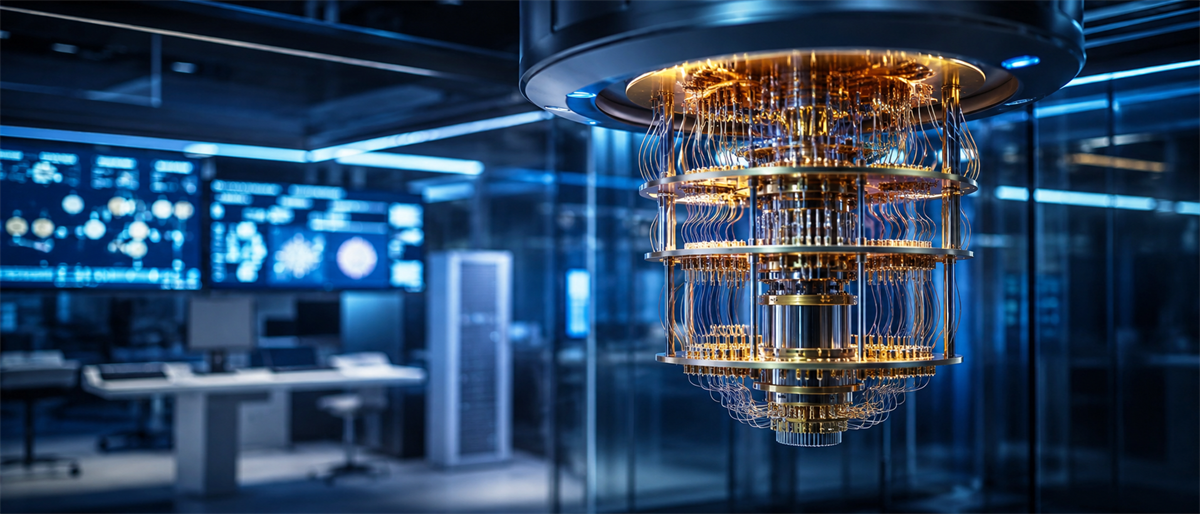
Key Points- Quantum Computing as a Service, or QCaaS, may matter more than raw hardware power for generating revenue among D-Wave, Rigetti, and Quantum Computing Inc.
- D-Wave appears best positioned for QCaaS growth, with over 37% of its QCaaS revenue coming from production applications and several 8-figure enterprise agreements.
- Rigetti shows stronger revenue and margin growth but remains hardware-dependent, while Quantum Computing Inc. is furthest from a QCaaS model and considered the riskiest bet.
- Special Report: Move Your Money Here Before September 30th
The investment case for quantum computing is largely focused on hardware, as companies race to achieve increasingly impressive qubit counts and lower error rates. Although the technology remains largely untested in commercial applications, there is also considerable debate over which architecture—from annealing to trapped-ion and beyond—is the most promising. While this debate assumes that the company building the most powerful quantum device will win the market, it obscures the element that may be best positioned to generate increasing revenue for companies including D-Wave Quantum Inc. (NASDAQ: QBTS), Rigetti Computing (NASDAQ: RGTI), and Quantum Computing Inc. (NASDAQ: QUBT): the software and cloud layer, and more specifically, Quantum Computing as a Service, or QCaaS. We're in a Noisy Middle PeriodPart of the reason QCaaS matters now is that the quantum computing industry is in a noisy middle period. Machines can operate with up to around 1,000 qubits, but errors remain frequent. Fault-tolerant quantum computing appears to be years away, making it likely that hardware will not fully scale in the near to medium term. Instead, access to quantum tools may be more easily monetized by allowing clients to run hybrid classical-quantum systems and complete vital tasks on quantum processors without owning the hardware. D-Wave's QCaaS Paves the WayD-Wave has one of the strongest cases for QCaaS, as evidenced in large part by its significant bookings this year, particularly in the latest quarter. It has negotiated several eight-figure enterprise QCaaS agreements, which provide an important complement to its hardware system sales. The latter are lumpy, which may have contributed to the company's overall disappointing performance last quarter. The bright spot for D-Wave amid disappointing revenue performance last quarter was its commercial metrics. More than 37% of its QCaaS revenue came from production applications, meaning companies were using quantum computing for live, operational workloads. This figure is important because it represents a customer base that may be most likely to rely on a quantum computing firm for stable, repeat business, generating recurring subscription revenue. D-Wave may have an advantage because of its quantum annealing hardware, which is designed specifically for optimization efforts that appeal to enterprise customers that do not yet need fault-tolerant quantum computing. This is also why investors may want to view D-Wave increasingly as a software or service provider, in addition to its hardware offerings. Rigetti's Cloud Offerings Are in ProgressRigetti takes a different approach, building quantum computers and integrating them into cloud platforms. The company does generate cloud revenue, but what Rigetti is really doing is providing access to its hardware rather than operating as a software-based recurring-revenue firm. At the same time, Rigetti has shown more meaningful progress than D-Wave this year. Revenue and gross margin both improved considerably year over year (YOY) in the last quarter, with revenue coming close to tripling. Still, Rigetti's revenue model appears to be more heavily dependent on hardware and major technology milestones, such as the 108-qubit system it is targeting in 2026 and a system with more than 150 qubits by the end of the year. Despite its apparently stronger Q2 2026, Rigetti may have a more difficult time adapting to a QCaaS-first approach than D-Wave. Quantum Computing Is a Higher-Risk Play OverallAs the smallest company on this list, with a very thin revenue history, Quantum Computing Inc. appears to be relying even more heavily on its ability to scale its architecture. In an already speculative industry, QUBT stands out, and Wall Street analysts agree: QUBT shares are a Hold overall, despite forecasts suggesting that the share price could surge by about 130%. QCaaS appears to be a long way off for Quantum Computing, despite the potential of its unique photon-based architecture. The company may appeal to investors seeking a diversified approach to the hardware side of quantum computing and looking to bet on photonic computing as the architecture that ultimately becomes the market leader. To be sure, all of these companies represent fairly speculative bets at this point. However, D-Wave appears to be best positioned for a QCaaS-forward approach, while Rigetti lies somewhere in the middle and Quantum Computing is least prepared to build software-like recurring revenue streams. Still, the industry is changing rapidly and becoming increasingly differentiated, and a new leader in the QCaaS race may emerge in the future. . | 
