Did China just fire shots at America?
Last week, in Tiananmen Square, China put on a chilling display of military power.
Fighter jets, tanks, AI-guided drones — all paraded under the red flag, in front of Vladimir Putin, Kim Jong Un, and more than two dozen world leaders. | 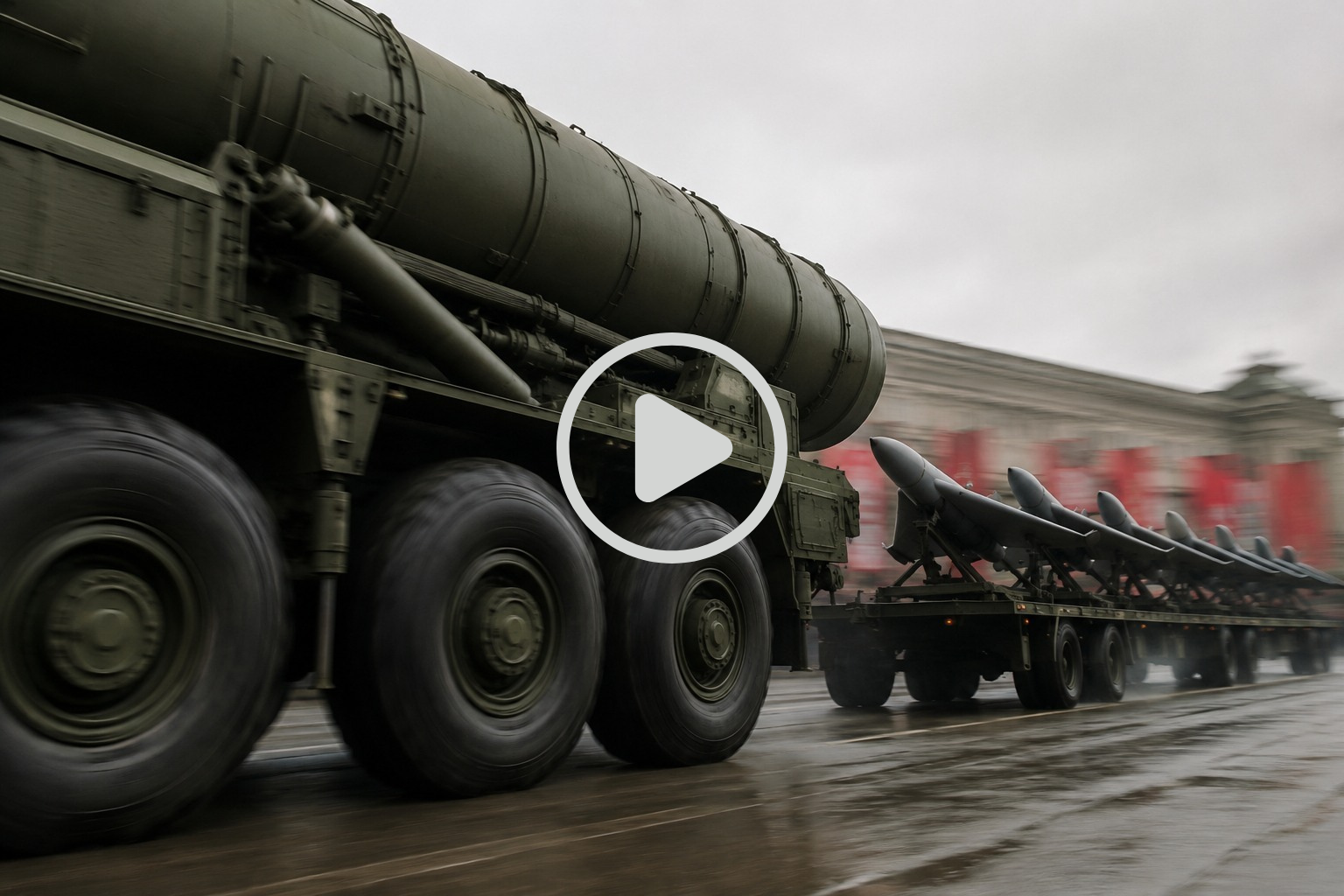 | Meanwhile, in Washington, President Trump watched.
“They were hoping I was watching,” he said. “And I was watching.”
But what he didn’t say matters more. Because while the media calls it a “celebration,” those of us paying attention know what it really was:
A warning shot at America. A not-so-subtle message to the United States — and to every American who still believes we call the shots.
The world is realigning. China. Russia. India. They’re drawing closer. And Trump’s high-risk trade policies are pushing them into each other’s arms.
The U.S. is becoming isolated and distrusted under our glorious leader.
And we’re drowning in debt – $21 billion a day added and growing.
And this Chinese parade – as symbolic as it was strategic – signals that the world may be entering a post-American financial era.
One where the dollar no longer dominates… and U.S. influence is no longer guaranteed.
The White House won’t admit it, but the signs are everywhere.
Foreign alliances are being formed without us… economic blocks are shifting against us… our tariffs are backfiring and capital is fleeing the country… debt is exploding past $37 trillion with no plans to stop it.
For those looking to protect themselves as this global power shift takes place… I highly suggest you watch this critical broadcast from Porter Stansberry.
In it, he details exactly how this new global power structure could impact your finances… and what he believes every American must do to protect their money before September 30, when America’s 2026 budget exposes just how bad things have become.
Click here to watch it now. | | | |
|
| China's Suspension of Its Rare-Earth Export Controls Expires on November 10, 2026 — Six Weeks After Xi Jinping's White House Visit and One Week After the US Midterms. The Suspension Was Traded for a US Rule Frozen on the Same Timetable, Which Means Both Sides Have a Dated Lever Pointed at Each Other. |
|
|
Beijing suspended its October 9, 2025 rare-earth export controls until November 10, 2026, in exchange for Washington suspending its own Affiliates Rule for the same period — a mutual stand-down formalised after the Busan summit. That clock runs out six weeks after Xi Jinping's scheduled September 24 visit to the White House and one week after the November 3 US midterms. Neither measure was cancelled; both were paused on the same date. |
|
|
What the suspension did not touch is as important as what it covered. The April 2025 controls on seven rare earth elements — samarium, gadolinium, terbium, dysprosium, lutetium, scandium, and yttrium — remain in force, meaning exporters of those items still require a MOFCOM licence, a process that can materially delay shipments. The suspended October measures added five more: holmium, erbium, thulium, europium, and ytterbium, bringing China's restrictions to twelve of the seventeen rare earth elements. The effect on flows has been substantial and durable. Chinese customs data show 17 tons of yttrium exported to the United States in the eight months from April to December 2025, against 333 tons in the eight months prior to the restrictions; February 2026 exports recovered only to 20 tons against over 66 tons in January 2025. Escalation has continued during the pause — in June 2026, China added ten US entities to its export control list, including Pentagon-backed MP Materials and USA Rare Earth, barring Chinese buyers from their products. |
|
|
For the investor, the specific value of a dated expiry is that it converts a diffuse geopolitical risk into a calendar item. Industries with direct exposure — electric vehicles, semiconductors, aerospace, magnets, medical coatings — face a known decision point rather than an open-ended uncertainty, and aerospace manufacturers have already flagged yttrium supply as a concern given its use as a thermal coating on engines. The practical read is that the September 24 summit and the November 10 expiry are linked events rather than separate ones: what gets agreed at the first substantially determines whether the second is renewed or allowed to lapse. Legal advisers have been telling clients to prepare for tightening in late 2026 if bilateral conditions deteriorate, which is the planning assumption the sector is working from. |
|
|
Sources — China Briefing, November 2025 · CSIS, May 5, 2026 · S&P Global, June 30, 2026 |
|
|
[email protected] is on ObliqueFront.com list because you opted in before the crowd caught on.
If we go quiet — look in promotions, updates, or wherever your inbox files things it hasn't figured out yet.
Privacy Policy
Unsubscribe. We'll part ways cleanly.
If something's off, you can reach us here
© 2026 Alpha One Marketers LLC. All rights reserved.
📍 254 Chapman Rd Ste 208 Newark, Delaware 19702. |
|
|
|

