Dear John,
For more than a year, I have been talking with our neighbors about how rising costs are impacting all of us. These days, it’s hard to think of anything that hasn’t gotten more expensive. But there is one issue in particular that comes up in conversation after conversation, from Reading to Coatesville to Kennett Square, with young families and aging seniors and everyone in between: housing.
I just spent three days in Chester and Berks Counties focusing specifically on housing, visiting new construction and hearing from constituents about how personal the housing affordability crisis is for them. Our PA-06 population is growing. Businesses want their workforce here, college graduates want to stay here, and seniors want to retire here – as long as they can afford it. |
This has been a priority of mine for some time, but I am excited to tell you about a bill I just introduced, the National Housing Emergency Act, which would build or restore four million homes across our country. Let me share more about how this legislation addresses the root of our housing problem and the relief it offers for people in our community. |
This housing affordability crisis affects different people in different ways, but the core concern is the same for just about everyone: housing is too expensive. If your adult child has a college degree and good job but still lives with you to save up for their own home, housing is too expensive. If your mortgage is paid off and you are retired, but now you can’t afford to downsize from a house that has become too big to manage, housing is too expensive. If your family has outgrown your starter home, but tight inventory and brutal interest rates have you frozen in place, housing is too expensive.
Solving these problems means recognizing that they are all connected as the result of a severe national housing shortage. When retirees can’t afford to move from their family homes, fewer houses are available for middle-aged families to buy, which means the ones on the market are extremely expensive. That same cycle happens at every stage, keeping would-be homeowners renting, keeping rent sky-high, and keeping would-be renters struggling. |
We need to start treating the high cost of housing like the crisis it is, and that’s exactly why I introduced my National Housing Emergency Act, a bicameral bill led by Senator Elissa Slotkin of Michigan in the Senate. This legislation would relieve our supply issue by building and restoring four million homes across the country, which would stop the cycle of high costs for buyers and renters at every stage.
What sets this bill apart is that it puts the full force of our federal government into efforts to build. It officially declares a national housing emergency, unlocking federal funding to help produce more U.S. lumber, steel, and other housing materials. Meanwhile, it also cuts red tape to ensure federal, state, and local governments are all working together – not getting in each other’s way – to get new housing built and existing units restored. |
|
At every level of government, we all understand that housing costs go down when we make more homes available. My National Housing Emergency Act frees us up to do exactly that.
This is just one of the many ways I’m committed to making housing more affordable. As the leader of the New Democrat Coalition’s Affordability Agenda, I've laid out comprehensive policy plans to bring down housing costs, and the costs of other core expenses like groceries, energy, healthcare, and childcare. |
While my bill still has a long way to go before becoming law, I am excited that our community is seeing smaller-scale efforts to expand our housing supply. |
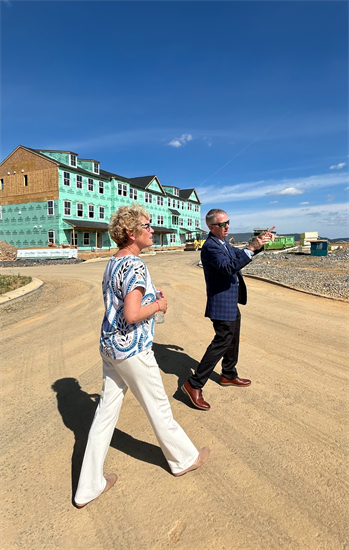
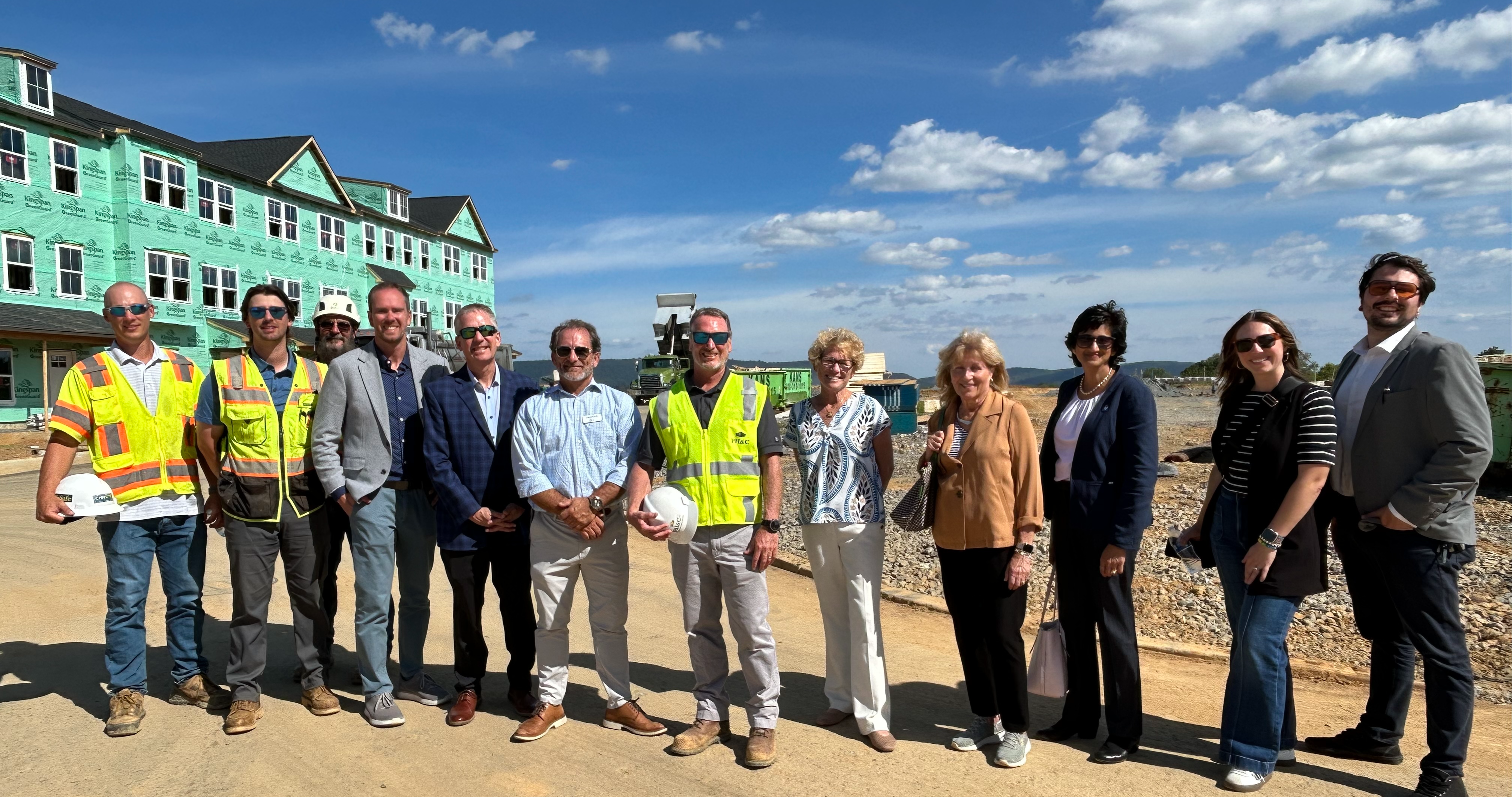
This week, I visited the Broadcast District in Reading, where 775 new homes – including apartments, condominiums, townhomes, and single-family homes – are being built, along with new retail space close by. This project is one of the largest investments the Reading area has seen in decades, supported by private funding, state transportation grants, coordination with Spring Township, and local subcontractors and vendors. It is a perfect example of how, with state and local governments on board, we can make real progress to expand affordable housing options.
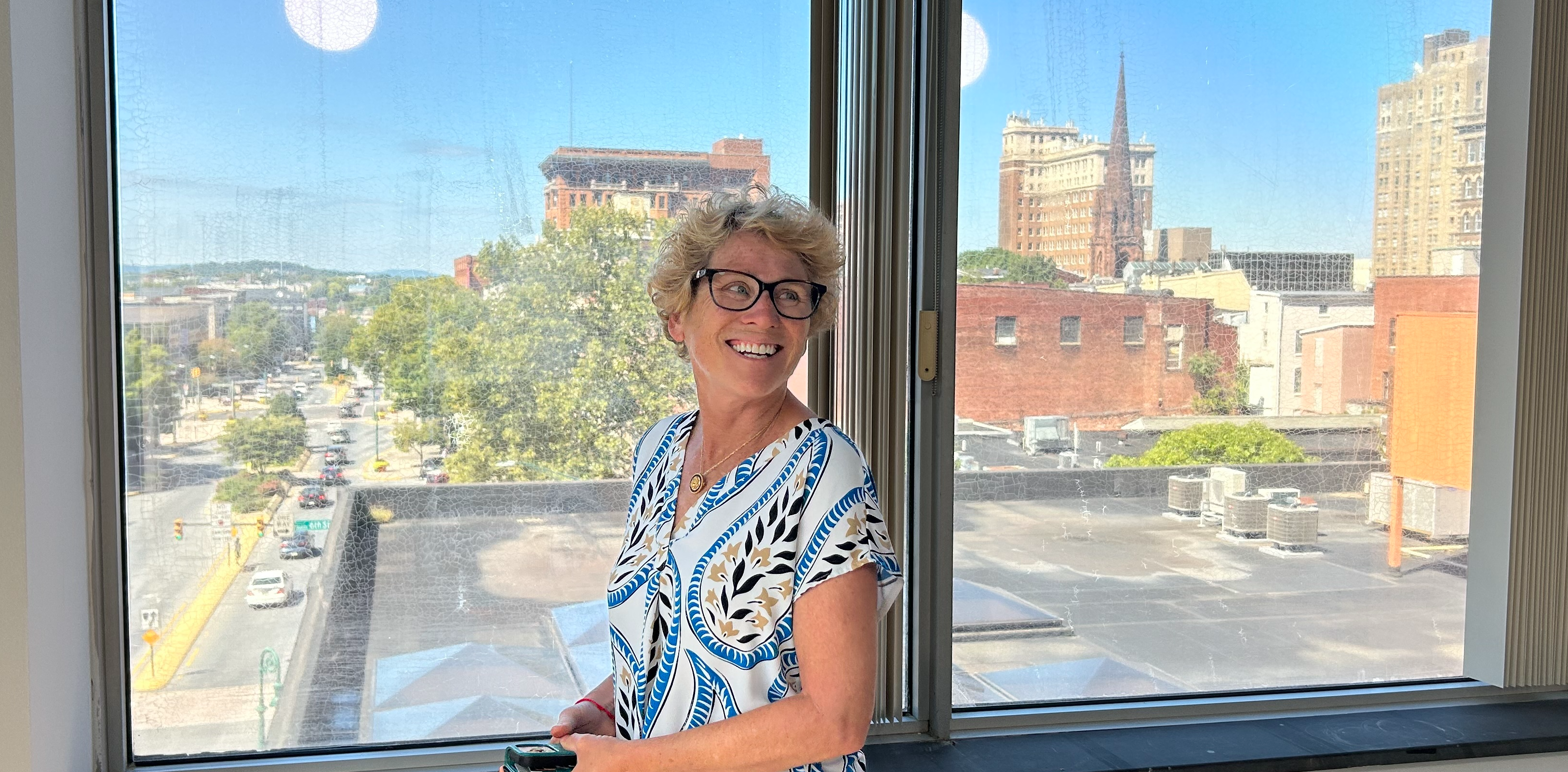
I also stopped by Reading Tower Apartments for a tour of what used to be the Santander building in downtown Reading. Renovations have transformed the office building into affordable apartments for young professionals in the area. When it comes to housing, we don’t always have to start from scratch; we should take advantage of opportunities to invest and transform wherever we can. |
There are more exciting housing developments like these happening all across our district, including the Legacy at Brandywine development on the old Brandywine Hospital campus, which I visited on Thursday.
As I talked with builders in our district this week, I was reminded that one of the most important ways the federal government can support housing growth is by investing in infrastructure. The Infrastructure Investment and Jobs Act, which I was proud to vote for in 2021, has helped fuel the development we’re seeing now, and I’m hopeful that Congress can deliver more crucial infrastructure investments.
But I know that many communities across PA-06 still need more support to build |
|
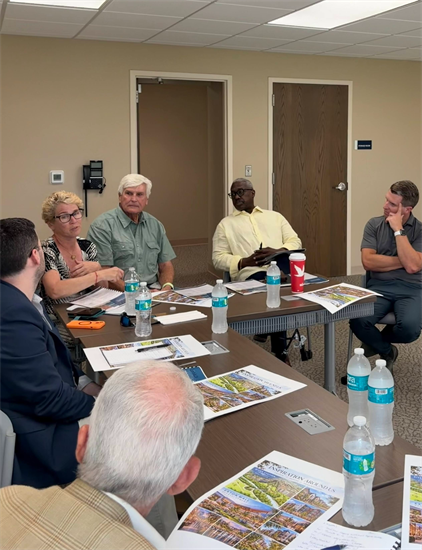
housing. I continued the conversation with local leaders in Kennett Square on Wednesday, and I'm taking what I learn from our neighbors back to Washington with me. Input from our community led me to introduce the National Housing Emergency Act, and it’s why I will keep fighting in Congress to do more to lower housing costs. |
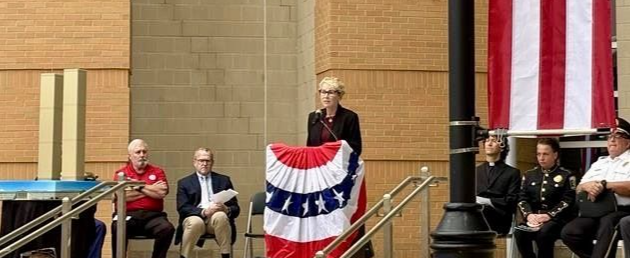
This week marked 25 years since the tragic attacks of September 11th, an emotional anniversary that asks us all to take a moment to reflect. I joined veterans at the Berks VA and first responders in Phoenixville to remember those we lost, to honor the sacrifices of our first responders, and to consider how this day fundamentally changed us as a country. |
In my reflections, I noted that 25 years is a long time. Long enough that there are adults in America today who were not alive on September 11, 2001. Increasingly, this anniversary is observed not by people who remember it, but by people who know it only through the stories we preserve. For them, September 11th is history. For me, and many of you, it is memory. And somewhere between memory and history comes a responsibility to teach what happened.
The people we lost, the firefighters climbing the stairs, the police officers and EMTs staying when they could have fled, the strangers helping strangers out of burning buildings, the passengers who took a vote aboard Flight 93, and the Americans who raised their hands afterward and said, "Send me." Their names, their families, and their stories are distinct memories for all of us who lived through September 11th.
Eventually, memory becomes history. But remembrance is a choice. Twenty-five years ago, Americans showed us what it means to serve one another when the unimaginable happens. Our responsibility now is to make sure their courage, their sacrifice, and their service are not lost to history. May we never forget. |
Chrissy Houlahan U.S. Member of Congress
Were you forwarded this email? Sign up for my newsletter here.
Please share: if you find this newsletter valuable or interesting, please share it with friends and family and ask them to subscribe too.
Please note that replying to this email will not direct your message to the right place. To contact the Office of Representative Houlahan, please click here. |
|