 In his most recent interview with The Economist, Elon Musk said that because of AI “money will be irrelevant by the year 2036.” I can see that happening too. AI is already displacing millions of jobs. One report says 40% of all jobs could be automated within the next decade. When that happens, the government will have no choice but to pay people some sort of Universal Basic Income. But this could take 20 years to materialize So while Musk tweets and Congress holds hearings, what are you supposed to do? Wait? I don't think so. But you don’t have to. Universal Income already exists. It's not funded by robots or AI. It's funded by America's oil and gas infrastructure, and it pays 10% a year, 42 times a year, to everyone who holds units. 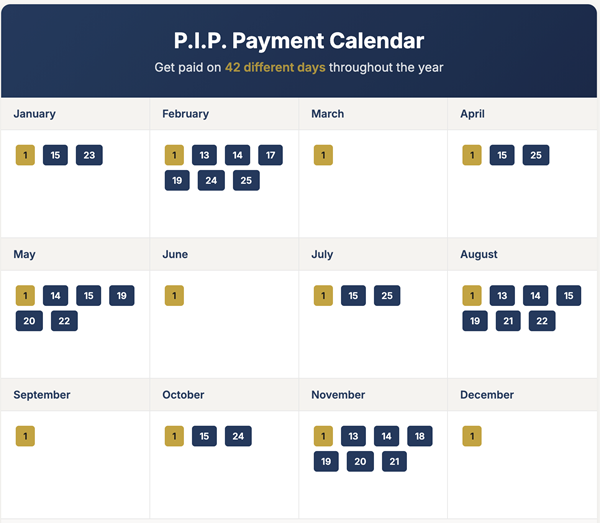
It’s called the Patriot Income Plan, or P.I.P. for short. And this year it’s expected to pay a record $53 billion in distributions. Think of it as your own personal sovereign wealth fund, backed by the biggest energy producer on planet earth. Enroll in P.I.P. before the next payout P.S. Since 2020, the average partnership in P.I.P. has produced 20% avg. annual gains. That’s in addition to the 10% yield. One investor already collects $4,800 a month. Another hasn't worked in years. Show me something better. I'll wait. [Enroll in P.I.P. →]
Additional Reading from MarketBeat Defense, Solar, and Refining Stocks Split as the Iran Conflict Raises Energy RiskReported by Nathan Reiff. Article Published: 9/9/2026. 
Key Points- Renewed escalation in the Iran conflict has lifted oil prices and kept energy-security concerns at the center of the market.
- SAIC’s defense IT exposure and strong fiscal second-quarter results make it a steadier way to play higher national security demand.
- SolarEdge still faces financing and residential-solar headwinds, while Marathon Petroleum has benefited most directly from elevated refining margins.
- Special Report: The $15 Gold Fund That Pays Up to $1,152/Month
Months into the war between the United States and Iran, the conflict has entered another period of intensification. The many ups and downs over the past several months, during which a ceasefire has appeared imminent several times before attacks resumed, have provided opportunities for select industries and companies to thrive. Now, with multiple commercial supertankers struck in recent weeks, the escalation is prompting a divergence across the market. As oil remains near multweek highs, defense contractors are benefiting from a sustained increase in government spending. At the same time, concerns about energy security may create uncertainty across the sector. Oil refiners are enjoying crack spreads that are near all-time highs in terms of profitability. The three companies below represent each of these corners of the market and have responded very differently to the latest round of fighting in the Iran conflict. SAIC Is a Steady Compounder in the Defense IT SpaceScience Applications International Corp. (NASDAQ: SAIC) plays a pivotal role in intelligence systems, cybersecurity and mission IT, allowing the contractor to benefit across all phases of a war like the one in Iran. Results for its latest quarter—Q2 fiscal 2027, which ended July 31, 2026—were strong across the board. Organic revenue grew about 5%, adjusted EBITDA reached $193 million at a 10.3% margin, and free cash flow totaled $131 million. The company also posted an impressive earnings beat, with earnings per share (EPS) of $3.01, or 70 cents ahead of estimates, despite EPS declining year over year (YOY) because of a large legal settlement a year earlier. SAIC also provided insight into its contract pipeline, which strengthens the case for its future prospects. A $400 million recompete contract for an unspecified U.S. intelligence agency, coupled with a recompete win rate of more than 90% for the latest quarter, demonstrates SAIC's ability to generate new business. Management raised its fiscal 2027 earnings outlook by 75 cents on the low end and 65 cents on the high end, while also increasing its projected revenue. The company's backlog is robust as well. In short, SAIC appears to be operating in an environment practically designed to support its success. One factor that may give investors pause, however, is that after climbing nearly 26% year to date (YTD), SAIC stock may not have as much room to rally in the near term. SolarEdge’s Recovery Still Faces a Difficult SetupAfter several highly tumultuous years, SolarEdge Technologies (NASDAQ: SEDG) appeared to be an early beneficiary of the Iran war. Shares climbed in the weeks immediately following the onset of U.S.-Israeli strikes and then spiked in early June as European demand rose amid market volatility. Since then, however, the picture has become cloudier. Even with fairly strong Q2 2026 results—including a 20% YOY revenue increase to more than $346 million, the company's first non-GAAP operating profit in several years and gross-margin expansion to 28.6%—SEDG shares have fallen significantly from their midyear highs. Higher energy prices should help boost solar adoption, which would benefit the company. However, rising Treasury yields driven by concerns about energy-fueled inflation also mean that project financing costs have soared, potentially hurting demand. Meanwhile, a tepid U.S. residential market may further weigh on SolarEdge's business. As a result, despite fairly strong fundamentals, the company has an overall Reduce rating across Wall Street analyses. Marathon Is the Clearest Winner, But Not a Risk-Free OneHigh gas prices, near-record crack spreads and supply concerns have created an excellent environment for oil refiners. Marathon Petroleum Corp. (NYSE: MPC), one of the world's largest refiners, is no exception. Marathon's Q2 2026 earnings report was stellar, as second-quarter profit surged nearly fourfold to $5.1 billion on a 54% YOY increase in revenue. Adjusted EBITDA more than doubled as well, thanks in large part to excellent crack spreads amid the near-closure of the Strait of Hormuz. MPC shares have predictably surged in this environment, climbing more than 140% YTD. Analysts remain largely optimistic about MPC's prospects, with 12 of 17 rating the shares a Buy even as the stock has surged past the consensus price target of $330.50. Of course, the danger for investors is that the same major catalyst—crack spreads driven by supply concerns—can reverse just as quickly. So while Marathon may appear to be the clear winner among the three stocks on this list, investors should remember that it still carries risks amid a highly volatile war. . | 
