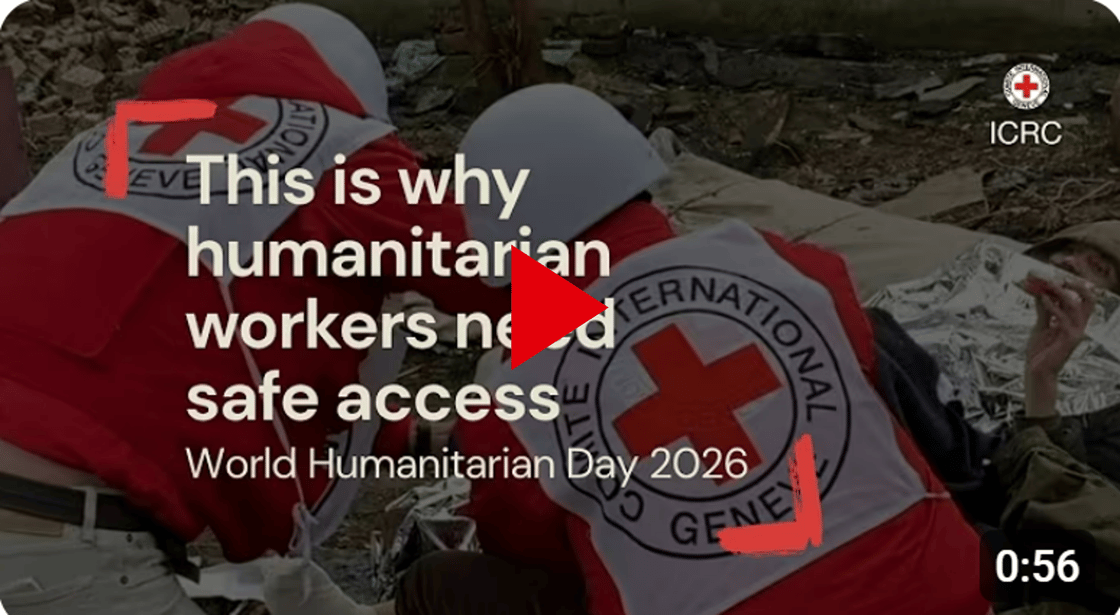
Last year, 24 of our colleagues were killed while serving others. This year, we have already lost 12 more.
Protecting humanitarian workers isn’t a favor: it’s a legal and moral obligation to preserve the space for humanity. How many lives is the "price of helping" worth?
Dear reader,
While many were able to take a pause this summer, the humanitarian front lines did not. The past two months have been a stark reminder of how quickly the world is shifting, and how much is at stake for those caught in the middle.
This edition begins with a critical look at the future of warfare, where we face a "moral red line" as autonomous weapons threaten to remove human control from the decision to use force. Yet, we also see the other side of technology in South Sudan where a simple satellite signal is becoming a digital bridge, allowing families separated by war to find one another through the social media tools we all use every day.
The theme of connection, and the agonizing pain of its absence, runs deep in this issue. As we marked the International Day of the Disappeared, we share stories from Syria, and Koreawhere the "invisible wound" of not knowing a loved one's fate transcends generations and borders.
Thank you for staying with us as we navigate these challenges. Below are the voices, the reports, and the footage of a world in flux, and the humanity that holds it together.
The ICRC Team
IN FOCUS -The race we cannot lose: Autonomous weapons and the law
This isn't science fiction. The race toward autonomy in weapons is already underway. From weaponized drones to AI-driven targeting, the battlefield is changing faster than the rules governing it. As weapons become more autonomous, human control risks slipping away.
Andthe next few months could be decisive. States have just concluded their latest round of discussions on autonomous weapons in Geneva, as outlined by ICRC Director of International Law, Cordula Droege. In November, they will return for the major Review Conference of the Convention on Certain Conventional Weapons (CCW): a crucial opportunity to decide whether to move from years of discussion towards negotiating new, legally binding rules.
The gap between what machines can do and what they should be allowed to do is widening. When the very scientists and engineers building these systems are sounding the alarm, the world cannot afford to wait until their use becomes widespread.
"Innovation must serve humanity – not endanger it,"
The choices made now could shape warfare for generations. Will we preserve human judgement and control in decisions of life and death, or allow algorithms to effectively determine for us who lives and who dies?
ON THE GROUND - The other side of technology: signals that bring us home
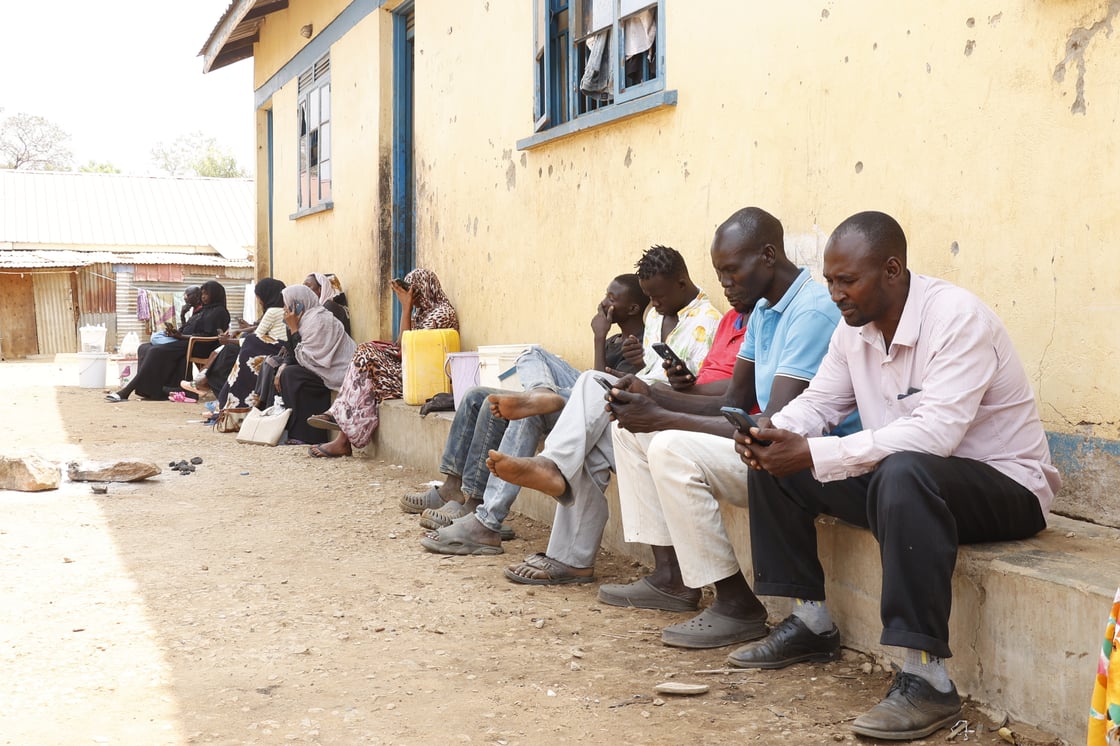
The conflict in Sudan has forced populations to flee to countries where their GSM telephone networks do not work and can connect with loved ones only through the internet. | Photo credit: Junior Ali/ICRC
Technology can create new risks in war. But the same digital world that can be weaponized can also do something profoundly human: help us stay connected to the people we love. For people separated by conflict and displacement, like Abubaker Ali Adam who fled the civil war raging on in his native Sudan, the checkmark of a "delivered" message has meant the difference between despair and hope.
As South Sudan marks 15 years of independence, millions of people continue to live with the consequences of conflict and violence. In a country where internet access remains limited and traditional phone networks can fail, a social media profile may be the only thread left connecting one person to another.
After months of silence, Abubaker Ali Adam finally reconnected with his brother via social media, learning that his family had survived. His story is one of 688 family members located in just forty-eight hours—proving that when we prioritize humanity, technology becomes a powerful force for good.
Where is my family? The question that never goes away.
When a loved one dies, there is a path for grief. But when someone simply vanishes into the chaos of conflict, there is no path: only a void.
“When my husband passed away, we accepted it as God’s will,” says Nawra, whose two sons are missing. “But it’s different when you lose someone to an ambiguous loss.”
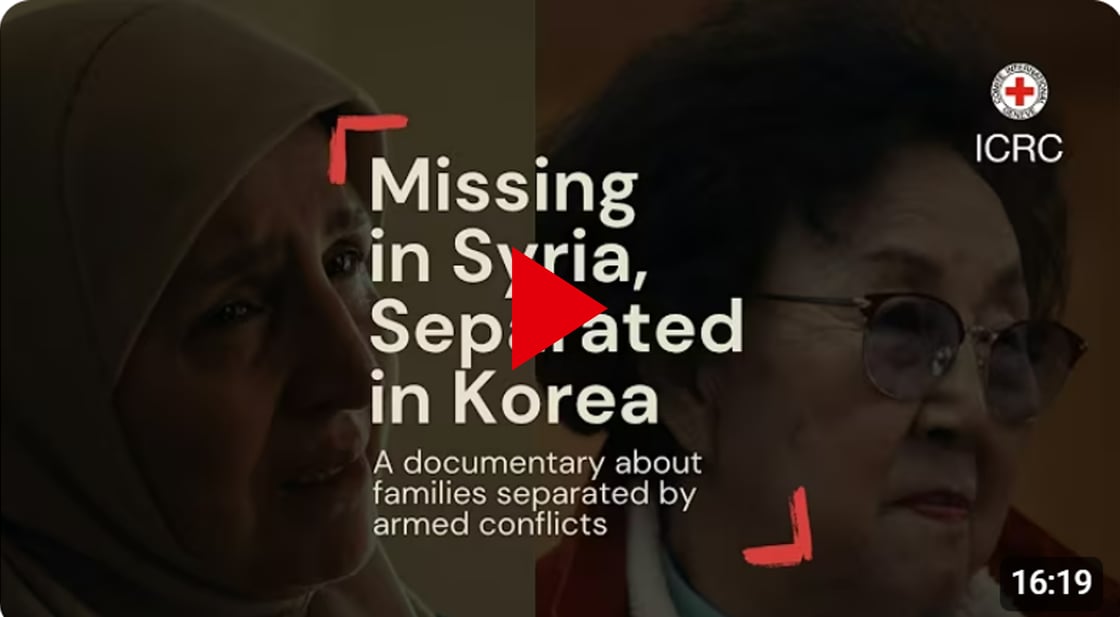
Marking the International Day of the Disappeared on 30 August, our new documentary "Missing in Syria, Separated in Korea" explores a striking truth as it brings together the stories of three women Nawra, Alida and Lee Yeon-bin: that the pain of not knowing transcends borders, cultures, and even time.
For the families left behind, the cost of not knowing creates a ripple effect that reshapes their entire reality. Beyond the heartache, our new report, “Voices of the Missing”, also reveals the legal limbo of not being able to claim an inheritance, the economic struggle of losing a breadwinner, and the social isolation that comes with an unresolved tragedy.
Today, over 284,000 people are registered as missing with the Red Cross and Red Crescent Movement; a staggering 70% increase in just five years. Behind every one of those numbers is a family like Nawra’s or Lee’s, waiting for an answer that may take decades to arrive.
Gaza: The agonizing wait for news, the daily fight for life
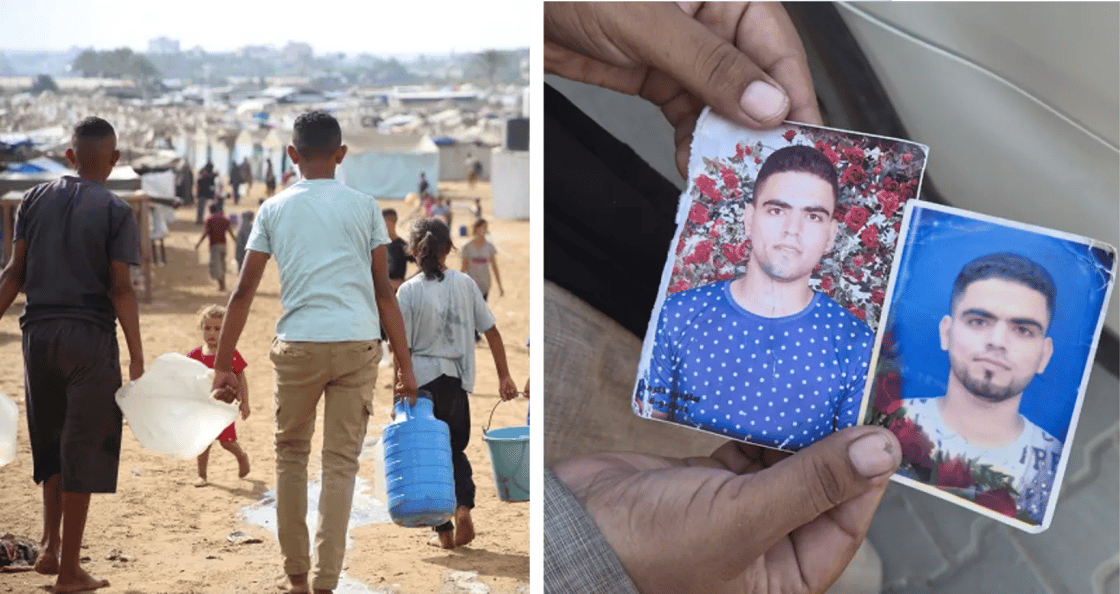
Beyond the visible destruction and the constant search for essentials like water, thousands of families in Gaza are grappling with a "less visible" pain: the uncertainty of not knowing if their loved ones are alive, detained, or buried beneath the rubble. Photo: Amani Al Naouq /ICRC
In Gaza, the pain of the missing is an ever-present, invisible wound. For Fatima Al Najjar, it means carrying her brother Mohammed’s photo everywhere she goes, asking every passerby for news. For Majed Al Khaldi, it’s celebrating his daughter Israa’s birthday by making a video of her, holding onto the memory of a woman who vanished on her way home.
But this agonizing wait does not happen in a vacuum. For Palestinians in Gaza, it is lived out on the ruins of destroyed neighborhoods and under the blistering sun of overcrowded tents; it is compounded by another uncertainty about their own survival.
As the basics of a dignified life (clean water, safe shelter, and medical care) are missing, our teams work on the ground to meet the immediate needs of those who have lost so much. From tracing a missing brother to repairing a broken water line, your support to our mission in Gaza helps us provide these lifelines to families who are holding onto hope in the face of unimaginable hardship.
Latin America: "Wherever you are, I want you to know…"
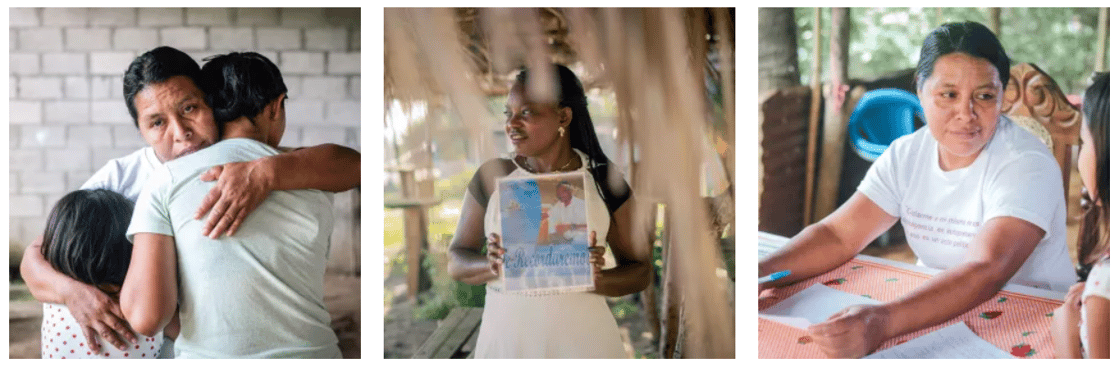
Behind every missing person is a family still waiting for answers. Families have the right to know the fate and whereabouts of their loved ones.
Absence does not stop the passage of time. Children grow up. Families expand. Birthdays come and go. Dreams are realized. And all the while, an empty chair remains — and the search continues.
“Wherever you may be, I want you to know that I’ll keep looking for you, and that, for as long as I live, I’ll fight to find you,” Paola wrote to her brother Tarcisio, missing in Colombia since 1988.
They write about the lives their loved ones have missed: a daughter starting second grade, grandchildren they never got to meet, the familiar sound of a lorry that no longer announces someone coming home. But they also write about determination: marching, campaigning, changing laws and supporting other families, while refusing to give up the search.
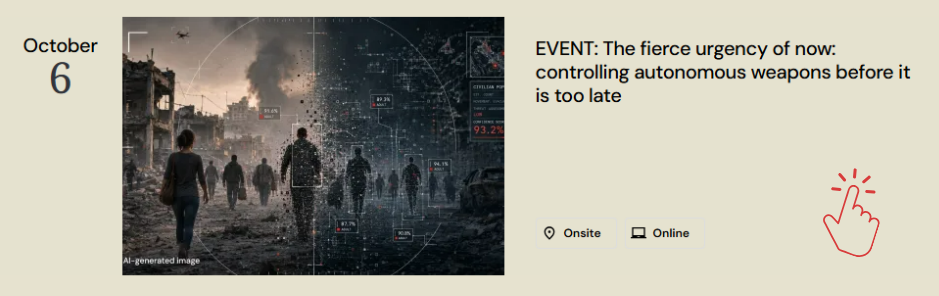
AGENDA:The fierce urgency of now: controlling autonomous weapons before it is too late
On 6 October 2026, the ICRC will convene a high-level discussion on the urgent need for legally binding international rules on autonomous weapons, ahead of the CCW Review Conference in November.
Bringing together policymakers, diplomats, military representatives and experts, the event will explore how to build political momentum for meaningful regulation and what action is needed to ensure that negotiations begin.
Was this newsletter forwarded to you?
To receive it directly in the future,sign up here!
International Committee of the Red Cross, 19 Avenue de la Paix, 1202, Geneva, Switzerland
.png?width=400&upscale=true&name=ICRC_RGB_pos%20(1).png)