By Ivana Saric
Digital Editor, Council on Foreign Relations |
Good afternoon, and welcome back to the Daily Brief.
Our team took the summer to reimagine the newsletter and provide a unique take on the news from within the halls of the Council. Now, we are excited to be back in your inboxes—every weekday afternoon this time—with global headlines and analysis from CFR’s experts. Our goal is to bring you the latest world news, and explain why it matters.
September is a time of new beginnings at CFR as we onboard a new class of seventeen visiting fellows covering topics from U.S. national security to Chinese foreign policy. The Daily Brief team looks forward to sharing their insights and research over the next year. There’s a lot of important coverage in the works at CFR, including pieces tied to the 9/11 anniversary. You can keep an eye out for those on CFR.org throughout the week.
Fall is also particularly busy as CFR gears up for the United Nations General Assembly (UNGA) high-level debate later this month, and the host of accompanying events held at our New York office. Follow along with the Daily Brief for behind-the-scenes insights from CFR’s UNGA events. Today’s Daily Brief brings you: -
a new Q&A with insights from Liana Fix about the German far-right’s results in weekend elections;
- expert insights into the aftermath of 9/11; and
-
an artificial intelligence (AI) influence operation that felt especially close to home for CFR.
For your daily dose of global news, the newsletter concludes with a curated roundup of top headlines from around the world.
Scroll on for more.
|
|
|
|
Let Us Know What You Think |
Thoughts, requests, feedback, or ideas for the new Daily Brief? We want to hear from you. Reach us at [email protected]. |
|
|
|
Q&A: CFR’s Liana Fix on Germany’s Elections |
Germany’s far-right Alternative for Germany (AfD) triumphed in weekend elections in the eastern state of Saxony-Anhalt. While the party failed to secure a majority, its nearly 44 percent of the vote is its best state election result since its founding in 2013.
Fix wrote in an expert take last week that a strong AfD result could undermine centrist parties’ “firewall” commitment to never govern with the far-right by making it difficult to form a governing coalition without it. The elections came at a “pivotal moment” for German Chancellor Friedrich Merz, Fix wrote. He is especially unpopular among young people and throughout the country’s east, and voters are unhappy with slow economic growth and rising energy prices.
The Daily Brief popped by Fix’s office this afternoon to get her take on the election results.
After this result, how durable do you think the “firewall” will prove? Germany’s firewall is under real pressure after these elections. However, there is no guarantee that the opposite approach—allowing the AfD into government—will tame the extremist party and make it less attractive. What might be the effect on Merz’s central government?
With further regional elections coming up in two weeks, Merz’s authority as chancellor is on the line, with low approval ratings in the public and in his own party.
Is there anything Merz can do to slow the AfD’s momentum?
Merz’s government should, first of all, avoid the mistakes of the past—a botched government reshuffle, or bad communication of its reform policies. But it will also have to address the structural issues: Germany’s economic decline and reform immigration policy.
These answers represent the views solely of the author. The Council on Foreign Relations is an independent, nonpartisan membership organization, think tank, and publisher, and takes no institutional positions on matters of policy. |
|
|
|
Friday is the anniversary of the deadliest terrorist attacks on U.S. soil. Yet twenty-five years after 9/11, the United States is contending with “a stunning lack of preparedness to handle mounting new threats and resurgent old ones,” CFR’s Bruce Hoffman and Farah Pandith write in an expert take out today.
The two convened a year-long discussion series with experts and national security practitioners to analyze the consequences of 9/11. They also analyze the contemporary challenges facing the country and offer policy recommendations. The consensus? The greatest threat from terrorists and hostile actors today comes from drones—against which the United States’ defense “remains inadequate.” Terrorists have also proven to be “effective manipulators” of social media, which has facilitated radicalization and recruitment.
Hoffman and Pandith write:
“U.S. policymakers have neither prioritized nor invested in the current and future threat landscape. They have not deployed creative ideas that have been tested over the last twenty-five years to reduce the appeal of extremist ideology. Funding for programs has dried up, and the lack of government interest in managing global coalitions to build more resilience online and offline is a serious error in judgment and a missed opportunity.”
|
|
|
|
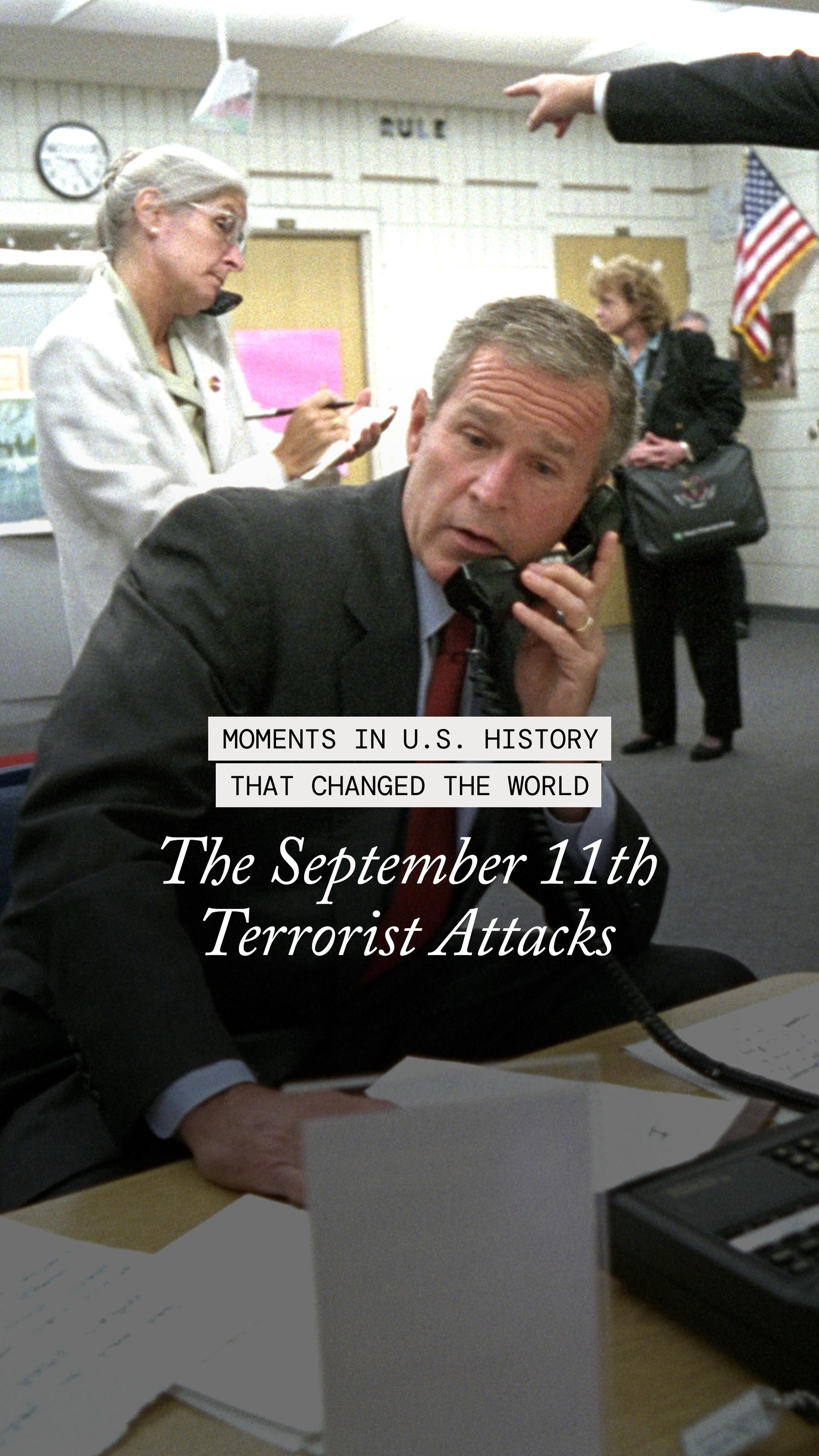
This summer, to mark the United States’ 250th year, CFR asked a host of experts to weigh in on moments in U.S. history that had changed the world. One of them was 9/11.
Though the attacks initially unified the country, the global war on terrorism and the invasion of Iraq distorted U.S. politics and helped destabilize the Middle East, CFR’s Steven Cook said in this YouTube short.
“[There] are prices we are continuing to pay, twenty-five years later,” Cook said. |
|
| |
|
CFR’s Jessica Brandt breaks down how a Russia-linked influence operation used ChatGPT to build a credible-looking think tank: the supposed International Burke Institute (IBI). The fake institute was complete with copied and misattributed academic work and real experts—including one from CFR—who never agreed to be listed. In her expert take, Brandt analyzes how the incident shows the advancement of tech-powered influence operations. She writes:
“This effort built a credible-appearing institution complete with purported expert affiliates, research papers, and a proprietary sovereignty index. Its perpetrators used AI as a tool to promote that infrastructure in multiple languages, without the language mistakes that previously gave campaigns away, and often using AI-generated personas, profile photos, and face-to-camera video reels.” |
|
|
|
Every day the Daily Brief brings you a curated list of the top stories from around the world. |
- Sudan’s Hospitals Approach ‘Breaking Point.’ International funding cuts have forced the closure of health care facilities across the war-torn country, Doctors Without Borders warned today.
-
Kenya Grants Foreign Workers Ninety Days to Validate Status. The government has announced a new deadline for foreign business owners to obtain or update necessary documents such as business licenses and work permits. President William Ruto had previously directed authorities to close small businesses run by foreigners beginning this week.
|
-
Canada Imposes New U.S. Tariffs. Retaliatory tariffs on roughly $20 billion of U.S. goods went into effect today, ratcheting up the trade war between the neighboring countries. It comes after the United States imposed tariffs on Canada last month following a breakdown in trade talks.
-
Rubio Begins South America Tour. U.S. Secretary of State Marco Rubio arrives in Colombia today on a three-day trip that also includes visits to Ecuador and Peru. Rubio intends to discuss trade and counternarcotics efforts, the State Department said.
|
-
North Korea and Russia Open New Bridge. The two countries opened their first connecting bridge yesterday, a one-kilometer structure above the Tumen River. Russian Prime Minister Mikhail Mishustin said up to three hundred vehicles could cross daily.
-
Hong Kong’s First Post-Colonial Leader Dies. Tung Chee-hwa died today at age 89. He assumed office in 1997 following the end of British rule, and resigned in 2005 due to health concerns.
|
- Germany to Send Ukraine More Patriot Missiles. German Defence Minister Boris Pistorius said today the missiles would come from Germany’s stockpile. He did not specify how many missiles would be sent, but noted they would be delivered “urgently.”
-
Israel Hit With Trade Restrictions Over Settlements. France, the United Kingdom, and nine other European nations joined Canada today in announcing plans to introduce or support trade restrictions on goods from Israeli West Bank settlements. Israel said it would close the British consulate in East Jerusalem, among other retaliatory measures.
|
-
Houthis Strike Four Saudi Cities. Iran-backed Houthi rebels in Yemen struck four cities in Saudi Arabia today, injuring dozens and damaging oil infrastructure. Oil prices spiked to nearly $100 per barrel afterward.
-
Netanyahu Denies Report of October 7 Warning. Israeli publication Haaretz reported today that the president of the United Arab Emirates warned Israeli Prime Minister Benjamin Netanyahu about an impending large-scale Hamas operation days before the October 7 attacks. Netanyahu’s office called the report an “absolute lie.”
|
|
|
|
Host: Ivana Saric
Editor: Xian Chiang Waren
Email Operations: Eric Rojas
Editorial Director, News: Phil McCausland
Editor-at-Large: Robert McMahon
Chief Digital Content Officer: Millie Tran |
|
|
|
58 East 68th Street, New York, NY 10065 |
1777 F Street, NW, Washington, DC 20006 |
|
|
|
|