
|
 |
Can Changing ‘Sell By’ to ‘Use By’ Help Americans Reduce Food Waste?
Lawmakers in California look to simplify expiration dates on groceries to reduce food waste, with millions of pounds of still-good food thrown out every year
|
| |||||||||||||||


Hoping to reduce one of the most significant drivers of household food waste, California lawmakers quietly took aim at the dates stamped on groceries. Will it inspire a nationwide movement?
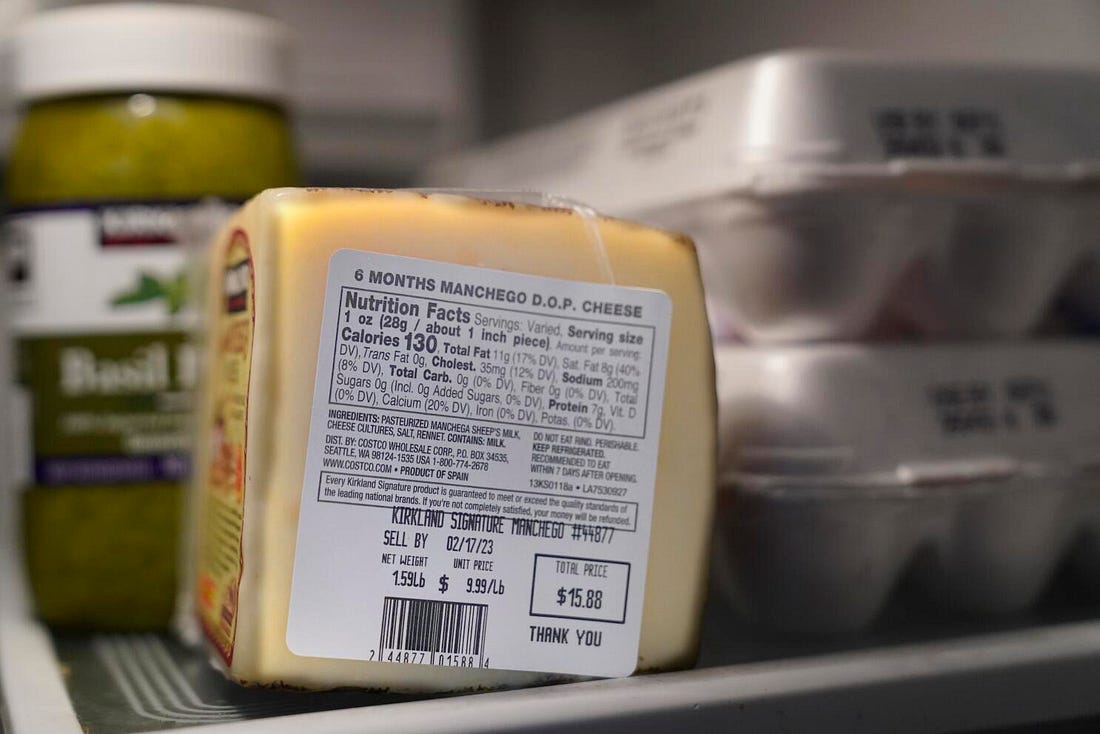 |
For decades, American grocery shelves have showcased a bewildering array of more than 50 different date-related phrases, including “Sell By,” “Best By,” “Best Before,” “Use By,” “Expires On,” “Fresh Until.” Confused over the meanings, many consumers throw away food that expires beyond these dates, believing that the products are unsafe to eat.
 |
Date labels on packaged food are not federally regulated or required, except for infant formula. Manufacturers and states determine what labels are necessary.
In California, a new law quietly took effect on July 1 (AB 660) that standardizes food date labeling to reduce consumer confusion and combat food waste.
California is the first state to enact these standards. Other states, including New York, are considering similar bills.
 |
Modeled on the California bill, the New York state legislature passed Assembly Bill A7291B last month. Gov. Kathy Hochul has until Dec. 31 to sign or veto it. If signed into law, it will require the safety date and quality date labeling on certain food products to appear in a standardized format. It would outlaw the various “sell by” dates on the packaging of food produced after July 1, 2028, replacing them with “Use By” safety labels and “Best if Used By” quality labels.
Similar federal bills remain stalled in committee. In July 2025, U.S. Representatives Chellie Pingree (D-Maine) and Dan Newhouse (R-Wash.), along with U.S. Senators Richard Blumenthal (D-Conn.) and Rick Scott (R-Fla.), reintroduced the Food Date Labeling Act.
Californians throw away about 2.5 billion meals worth of perfectly edible food each year, according to data cited by Californians Against Waste and state agencies.
 |
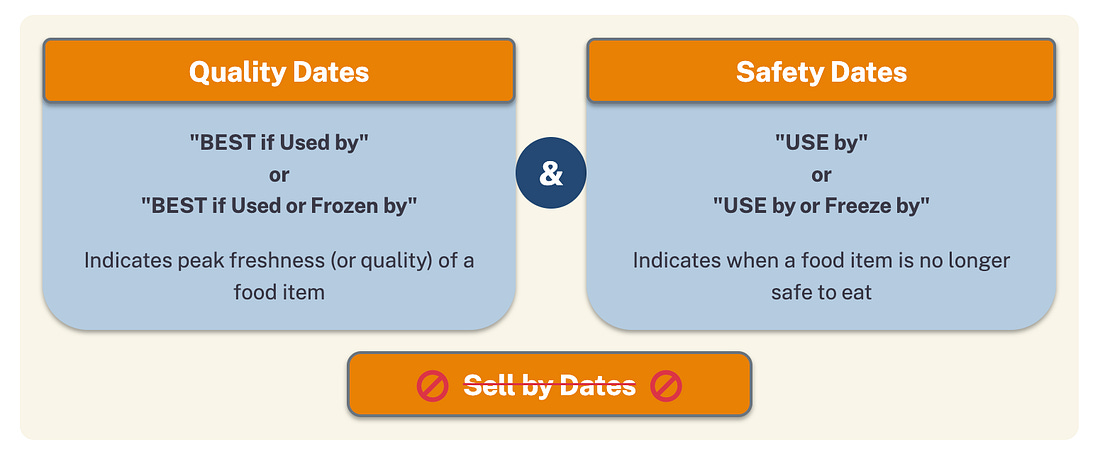
The new law limits manufacturers to two standardized terms for products manufactured on or after July 1. The permitted terms are “Best if Used By” or “Best if Used or Frozen By,” which indicates the date of peak quality or freshness; and “Use By” or “Freeze By,” which represents a safety date.
Under the new law, “Sell By” dates are now prohibited on food packaging in the state of California. Eggs and infant formula are the only exceptions.
 |
The National Resources Defense Council (NRDC), which co-sponsored the bill, said in a press release that “there are more than 50 differently phrased date labels on packaged food” on grocery store shelves.
“Standardizing food date labels is a commonsense solution that will keep more money in people’s pockets and food on families’ plates, while reducing climate warming emissions.” said Victoria Rome, director of California government affairs at NRDC.
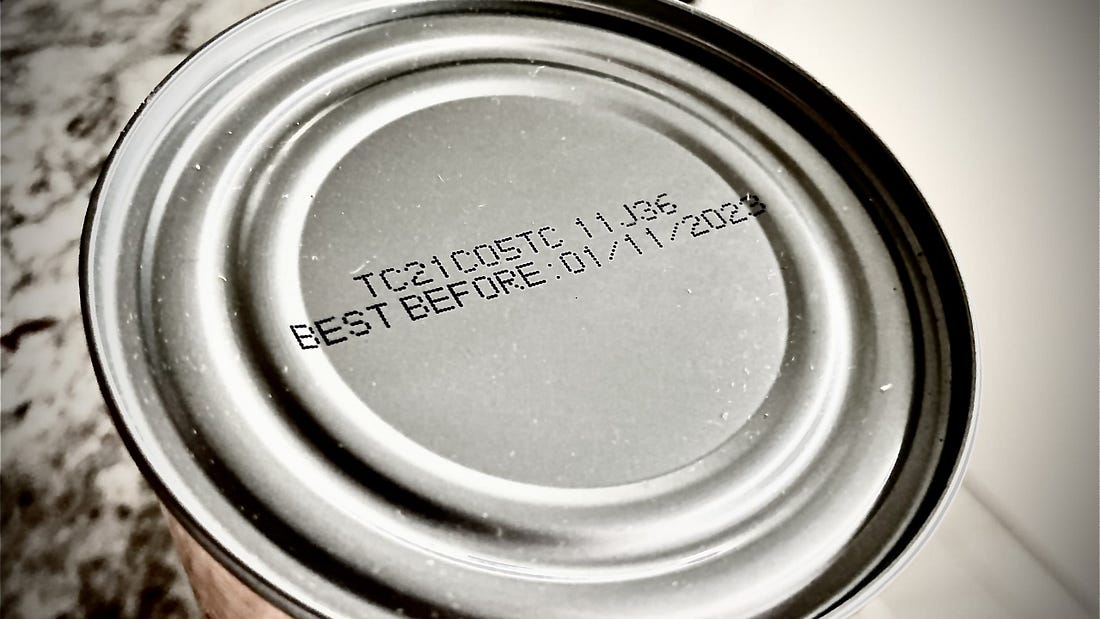
According to the USDA’s Food Safety and Inspection Service, a “Best if Used By/Before” date indicates when a product will be of best flavor or quality. It is not a purchase or safety date.
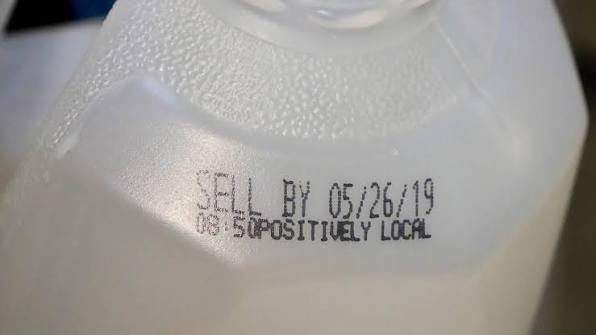 |
A “Sell-By” date alerts the store how long to display the product for sale for inventory management. It is not a safety date.
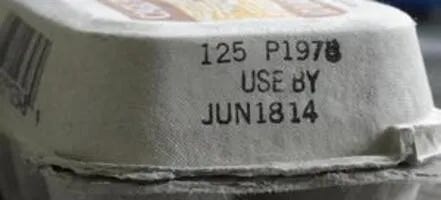 |
A “Use-By” date is the last date recommended for the use of the product while at peak quality. It is not a safety date except when listed on infant formula. The only food required by federal law to have a true expiration/safety date in the United States is infant formula.
A “Freeze-By” date indicates when a product should be frozen to maintain peak quality. It is not a purchase or safety date
 |
Tiffany Ryder, an emergency medicine physician assistant and a MAHA-aligned strategic communications strategist, told The MAHA Report that clarity is important for helping consumers better understand the food they are choosing.
“We’ve got like seven different ways to tell people to pay attention: ‘sell by,’ ‘best by,’ ‘best before,’ ‘best if used by,’ ‘fresh by,’ ‘use by,’ ‘enjoy by.’ This just really looks like better transparency,” Ryder said about the California legislation.
For families already squeezed by the cost of food, the stakes are high. Every carton of eggs or gallon of milk unnecessarily thrown out equals lost money and nutrition.
Many consumers mistakenly treated “Sell By” dates, which are primarily intended for retailers to manage inventory and stock rotation, as expiration dates for safety, Kendall Mackintosh pointed out.
Mackintosh, a licensed nutritionist, notes that terms like “sell by,” “best if used by,” “best before,” and “use by” are “not interchangeable,” even though they are printed on different products in grocery store aisles.
“When people see ‘sell by’ or ‘best by,’ they may assume the food is unsafe immediately following that date, but in many cases the date is just about peak quality, not about the food suddenly becoming dangerous,” she explained.
“Families struggle to know what’s truly spoiled, and many waste valuable nutrient-dense foods based solely on date stamps,” she added.
Simplifying the system reduces confusion since consumers won’t have to decode a group of similar phrases, prevents waste since people are less likely to throw away food that is still safe, and improves safety because it establishes clearer distinctions that make it easier to recognize when a date actually matters for health, Ryder explained.
Susanne Lee, who is a fellow at the University of Maine’s Sen. George J. Mitchell Center for Sustainability Solutions, said that her organization’s research shows that more than 80 percent of American consumers are confused by food date labels, leading them to throw out “perfectly good and edible food.”
She encourages people to take practical steps to reduce food waste.
“Trust your senses. Smell, appearance, and proper refrigeration are good guides for determining if your food is still safe to eat,” she said. “And freeze it before it spoils. Freezing meats, dairy products, and leftovers in time can dramatically decrease the waste of good food.”
 | A guest post by
|
Thank you for subscribing to The MAHA Report
You can follow us at: TheMAHA_Report on X
You can also follow us at: MAHA Action on Facebook
If you want to support our work you can donate here: MAHA Action Website
Make America Healthy Again™ and MAHA™ are trademarks owned by MAHA TM LLC
| ||||||||||


