Hamas's War on Trump's Board of Peace
by Khaled Abu Toameh • September 8, 2026 at 5:00 am
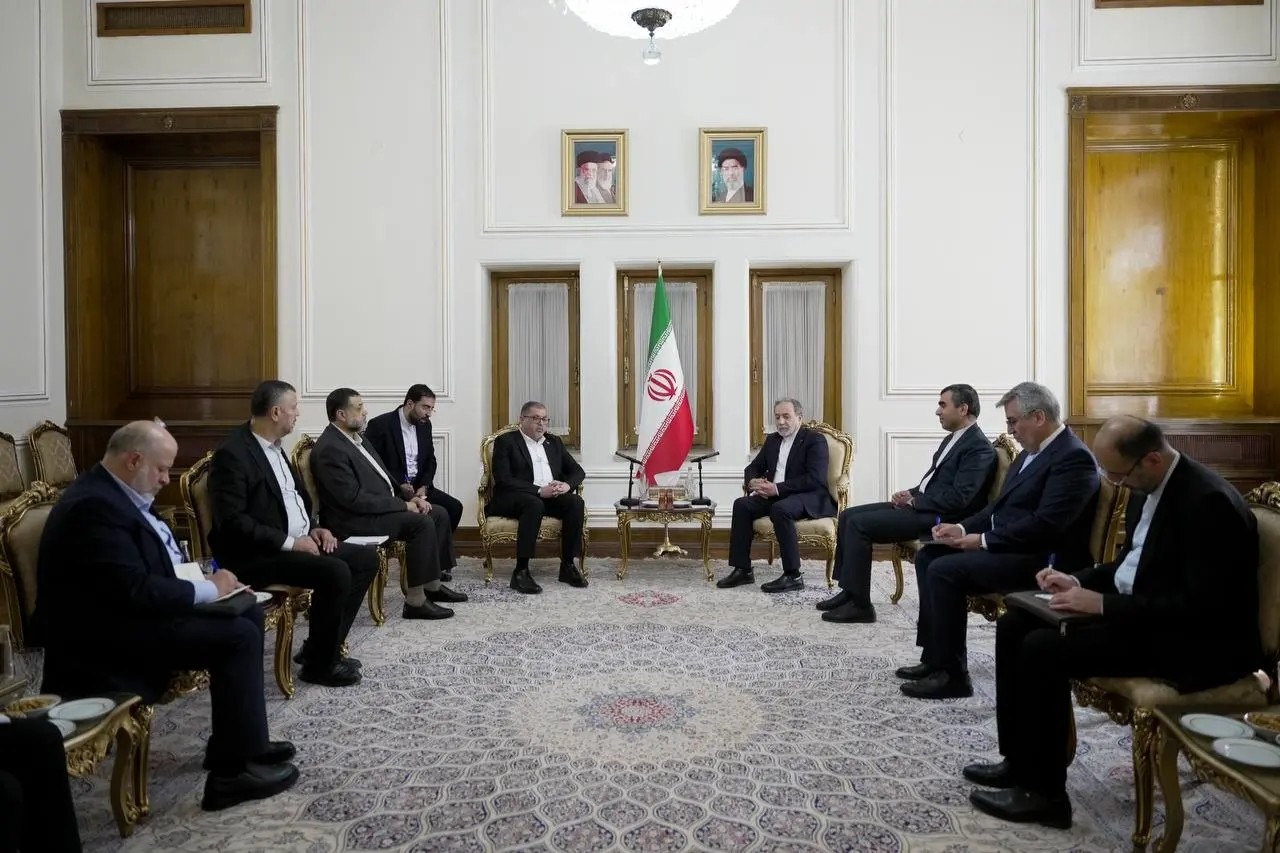
Just days before the terrorist group launched its latest campaign against the Board of Peace, a senior Hamas delegation traveled to Tehran and met with senior Iranian officials, including Foreign Minister Abbas Araghchi and Parliament Speaker Mohammed Bagher Ghalibaf.
Is Iran encouraging Hamas to resist or delay the implementation of the US peace plan for Gaza, particularly the demand that Hamas surrender its weapons and relinquish control of the Gaza Strip?
Hamas's own statements suggest that the terrorist group is becoming increasingly uncomfortable with the direction of Trump's peace process.
[Prominent Palestinian political analyst Ahmed Fouad] Alkhatib wrote [in the New York Times] that the Gaza Strip should become "the pride of the Palestinian people" and a model of effective Palestinian self-governance. He also called for deep deradicalization in schools, mosques, the media, and public discourse.
Alkhatib argued that Gaza cannot have a future as long as Hamas remains in power, called for Hamas to be excluded from governance, rejected the glorification of "resistance," and said that Gaza needs deradicalization in its schools, mosques, media, and public discourse.
Alkhatib was not simply criticizing Hamas; he was arguing for a Gaza without Hamas rule, without its weapons, and without the ideology that has sustained its power.
Hamas did not welcome these ideas.
The terrorist group does not merely object to specific policies. It appears to object to the very idea that Palestinians – particularly those living in the Gaza Strip – might begin discussing a future without Hamas domination, without armed "resistance," and without the ideology that has brought the Gaza Strip decades of war and destruction.
Hamas wants the international community to believe that it is prepared to participate in a new political process. At the same time, however, it continues to defend its weapons, its ideology, and its claim to represent the Palestinian national aspirations.
Alkhatib argued that Gaza cannot have a future as long as Hamas remains in power, called for Hamas to be excluded from governance, rejected the glorification of "resistance," and said that Gaza needs deradicalization in its schools, mosques, media, and public discourse.
Alkhatib was not simply criticizing Hamas; he was arguing for a Gaza without Hamas rule, without its weapons, and without the ideology that has sustained its power.
Hamas's reaction also demonstrates that the terrorist group has not changed. Hamas wants the international community to believe that it is prepared to participate in a new political process. At the same time, however, it continues to defend its weapons, its ideology, and its claim to represent the Palestinian national aspirations.
The central question, therefore, is whether Hamas is actually prepared to do what it has been asked to do: disarm and relinquish control of the Gaza Strip.
For years, Hamas has managed to turn every discussion about its weapons into discussions about Israel.
This response is precisely the problem. Hamas wants the benefits of the new political framework without accepting its most important obligations. Hamas wants reconstruction, international recognition, political influence, and a role in determining Gaza's future. Yet it does not appear prepared to accept the fundamental condition of a peaceful future: that Gaza cannot remain under the control of an armed terrorist organization.
The question that Trump and the Board of Peace should now be asking is easy: When will Hamas surrender its weapons? If Hamas refuses, why is the Board of Peace continuing to negotiate with it as though disarmament were merely another item on a diplomatic agenda?
Hamas's attacks on the Board of Peace should not be viewed as an ordinary diplomatic disagreement. They are a warning that Hamas has no intention of quietly disappearing from Gaza's political or military landscape. The terrorist group is signaling that it will resist any attempt to disarm it, remove it from power or replace its ideology of "resistance" with a program of reconstruction and deradicalization.
By attacking the Board of Peace, Hamas is also attacking its members, including Qatar, Turkey, and Pakistan, countries that apparently still maintain close relations with Hamas. Why are those countries silent? If Qatar, Turkey and Pakistan genuinely support the new Gaza framework, they should tell Hamas that the time has come to stop making excuses and fulfill its commitments.
The Board of Peace should not be a platform for Hamas to demand immunity for its commanders, including those involved in the October 7 massacre. The Board of Peace should not be an institution whose sole responsibility is to prevent Israel from pursuing terrorists who continue to threaten its citizens. Hamas appears to believe that the Board of Peace exists to restrain Israel while protecting the terrorist group.
Hamas, it seems, does not want to abandon the Board of Peace's peace plan and roadmap. Instead, Hamas wants to redefine them – from a process for disarming Hamas into a process for protecting Hamas.
The Iran-backed Hamas terrorist group has suddenly stepped up its rhetorical attacks on US President Donald J. Trump's Board of Peace. They are accusing the body of promoting the Israeli narrative, failing to pressure Israel and interfering in Palestinian affairs.
There is something else that deserves attention: the timing.
Just days before the terrorist group launched its latest campaign against the Board of Peace, a senior Hamas delegation traveled to Tehran and met with senior Iranian officials, including Foreign Minister Abbas Araghchi and Parliament Speaker Mohammed Bagher Ghalibaf.
Is this a coincidence? It may be. However, the timing raises an important question that the Trump Administration and the Board of Peace should not ignore: Is Iran encouraging Hamas to resist or delay the implementation of the US peace plan for Gaza, particularly the demand that Hamas surrender its weapons and relinquish control of the Gaza Strip?