| Unsubscribe |
Jon Najarian's #1 Energy Trade for 2026
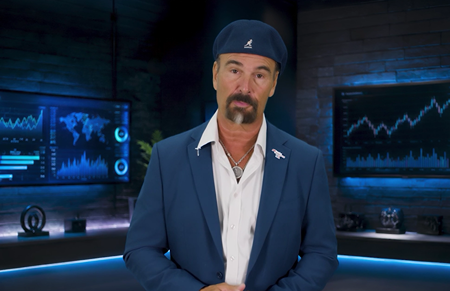
Elon Musk just built the largest private power network in American history. Hall of Fame Trader Jon Najarian says one tiny $6 billion company is critical to every piece of it — and it's his #1 Energy Trade for 2026 as Elon's new "Infinite Power Grid" expands across America.
3 Space Stocks: Ready for Liftoff or Burning Up on Reentry?
Author: Thomas Hughes. Publication Date: 9/1/2026.

Key Points
- Space stocks pulled back sharply after the SpaceX IPO, driven by hype rather than any underlying business failure across the sector.
- Rocket Lab, AST SpaceMobile, and Intuitive Machines are viewed as leading candidates to reach profitability after SpaceX, each backed by growing contract pipelines.
- Analysts and institutional investors are increasingly bullish on these three stocks, with consensus price targets implying substantial upside for each.
- Special Report: Everyone wanted SpaceX. Smart money wants this.
Space stocks have been on a wild ride this year. Many, if not all, rose 50% to 100% or more at their peaks, only to fall back to earth after the SpaceX (NASDAQ: SPCX) IPO was completed. We can attribute this sharp reset in space stock valuations to SpaceX—not because of any underlying failure, but simply because of the hype surrounding the company. SpaceX is exciting; it has an eccentric, headline-making CEO and unlocked the floodgates of institutional space investing. What it does not do is make space an advanced or profitable sector. Pockets of profitability exist—SpaceX’s Connectivity segment, which includes Starlink, is one—but they are few and far between. It will take time for these stocks to fully recover.
The opportunity in space today is to pick up the pieces left by the SpaceX IPO and reassemble them into a portfolio of winners. The space economy was valued at approximately $650 billion as of late August and is expected to grow at a modest single-digit CAGR over the coming years. Growth will be driven by declining launch costs and demand for satellite constellations, with commercial applications making up the bulk of the market and defense applications representing a large but still minority share. Commercial space stations and manufacturing platforms could soon replace existing infrastructure—which is limited—and open new paths to revenue and profits.
Move Your Money Here Before September 30th (Ad)
TradeSmith CEO Keith Kaplan warns that AI's rapid rise has a dark side, threatening American jobs and livelihoods. He says now is the time to prepare before September 30th.
TradeSmith has invested $17 million in AI tools and built a platform used by 180,000 traders worldwide. One user, Stephen, credits it with building a $2.95 million retirement portfolio.
See where Kaplan says to move your money before September 30thProfits are key, as most space companies, including SpaceX, face high upfront development and operating costs. SpaceX is forecast to achieve profitability first, potentially in the next fiscal year, followed by Intuitive Machines (NASDAQ: LUNR), AST SpaceMobile (NASDAQ: ASTS), and Rocket Lab (NASDAQ: RKLB). The question is which company is best positioned today.
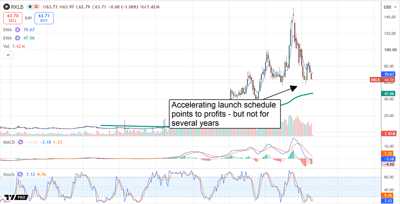
Rocket Lab Accelerates Launch Schedule
Rocket Lab is accelerating its launch schedule and has a major catalyst at hand. While its primary launch system, Electron, is ramping up, the company is preparing to bring the Neutron system to market. Its first flights are scheduled for late 2026 or early 2027, setting the stage for a gradual ramp over the following three years. Neutron is Rocket Lab's medium-lift rocket, capable of carrying larger payloads into space at a lower cost. It is central to the company’s profitability outlook. As it stands, Rocket Lab has one of the longest timelines to profitability, but that timeline is becoming increasingly de-risked. The company has a visible pipeline of contracts for future capacity; it just needs the rockets to deliver.
Revenue is ramping in step with the launch pace. Q2 results reflect year-over-year acceleration, more than 130% growth on a two-year stack, and narrowing losses. Backlog and guidance reinforced the results, pointing to sustained strength, if not acceleration, in upcoming quarters.
Analyst sentiment and institutional interest are also improving. MarketBeat data show that analyst coverage is rising, sentiment is firming, and price targets are increasing, with consensus forecasting about 70% upside. The data also show that institutions own more than 70% of the stock and are aggressively accumulating shares, with buying reaching record levels in early Q3.
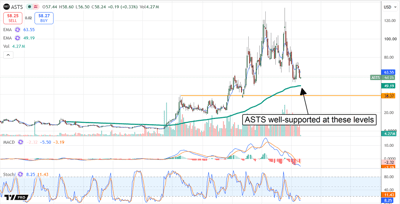
AST SpaceMobile: On Track to Dominate 5G
AST SpaceMobile is more of a space-based play than a space pure play, operating a satellite constellation to support ground-based 5G services. The constellation is populated by antenna arrays that can beam signals directly to ground-based devices, providing broad coverage. Today’s story is the cost and time required to get satellites into orbit. Tomorrow’s story could be the large and growing number of contracts with global 5G service providers, enterprises, and governments. These contracts support a robust revenue and earnings outlook, with revenue in the midst of a significant ramp. Profitability remains dependent on satellite deployment, service activation, and cost control.
Analyst and institutional activity reflect continued interest in the stock, though not without risk. While sentiment is pegged at Hold, it is improving, and the consensus forecast calls for nearly 50% upside, with institutions buying. Institutions show even higher conviction, owning more than 60% of the stock and buying at a pace of more than $10 for every $1 sold in early Q3. Their activity has underpinned late-summer support, limited risk, and provided a launchpad for rallies. The next catalyst could be the expected launch of a U.S. satellite service with major mobile network partners.
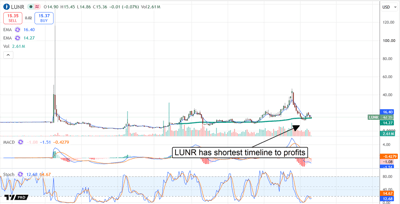
Intuitive Machines: Your Guide to Lunar Landings and Space Profits
Intuitive Machines has emerged as a mission-critical service provider with vertically integrated capabilities to support lunar missions.
Recent acquisitions have increased its telemetry and communications capacity, while its existing technologies include space infrastructure, payload protection, and lunar landers. Numerous contracts support its business, including government projects and NASA’s Artemis mission.
Results reflect accelerating demand and a path to profitability, with profitability expected in 2026 and broader earnings improvement anticipated thereafter. Upcoming results are likely to trigger price action, with analysts rating the stock a Moderate Buy, price targets firming, and consensus forecasting nearly 100% upside.
What Does Apple's TV Price Hike Say About Where the Stock Is Heading?
Author: Sam Quirke. Publication Date: 9/2/2026.
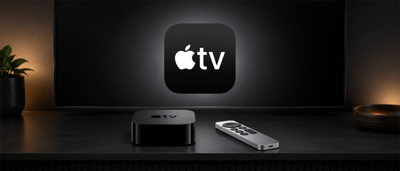
Key Points
- Apple raised prices on Apple TV and Apple One by up to 20%, signaling confidence in its pricing power across a massive, loyal customer base.
- Services revenue hit a record nearly $31 billion last quarter, and its high margins increasingly offset pressure on hardware profitability from rising memory costs.
- The price hike arrives as John Ternus takes over as CEO, with investors watching whether Apple can prove itself in artificial intelligence going forward.
- Special Report: Everyone wanted SpaceX. Smart money wants this.
A price increase on a television subscription might not seem like the sort of thing that could move the needle for one of the world's most valuable companies. Yet the increase Apple Inc. (NASDAQ: AAPL) implemented last week, raising the cost of its Apple TV service and flagship Apple One bundle by up to 20%, says a great deal about the strategy now driving the business—and, by extension, its stock.
The timing is interesting. Apple shares are up 20% so far this year and have been consolidating comfortably just below the all-time highs they set in July. On top of that, the new CEO, John Ternus, formally takes the reins this week. Taken together, last week’s seemingly straightforward price hike offers a useful window into where the company—and its shares—might be headed next.
Squeezing More From the Ecosystem
Move Your Money Here Before September 30th (Ad)
TradeSmith CEO Keith Kaplan warns that AI's rapid rise has a dark side, threatening American jobs and livelihoods. He says now is the time to prepare before September 30th.
TradeSmith has invested $17 million in AI tools and built a platform used by 180,000 traders worldwide. One user, Stephen, credits it with building a $2.95 million retirement portfolio.
See where Kaplan says to move your money before September 30thThe price increases themselves are straightforward enough. The monthly cost of Apple TV climbs to just under $15, its annual plan rises to $119, and the all-in-one Apple One bundle increases to nearly $22 per month. Taken individually, each change is modest, but together they reveal a clear direction.
What makes the move so significant is what it says about Apple's pricing power. The company is confident it can charge its enormous customer base up to 20% more for the same services without sending customers running for the exits. For context, Apple TV's monthly price has tripled since its launch in 2019.
That confidence is underpinned by the sheer scale of Apple's ecosystem, which includes more than 1.5 billion paid subscriptions and an installed base of more than 2.5 billion active devices. Bundling services together, as Apple One does, encourages customers to sign up for more of them and makes it harder to leave, quietly boosting both loyalty and the average revenue generated from each user.
Why Services Hold the Key
To understand why any of this matters for the stock, it's important to appreciate just how central services have become to the Apple story. Once defined almost entirely by the iPhone, Apple now leans heavily on a services division that has become its most important growth engine.
The numbers explain the enthusiasm. Services revenue reached a record of nearly $31 billion in the most recent quarter, up 12% year over year despite currency headwinds, with records across advertising, the App Store, music and video. Crucially, Apple's services unit is far more profitable than its hardware business, so every dollar earned there has an outsized impact on the company's bottom line.
This is the crux of the bull case. As rising memory and other component costs squeeze the profitability of Apple's hardware, a thriving, high-margin services business offers a powerful counterweight. Price increases like last week's flow directly into that engine, which is precisely why investors should be paying attention.
The Other Side of the Coin
None of this is to say the path ahead is entirely smooth, and more cautious voices have some fair points to make. For one, Apple's shares are hardly cheap, trading at a valuation that already assumes durable services growth, resilient iPhone sales and successful execution of an AI strategy that has many investors scratching their heads. That leaves little margin for error should any of those pillars wobble.
More immediate pressures remain, too. Rising memory costs are set to weigh on hardware margins for the foreseeable future, and there's an obvious limit to how far Apple can keep raising prices before price-sensitive customers begin to balk. Even the mighty services arm isn't immune, and its growth rate has cooled somewhat from the brisker pace it set earlier in the year.
Then there is the great unknown of AI. Apple has been notably more cautious in this space than its rivals, and questions remain about whether it can turn its AI efforts into tangible sales and services revenue. For John Ternus, the new leader who stepped in on Sept. 1, price increases like this one may buy some time. However, proving that Apple can hold its own in the AI age is likely to be the defining challenge of his tenure.
A Confident Signal in a Time of Change
Viewed as part of the bigger picture, last week's price increases point to a company executing confidently on the strategy investors most want to see: extracting ever more value from its vast, loyal customer base through high-margin services.
That's a reassuring signal at a moment of transition, and it suggests continuity in the approach that has served Apple so well in the past. The fact that its shares have steadily recovered from their post-earnings dip to sit just shy of record highs, while the stock carries a MarketBeat consensus rating of Moderate Buy, makes it difficult to bet against Apple as the new era begins.
This email content is a paid sponsorship provided by Banyan Hill Publishing, a third-party advertiser of Earnings360 and MarketBeat.
If you would like to unsubscribe from receiving offers for Strategic Fortunes, please click here.
If you have questions about your subscription, feel free to email MarketBeat's South Dakota based support team at [email protected].
If you no longer wish to receive email from Earnings360, you can unsubscribe.
© 2006-2026 MarketBeat Media, LLC.
345 North Reid Place, Suite 620, Sioux Falls, S.D. 57103-7078. United States..