Hello,
Welcome to our flagship newsletter, MarketBeat Daily Ratings.
We'll deliver the latest "Buy" and "Sell" ratings from Wall Street's top-rated analysts directly to your inbox each morning.
But first, we need you to do two quick things:
1. Hit reply, and send a simple "Yes." Just one word. This tells Google (and other emails providers) that you actually want to get our newsletter.
2. After that, this link to confirm your subscription. That will tell us that you received our welcome email and that we should start sending your daily report.
Confirm your subscription here.
After you have completed these two steps, we would like to gift you a free copy of one of our most popular investing reports: 7 Stocks to Buy and Hold Forever. You can download the report with this link.
Thank you again for subscribing. We look forward to being an important part of your investing journey

Matthew Paulson
Founder and CEO, MarketBeat.
P.S. If you didn’t intend to subscribe, no problem—you can unsubscribe with this link.
(ARReply-161)
Just For You Lilly’s Merida Deal Shows the GLP-1 King Is Already Thinking Beyond ObesityAuthor: Chris Markoch. Article Published: 9/2/2026. 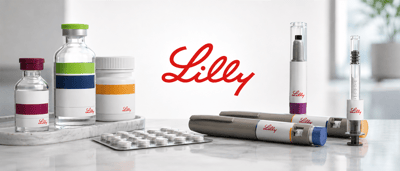
Key Points- Eli Lilly agreed to acquire Merida Biosciences for up to $2.875 billion to expand its immunology pipeline.
- Merida’s lead candidate, MER511, is in Phase 1 development for Graves’ disease and thyroid eye disease.
- Eli Lilly’s GLP-1 strength continues to support growth, but valuation, payer coverage and expectations remain important risks.
- Special Report: Everyone wanted SpaceX. Smart money wants this.
On Aug. 31, Eli Lilly & Co. (NYSE: LLY) announced its intention to acquire Merida Biosciences for $2.875 billion. The acquisition will expand Lilly's portfolio of treatments for serious autoimmune and allergic diseases.
Merida's lead drug candidate, MER511, is in Phase 1 development for the treatment of Graves' disease and thyroid eye disease (TED). Graves' disease affects approximately three million people in the United States. Roughly 25% to 40% of patients with Graves' disease go on to develop TED.
Trump has called an Iran deal close 38 times since the war began, yet the fighting keeps flaring back up.
One day it's a ceasefire, the next it's bombs again. The back and forth may be masking a bigger story most investors are missing.
See the real reason this conflict may never fully end. Uncover the real reason Trump may never end this war If approved, MER511 will be the first approved treatment for both conditions that directly targets the autoantibodies that cause them. The acquisition fits with Lilly's strategy of building its pipeline "around therapies that meaningfully change the course of disease, not just its downstream effects."
The deal is also one of the first examples of how Lilly is using the financial strength generated by its GLP-1 franchise to diversify its pipeline, particularly in immunology.
The Merida Deal Shows How Lilly Is Thinking Beyond GLP-1
On its own, $2.875 billion is a rounding error for a company with Lilly's market capitalization. But the Merida deal is about what it signals rather than what it costs. In Lilly's case, it's a tell about how management is thinking about the next phase of the GLP-1 story.
Every mega-cap drugmaker eventually faces the same question after a period of explosive, single-franchise growth: Is this durable, or is it a supercycle that fades once patent cliffs, competition or payer pushback catch up?
Lilly's answer, at least so far, is to plow GLP-1 cash flow into adjacent, higher-conviction disease areas rather than simply defending its current lead. That's a different posture from a company milking a hit product—and it's the detail investors should weigh before turning to the obesity and diabetes headlines below.
Lilly Is Using GLP-1 Strength to Build Beyond Obesity
Eli Lilly is one of the most well-known and well-respected names in the biotechnology sector. Quarter after quarter, and now year over year, Lilly is showing why it's the leader of the growing GLP-1 sector.
Recent clinical trial results show it has no intention of giving up that crown anytime soon. Those trials center on expanding the labels for its leading GLP-1 drugs.
Regarding its obesity drug, Zepbound, Lilly recently released one-year Phase 3b results showing that a combination of Zepbound and Taltz produced durable improvements in psoriasis and psoriatic arthritis, in addition to improving or sustaining weight and metabolic outcomes.
In addition, Mounjaro, its type 2 diabetes drug, received an FDA expansion approving the drug to reduce cardiovascular risk. This expands the drug's addressable market and may help offset concerns that employers and payers will reduce coverage of GLP-1 medicines heading into 2027.
LLY Stock Is Still Trailing Healthcare Despite Strong Results
But it might surprise some investors to know that an investment in LLY has underperformed the Health Care Select SPDR Fund (NYSEARCA: XLV), one of the leading exchange-traded funds in the sector.
To be fair, the difference is small. LLY has increased by nearly 8%, while XLV has risen about 10% so far this year. Also muddying the waters is the fact that LLY is XLV's largest holding by weight at just over 15%.
Lilly’s Pipeline Gives the Stock More Than a GLP-1 Story
This is the broader issue for investors to consider. LLY has been on a strong five-year run that has pushed the stock price up approximately 350%. Investors who have reinvested the company's dividend, which currently yields about 0.60%, have received a total return of more than 370% over the same period.
The company's Q2 2026 earnings report showed an almost 48% year-over-year (YOY) gain in revenue and a 32% YOY increase in adjusted earnings per share (EPS). Furthermore, Lilly raised its full-year guidance for both the top and bottom lines.
Those results speak to the company's leadership in GLP-1. But even before the Merida acquisition, Lilly had one of the deepest pipelines in the industry, including Cardiometabolic Health, Immunology, Neuroscience and Oncology. More than 40 drugs in the company's pipeline are in Phase 3 trials. That gives investors a line of sight to future revenue and earnings growth.
Valuation Is the Real Test for LLY Stock Now
Surprisingly, even at around 38 times earnings, LLY isn't overvalued by its historical standards. That said, as of early September, the stock is within about 11% of its consensus price target of $1,292.18. Several analysts have raised their price targets since the company's last earnings report, suggesting the Street still sees room to run. But a stock trading close to consensus after a nearly 350% five-year gain is also one with less room for error.
To be fair, Lilly has earned its "GLP-1 king" reputation through results, not hype. The company's pipeline was already deep, and the Merida deal shows a company thinking several moves ahead.
Nevertheless, Lilly is now in a period when that growth may be getting priced in. LLY's year-to-date underperformance relative to XLV is a reminder that even best-in-class execution doesn't guarantee outperformance when expectations have run ahead.
GLP-1 Coverage Risks Could Challenge Lilly in 2027
Another factor for investors to consider is the 2027 payer-coverage overhang on GLP-1 pricing. That makes the setup less "buy the king unconditionally" and more "the king's crown is real, but the price of admission has risen along with it."
Investors comfortable paying up for quality and duration have a reasonable case. Those looking for a margin of safety may want to wait for a pullback, a trial disappointment or a guidance reset to create one. |