 Dear Reader, Bank of America just revealed your expiration date. In their Bloomberg interview, they didn't just predict the digital dollar. They gave us the timeline… 2025 to 2030. 
We're in that window right now. Their exact words: CBDCs are an "inevitable evolution of today's electronic currencies." The Federal Reserve has already asked for public comment. The infrastructure is being built as you read this. Once the digital dollar launches, every transaction you make will be tracked. Your spending could be controlled. Your accounts could be frozen. China already did this. Nigeria already did this. But there's still a legal backdoor. I'm Tan Gera, ex-Wall Street banker and CFA Charterholder. I left the system when I saw what was coming. Over 4,500 investors have already used this legal backdoor to hold assets CBDCs can't freeze and generate yields the Federal Reserve can't touch. Watch how to access the legal backdoor before it closes → Bank of America said 2025-2030. We're already in 2026. The window is closing. To your freedom, Tan Gera, CFA
Decentralized Masters P.S. Bank of America called the digital dollar "inevitable." Discover the legal backdoor investors are using to escape →
This Month's Exclusive News Darden Restaurants Just Hit a 52-Week High–Is the Olive Garden Comeback Story Legit?Reported by Jessica Mitacek. Article Posted: 8/22/2026. 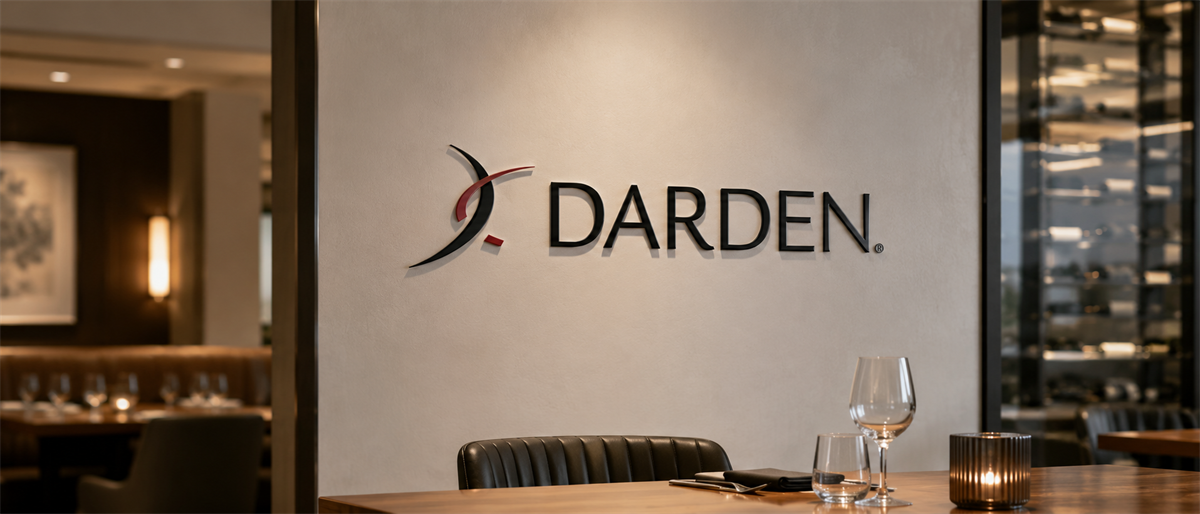
Key Points- Darden Restaurants, owner of Olive Garden and LongHorn Steakhouse among other brands, has outpaced the consumer discretionary sector and reached a 52-week high in 2026.
- Strong brand-specific gains helped push Darden's fiscal 2026 total sales past $13 billion for the first time.
- Meanwhile, competitors Domino's and Chipotle struggled with weak sales growth and falling share prices.
- Special Report: I paid $5,000 to hear Elon say this
It has been a challenging year for the consumer discretionary sector, which has lagged the broader S&P 500 in 2026. But sectors are not monolithic, and one company operating in that corner of the market has not only outperformed the index in 2026, but recently hit its 52-week high. Darden Restaurants (NYSE: DRI), the multibrand, full-service restaurant company that owns and operates Olive Garden, LongHorn Steakhouse, Cheddar’s Scratch Kitchen, Yard House, Ruth’s Chris Steak House, The Capital Grille and Seasons 52—among others—is outperforming much of the sector. But the company’s success this year is also providing clues about the economy and the nuances within the restaurant services industry. Darden’s Evolution Has Underpinned Its SuccessThe Orlando-based company, whose portfolio is composed of casual and fine-dining businesses, has seen its stock rise more than 18% this year. Much of that gain has resulted from investments in its evolving brands. Olive Garden, for instance, has spent years modernizing and updating its brand image. It has invested heavily in first-party delivery options and online ordering platforms, improved kitchen productivity by adopting streamlined technology, and updated its menu to offer trendy, less conventional dishes and lighter fare. Olive Garden’s resurgence is not an isolated case. Darden’s Q4 2026 sales from LongHorn Steakhouse reached $1 billion for the first time, with same-restaurant sales increasing 9.5% year-over-year (YOY) and 7.2% for full-year 2026. And while many restaurants have experienced dwindling foot traffic, Yard House—the chain of high-end sports bars offering an extensive menu of trendy fare and draft beers—has grown to 97 locations as of August 2026. With consumer sentiment remaining near record lows, Darden’s management team has focused on providing value-seeking diners with restaurants that deliver without feeling cheap. The results have been tangible. For fiscal year 2026, Darden’s total sales surpassed $13 billion for the first time. In Q4, revenue of $3.72 billion represented a 13.7% YOY increase, while earnings per share (EPS) growth was 37.1% YOY and free cash flow growth was 195.4% YOY. Olive Garden, LongHorn and Yard House all posted positive comparable sales for the fifth consecutive year. That success has fueled growth for the 88-year-old company. In his Q4 earnings call comments, CEO Rick Cardenas highlighted how Darden’s success has contributed to global expansion, with new international franchising partners in Canada, India and Spain opening their first locations. While Other Restaurants Suffer, Darden Is Bucking the TrendThe company’s successful 2026 was highlighted by a new share repurchase plan and strong 2027 guidance. In Q4, the company bought 700,000 shares of its common stock for $138 million, with the board authorizing a new $1.5 billion share repurchase program without an expiration date. Darden CFO Raj Vennam highlighted that the company has delivered 9% annualized adjusted earnings before interest, taxes, depreciation and amortization (EBITDA) growth since 2019. He added that consistent cash generation provides “more than sufficient capacity” to fund the business’s core requirements each year, grow its dividend—which currently yields 2.92%, or $6.48 per share annually—and invest in new locations. Guidance for 2027 includes: Sales in the range of $13.6 billion to $13.75 billion Same-restaurant sales growth of 2.5% to 3.5% Between 75 and 80 new restaurant openings Total capital spending of $875 million Diluted net earnings per share of $11.10 to $11.35
But the broader restaurant industry has not fared nearly as well. In fact, Darden’s success has been something of an exception. Cardenas acknowledged that during the company’s Q4 earnings call, stating that Darden offers “a collection of brands” that gives it reach across multiple dining occasions, guest demographics, price points, geographies and cuisine types. As a result, the company does not rely on a single brand or consumer segment, unlike many of its competitors. That’s particularly true of companies operating in the fast-food and fast-casual segments. For comparison, Grand View Research forecasts that the U.S. fast-food and quick-service restaurant market will grow at a compound annual rate of 3.4% from 2025 through 2030. That trend is already evident for some chains. Domino’s (NASDAQ: DPZ) saw just 0.1% same-store sales growth when it reported Q2 results in late July. Its EPS miss was the third in a row and the fifth in seven quarters. Income from operations grew just 2.6% in Q2. The stock is down more than 20% over the past year. Shares of Chipotle (NYSE: CMG) are down around 18% over the past year, and after years of double-digit revenue growth, the company has averaged just 6.42% over the past five quarters. Insider buying has dried up, with zero purchases over the past three years compared with nine sales. Meanwhile, analysts assign Darden a consensus Moderate Buy rating, current short interest is less than 6% of the float, and institutional owners have injected $6.76 billion into DRI over the past 12 months, compared with $2.41 billion in outflows.
This content is for educational purposes only. The opinions expressed are from DM Intelligence LLC, doing business as Decentralized Masters, who are not licensed financial advisors or registered investment advisors. The reader acknowledges that DM Intelligence LLC is not responsible for any losses, direct or indirect, resulting from the use of this information, including errors, omissions, or inaccuracies. Results are not typical and will vary. Success with digital currencies requires time, effort, and involves substantial risk including total loss of investment. Past performance does not indicate future results. All investments are at your own risk. You may unsubscribe at any time. . | 
