|
The following news release was issued earlier today by the Michigan Department of Agriculture and Rural Development.
Sept. 2, 2026
Media contact: Lynsey Mukomel, 517-290-1734
Agencies teaming up to certify Michigan firewood sellers as part of longstanding statewide effort
The Michigan Departments of Agriculture and Rural Development and Natural Resources are reminding consumers to not move firewood long distances this holiday weekend to help prevent the spread of invasive insects and plant diseases. The agencies are also working to expand access to certified invasive-free firewood.

Firewood movement is one of the most common pathways for the spread of invasive insects and diseases. The Michigan Invasive Species Program’s longstanding “Don’t Move Firewood” campaign asks Michiganders to purchase firewood at or near their destination and choose certified products whenever possible. Certified invasive-free firewood has been heat-treated to neutralize invasive pests and diseases, making it safe to transport.
“Michigan’s forests, parks and natural areas are among our state’s most treasured assets,” said MDARD Director Tim Boring. “By choosing certified invasive-free firewood, consumers can play an important role in protecting those resources and preventing the spread of harmful pests and diseases.”
To expand the “Don’t Move Firewood” campaign, MDARD and DNR have teamed up to help Michigan producers and suppliers become certified through the Invasive-Free Firewood Certification Program.
|
To expand the “Don’t Move Firewood” campaign, MDARD and DNR have teamed up to help Michigan producers and suppliers become certified through the Invasive-Free Firewood Certification Program.
“Local producers who become certified show they care about Michigan’s forests and the future availability of wood products,” said DNR Director Scott Bowen. “They also help to provide consumers with a safe firewood option, no matter where they travel in the state.”
More than 140 pests and plant diseases can hitch a ride in untreated firewood, traveling hundreds of miles before emerging to wreak havoc on local ecosystems. Many of these harmful pests, including hemlock woolly adelgid, Asian longhorned beetle and oak wilt, are difficult to see with the naked eye, making them easy to transport unintentionally. Once established, these pests are extremely difficult or even impossible to eradicate.
|
Invasive species can:
Properly heat-treating firewood eliminates these threats by destroying harmful invasive pests, helping protect Michigan’s natural and agricultural resources. Non-certified firewood should not be moved more than 10 miles from where it was originally cut.
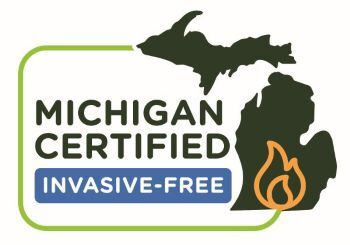
Consumers are encouraged to look for Michigan’s “Certified Invasive Free” seal or the U.S. Department of Agriculture certification shield on packaging to ensure that firewood has been heat-treated to prevent invasive species spread.
Producers or suppliers who wish to become certified should reach out to the Invasive-Free Firewood Certification Program.
For more information about actions Michigan is taking to combat the spread of invasive species, visit the Michigan Invasive Species Program web page.
Michigan's Invasive Species Program is cooperatively implemented by the Michigan departments of Agriculture and Rural Development; Environment, Great Lakes, and Energy; and Natural Resources.
Note to editors: Accompanying photos are available below for download. Caption information follows.
Avoid: A reminder from Michigan's Don't Move Firewood campaign to purchase certified invasive-free firewood.
Certified: Look for the Michigan Certified Invasive-Free logo or a USDA certification shield to be sure the wood you purchase is certified, heat-treated wood.
|