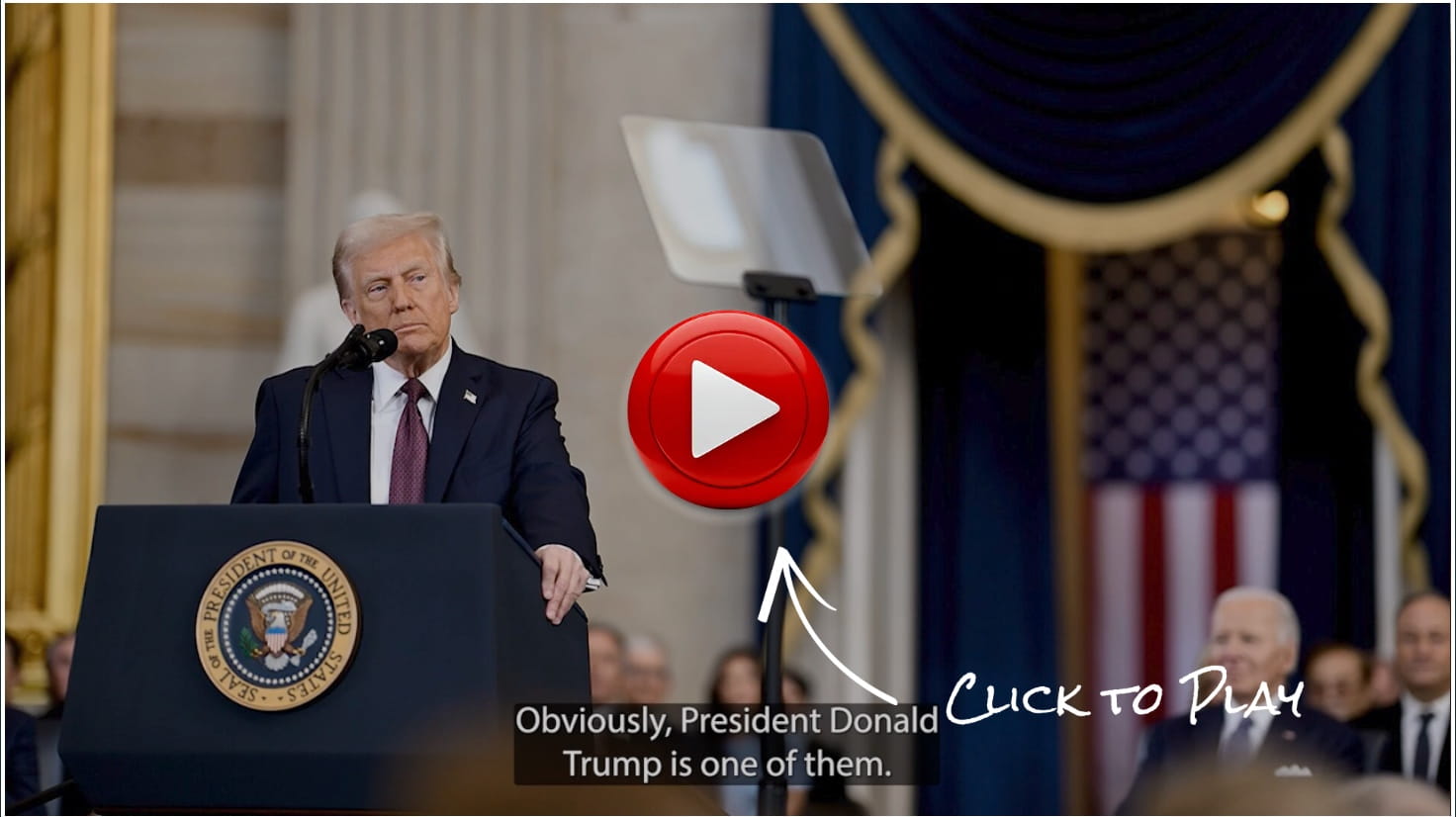
| A number of strange events have begun to play out in the world... With almost ZERO explanation. Here's what we're seeing: - The U.S. Bureau of Economic Analysis is preparing a change to how inflation is measured — a shift that will effectively erase the apparent acceleration in core inflation this year…
- The U.S. dollar has sunk to near its lowest level in four years…
- The world's largest investors are moving their money at the fastest pace in a generation…
- And in London, staff at the Bank of England are being forced to work OVERNIGHT to enable the world's richest people to move their money, according to Bloomberg.
Together, all of this is likely setting up what one financial expert believes will result in a parabolic move in ONE asset. Dr. David Eifrig is the CEO of one of the largest publicly traded independent research firms in America, with 400,000 people relying on his firm's market predictions. And he just issued a brand-new warning for what he believes will happen to one of the most currently ignored investments in 2026. According to Dr. Eifrig: "The evidence is everywhere. And yet most folks aren't paying attention." "Mark my words," he warns, "This is the calm before the storm." And yet, even the most prepared Americans could be blindsided by what's about to happen. Which is why we're posting Dr. Eifrig's full, latest, warning to the public on our website today... Click here to access it for yourself (100% free for a limited time). All the best, Corey McLaughlin Editor, Stansberry Digest | | | | | This ad is sent on behalf of Stansberry Research, 1125 N Charles St, Baltimore, MD 21201. If you would like to optout from receiving offers from Stansberry Research please click here. | |
Silver Tract Editorial | SILVER TRACT | EDITORIAL NOTE | | | | | | FLEXIBILITY / DECISIONS / FINANCIAL STRUCTURE | | | The Financial Value of Keeping Options Open | | Finance is often framed around what money can buy. Just as important is what available resources allow a household or business to postpone, reconsider, or redirect. | | Financial decisions are usually described in terms of action: buying, borrowing, investing, paying, expanding, or saving. Yet one of the most useful financial positions can be the ability not to act immediately. A household with some uncommitted cash has room to wait before making a large purchase. A business with available liquidity may be able to evaluate a new opportunity without abandoning an existing plan. A company that has not used every dollar of borrowing capacity preserves choices that might matter later. This flexibility is difficult to see on a standard financial statement because it is partly defined by decisions that have not yet been made. Still, the ability to delay commitment has economic value. It creates space between changing information and the moment when money becomes permanently assigned to one use. | | 01 | COMMITMENT REDUCES FLEXIBILITY | | | Money becomes less flexible when it is committed to a specific purpose. Cash used to purchase equipment becomes equipment. Money placed into inventory becomes goods waiting to be sold. Funds used for a long-term project may remain tied to that project for years. None of these decisions is necessarily undesirable. Businesses exist to put resources to work. The important distinction is that commitment changes what can happen next. A factory cannot instantly convert a newly installed production line back into the exact amount of cash originally spent on it. A homeowner cannot use part of a kitchen renovation to settle tomorrow's utility bill. The value still exists, but its form has changed. Financial flexibility therefore depends partly on how much of a resource base remains uncommitted or easily redirected. The more specific the use becomes, the narrower the remaining set of choices. | | | EDITORIAL NOTE A financial resource can keep its value while losing some of its flexibility once it is committed to a specific use. | | | 02 | WAITING CAN PRODUCE INFORMATION | | | The value of waiting comes partly from the fact that conditions change. A project that looks promising today may become clearer once customer demand, supplier pricing, construction costs, or other variables are better understood. Committing early can secure an opportunity, but it can also lock in assumptions before more information arrives. Delaying a decision preserves the possibility of responding to that new information. Businesses encounter this constantly. A retailer may test one location before opening several. A manufacturer can operate an existing production line longer while evaluating whether demand justifies additional capacity. A household can postpone replacing an item that still functions while comparing alternatives. In these situations, time itself becomes informative. The world continues producing evidence while the decision remains open. | | “ | The ability to wait can have financial value because tomorrow may contain information that does not exist today. | | | 03 | LIQUIDITY CREATES DECISION SPACE | | | Liquidity is often discussed as protection against bills and unexpected expenses. It also has another role: it preserves decision space. A company with available cash can respond differently from one whose resources are almost entirely tied to property, machinery, inventory, or long-term projects. Both may own valuable assets, but only one may be able to redirect a meaningful amount quickly. The same distinction appears at household scale. An emergency reserve is valuable partly because it has not been assigned in advance to a specific purchase. Its usefulness lies in remaining available for a range of possible future needs. Liquidity therefore represents more than financial safety. It is the practical capacity to choose among several uses when the exact future use is not yet known. | | 04 | UNUSED CAPACITY CAN STILL BE USEFUL | | | Finance sometimes treats unused capacity as inefficient, and in some cases it can be. But spare capacity can also function as flexibility. A business may maintain an undrawn credit facility that it does not expect to use immediately. A warehouse may have room for additional inventory during a seasonal peak. A company may keep some cash outside its current investment program. These resources may appear inactive until circumstances change. Their value becomes clearer when a supplier requires faster payment, a new contract demands additional working capital, or a temporary disruption creates an unexpected need. The key distinction is between wasted capacity and deliberately preserved capacity. One reflects resources without purpose. The other reflects room intentionally left open because the future is not perfectly predictable. | | THE OPTIONALITY VIEW Some financial resources are valuable precisely because they have not yet been assigned to one irreversible purpose. | | | 05 | FLEXIBILITY HAS A COST TOO | | | Keeping options open is not automatically the best use of every resource. Money held highly liquid may not be serving another productive purpose. Delaying an investment can mean postponing benefits that might have begun earlier. This creates the central tradeoff. Commitment can create productivity, while flexibility preserves alternatives. Too much commitment can leave little room to adjust. Too much hesitation can prevent resources from being put to useful work. Financial planning therefore involves more than selecting good individual uses of money. It also involves deciding how much of the future should be locked in today. That question appears in capital budgets, household savings, corporate liquidity, debt structures, and almost every other area where current resources must support an uncertain future. | | — | Finance is often about deciding where money should go. Just as important is deciding when not to decide yet — preserving enough room for new information, changed conditions, and choices that have not appeared on the calendar. | | | SILVER TRACT / EDITORIAL NOTE | | | |
|
|
This email communication is from SilverTract, which forms part of TerraTrance Technologies, LLC. You can reach our team by replying to this message or emailing [email protected]. 200 Broadway Blvd NE, Albuquerque, NM 87102 Copyright © 2026 SilverTract. All Rights Reserved. No written, visual, or informational material in this communication may be reproduced or distributed in any manner without prior written permission from TerraTrance Technologies, LLC. |
|
|
|