- Breaking Point — 203 of survey respondents in Outright's latest research have lost funding. Briefing on September 10. - WorldPride Amsterdam — the march, the conference, and 172 people on a boat. - Grassroots to Geneva — eleven activists, one statement, ninety seconds. - A $100,000 promise, and save the date for Outsummit on November 6.
Dear John,
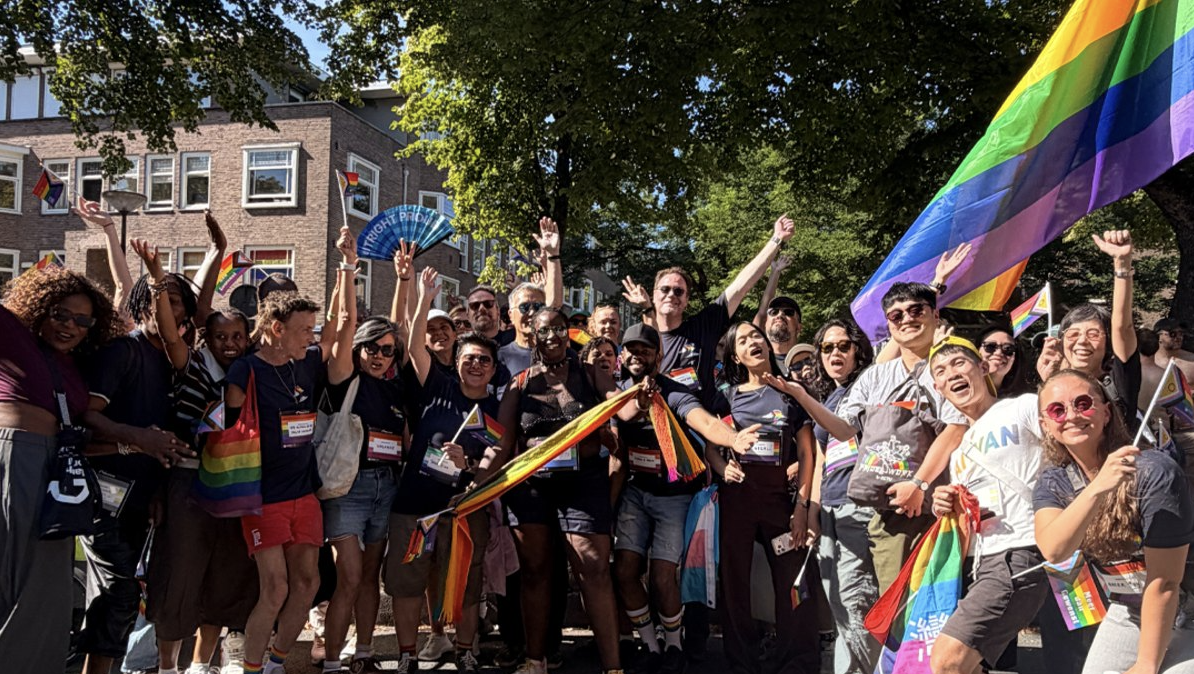
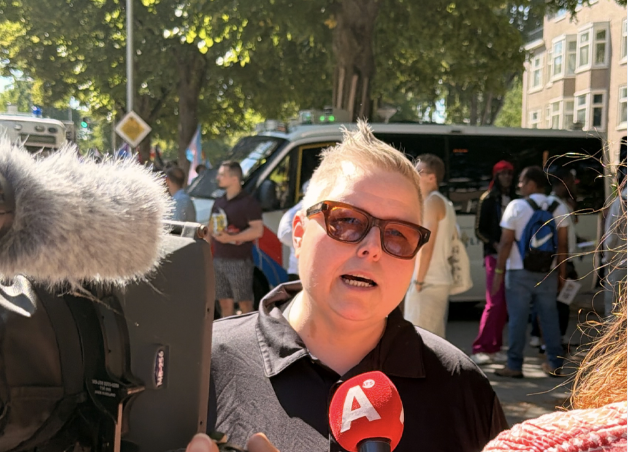
On August 8, tens of thousands of people marched through Amsterdam for WorldPride. Outright staff, Board members, and activists joined the WorldPride closing march, amplifying our March For All campaign and carrying the names of LGBTIQ people who cannot safely march where they live.
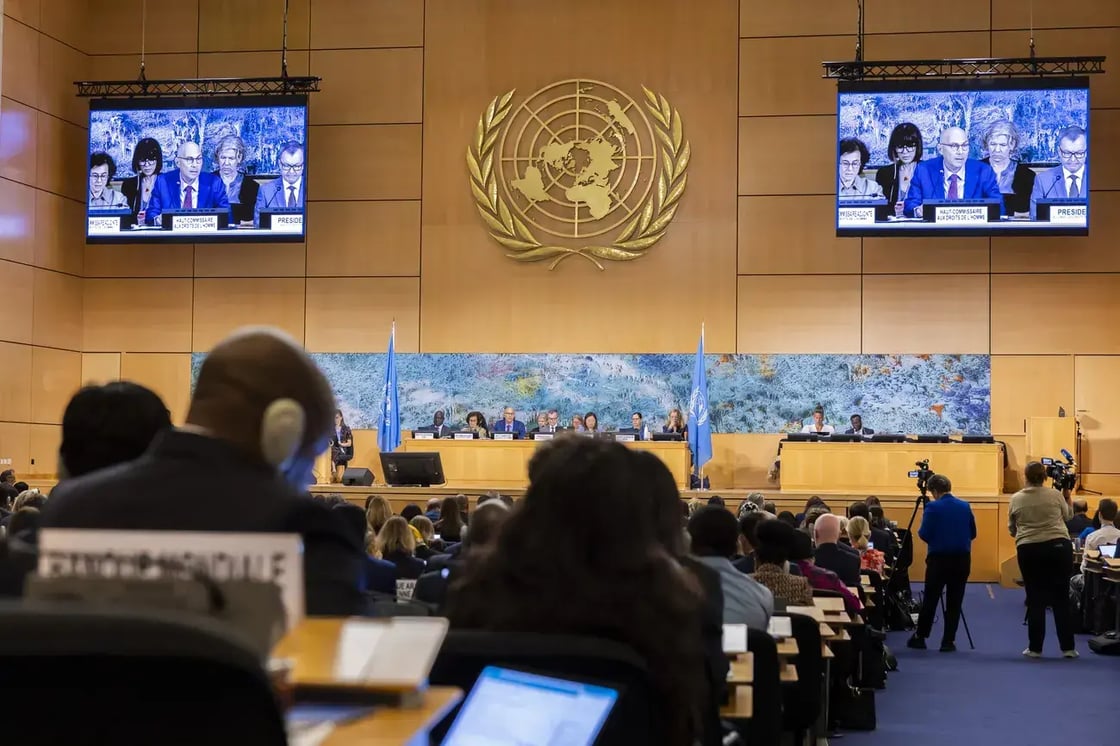
Two months earlier, in Geneva, Jamilla Jade Madingwane of the Forum for the Empowerment of Women had ninety seconds to address the UN Human Rights Council. She used them to speak up for the global LBQ movement and activists everywhere.
Different environments, the same work: getting the people whose rights are being debated into the conversations and environments where the decisions are made.
Neither of those moments happened on its own. Generous supporters fund the travel, the training, and the weeks of preparation before the microphone moment. The preparation is the part of this work nobody photographs.
Since the United States withdrew nearly all of its foreign assistance in 2025, LGBTIQ organizations have been holding their ground with far less to hold onto it with.
We surveyed 229 LGBTIQ organizations in 94 countries to find out the true impact of the funding cuts long term. 203 of them have lost funding since January 2025.
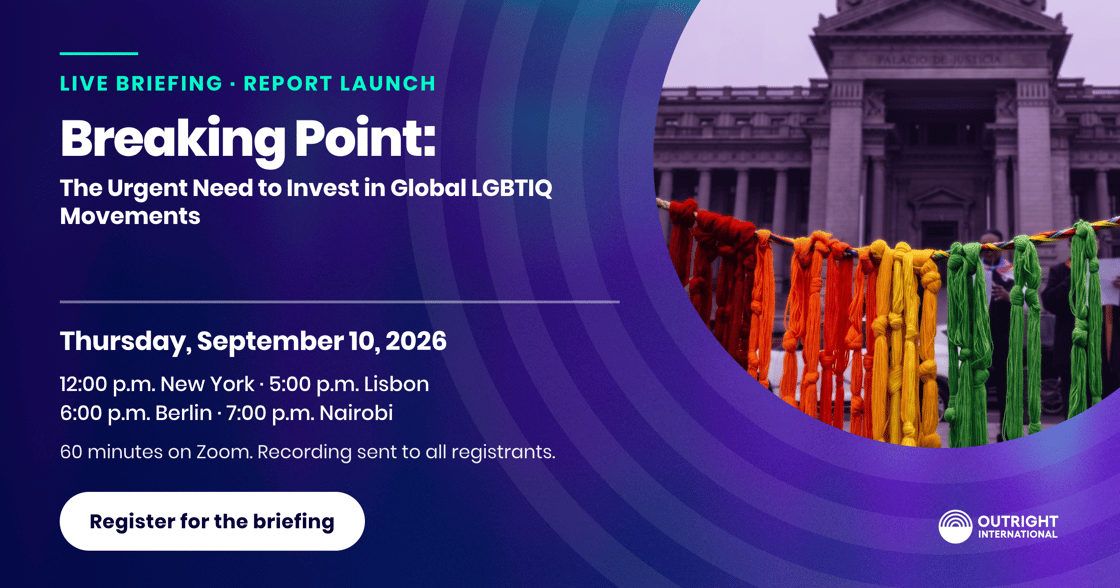
That is what our new report “Breaking Point: The Urgent Need to Invest in Global LGBTIQ Movements” documents, and what we will walk through together during our webinar on Thursday, September 10.
The work does not stop. Neither do we, and neither should the support this movement needs to keep going.
THURSDAY, SEPTEMBER 10 · ONLINE · ONE HOUR
Breaking Point: The Data, and What Funders Can Do Now
WorldPride is a march, a conference, a canal full of boats, and thousands more intimate conversations. Outright was there for all of it.
In the march.March For All makes Pride more accessible, visible, and inclusive across borders, with marchers carrying the names of those who cannot safely march where they live. On Saturday, August 8, Outright walked with partner and 2026 March For All sponsor, Deutsche Bank, with tens of thousands of people moving through the city for the WorldPride March.
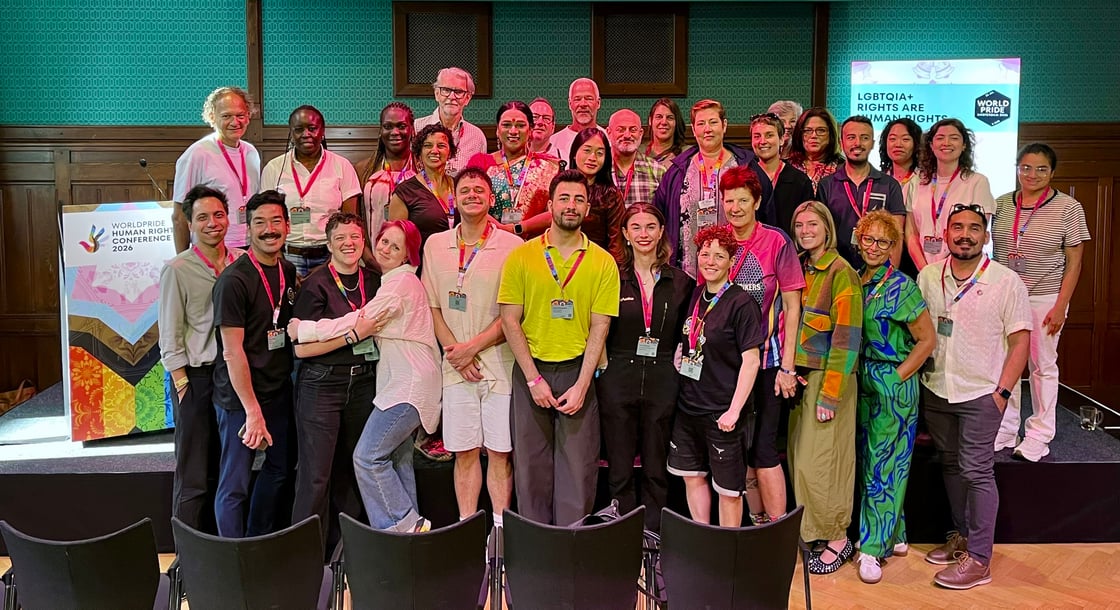
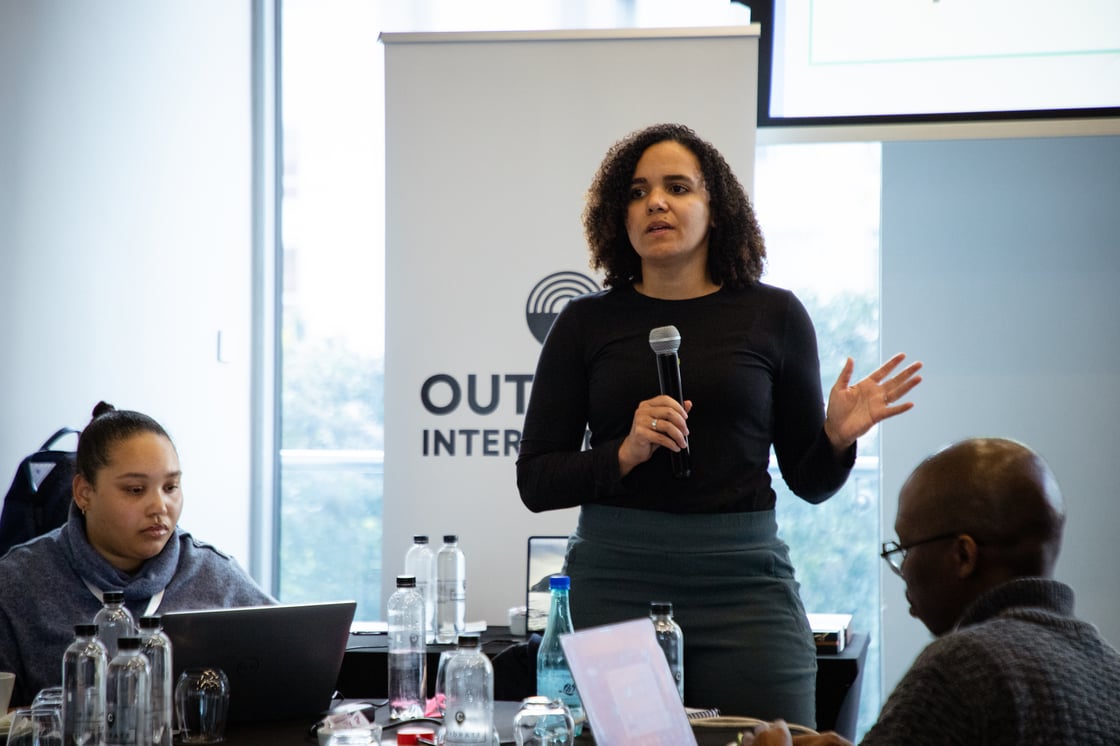
In the conference halls.At the WorldPride Human Rights Conference from August 5 to 7, Neela Ghoshal, our Senior Director of Law, Policy, and Research, led a session on LGBTIQ heritage and culture under attack. It traced how the wave of anti-trans laws and policies now moving through dozens of countries and the multilateral system targets trans, intersex, and queer expression, and which counter-narratives hold up against it. Maria Sjödin, our Executive Director, joined sessions on the international mechanisms that still protect these rights, and on how to keep them working.
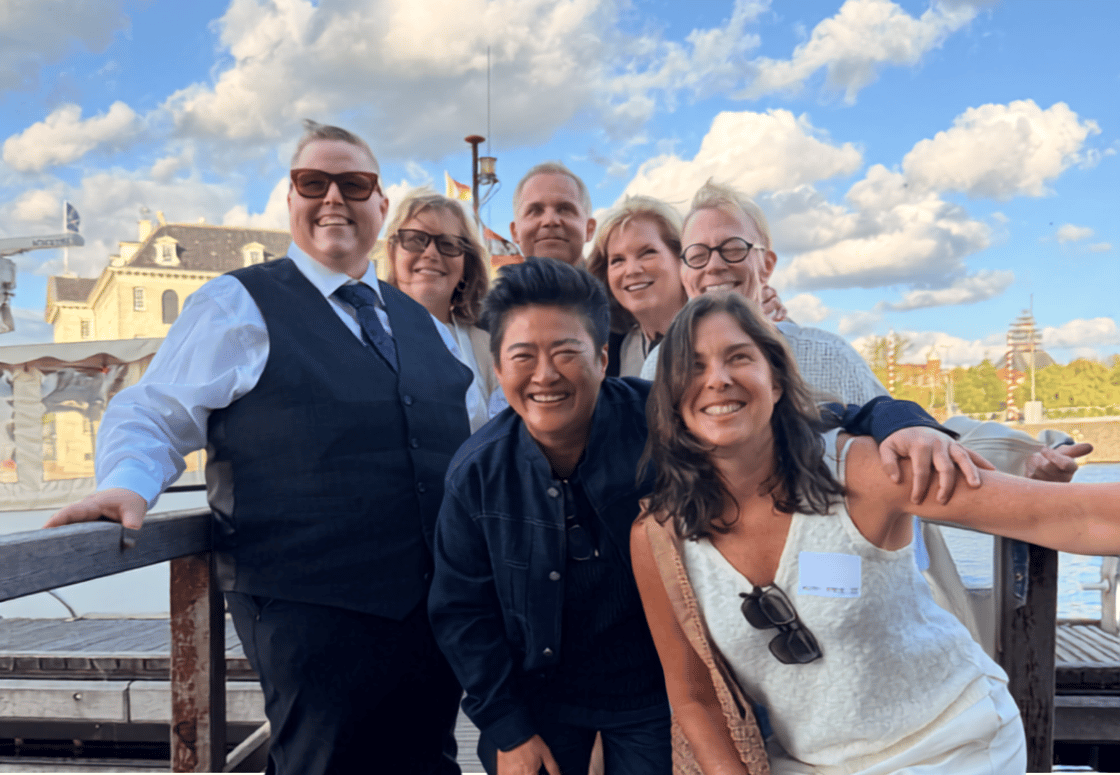
On the water. Outright co-hosted a canal boat reception with Open for Business and Deutsche Bank. It gathered 172 LGBTIQ civil society leaders, policymakers, and business leaders together for an evening, connecting activists, researchers, funders, and more to build bridges that strengthen our movement.
And in between.Meeting and making new friends, exchanging ideas, celebrating queer joy, and occupying spaces.
By the numbers
172 leaders charting the course on one boat in Amsterdam
90seconds to deliver a vital message to shape international policy
11 LBQ activists and movement leaders who shaped one statement in Geneva
203survey respondents detailing the impact of funding cuts
Governments in dozens of countries are manufacturing alarm around LGBTIQ identity and using it to tighten their hold on courts, schools, and public memory. The pattern is consistent enough to name. Authoritarian governments test methods on LGBTIQ people that they later apply far more widely. Of the countries that held elections in 2024, 85 percent saw anti-LGBTIQ messaging enter the campaign.
Maria sets that against what activists achieved anyway. Campaigners and courts in Bulgaria, Ecuador, and Botswana each secured gains this year that patient local organizing made possible.
Underneath all of it sits the funding question. The U.S. withdrawal of foreign assistance left hundreds of LGBTIQ organizations without much needed support. During that same time period, Outright completed its largest grantmaking year to date, moving more resources to LGBTIQ organizations than in any year of our history.
Jamilla Jade Madingwane has spent more than a decade at the Forum for the Empowerment of Women (FEW), a South African organization built by and for Black lesbian and queer women. FEW had already submitted evidence to the UN Independent Expert on violence and discrimination based on sexual orientation and gender identity, documenting the barriers LBQ women in South Africa face when they try to access justice, healthcare, and equal treatment. In June, that evidence helped shape the first UN report devoted to the experiences of LBQ women.
Getting the voices of LBQ activists into the room was a separate job.
Outright co-organized our first LBQ Advocacy Week in Geneva, which brought eleven activists from around the world together to strengthen our collective engagement with the UN human rights system: strategy sessions, advocacy trainings, meetings with UN experts, and a seat in the proceedings of the Human Rights Council. For most of them, it was their first time inside those rooms.
The week produced one statement. The eleven activists workshopped draft after draft until it reflected all of them. Jamilla delivered it.
“While one person may stand behind the microphone, effective advocacy is almost always built collectively. Behind many oral statements are countless conversations, consultations, lived experiences, and moments of solidarity that make them possible.”
Jamilla Jade Madingwane, Forum for the Empowerment of Women
Moments such as this are how we change the harsh realities LBQ women often face in pursuit of justice, healthcare, and equal treatment.
Her account of that week was published this month.
A program manager at Kebaya, a trans women-led organization in Indonesia, put that question to our researchers after funding cuts reduced her staff from 11 to 3.
"Breaking Point: The Urgent Need to Invest in Global LGBTIQ Movements” documents, at scale, what she is referencing. Outright surveyed 229 LGBTIQ organizations across 94 countries. Of those, 203 have lost funding since January 2025, and most trace it to the U.S. withdrawal of foreign assistance.
NEW RESEARCH
Among those 203 organizations:
- Nearly half lost more than half of their budget. - Nearly two-thirds can no longer respond to emergencies. - More than a third expect to close within the year.
The losses landed hardest where support was already thinnest. Shelters have closed across four continents. HIV treatment has been interrupted in multiple countries.
On Thursday, September 10, join Outright researchers and partner activists who will deliver a one-hour briefing: what the data shows, what funders can do right now, and what comes next.
In June, 14 LGBTIQ entrepreneurs from seven countries across Southern Africa spent two days together in South Africa. It was the first sub-regional convening of Outright's Build, Earn, Thrive Initiative, which works on the practical side of economic inclusion: whether LGBTIQ people can get hired, start an entrepreneurial initiative, borrow money, and keep a business alive.
The agenda expanded a range of topics, some already intensely discussed in the movement and others that broke new ground. How cultural work becomes a profitable business. How a physical space stays financially viable without pricing out the people it was built for. How queer-owned businesses reach each other and reach mainstream markets. How storytelling and legal strategy work together, where neither is guaranteed.
Two things came up in every session. One was the movement’s complicated relationship with money, which turned out to be shared regardless of how financially successful anyone in the room had become. The other was capital. Participants described traditional LGBTIQ funders (and funders outside the space) treating for-profit enterprises as too risky to back, which leaves viable businesses with nowhere to go.
They have started building the alternative themselves. Since June, four participants from three countries have begun organizing a member-led investment pool so the group can raise money together and lend to one another on terms they set.
Nine of the twelve participants who answered our survey requested more sessions like it in the future.
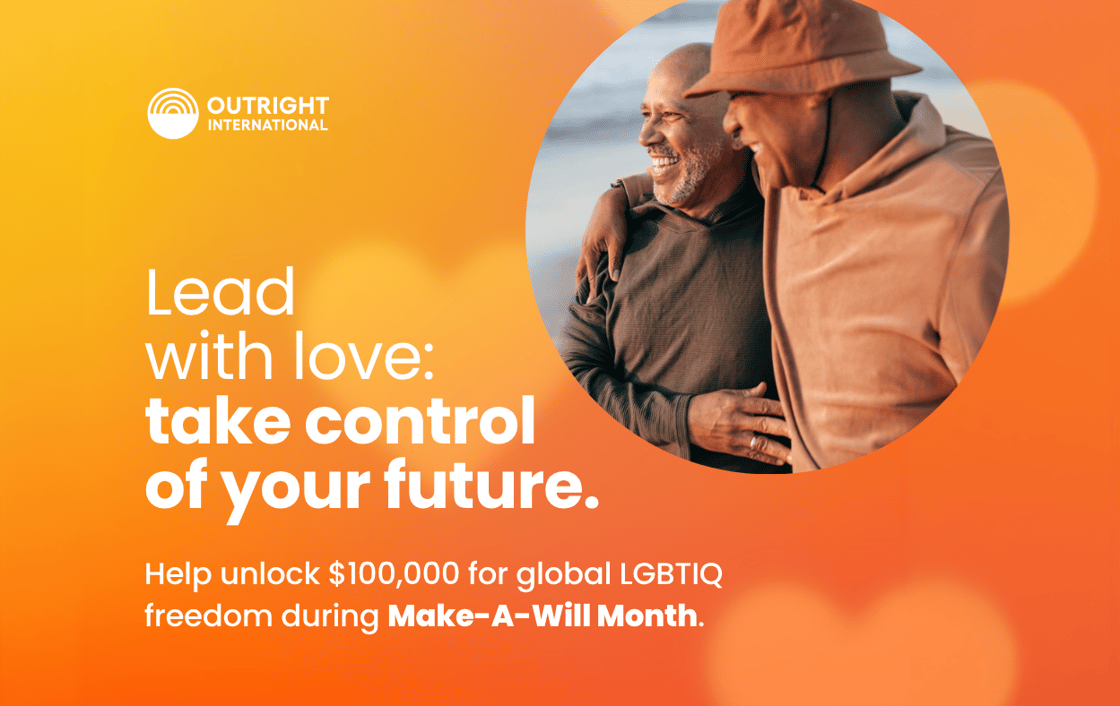
August is National Make-A-Will Month, and this year, one supporter has attached a challenge to it. They have pledged a transformational $100,000 bequest once ten Outright supporters confirm they have included Outright International in their estate plans. There are four days left in the month. Will you help Outright unlock this match?
Naming Outright in your will, or as a beneficiary of a retirement account, costs nothing today. It helps sustain this work for the generations who will need it.
Last year, 574 people from more than 70 countries joined Outsummit, our annual hybrid global LGBTIQ human rights conference. This year, it takes place on Friday, November 6.
At Outsummit, leaders from civil society, government, philanthropy, and business spend a day together reflecting on where the global LGBTIQ movement stands and collectively imagining its future. This year's theme is "The Future We Claim." It’s about what this movement intends to build, and who it intends to build it with.
Registration opens soon. Until then, you can look back at who has taken the stage in past years. If you will be in NYC on November 6 and would like an invitation to the invite-only in-person event, send us an email at [email protected].