| Unsubscribe |
Dear Reader,
Most investors look at price.
I look at access.
Because price tells you what the crowd believes today.
Access tells you what the people on the inside may already know.
And one tiny public company has an address that is almost impossible to ignore.
It operates inside the secure perimeter of Kennedy Space Center, where SpaceX and Blue Origin are its neighbors.
And they have a special agreement allowing it to use a multi-billion dollar federal launch facility for just $500…
Yet its shares still trade for less than $5.
The Pentagon is already paying them.
So are Lockheed Martin and GE Aerospace.
That combination of elite access, major customers, and a tiny share price is what led my private intelligence contact to take a closer look.
And he found a launch technology that could eliminate one of the most expensive problems every rocket company faces.
I am not going to explain that technology here because it would give away too much.
But I will show you the company, the research, and why early investors could see gains as high as 997% here.
For now, most Wall Street analysts do not even know this company exists.
With a major milestone I reveal in this presentation approaching, that may not last much longer.
Click Here to Go Behind the Gates and Discover the Company
Uncle Sam’s Chip Trick: How the Government Built a Silicon Moat
Written by Jeffrey Neal Johnson. First Published: 8/18/2026.

Key Points
- U.S. trade restrictions on foreign memory suppliers and surging AI-driven demand for high-bandwidth memory are jointly reshaping the economics of the semiconductor industry.
- Micron Technology posted nearly $41.5 billion in quarterly revenue, a 346% year-over-year increase, with net profit margins expanding to nearly 56% amid strong pricing power.
- Institutional investors have poured roughly $119 billion into Micron over the past year as analysts, including Bank of America, project earnings could exceed $230 per share by fiscal 2030.
- Special Report: Forget SpaceX. Buy the company Musk can't replace.
Investors analyzing what's driving semiconductor stocks should consider how two forces—trade policy and the demands of artificial intelligence—are reshaping institutional portfolios. Traditional cyclicality in the memory segment is giving way to something steadier and more structural.
This shift is being propelled by federal protectionist policies and a tightening supply ceiling, as high-performance computing (HPC) clusters consume global foundry capacity and fundamentally reset the industry's long-term margin profile.
Get in before the Senate returns (Ad)
When the Senate comes back in September, one of the biggest crypto bills in years gets a real shot at a floor vote… and the money that's been sitting on the sidelines for years won't wait around to see how it plays out.
The question is: which coin is best set up to catch the move? We believe we've found the answer.
A network built from the ground up for regulated finance: tokenized securities, stablecoin settlement, institutional payments, collateral movement, privacy, and the compliance and auditability trails institutions actually require... and it's already in the room with names like Goldman Sachs, J.P. Morgan, Bank of America, and Citadel.
Reveal the #1 Coin Before the Clarity Act vote in September.Washington is working to insulate critical technology supply chains, effectively establishing a federally guarded protectionist moat. At the same time, hyperscaler data center demand is consuming global silicon wafer capacity, creating a structural shortage of advanced memory.
This combination grants domestic producers unprecedented pricing power over hardware developers. Instead of competing on thin margins against subsidized foreign producers, domestic manufacturers are securing multiyear, high-margin supply agreements. Investors who understand how this geopolitical shield feeds directly into wider margins can spot these structural shifts before the market fully prices them in.
Washington Cuts Off Cheap Foreign Chips
This policy shift is most evident in consumer hardware, where major technology companies face shrinking flexibility in component sourcing. A prime example occurred when federal trade officials cautioned consumer electronics leader Apple Inc. (NASDAQ: AAPL) against buying lower-cost memory components from foreign, state-subsidized suppliers, including Yangtze Memory Technologies Corp. and ChangXin Memory Technologies.
With hardware gross margins under pressure from rising component costs, mega-cap buyers naturally sought cheaper alternatives overseas. However, the U.S. Department of Commerce made its position explicit: sourcing core memory components from blacklisted or foreign military-linked enterprises poses unacceptable national security risks. This regulatory stance removes low-cost foreign producers from the domestic supply chain, stripping buyers of their traditional negotiating leverage.
Consequently, technology companies must turn to domestic and allied suppliers to meet their needs. Domestic manufacturers are capturing these guaranteed order volumes by investing heavily in reshoring production.
Micron Technology (NASDAQ: MU) committed approximately $250 billion to construct megafab facilities across Idaho and New York. These capital commitments align directly with federal industrial policy, creating a captive-customer dynamic in which domestic manufacturers can secure long-term, noncancelable supply agreements at prices that favor suppliers.
How AI Accelerators Gobble Up Global Silicon Capacity
While trade restrictions establish a regulatory barrier, the physical supply of silicon memory is undergoing an equally dramatic contraction. The primary driver is the surge in demand for high-performance computing platforms built by chipmakers such as NVIDIA Corporation (NASDAQ: NVDA) and Advanced Micro Devices, Inc. (NASDAQ: AMD).
To power modern artificial intelligence models, advanced graphics processors require large stacks of high-bandwidth memory (HBM). The physics of semiconductor manufacturing reveals the broader economic impact: producing one bit of HBM requires roughly three times the silicon wafer capacity of standard DRAM. As foundries convert conventional manufacturing lines to specialized packaging, global wafer capacity for standard consumer memory dries up.
This wafer-conversion ratio creates a rising tide that expands pricing power across all memory categories. Manufacturers report that 100% of their 2026 HBM production capacity is fully allocated under noncancelable, long-term agreements. Because chipmakers such as NVIDIA Corporation consume vast amounts of available foundry capacity, traditional hardware makers must compete for a shrinking pool of conventional memory, cementing high contract pricing across the hardware ecosystem.
Financial Data Proves Memory Pricing Power
Recent financial data from Micron provides concrete evidence of how this protectionist moat and supply deficit have translated into fundamental outperformance. In its Q3 fiscal year 2026 earnings report, Micron reported revenue of nearly $41.5 billion, representing a year-over-year increase of nearly 346%, and exceeded consensus earnings expectations with earnings of $25.11 per share. Management subsequently issued fourth-quarter earnings guidance of $30 to $32 per share, outpacing Wall Street estimates.
Beyond top-line momentum, the true story lies in profitability and cash generation. Net profit margins expanded to nearly 56%, demonstrating that memory producers are no longer price takers. Analysts at Bank of America recently revised their long-term structural models, projecting that Micron's earnings could surpass $230 per share by fiscal 2030 as high-margin contracts replace low-margin commodity DRAM.
Even with MU trading around $1,015 per share and carrying a market capitalization approaching $1.15 trillion, its forward price-to-earnings ratio sits at a modest 13x to 14x. Institutional investors have taken notice, driving roughly $119 billion in gross institutional inflows into the stock over the trailing 12 months. This institutional accumulation reflects growing recognition that domestic protectionism is fundamentally altering the long-term earnings baseline.
Semiconductor Exposure: Positioned for the Protectionist Shift
The convergence of federal trade mandates and supply deficits has altered semiconductor economics. By restricting foreign, state-subsidized supply, Washington has underwritten a domestic protectionist moat that nearly guarantees captive demand for Western manufacturers.
While fundamental tailwinds remain powerful, investors should account for potential risks, including broader pullbacks in the technology sector, executive profit-taking following steep stock rallies, and delays in the construction of new domestic fabs.
Those evaluating exposure to the sector might consider monitoring domestic memory manufacturers during short-term market consolidation, focusing on companies with significant exposure to HBM production, and tracking changes in federal trade policy as key indicators for long-term position management.
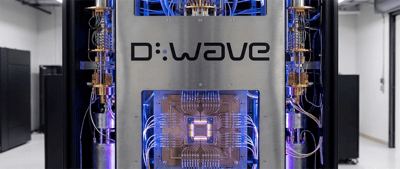
D-Wave Has Momentum—What Does It Need to Keep It Going?
Written by Nathan Reiff. First Published: 8/17/2026.
Key Points
- D-Wave Quantum's stock has fluctuated as investors weigh its technological progress against inconsistent financial results, including a middling Q2 2026 earnings report.
- Analysts suggest that repeatable revenue streams, a larger customer base, and progress toward profitability matter more to investors than a small Canadian government grant.
- D-Wave's reliance on lumpy, one-time contract revenue caused a steep year-over-year decline, making recurring revenue and real-world commercial validation crucial for sustaining investor momentum.
- Special Report: Forget SpaceX. Buy the company Musk can't replace.
If there's one thing proponents of D-Wave Quantum Inc. (NASDAQ: QBTS) are likely to keep in mind after the latest round of industry earnings reports, it's that quantum computing stocks rarely move in straight lines.
A tremendous rally in QBTS last fall eventually gave way to declines early in 2026, as investors questioned whether the company's financial results could keep pace with its exciting technological developments.
Small Colorado Company (Backed by Sam Altman) Could Save U.S. Power Grid (Ad)
A small Colorado company has secured rights to technology that could prevent the U.S. public power grid from collapsing — and billionaire Sam Altman is now an investor.
This under-the-radar firm is drawing serious attention from those watching the energy infrastructure space closely.
Click here to learn this company's name for free todayHowever, sentiment may be improving once again, even after a middling Q2 2026 earnings report that prompted another brief sell-off, giving rivals such as IonQ Inc. (NYSE: IONQ) a chance to separate themselves from the pack.
The turnaround in QBTS shares may be due to a recent stream of updates that reinforce the company's long-term value prospects. Still, larger and repeatable revenue wins, a growing customer base, and meaningful steps toward profitability may matter more than technological advances for the time being.
Canadian Government Adds Another Positive Data Point
One of D-Wave's latest announcements highlighted a modest funding award from the Canadian government as part of the Applied Quantum Computing Challenge program. Government grants like this provide validation that D-Wave's technology and research initiatives are yielding important results. However, the dollar amount—CAD 300,000 in this case—is so small that it has essentially no bearing on the company's financials, particularly given that its balance sheet is already quite healthy overall.
It's possible that this announcement helped provide a small boost to QBTS shares, but investors are more likely to seek out meaningful business milestones to justify extending the rally much further.
The Holy Grail Is Larger and Repeatable Revenue Opportunities
A major question across the quantum industry is whether the large bookings reported in some Q2 earnings reports are isolated deals or the beginning of a longer, sustainable trend. In D-Wave's case, many of its biggest contracts have still come from individual system sales or one-time deals. Those contracts have formed the backbone of the company's early revenue base, but they lead to lumpy earnings. As evidenced by a revenue decline of about two-thirds year over year from H1 2025 to H1 2026, they can even backfire when one period includes a major deal and another does not.
Building a base of recurring revenue through cloud subscriptions, software, enterprise usage, and similar avenues would be a tremendous boon for D-Wave. It would allow investors to anticipate more predictable revenue from one quarter to the next while reducing the company's dependence on a small number of sizable contracts.
Customer Expansion and Profitability Over Research Grants
Investors are unlikely to assign significant value to—or make major moves in QBTS shares based on—a government award worth hundreds of thousands of dollars when D-Wave already has a balance sheet with hundreds of millions of dollars. What is more likely to keep momentum going, however, is commercial validation of D-Wave's offerings.
Investors might therefore be more inclined to watch for news involving government agency contracts, Fortune 500 company deals, major telecom provider interest, and similar developments. These partners would provide stronger evidence that D-Wave's products can address optimization problems in the real world.
Along with this, signs that the company is moving more consistently toward profitability during the remaining earnings periods this year would undoubtedly go a long way toward strengthening investor support for D-Wave, even though there is already a strongly bullish ratings landscape for QBTS.
Technological Advances Do Still Matter
This is not to say that technical milestones are unimportant to D-Wave's continued success—they are crucial. This is a challenge that all quantum computing companies face: They must maintain a rapid pace of technological growth to remain at the industry's cutting edge while advancing their business goals to appeal to investors.
D-Wave's differentiation through its two-pronged approach to quantum technology continues to appeal to investors, as do its progress toward a long-term technology roadmap and its major acquisitions. To maintain momentum in the coming months, the firm may be best served by making additional product announcements, reporting key results that support the narratives above, and demonstrating real-world applications for its new technology—not just receiving recognition from grant providers or similar organizations. The better D-Wave can make the case that its systems will solve commercially relevant problems faster and more efficiently than classical computers, the more likely investors will be to justify continued high valuation multiples.
This email message is a sponsored message sent on behalf of Freedom Financial, a third-party advertiser of DividendStocks.com and MarketBeat.
If you have questions about your subscription, please don't hesitate to contact MarketBeat's U.S. based support team at [email protected].
If you no longer wish to receive email from DividendStocks.com, you can unsubscribe.
© 2006-2026 MarketBeat Media, LLC. All rights protected.
345 N Reid Pl., Sixth Floor, Sioux Falls, S.D. 57103. U.S.A..