| THE HILL REPORT The Strait Has Never Been Closed Connor Hill · InsightfulWord · August 30, 2026 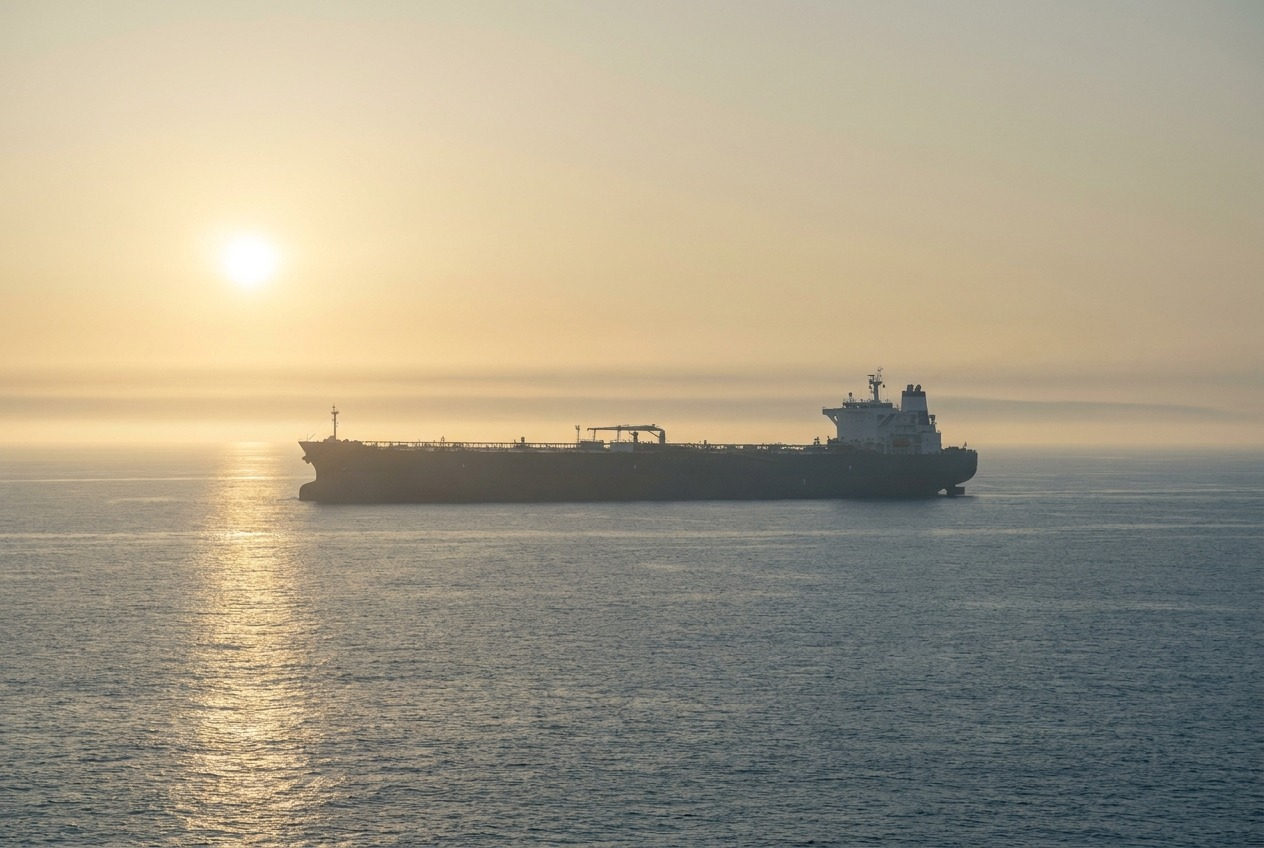 The Strait of Hormuz is the most consequential piece of water in the global energy system, and the figures describing it are published annually and are not in dispute. Roughly 20 million barrels a day of crude oil and refined products transited the strait in 2025 — around a quarter of the world's seaborne oil trade. Just over 112 billion cubic meters of liquefied natural gas passed through in the same year, close to a fifth of global LNG trade. The geography is the reason it matters. At its narrowest the strait is about 29 nautical miles across, and the navigable shipping channels are far narrower still: two miles inbound, two miles outbound, separated by a two-mile buffer. A very large tanker has limited room to maneuver and a predictable path. Set against that, a fact that receives far less attention. Despite recurring threats spanning more than four decades, and despite a period in the 1980s when both sides of a regional war attacked shipping directly, the strait has never been closed to traffic. That record is not a prediction and it should not be read as one. It is a base rate, and base rates are the appropriate starting point for assessing any specific claim of imminent closure. The reason the record looks the way it does is worth understanding, because it is not primarily about military capability. The countries bordering the strait depend on it for their own exports and imports, closure would eliminate their principal revenue, and the interests of every major consuming and producing state align against it. That alignment has held through several episodes in which the rhetoric was considerably sharper than the shipping data. What follows is what transits and where it goes, what the bypass capacity actually is, what happened during the previous period of direct attacks on shipping, how insurance and freight rates register risk before anything else does, and what would distinguish a genuine disruption from a headline. What Transits and Where It Goes The destination pattern is the part of this subject most often misdescribed in Western commentary. The great majority of crude leaving the strait goes to Asia. China, India, Japan and South Korea are the principal buyers, and the flows are contracted on long-term terms with defined loading windows. That distribution has two consequences. A disruption falls hardest on economies that are not the ones usually discussing it, and the states with the strongest interest in keeping the strait open include several with considerable influence over the countries bordering it. The United States, meanwhile, imports a small fraction of what it once did from the region, having become a net exporter of petroleum liquids. That does not insulate it: oil is priced globally, a supply disruption anywhere raises prices everywhere, and American consumers pay the world price regardless of where the barrels originate. The gas flows are more concentrated still, with a single producer accounting for the large majority of the LNG passing through, delivered predominantly to Asian and European buyers under long-term contracts. Gas has no bypass at all, which is the asymmetry least often noted. Crude has pipelines around the strait; liquefied gas does not, because it requires liquefaction plants and export terminals that exist only where they were built. A disruption therefore affects the two commodities very differently, and the gas exposure is the more absolute of the two. What the Bypass Capacity Actually Is Alternatives exist, they are partial, and their capacity is a published figure. | 📊 Live Defense Test 20 million barrels a day Average crude oil and refined product transit through the Strait of Hormuz in 2025 — about a quarter of world seaborne oil trade — alongside just over 112 billion cubic meters of LNG, close to a fifth of the global trade. Estimated bypass pipeline capacity is 3.5 to 5.5 million barrels a day. Source: International Energy Agency, Strait of Hormuz oil security assessment. | | Support or oppose: should consuming countries hold larger strategic reserves given this concentration? Supporters argue that a quarter of seaborne oil passing a single narrow channel is precisely the situation reserves exist for, that release mechanisms are already coordinated internationally, and that the cost of holding is small against the cost of a disruption. Opponents answer that reserves address a temporary interruption and not a sustained one, that holding costs are real and recurring, and that investment in demand reduction and in alternative routes buys more security per unit spent. Which is the better use of public money? Hit reply — one line is enough. | Two pipelines carry crude around the strait: one crossing Saudi Arabia to the Red Sea and one crossing the United Arab Emirates to a port outside the Gulf. Combined available spare capacity on those routes is estimated at 3.5 to 5.5 million barrels a day. That is a meaningful cushion and it is roughly a quarter of what normally transits. A complete stoppage would therefore leave a substantial shortfall even with the bypass routes running at full capacity, and those routes have their own vulnerabilities, one of which was demonstrated when a pumping station was struck by a drone in 2019. Strategic petroleum reserves are the other buffer, held by member countries of an international coordination body with obligations to hold stocks equivalent to a defined period of net imports, and with an established mechanism for coordinated release. Neither mechanism substitutes for the strait. Both change the shape and duration of a disruption, which is what buffers are for. Spare production capacity is the third buffer and the most consequential. Where producers can raise output quickly, a shortfall elsewhere is partially offset — but the great majority of the world's spare capacity sits with producers whose own exports transit the same strait, which means the buffer and the exposure are held by the same countries. That concentration is a published figure and it is the reason bypass pipeline capacity receives the attention it does. What Happened the Last Time Shipping Was Attacked The most relevant precedent is well documented and is instructive precisely because it was so severe. During the Iran-Iraq war, both belligerents attacked commercial shipping in the Gulf over several years. Hundreds of vessels were hit. Naval escorts were arranged, vessels were reflagged, and mines were laid and cleared. | Context — what this article is and is not about Nothing here takes a position on any government's conduct, on the merits of any policy response, or on who bears responsibility for tension in the region. Those are political questions on which people differ and on which this piece has nothing to add. What is described is the physical and commercial structure of a shipping route, which is measured and published, and the historical record of how that route has behaved under stress. Readers with any view of the politics can take the transit figures, the bypass capacity and the freight and insurance data as given. | Traffic did not stop. It continued at reduced volumes, at substantially higher insurance cost, with altered routing and timing. Prices rose and then fell back as the market absorbed the new conditions. The lesson practitioners draw from that period is that the practical outcome of interference with shipping is usually a risk premium rather than a stoppage, and that the premium is measurable in real time. That is the useful frame for any current episode. The question is not whether traffic ceases, which the record suggests is unlikely, but how much the risk premium rises and for how long — and both are observable. Where Risk Registers First Four markets price this risk continuously, and they move before any narrative reaches a general audience. War risk insurance premiums for transits, quoted as a percentage of hull value, rise immediately when underwriters reassess a route. They are reported by shipping press and by brokers, and they are the most direct measure of professional assessment available. Tanker freight rates on the affected routes rise as owners demand compensation for risk and as voyage times lengthen. Rate indices are published daily. The spread between crude benchmarks priced inside and outside the affected region widens when supply from one is threatened, which separates a genuine regional supply concern from a general market move. And vessel tracking data shows what ships are actually doing — how many transits are occurring, whether routes have changed, whether vessels are waiting outside. That is a direct observation rather than an inference. What Would Distinguish a Genuine Disruption Five observable things, none of which requires any privileged access. A sustained fall in the number of transits, visible in tracking data over days rather than a single day's figures. War risk premiums remaining elevated rather than spiking and retreating, which distinguishes a reassessment from a reaction. Bypass pipelines running at capacity, which is reported and which indicates that the alternative routes are being used rather than merely being available. A coordinated reserve release, which requires a decision by member governments and is announced. And the physical positioning of vessels: tankers anchored outside the strait rather than transiting is the clearest single indicator that commercial operators have concluded the risk is real. Every one of those is published, most of them daily. Together they describe what is actually happening on a route that carries a quarter of the world's seaborne oil and that, through four decades of threats, has stayed open. | The bill, not the debate A quarter of the world's seaborne oil passes through a channel four miles wide, and the record of the last forty years — including a war in which shipping was attacked directly for years — is that traffic continued at a higher price rather than stopping. Insurance premiums, freight rates and vessel tracking say what is happening now. When closure is asserted, has anyone shown you the transit count? Connor Hill reads every reply. | | Connor Hill · InsightfulWord | |