
|
 |
The UK's Net Zero consensus is quietly cracking
Plus: Regulation is strangling Britain's labour market
|

| |||||||||||||||


In today’s newsletter:
Energy costs, not prices: the fading “Net Zero vs Not Zero” fight
Tax and the young
Why AI “slop” is not a sign of failure
Andy Mayer is the Chief Operating Officer, Company Secretary and Energy Analyst at the Institute of Economic Affairs
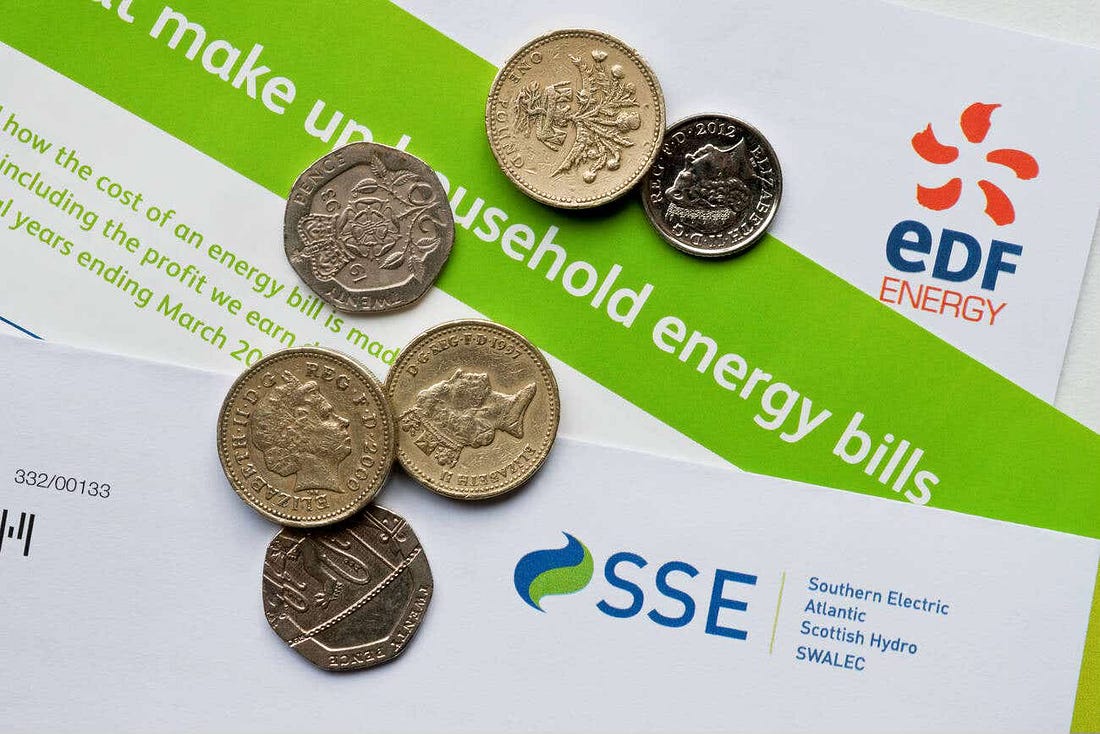
This week, the energy regulator Ofgem raised the price cap on domestic energy bills by around 4% compared with the previous quarter. The movement itself was unremarkable. The ongoing Strait of Hormuz crisis is impacting fossil fuel prices, supply chains are yet to adjust, Europe and the UK are import dependent, and the UK power system is highly exposed to movements in the price of gas.
More interesting was the lack of hysteria, particularly in the context of a Mediterranean summer where the London Underground doubled as a sauna, and the British wine industry celebrated near-record output. No Swedish schoolchildren were dispatched to reclaim their childhood from adoring politicians, few heads had to be unglued from the public highway, most airports and bridges went unmolested by unemployed social justice warriors with double-barrelled surnames.
Whisper it quietly, but it seems that the underlying debate between ‘Net Zero’ and ‘Not Zero’ is passing. The former is an ideological stance and holds that the UK alone can adjust the global thermostat, and must do so regardless of cost. The latter is the pragmatic position that decarbonisation matters, but must be affordable, secure and not constrain growth.
The current government remains publicly committed to Net Zero, but even the chief prophet of climate doom, Ed Miliband, seems relatively half-hearted compared to his messianic heyday, while his successor as Energy Minister, Miatta Fahnbulleh, is struggling in interviews.
The Opposition, by contrast, is gung-ho for change. Reform want to literally bury everything to do with connecting renewables to the grid. The Conservatives want market redesign, coming around to some of the recommendations of the 2017 Helm Review – that ‘firm power’ matters, nearly a decade late.
The reason is energy costs, not energy prices.
Prime Minister Andy Burnham, however, is still thinking mostly about the latter. Some policy costs, like VAT and ending energy efficiency schemes, are genuine savings. But shifting subsidy costs from bills to taxes, or changing assumptions about typical household energy use, hides rather than addresses inefficiency.
Being open to allowing some North Sea drilling without actually taking any decisions, let alone addressing the armada of legislation that makes investment unattractive, is unserious. Ploughing ahead with multi-billion-pound grid expansion schemes is self-sabotaging if other plans to reduce the risk and cost of building nuclear power succeed and remove the need for them.
The parties, then, are competing to present a credible vision for getting costs down. Reports from Onward and BCG this week have highlighted the importance of making electricity both cheap and abundant. The IEA set the scene earlier in the year with widely reported work on the cost of Net Zero and the madness of our approach to the North Sea.
This is a major change from the 2010s when every wobble in average bills was a ‘cost of living’ crisis. And eventually the Conservatives, conservative in nothing but name, brought in the energy price controls subsequently used as a stick to beat them, as Covid and conflicts tested the theory of state control.
But people have clearly noticed and, most importantly, so has at least one half of a future Parliament. The mission for all parties at the next election is who can convincingly get costs down, not just prices. If that dividing line can survive this summer, it is likely to hold to 2029.
 |
(Alamy/PA) (Local Library)
The best way to never miss out on IEA work, get access to exclusive content, and support our research and educational programmes is to become a paid IEA Insider.
IEA Podcast: Director General Lord Hannan is joined by Editorial Director Dr Kristian Niemietz and IEA Spokesperson Maeve Halligan to discuss the widening gap in graduate job opportunities and youth unemployment, the IPPR’s proposal to tax older homeowners to help the young, and Iceland’s referendum on rejoining the EU, IEA YouTube
This week on Economic Affairs
 |
|
 |
|
 |
|
 |
|
 |
|
 |
|
 |
|
News and Views from the IEA
The Labour Market
Poor productivity since the financial crisis owes much to a labour market gummed up by growing regulation, from employment law to tribunal rulings and licensing
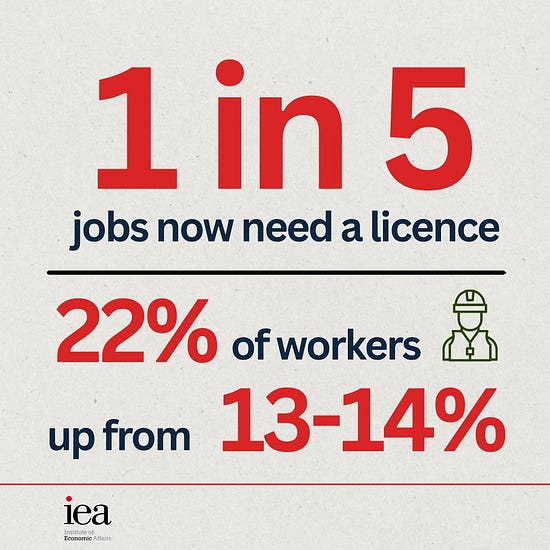
Wage signals are increasingly distorted: 20% of employees have pay set by the minimum wage, and 22% now need an occupational licence, up from 13-14% in 2011
Tightened unfair dismissal law and expansive equal pay rules make it harder for firms to adjust their workforce, slowing “creative destruction”
Tax and benefits, education policy, and housing shortages compound the problem, blunting workers’ incentives to respond to changing job prospects
New briefing from the IEA by Professor Len Shackleton sets out how labour market regulation is holding back Britain's productivity growth
 |
Instead of taxing older people to the hilt, Labour should use my blueprint to build a country in which the young can flourish. Lord Hannan, the IEA’s Director General, writes in the Daily Mail on why taxing older people more, as the IPPR proposes, is the wrong fix for intergenerational unfairness, and why cutting the burdens on the young is the real answer.
"Our taxes are already higher than at any point since the post-Second World War demobilisation. To find a higher overall proportional tax take in Britain, we must go back to 1947, when the only heating source most people had was coal, when indoor plumbing was a luxury, and when rationing allowed us one fresh egg a week.”
“The way to have intergenerational justice is not to tax older generations so that there is equality of suffering. Intergenerational justice will come when younger people can realistically find well-paid jobs and a shot at buying a decent place to live.”
Is the Minimum Wage Doing More Harm Than Good? Daniel Freeman interviews Len Shackleton on his Great Stagnation chapter on Britain's labour market, IEA YouTube
"Having legislated and regulated ourselves into this stagnation, largely in a fit of absence of mind, we can legislate and deregulate ourselves out." Daniel Freeman diagnoses Britain's growth problem, ConservativeHome.
Labour’s war on flexible work is just getting started. Professor Len Shackleton, Editorial and Research Fellow at the IEA, writes for CapX on why the Government's crackdown on zero-hours contracts is a recipe for disaster.
“The new restrictions on the use of zero-hours workers will have consequences; indeed, they already are. Small businesses will be less likely to offer work because of the extra costs from guaranteed shifts, administrative hassles and threats of getting the law wrong, which could be expensive when tribunals get to work. Larger businesses are likely to reduce overheads by consolidating on a smaller number of permanent employees rather than a large number of more casual workers. This will favour some types of people rather than others: those who can commit to fixed hours.”
“Clamping down on zero-hours contracts is a policy which seems to be driven by ideology rather than the real interests of the workers whom the Government wants to help.”
"Your first response to seeing AI 'slop' should be to drop to your knees, and sing a hymn to technological progress." Kristian Niemietz defends the AI "slop" economy, The Critic.
"‘Worse things happen at sea’ is not the appropriate benchmark by which to judge public policy.” Christopher Snowdon skewers the “it's only a minor inconvenience” defence of government overreach, The Critic.
Education, Events and Opportunities
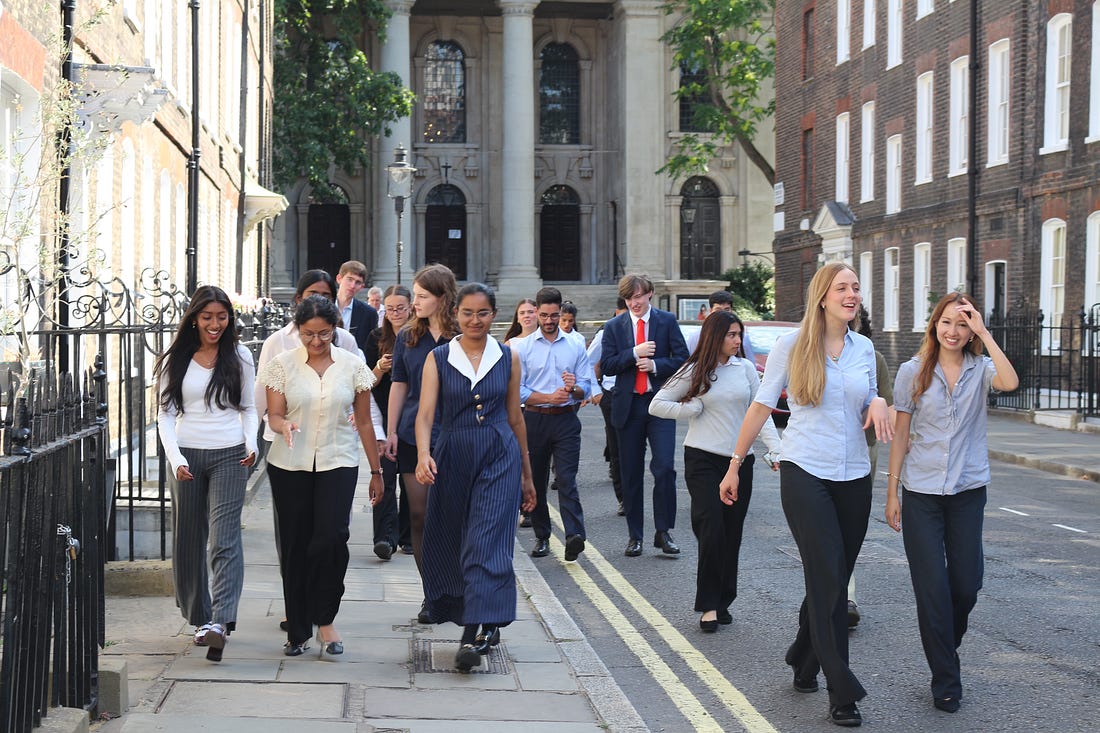
Last week, we were delighted to once again host Freedom Week alongside our friends at the Adam Smith Institute, welcoming a new cohort of students to Cambridge from Monday 17th to Friday 21st August 2026. Freedom Week is one of the projects we’re proudest of: a week-long residential seminar, entirely free for those who attend, that introduces bright young students to classical liberal, free-market ideas across economics, politics, history and society. Around thirty students spent the week immersed in lectures from some of Britain’s leading thinkers, alongside our own staff and those of the ASI, with plenty of time for lively discussion, networking and the social occasions Freedom Week is known for—from the famous pub dinners to an afternoon punting on the River Cam.
Programmes like this are only possible thanks to supporters like you. By helping us reach the next generation of students, you are investing in the thinkers, writers and opinion formers who will go on to make the case for freedom for years to come—and for that, we are enormously grateful.
If you’re a student or recent graduate keen to get involved next year, keep an eye on the IEA website for applications.
 |
You’re currently a free subscriber to Economic Affairs. For the full experience, upgrade your subscription.
Paid subscribers support the work of Economic Affairs and the IEA's charitable mission and receive special invites to exclusive events.
| ||||||||||


