| THE HILL REPORT The Resource Was Never the Constraint Connor Hill · InsightfulWord · August 19, 2026 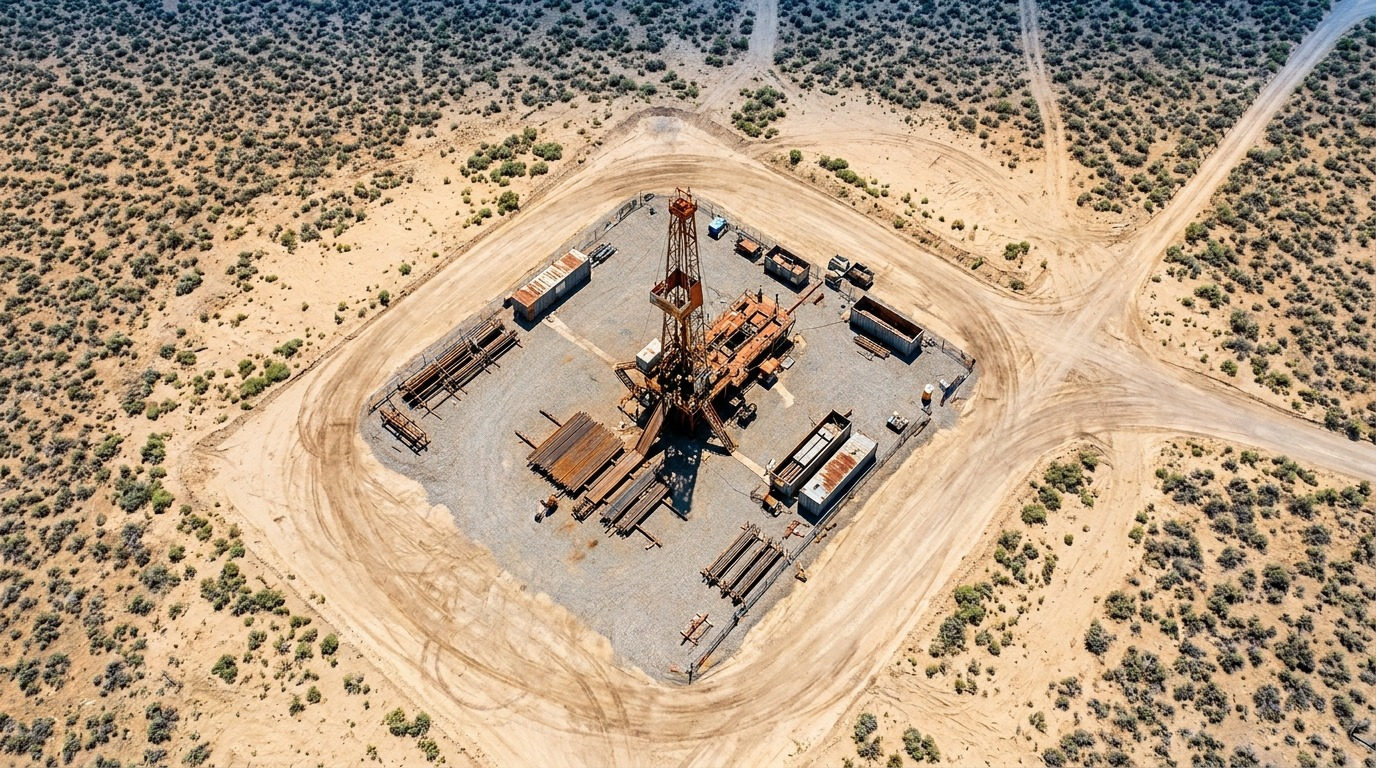 There is a figure that circulates whenever the earth's internal heat comes up in conversation, and it is accurate: the International Energy Agency's assessment concluded that geothermal resources are theoretically sufficient to meet global electricity demand many times over. The number is real, the arithmetic behind it is defensible, and it explains almost nothing about whether geothermal energy will be built. Technical potential and economic potential are different quantities, and the distance between them is where every energy technology has ever lived or died. Sunlight falling on the world's deserts exceeds human energy consumption by orders of magnitude. Wind moving through the atmosphere does the same. The question that determines what actually gets constructed is never how much energy is present. It is what a unit of it costs to extract, and whether that cost is falling. For geothermal, the answer to both questions sits almost entirely in one line item. Drilling has historically accounted for more than half of the capital cost of a geothermal project. Not the turbines, not the transmission, not the land. The hole. That concentration is unusual and it is analytically convenient, because it means the entire economics of the sector can be tracked through a single measurable quantity: the cost of putting a well into hot rock at depth, and the rate at which that cost declines as more wells are drilled. Everything else is secondary. The reason the sector has become interesting over the past three years is that this number has moved, and moved quickly, for a reason that is not mysterious. Two decades of shale development in the United States produced a workforce, a supply chain and a body of directional drilling practice that transfers almost directly to hot rock. The IEA's assessment put it plainly: as much as 80 percent of the investment required in a geothermal project involves capacity and skills already common in the oil and gas industry. That is a statement about who can do the work, and it is the most consequential fact in the sector. A technology that requires a new industrial base takes decades. A technology that can hire an existing one takes years. What follows is why the drilling cost dominates, what a learning rate is and how the reported ones should be read, where the permitting layer actually binds, the operating characteristic that makes the output worth more per unit than intermittent alternatives, and what evidence over the next two years would show whether the cost curve is holding. Why Drilling Is the Whole Cost Structure A conventional geothermal plant is a heat engine with an unusual boiler. Hot fluid comes up a well, gives up its energy to a working fluid, and is returned underground through a second well. The surface equipment is ordinary industrial hardware with well-understood costs. The wells are not ordinary. Depth drives cost non-linearly, temperature degrades the electronics in downhole measurement tools, and hard crystalline rock destroys drill bits at rates that sedimentary formations do not. A well that takes two months instead of two weeks costs roughly what the rig and crew cost for those extra six weeks, and rig day rates are the dominant variable expense. The next-generation approach changes the geology problem rather than solving it. Instead of searching for a naturally permeable hot reservoir — which restricted conventional geothermal to a handful of volcanic regions — engineered systems drill into hot impermeable rock and create the flow paths, using the horizontal drilling and hydraulic stimulation techniques developed for shale. This makes the resource available across a far wider geography and makes drilling performance the only thing that matters. It also means the sector's cost trajectory can be audited. A company drilling a series of wells in the same formation produces a public record of how long each took, and the trend in that record is the trend in the technology. What a Learning Rate Actually Measures A learning rate is the percentage by which unit cost falls for each doubling of cumulative production. Solar photovoltaics have sustained roughly twenty percent for decades, which is why the modules are now the cheapest part of a solar plant. Applied to geothermal drilling, the reported figures have been striking. One developer's disclosed well costs fell from $9.4 million to $4.8 million across successive campaigns, with drilling times dropping sharply between pilot and production wells, and the implied learning rate running well above the company's own planning assumption. | 📊 Fresh Energy Signal $9.4m → $4.8m Disclosed per-well drilling cost across successive next-generation geothermal campaigns in the western United States, against an internal target below $3 million. Drilling has historically represented more than half of total geothermal capital cost. Sources: Information Technology and Innovation Foundation, May 2026 assessment; International Energy Agency, The Future of Geothermal Energy. | | Support or oppose: should federal permitting treat geothermal the way it treats oil and gas? Supporters argue that the two use nearly identical equipment and disturb comparable acreage, that geothermal has been held to a slower review process for historical rather than environmental reasons, and that parity would remove a distortion rather than create a subsidy. Opponents answer that faster review on federal land reduces the window for tribal and local consultation, that induced seismicity from stimulation is a genuine and site-specific concern, and that speed granted to one technology tends to be claimed by others. Where should the line sit? Hit reply — one line is enough. | Two cautions belong with any such figure. The first is that early learning is always the fastest. The move from a first-of-a-kind well to a repeatable one captures the largest available gains, and rates measured over a small number of wells in a single formation do not automatically transfer to a different one. The second is that a cost per well is not a cost per megawatt-hour. A cheaper well that produces less flow is not progress. The honest way to read the disclosures is as evidence that the practice is transferring from shale as expected, not as proof that a particular cost target will be reached. The published capital cost figures — on the order of seven thousand dollars per kilowatt today, with developers targeting three — are the number that eventually matters, and it is the one to check. Where the Approvals Actually Sit Cost is one constraint. Time is the other, and the IEA's assessment noted that commissioning a new geothermal project has taken up to a decade, much of it consumed by consenting rather than construction. The reason is structural. Most of the accessible high-temperature resource in the United States lies under federal land in the Great Basin and the interior West, which places projects inside the National Environmental Policy Act review process. Geothermal exploration has historically required a full environmental assessment at multiple stages — leasing, exploration, drilling, and development — where an oil and gas operator on adjacent acreage might proceed under a categorical exclusion. | Context — heat is the larger half Electricity generation is the visible use of geothermal energy and the smaller one. Direct use — district heating, greenhouses, industrial process heat, and ground-source heat pumps serving individual buildings — accounts for the majority of geothermal energy actually consumed worldwide, and it works at temperatures far below those required to spin a turbine. The IEA's assessment identified roughly 320 terawatts of thermal potential in sedimentary aquifers within three kilometres of the surface at temperatures above 90 degrees Celsius. None of that requires hot dry rock, deep drilling, or a power plant. | That asymmetry has been narrowing. Federal land managers have moved to apply categorical exclusions to geothermal resource confirmation activities on limited acreage, and individual large projects have been approved under streamlined review. The direction is consistent across administrations, which is itself informative: permitting parity for geothermal has attracted unusually little partisan resistance, because the constituency that dislikes drilling and the constituency that dislikes renewables are not the same people. The practical effect is that the binding constraint is migrating from consent back to engineering and to grid connection — which is a better place for it to be, but not the same as its removal. The Number That Makes It Dispatchable Nameplate capacity is the figure quoted in announcements and the least informative one. What determines the value of a generating asset to a system operator is how much of that capacity is available when required. Geothermal's utilization rate exceeded 75 percent globally in 2023, against under 30 percent for wind and under 15 percent for solar photovoltaics. The output does not depend on weather, time of day, or season. It requires no fuel and therefore has no fuel price exposure, no delivery logistics, and no counterparty in a producing country. This is why the interest from large electricity consumers with continuous loads has been disproportionate to the sector's size. A data center operator does not want energy on average. It wants power at three in the morning in February, and the contracts that have been signed reflect that preference rather than a judgment about the technology's elegance. The corollary is less flattering to the sector's promoters. High utilization raises the value of each installed kilowatt, which means the technology can tolerate a higher capital cost than intermittent alternatives and still compete. It does not mean the capital cost has stopped mattering. It means the threshold is higher than a naïve comparison of installation costs would suggest, and lower than the enthusiasm implies. What Would Confirm the Curve Three published series would settle, over the next twenty-four months, whether the cost trajectory is real or an artifact of favorable early sites. The first is well cost per unit of delivered flow, rather than per well, disclosed across at least two distinct geological settings. A learning rate demonstrated in one formation is a result about that formation until it is repeated elsewhere. The second is commissioned capacity actually delivering energy under contract, as reported in federal generation statistics rather than in announcements. Geothermal capacity in the United States has been roughly static for two decades, and the series will show any genuine departure from that plateau clearly and without interpretation. The third is the price in signed offtake agreements, where these become public. A contract price is the only number in the sector that reflects what a counterparty was willing to pay after examining the engineering rather than the press release, and it is the closest thing available to an independent verdict. There is also a question nobody can answer yet, and it is worth naming rather than papering over. Induced seismicity from hydraulic stimulation ended one prominent European project and remains the most plausible route by which the sector could lose public consent quickly. The monitoring protocols have improved substantially. Whether they are sufficient at scale, in populated areas, is genuinely unknown, and a single badly sited project could do more to slow the industry than any cost curve could do to accelerate it. | The bill, not the debate The interesting question about an energy technology is almost never how much of the resource exists. It is which single line item dominates the cost, and whether that line item is falling for a reason that can be verified. For geothermal, that line item is a hole in the ground, and the record of how long each one took to drill is public. If a technology is described to you as abundant, do you know which cost it actually has to beat? Connor Hill reads every reply. | | Connor Hill · InsightfulWord | |