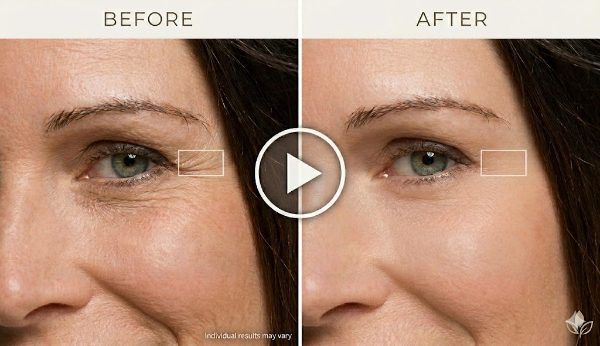
| CONNOR'S HEALTH NOTES Cleared Is Not Approved Connor Hill · InsightfulWord · August 18, 2026  Two words appear on packaging and in marketing for medical devices sold to consumers, and most people treat them as synonyms. They are not, and the difference between them determines what evidence a manufacturer had to produce before a product could be sold. A device that is FDA approved has been through premarket approval, the most demanding pathway the agency operates. It applies to devices in the highest risk class, and it requires the manufacturer to submit valid scientific evidence — normally including clinical data — demonstrating that the device is safe and effective for its intended use. A device that is FDA cleared has been through a premarket notification, known by the section of the statute that created it: 510(k). The standard here is entirely different. The manufacturer does not have to demonstrate that the device works. It has to demonstrate that the device is substantially equivalent to a device already legally on the market — the predicate. The agency's own description of the outcome is precise about this. A successful submission produces a letter finding the device substantially equivalent, and that order, in the FDA's words, "clears" the device for commercial distribution. Nothing in that sentence is a finding about effectiveness. Substantial equivalence has a defined meaning. A device qualifies if it has the same intended use as the predicate and the same technological characteristics; or if it has the same intended use, different technological characteristics that do not raise different questions of safety and effectiveness, and submitted information showing it is as safe and effective as the predicate. The evidence that supports such a submission may include clinical data, and frequently does not. The agency lists the acceptable performance data as including engineering bench testing, sterility, electromagnetic compatibility, software validation and biocompatibility, alongside clinical data where relevant. For a great many consumer devices, the file contains no clinical trial at all. None of which makes cleared devices dangerous or fraudulent. The pathway exists because requiring full clinical evidence for every incremental variation on an established product would be enormously wasteful. It means something narrower and important: for most devices a consumer can buy, the regulatory record establishes that the product resembles something already sold and does not appear unsafe. It does not establish that it does anything. What follows is how the predicate chain works, where the aesthetic device category sits within it, and what a consumer can actually verify. The Chain of Predicates The mechanism that makes clearance efficient also makes it self-referential in a way that repays understanding. Every cleared device is equivalent to a predicate. That predicate was itself, in most cases, cleared by being equivalent to an earlier predicate. Follow the chain back far enough and it terminates either in a device marketed before the 1976 amendments that created the modern framework, or in a device that went through full approval. The consequence is that a product on sale today may be several generations of equivalence removed from anything that was ever tested for effectiveness. Each step in the chain was a reasonable judgment that the new device was sufficiently like the old one. The accumulation of reasonable steps can nonetheless carry a category a considerable distance from its evidentiary origin. This is a known feature rather than a scandal, and it has been examined repeatedly by the agency and by outside reviewers. Its practical significance for a consumer is simple: the presence of a clearance number establishes that a device joined an established category. It establishes nothing about whether the category was ever shown to produce the effect being marketed. Where Aesthetic Devices Sit Consumer devices marketed for appearance occupy an unusual position, because the same underlying technology can be regulated very differently depending on what the manufacturer claims it does. A claim about appearance — that skin looks smoother, that lines appear reduced — generally keeps a product in a lighter regulatory category. A claim about structure or function, such as stimulating collagen production or treating a condition, moves it toward a stricter one. The device may be identical. The claim determines the pathway. That produces the same phenomenon visible on cosmetic packaging. Marketing language in this category is carefully constructed to describe appearance rather than biology, not because the writers are being coy but because the alternative changes the product's regulatory status. A reader who takes vague appearance language as modesty is misreading a legal constraint as a stylistic one. The energy-based devices sold for home use — light-emitting, radiofrequency, microcurrent, microneedling — have a further complication. Professional versions of several of these technologies have genuine clinical evidence behind them at the intensities used in a clinic. Home versions operate at far lower power for safety reasons, and evidence for the professional version does not transfer to the consumer version. The technology name is the same. The dose is not. | 🩹 Health Stat of the Day Substantially equivalent The legal standard a 510(k) submission must meet — that a device is as safe and effective as a device already legally marketed. FDA's order "clears" the device for distribution; it is not an approval, and the supporting file frequently contains no clinical evidence of effectiveness. Source: U.S. Food and Drug Administration, Premarket Notification 510(k). | | Support or oppose: should consumer devices have to show they work? Most devices a consumer can buy reach the market by resembling an existing product rather than by demonstrating an effect. Supporters of the current system say requiring clinical trials for every incremental device would raise prices enormously, slow innovation, and produce little safety benefit for low-risk products. Critics answer that a standard which asks only whether something is similar to what already exists permits an entire category to be sold on claims no one has ever tested, and that consumers reasonably read a clearance as a verdict on effectiveness. Should the bar be effectiveness rather than equivalence? Hit reply — one line is enough. | The Professional Version Is a Different Product The single most common error in this category is treating clinical evidence for a technology as evidence for a device that shares its name, and the gap between them is usually a matter of dose rather than principle. Energy-based treatments work, where they work, by delivering enough energy into tissue to provoke a response — controlled injury followed by repair, in most cases. The response depends on how much energy reaches the target and how deep it goes. That is a dose relationship, and dose is what separates a clinic device from a consumer one. Home devices are deliberately limited in output. They have to be, because they are used without training, without supervision, on people who cannot assess their own skin type or recognize a burn developing. Every safety constraint that makes a device appropriate for unsupervised use also reduces the energy it can deliver. The consequence is that a study demonstrating an effect at clinical intensity says nothing about the same technology at a fraction of that intensity, even though both may accurately be described by the same technical term. A manufacturer citing the professional literature for a home device is not necessarily misrepresenting anything, and the citation is nonetheless not evidence about the product being sold. The reverse question is the useful one and is rarely asked: has this device, at this power, in this configuration, been tested against a control? For most consumer devices the answer is no, and where it is yes the study is frequently small, short, manufacturer-funded and unpublished. None of those features makes a result wrong. All of them make it weak, and weakness is a legitimate thing for a buyer to know about. What Is Actually Verifiable The useful part of this framework is that it is transparent. A consumer can check the regulatory status of a device in a few minutes, and almost nobody does. The agency maintains a public, searchable database of 510(k) clearances. Entering a device or manufacturer name returns the clearance record, the date, the product code identifying the category, and the predicate device the submission relied on. A premarket approval database exists alongside it for the higher-risk pathway. Three things are worth reading from a record. First, whether the product appears at all — a marketed device claiming clearance should be findable. Second, which pathway it went through, since a listing in the 510(k) database means clearance rather than approval regardless of what any advertisement says. Third, the stated intended use, which is the language the manufacturer committed to and which is frequently narrower than the marketing. That last item is the most informative and the least examined. The gap between an intended use statement filed with the agency and the claims made in a video is often substantial, and the filed version is the one with legal consequences attached. | How to read an effectiveness claim in this category Four questions separate a supportable claim from an unsupportable one, and they apply to any consumer device or aesthetic intervention. What exactly was measured — a photograph rated by an observer, an instrument reading of skin properties, or a subject's own opinion of how they looked? Compared with what — an untreated area on the same person, a sham device, or nothing at all? Over how long, and with what proportion of participants completing? And published where, if anywhere, or held internally as unpublished data supplied by the manufacturer? A claim that survives all four is unusual in this market and worth taking seriously. A claim that names none of them is a statement about marketing rather than about skin. None of this requires expertise, and the questions are the same ones a clinician would ask. | The Comparison Worth Making Setting aside regulation entirely, there is a useful way for a person to think about interventions in this category, and it concerns where the evidence is concentrated rather than where the marketing is. The interventions with the strongest clinical evidence for visible skin change are, broadly, prescription topical agents and procedures performed by clinicians. That is not a coincidence of prestige. It follows from the same regulatory logic described above: the more reliably a treatment alters skin biology, the more likely it is to be regulated as a drug or a device requiring evidence, and therefore to have generated that evidence. The interventions available without a prescription and without a clinician sit, correspondingly, in the part of the distribution where evidence requirements are lightest. Some of them work. The point is that the regulatory system was not designed to tell a consumer which, and reading a clearance as though it were performing that function is the error. Prevention remains the intervention with the most evidence behind it and the least commercial energy, because nothing sold after the fact competes with dose not accumulated in the first place — which is a considerably less appealing message than one about reversal. The distinction to keep is two words apart. Cleared means it resembles something already sold. Approved means somebody had to show it worked. | The bill, not the debate Most marketing in this category leans on a regulatory word that consumers read as a verdict on effectiveness and that means something quite different. The database recording which word applies to which product is public, free, and searchable in about two minutes. For the last device or treatment you bought for your skin, do you know which of the two pathways it came through? Connor Hill reads every reply. | | Connor Hill · InsightfulWord | |