 Hi, Tim Plaehn here. Gold prices are breaking records. But while everyone else is fixated on headlines… They're missing something much bigger: There's a new way to collect income from gold. Not mining stocks.
Not options.
Not a single ounce of physical metal. Instead, it's a $15 fund that's quietly paying out up to $1,152 a month to regular investors… All thanks to a breakthrough strategy that transforms gold's rally into reliable monthly payouts. Click here to discover the gold income breakthrough most investors are missing. But move fast: the next payout is just days away. To your income,
Tim Plaehn
Chief Income Strategist, Investors Alley
Exclusive Content from MarketBeat.com Asian Market Circuit Breakers Hit Stocks, Not AI DemandAuthored by Jeffrey Neal Johnson. Article Posted: 8/13/2026. 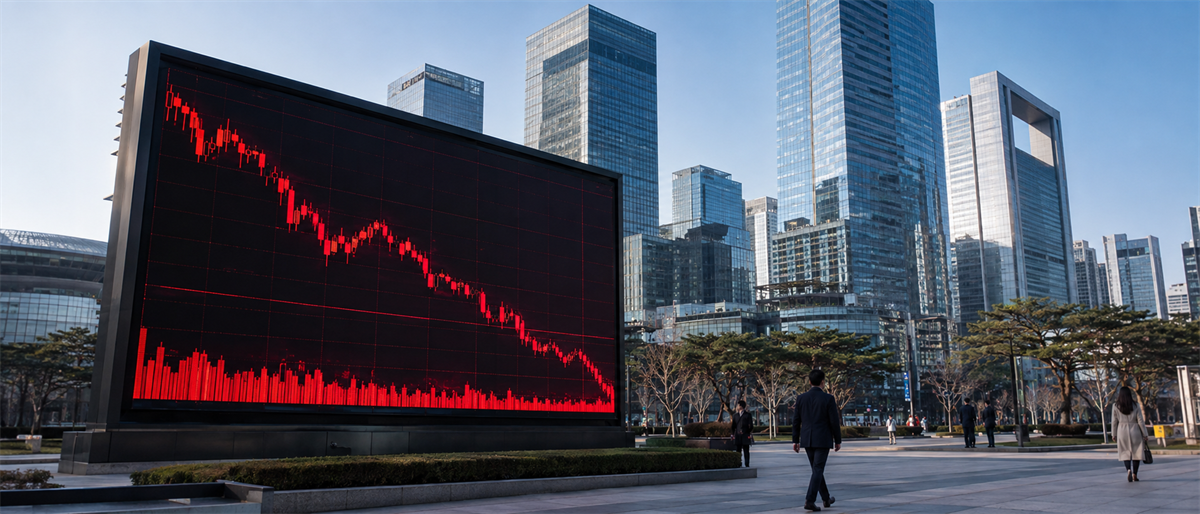
Key Points- South Korean margin debt and Japanese Yen carry-trade unwinds, not weakening AI or chip demand, are identified as the true drivers behind Asian tech market shocks.
- Because multi-year chip contracts and hyperscaler buildouts continue uninterrupted, these currency- and leverage-driven sell-offs are framed as temporary buying opportunities rather than signs of business deterioration.
- NVIDIA, Micron, Advantest, Arm Holdings, and IBM are presented as financially resilient companies worth watching, with a 48-hour waiting period and phased buying suggested to manage entry timing.
- Special Report: 3 AI stocks to buy before August 2026
Trading halts on South Korea's stock exchange or flash crashes across Japanese benchmark indices frequently send panic signals through global technology markets. Automated algorithms respond instantly, dumping equities tied to the global electronics hardware supply chain. Yet these intense liquidations rarely stem from actual declines in end-market demand for artificial intelligence (AI), advanced semiconductors or enterprise quantum hardware. Instead, these market shocks arise from localized financial mechanics and currency leverage. South Korea carries significant retail margin debt concentrated in memory chipmakers, leaving local indices vulnerable to circuit-breaker halts when short-term sentiment shifts. In Japan, central bank interest-rate adjustments can spark sudden unwinding of the Japanese yen carry trade, forcing offshore funds to liquidate holdings to settle currency loans. For investors, these overseas panics represent short-term liquidity squeezes rather than fundamental corporate failures. Hyperscaler data center buildouts do not pause because foreign exchange rates fluctuate in Tokyo or margin calls hit accounts in Seoul. When capital flees regional turbulence, it seeks refuge in cash-rich balance sheets, creating strategic entry points into world-class businesses. Tokyo's Yen Squeeze and Seoul's Margin TrapCapitalizing on international market disruptions requires separating mechanical trading noise from operational business performance. The physical supply chain for advanced computing is tightly concentrated in Asia. South Korea manufactures a major portion of the world's high-bandwidth memory, while Japan supplies essential silicon wafers, specialty chemicals and automated testing machinery. Because these regional markets form the physical backbone of advanced computing, localized financial distress quickly bleeds into global asset prices. When Korean memory producers face forced selling, algorithms liquidate U.S. memory equities in lockstep. Likewise, when Japanese equipment makers experience currency-driven liquidations, U.S. technology leaders that depend on their tools can experience temporary price declines. This dynamic creates a distinct valuation gap. While equity prices retreat during a deleveraging cascade, fundamental supply-and-demand ratios remain firm. Corporate commitments to construct infrastructure for generative AI, cloud networks and edge computing operate on multiyear planning horizons. Orders for advanced microchips and capital equipment are secured months or years in advance under fixed contracts. Recognizing that a price dip stems from forced liquidation rather than canceled purchase orders allows investors to act with strategic clarity. Shopping the Asian Fire Sale for 5 GiantsWhen regional currency swings and trading halts depress global hardware valuations, broad market panics often treat premier technology leaders as collateral damage. These temporary liquidity dislocations create rare valuation gaps, giving disciplined investors a chance to invest in world-class businesses at reduced prices. Five structural market leaders stand out for their pristine balance sheets, expanding profit margins and indispensable positions across the artificial intelligence, semiconductor and quantum infrastructure landscapes. NVIDIA Corporation: Buying the AI King on Asian DipsAs the leading provider of graphics processing units for artificial intelligence workloads, NVIDIA Corporation (NASDAQ: NVDA) sits at the center of modern data center infrastructure. The company maintains a healthy net profit margin of around 63% and a return on equity approaching 97%. Despite occasional supply-chain concerns originating in Asian assembly plants, enterprise appetite for graphics processors remains robust. To support shareholder value during market swings, management authorized an $80 billion share repurchase program. When international market panics drag the stock lower, investors gain a discounted entry point into a cash-generating enterprise. Micron Technology, Inc.: Sold-Out Capacity on SaleAs the primary U.S.-based manufacturer of memory and storage solutions, Micron Technology, Inc. (NASDAQ: MU) frequently trades as a liquid proxy for South Korean memory dynamics. Memory production is a concentrated global triopoly, and high-performance memory is essential for complex computing workloads. Micron recently reported annual sales of about $37.38 billion, with quarterly revenue expanding more than 345% year over year. High-bandwidth memory capacity is effectively sold out through calendar year 2027 under fixed contracts. Trading at a forward price-to-earnings ratio of around 12.5 times, the manufacturer offers an attractive valuation whenever South Korean halts trigger automated selling. Advantest Corporation: Japanese Testing Toll Road on SaleHeadquartered in Japan, Advantest Corporation (OTCMKTS: ATEYY) holds a dominant global market share of more than 50% in automated test equipment for advanced microchips. As semiconductor architectures grow more complex, chipmakers cannot ship components without validation from these testing systems. Advantest operates with a net margin of roughly 37% and a return on equity of 64%. Because its primary listing is on the Tokyo exchange, American depositary receipts of the company can be caught in Japanese yen currency liquidations. These exchange-rate-driven sell-offs allow investors to acquire a high-margin equipment supplier at a temporary discount. Arm Holdings: Dominance Untouched by NoiseArm Holdings plc (NASDAQ: ARM) designs the energy-efficient processor architectures that power nearly all modern smartphones and a growing share of cloud servers. Through its intellectual-property licensing model, the company collects high-margin royalties without incurring direct factory capital expenditures. Quarterly revenue recently rose more than 22% year over year to approximately $1.29 billion. Because Japanese conglomerate SoftBank Group maintains majority ownership, the stock frequently experiences short-term swings tied to Japanese leverage. These pullbacks can separate the stock price from Arm's expanding presence in server data centers and edge computing. International Business Machines Corp.: Quantum Hardware at Value PricingFor investors seeking balance-sheet resilience alongside cutting-edge technology exposure, International Business Machines Corp. (NYSE: IBM) provides a stable foundation. The business recently established a major strategic partnership with OpenAI to integrate advanced generative models across its consulting network, while expanding commercial quantum computing development through its Heron processor line. IBM trades at a reasonable forward price-to-earnings multiple of around 19 times and offers a steady dividend yield of approximately 2.86%. During aggressive tech liquidations, the business functions as an institutional capital harbor, combining downside protection with long-term exposure to software and quantum innovation. The Contagion Rule: Timing Asian Market BottomsCapitalizing on foreign-market volatility requires a structured execution framework rather than emotional reactions. When overseas exchanges experience circuit-breaker halts or currency-driven flash crashes, sentiment can drop to extreme lows before fundamental earnings data catches up. A practical approach is the 48-Hour Contagion Rule. Allowing two full trading sessions after an overseas market crash gives margin calls and forced liquidations time to process through clearinghouses. This cooling-off window helps prevent investors from buying into an ongoing liquidation cascade. Monitoring foreign-exchange pairs, such as the U.S. dollar against the Japanese yen, also provides clarity on whether a sell-off is driven by currency unwinds or changing commercial conditions. Rather than attempting to pinpoint the exact market floor, investors may consider scaling into positions using dollar-cost averaging across three distinct tranches. This systematic strategy manages timing risk while building exposure to world-class balance sheets. Investors seeking to expand their technology allocations may want to add these five structural leaders to their watchlists, ready to act when foreign-market headlines open temporary valuation windows.
All information contained herein is copyright 2025, Magnifi Communities LLC. | 
