THE HILL REPORT The Drone Problem Was Never the DroneConnor Hill · InsightfulWord · August 15, 2026 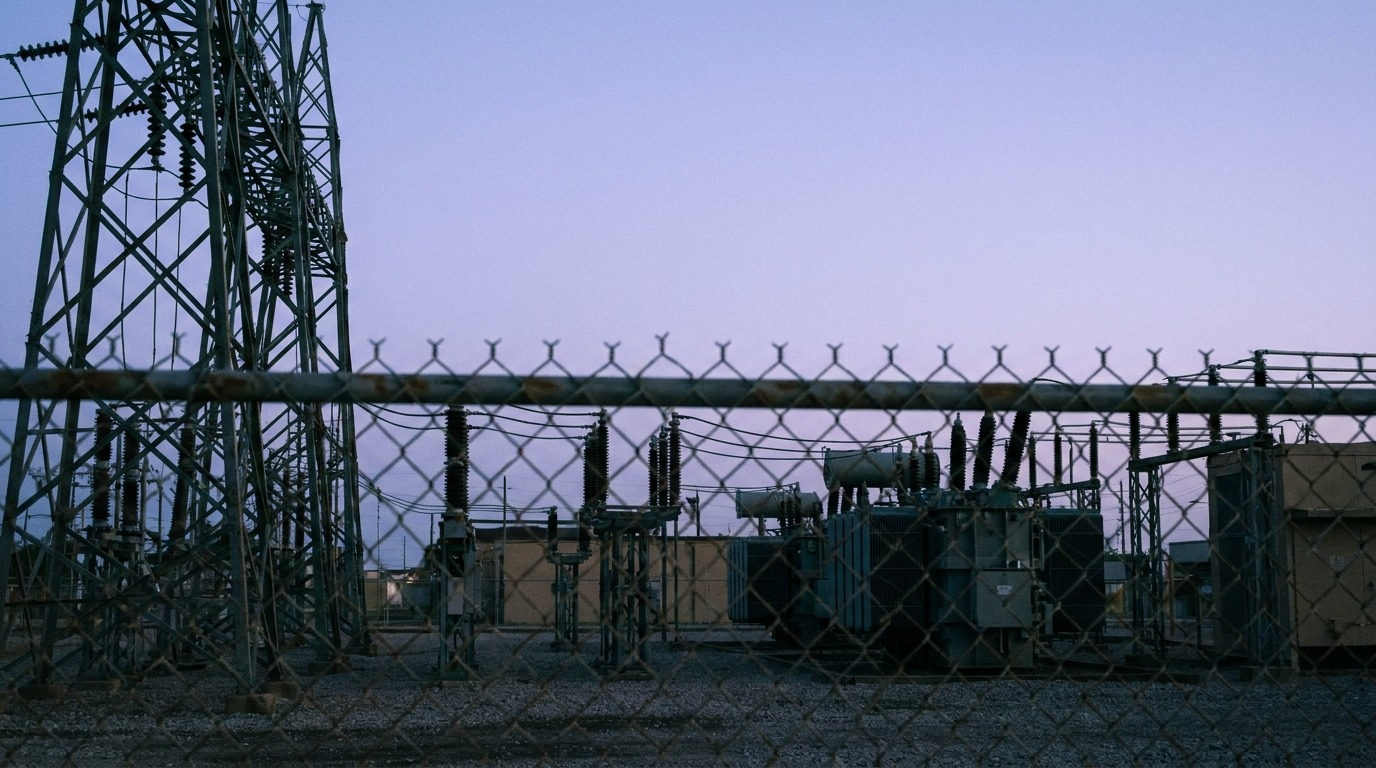 On July 1 the Departments of Justice and Homeland Security issued an interim final rule, and on July 2 the Federal Communications Commission issued coordinated orders alongside it. Together they did something that had been argued over in Washington for the better part of a decade: they set out a framework under which state, local, tribal and territorial law enforcement agencies may lawfully detect and, in defined circumstances, disable an unmanned aircraft. The public comment period on that rule closes on September 4, which makes this a live question rather than a settled one. The reason the framework was needed is easier to state than to believe. Until it existed, a county sheriff watching a drone circle a substation, a stadium, or a prison yard had no lawful authority to interfere with it. Not because the drone was permitted to be there, but because the federal statutes that protect aircraft from interference, and the federal statutes that protect radio communications from jamming, applied to the sheriff. The technology to bring the drone down had been commercially available for years. The permission had not. That gap produced an odd inversion, and it is the reason this subject is worth understanding as a mechanism rather than a headline. In American airspace the constraint on counter-drone response has not been detection, and it has not been hardware. It has been legal authority, distributed across at least four federal agencies, with the operational need sitting almost entirely at the local level. The new framework addresses that in two tiers. The first covers detection, identification, monitoring, tracking, warning and confiscation. The second — mitigation — permits disrupting, seizing control of, disabling, damaging or destroying an aircraft through radio frequency transmission. Access to the second tier is conditioned on federal training and certification, use of approved equipment, and compliance with FCC authorization requirements, including special temporary authority that runs 180 days from issuance. The scope is bounded to credible threats against people, facilities, critical infrastructure, correctional facilities and large public venues. Outside that supervised framework, the existing prohibitions on radio interference continue to apply exactly as before. There is a further feature worth noting. It arrived as an interim final rule, which means it took effect on issuance rather than after a comment period — a procedural choice agencies make when they judge that the need is immediate. The comments now being collected will shape the final version, and the questions raised in them are the ones most likely to determine whether this framework works or produces a new category of problem. What follows is an account of why the authority was so hard to grant, what the framework does and does not solve, and which parts of the problem no rule can address. Why Four Agencies Had to AgreeThe reason this took a decade is not bureaucratic inertia, though there was some. It is that a drone is simultaneously three regulated things, and each is governed by a different body of law written before small unmanned aircraft existed. It is an aircraft. Federal law makes it a crime to damage, destroy, or interfere with an aircraft in flight, and the statute does not scale its protection to the size of the aircraft. A rule permitting police to shoot down a two-kilogram quadcopter has to be reconciled with a criminal statute written to protect airliners. It is a radio device. Nearly every mitigation technique that does not involve a projectile works by transmitting radio energy — jamming the control link, spoofing the navigation signal, or taking over the command channel. Transmitting to interfere with a licensed communication is regulated by the FCC, and the general prohibition on causing harmful interference is not something a police department may waive locally. It is also, in a legal sense, someone's property, and in some circumstances a platform carrying someone's communications. Seizing or disabling it raises the same questions any search or seizure raises. The framework works because it addresses all three at once — a criminal law carve-out administered through DOJ and DHS, and a spectrum authorization administered through the FCC. Any one of those alone would have left the operator exposed on the other two. 📊 Live Defense Test September 4, 2026 Close of the public comment period on the interim final rule that, for the first time, permits state, local, tribal and territorial agencies to detect and — with federal certification — disable threatening unmanned aircraft. Sources: Department of Justice and Department of Homeland Security interim final rule, July 1, 2026; Federal Communications Commission coordinated orders, July 2, 2026. |
Support or oppose: should local police be able to bring down a drone? Under the new federal framework, certified state and local agencies may jam, seize control of, or disable an unmanned aircraft that presents a credible threat to infrastructure, a prison, or a large venue. Supporters say the threat is already here, that the operational need is entirely local, and that a decade of waiting for a federal response produced nothing usable. Opponents warn that radio-frequency mitigation is indiscriminate by nature, that it can disrupt nearby licensed communications including aviation and emergency services, and that thousands of separately trained agencies will produce inconsistent judgment. Should this authority sit with local police? Hit reply — one line is enough. |
What Mitigation Actually DoesThe word used in the rule is mitigation, and its vagueness conceals a set of techniques with meaningfully different consequences. Radio-frequency jamming saturates the frequencies the aircraft uses for control or navigation. It is effective, it is comparatively cheap, and it is indiscriminate in a way that matters: energy radiated to disrupt one link does not respect the boundary of the intended target. In a dense environment the same transmission can affect other devices using neighboring spectrum, which is precisely why FCC authorization sits at the center of the framework rather than at its edge. Protocol takeover — commandeering the control link and landing the aircraft — is more precise and works only against aircraft whose control protocol is known and unencrypted. It fails against anything using an unfamiliar or hardened link. Kinetic and physical methods, from nets to interceptor drones, avoid the spectrum problem entirely and introduce a different one: an aircraft that has been disabled over a crowd is now an uncontrolled falling object, and the debris question is not academic at a stadium. The most important limitation applies to all three. A drone flying a preprogrammed route with no active control link and no reliance on satellite navigation is not susceptible to jamming or takeover, because there is nothing to jam or take over. The capability that makes autonomous navigation useful is the same capability that makes the cheapest countermeasures irrelevant, and the trend in the technology runs firmly in that direction. The Detection Problem Comes FirstMitigation authority is the part that generates debate, and it is the smaller half of the problem. Before anything can be brought down it has to be found, identified, and assessed — and the window in which that must happen is short. A small aircraft moving at even modest speed covers the distance from a perimeter fence to a critical asset in well under a minute. Detection systems that work by radio-frequency monitoring, radar, acoustics or optics each have characteristic failure modes, and each produces false positives that a human operator must resolve under time pressure. The identification step is harder than detection and receives less attention. A drone near a substation may be a survey contractor, a utility inspecting its own equipment, a hobbyist who does not know the rules, a journalist, or something requiring a response. Distinguishing among those in seconds, on the basis of a radar return, is the actual operational problem, and no authority framework simplifies it. The asymmetry that makes this hard to solve The cost structure of this problem runs the wrong way for the defender, and no rule changes that arithmetic. A capable small unmanned aircraft can be assembled from commercially available components for a sum in the hundreds or low thousands of dollars. A detection and mitigation system covering a single fixed site costs orders of magnitude more, requires trained operators, and protects only what it is pointed at. The attacker chooses the time, the place, and the number; the defender must cover every site, continuously, forever. This is the same asymmetry that governs cyber defense, and it produces the same conclusion: perfect prevention is not purchasable, and the realistic objective is raising the cost and shortening the response time rather than achieving immunity. Any vendor or official promising the former is selling something. |
Authority Is Cheaper Than CapabilityThere is a gap between what a rule permits and what an agency can actually do, and in this case the gap is large enough to determine the practical effect of the entire framework. Permission costs the federal government nothing to grant. Detection and mitigation equipment costs money, requires trained operators to run, and demands a certification process that consumes personnel time from departments that are generally not over-staffed. A framework that authorizes several thousand agencies to acquire a capability does not, by itself, put that capability anywhere. The predictable result is concentration. The departments that will be certified and equipped first are the ones with existing federal security relationships, dedicated grant funding, or a large venue whose operator is willing to underwrite the cost. Major metropolitan forces, agencies covering nuclear or defense sites, and jurisdictions hosting international events will move first. Rural counties with a single substation and a four-person night shift will not. That distribution is not perverse — resources going first to the highest-consequence sites is a defensible allocation. But it means the honest description of what changed on July 1 is narrower than the coverage suggested. A legal barrier was removed. Whether anything is standing under the sky above any particular piece of infrastructure remains a budget question, answered locally, and answered slowly. What the Rule Does Not ReachThree categories of exposure sit outside the framework entirely, and they are worth naming because coverage announcements rarely do. The first is private critical infrastructure without a law enforcement relationship. The authority runs to government agencies. A privately owned substation, pipeline terminal, chemical plant or data center may detect an aircraft over its property and may call the police, but the operator itself remains where everyone was before July: able to watch and not to act. The second is the sheer number of sites. The framework enables certified agencies to respond to credible threats. It does not fund equipment, train operators, or create the personnel to staff a capability at every location that might warrant one. Authority without appropriation produces a capability concentrated where budgets already exist. The third is the aircraft that does not care. Preprogrammed, autonomously navigating platforms are the direction the technology is moving, and the electronic countermeasures at the center of this framework are least effective against exactly that design. The rule was written against the threat that exists in volume today. The comment period closes on September 4. The submissions worth watching are not the ones arguing for or against the authority in principle — that argument is effectively over — but the ones from spectrum users, airport operators and emergency communications providers explaining what happens when the mitigation is used near them. The bill, not the debate Most coverage of unmanned aircraft treats the story as a technology race, which frames it as something happening to militaries far away. The domestic version is a permissions problem that was left unresolved for a decade while the hardware became a consumer product, and it is now being fixed under a rule that most people affected by it will never read. If a drone were circling the substation that feeds your neighborhood tonight, do you know whether anyone within fifty miles is certified to do anything about it? Connor Hill reads every reply. |
Sources checked: Davis Wright Tremaine — analysis of the DOJ/DHS interim final rule and FCC coordinated orders establishing the state and local counter-UAS framework, July 23, 2026 · Congressional Research Service — Regulating State, Local, Tribal, and Territorial Law Enforcement Actions to Counter Unmanned Aircraft Systems, IF13279 · U.S. House Committee on Transportation and Infrastructure — approval of bipartisan legislation to reauthorize and reform counter-UAS authorities · U.S. Congress — H.R. 7525, Counter Drone State and Local Defender Act, 119th Congress · Morgan Lewis — Preparing for the Next Megaevent: New Federal Counter-UAS Rules Will Reshape Aviation Security in the United States, July 2026 · Route Fifty — Defense law includes expanded counter-drone authority, January 2026 |
Connor Hill · InsightfulWord |
|