|
New Housing Affordability Law,
What it Means for You:
It feels like the American Dream of owning a home is growing out of reach for many families. There are not enough homes being built, regulations are driving up costs and increasing construction times, and there are too many hurdles to buy and sell a home. But recent law helps make changes to support working families and address rising housing costs.
The 21st Century Road to Housing Act became law last month. This law increases housing supply by reducing government regulation, cutting red tape for building and lending, and addressing high housing costs. This is the first major housing affordability legislation to pass through Congress in 30 years.
Housing costs are too high for many families, driving homeownership out of reach. From 2021 to 2025, mortgage interest rates increased from 2.65% to over 6%. This contributed to the typical mortgage payment doubling, from $1,100 a month to over $2,200.
Key drivers of high housing prices include a lack of supply and workforce needs. Government red tape can also increase housing costs and make building new homes difficult. America needs roughly 6 million more homes to meet housing demands.
The 21st Century Road to Housing Act boosts housing supply by modernizing standards, cuts red tape to reduce the cost of manufactured homes by approximately $3,000, and updates federal permitting to ensure that projects without environmental impacts do not need to undergo extra environmental permitting reviews. It also modernizes HUD programs to support new housing construction.
I want to hear from you:
The law also contains my bill the Accelerating Home Building Act, which I introduced with Congresswoman Janelle Bynum (OR-05). It helps communities implement pattern zoning. Pew reports that this process could save families $5,000 - $10,000 in costs. These savings matter for working families. Here is how it works:
Pattern zoning allows architects and local governments to develop "pattern books" full of pre-approved, standardized plans and designs for use in their community.
Families, communities, and builders work together to design these homes and streamline the zoning process. This lowers overhead design costs, saving time and money for homebuyers. Pattern zoning allows communities to expedite the building process while strengthening neighborhood character.

This is an innovative approach to lowering housing costs. Communities across the country are beginning to adopt pattern zoning to help reduce costs.
When South Bend, IN adopted this approach, Pew reported that housing costs were lowered by as much as $10,000.
In another City, Claremore, OK, Pew reported an 80% reduction in permit approval time and up to $7,000 in savings for a single family home. Studies show that each month of permitting delays reduced costs by $1,300 for families.
While there is still more work to do in order to bring down costs, this new law is a step in the right direction.
For more information on how this new law might impact your family, click here.
Supporting Strong Families
Adopting a child is one of the most important decisions a family can make. It shouldn’t be out of reach because of cost. With more than 300,000 children in foster care across the country, families who are ready to provide a stable home should have the support they need. But the average cost for adoption can reach as high as $45,000, putting adoption out of reach for families.
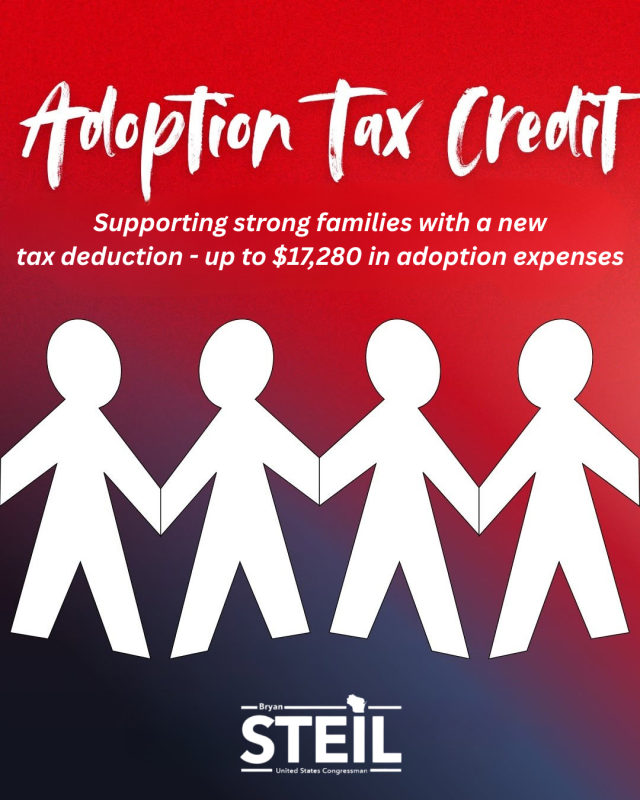
That's why the Working Families Tax Cuts included an updated adoption tax credit. Families can now claim up to $17,280 in qualifying adoption expenses, with the first $5,000 refundable. This helps ease some of the upfront costs that come with the adoption process.
This important reform helps to build and maintain strong families. The Working Families Tax Cuts also includes updates that support all families raising kids:
Recently Clark Saunders, a public school teacher and adoptive father, testified before Congress about what this means for low- and middle-income families:
"If you're talking about $30,000 to invest in your family, that's paying for an entire car, just to start to have a child, and even that comes with risks where sometimes placements don't happen. Sometimes you incur even more costs. Having the ability to not have to sacrifice as much to have that standard of living for your family is super helpful... Being able to apply that Adoption Tax Credit for our second son will be a huge benefit to our family."
To hear more about how the Adoption Tax Credit is helping working families, click here.
Every child deserves a safe and supportive home. Families willing to open theirs should have a path to adopt that’s affordable and predictable. These changes help support that mission and deliver real relief to working families.
As always, feel free to contact my office if you have questions, want to share an opinion, or are having trouble with a federal agency.
On Wisconsin,

Bryan Steil
Member of Congress
Click here to subscribe to my e-newsletter
|