Hello,
Welcome to our flagship newsletter, MarketBeat Daily Ratings.
We'll deliver the latest "Buy" and "Sell" ratings from Wall Street's top-rated analysts directly to your inbox each morning.
But first, we need you to do two quick things:
1. Hit reply, and send a simple "Yes." Just one word. This tells Google (and other emails providers) that you actually want to get our newsletter.
2. After that, this link to confirm your subscription. That will tell us that you received our welcome email and that we should start sending your daily report.
Confirm your subscription here.
After you have completed these two steps, we would like to gift you a free copy of one of our most popular investing reports: 7 Stocks to Buy and Hold Forever. You can download the report with this link.
Thank you again for subscribing. We look forward to being an important part of your investing journey

Matthew Paulson
Founder and CEO, MarketBeat.
P.S. If you didn’t intend to subscribe, no problem—you can unsubscribe with this link.
(ARReply-161)
This Week's Bonus News GE Sparks a High-Voltage Aviation BreakoutAuthor: Jeffrey Neal Johnson. Publication Date: 7/22/2026. 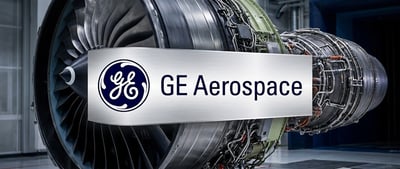
Key Points- GE Aerospace, NASA, and Boeing successfully tested a hybrid-electric propulsion system above 30,000 feet, advancing sustainable commercial aviation technology by roughly a decade.
- The company posted strong second-quarter 2026 results, beating earnings estimates with a $210 billion backlog, 17.72% net margins, and 40.56% return on equity.
- Despite robust demand, GE Aerospace faces supply chain bottlenecks and rising spare parts delinquency, while an active $20 billion buyback program continues to support shareholder value.
- Special Report: Everyone wanted SpaceX. Smart money wants this.
At the Farnborough International Airshow, a heavily modified Saab 340B turboprop quietly achieved a breakthrough that the commercial aviation sector has long viewed as a distant dream. Operating above 30,000 feet, the aircraft sustained flight for more than two hours using a megawatt-class hybrid-electric propulsion system.
For GE Aerospace (NYSE: GE), the successful collaboration with NASA and Boeing (NYSE: BA) validates the engineering viability of high-voltage, high-altitude hybrid-electric flight for commercial aviation.
Whitney Tilson of Stansberry Research has long recommended Berkshire Hathaway as a core retirement holding - but now he believes he's found something better.
This under-the-radar company sits at the intersection of America's two most important industries, including AI, pays massive dividends, and attracted a famous money manager who put 60% of his multi-billion-dollar fund into it. Tilson is revealing the name and ticker symbol completely free - no credit card or email required. Get the stock name and ticker symbol free of charge today The successful deployment of this technology at commercial cruise altitudes raises the engineering ceiling that previously restricted electric aviation largely to low-altitude air taxis and short-hop experimental aircraft. GE Aerospace has demonstrated that hybrid-electric architecture could eventually scale to commercial jetliners.
By combining conventional fuel consumption with high-capacity electric battery power, GE Aerospace is helping draft the blueprint for next-generation propulsion.
Pulling the Sustainable Aviation Timeline ForwardStructural transitions in the physical economy do not happen overnight. The immediate takeaway is not that legacy jet engines will disappear tomorrow, but rather that GE Aerospace has established a strong research-and-development moat. This milestone could pull the sustainable aviation timeline forward by a decade.
If airlines begin replacing their narrowbody fleets in the late 2030s to comply with tightening global regulatory mandates, this foundational technology could position GE Aerospace to help shape the market. Regulatory bodies have historically lagged behind localized commercial deployment, meaning governments often mandate sustainable flight only after a manufacturer demonstrates that it can be done safely and at scale. By clearing the 30,000-foot hurdle today, GE Aerospace may be widening the engineering gap between GE Aerospace and its competitors, establishing a potential pathway to long-term leadership in the aerospace sector.
$210 Billion Backlog: Fueling Margins on the GroundThe market does not award a trailing price-to-earnings ratio of 40 solely for successful science projects. Investors also pay for consistent execution and highly visible cash flow. While the hybrid-electric milestone captures headlines, the underlying fundamentals of GE Aerospace help support its $354 billion market capitalization.
Second-quarter 2026 earnings delivered a resounding beat, with GE Aerospace posting $2.02 in earnings per share versus a $1.86 consensus estimate. Profitability was supported by 21.1% year-over-year revenue growth.
More importantly, GE Aerospace is operating with considerable efficiency. Net margins stand at a robust 17.72%, while return on equity has reached an exceptional 40.56%. In a highly capital-intensive industry, generating a 40% return on shareholder equity indicates that management is effectively allocating capital to profitable projects rather than deploying cash toward low-yield ventures.
The ultimate driver of this financial performance is strong commercial demand, crystallized in a staggering $210 billion backlog. During the Farnborough event, traditional propulsion systems demonstrated their immediate scale. CFM International, the highly successful joint venture between GE Aerospace and Safran (OTCMKTS: SAFRF), finalized a memorandum of understanding with IndiGo for more than 1,000 LEAP-1A engines. Additional agreements secured hundreds of engine packages for leasing giants such as BOC Aviation and SMBC Aviation Capital.
To protect profitability amid inflationary pressures on raw materials and engine durability kits, GE Aerospace leaned heavily on its proprietary FLIGHT DECK operational system. This internal initiative increased shop-visit output and streamlined maintenance operations, helping shield a 21.7% operating profit margin.
Turbulence Ahead: The Supply Chain Reality CheckDespite the exceptional demand profile, the aerospace sector is wrestling with significant macroeconomic headwinds, primarily in the form of raw-material bottlenecks and supply-chain constraints.
During the latest earnings call, CEO Larry Culp explicitly stated that the primary operational hurdle is on the supply side. There are no victory laps in the executive suite. While order growth surged 17%, spare-parts delinquency increased 20% sequentially. Airlines are desperate for engines and replacement parts, but manufacturers are struggling to forge and assemble components quickly enough to meet demand.
This logistical bottleneck highlights why the hybrid-electric propulsion breakthrough poses no immediate existential threat to legacy airline models. The multidecade life cycle of existing commercial airframes means the transition will be gradual. A systemic overhaul of global aviation infrastructure will take time, and the immediate displacement of fossil-fuel engines is logistically impossible.
Beyond commercial aviation, GE Aerospace continues to bolster its defense portfolio. A recent partnership with Shield AI successfully integrated the X-Bat engine, enabling thrust-vectoring and vertical-flight capabilities. This dual-use capability across both the commercial and defense sectors provides a stabilizing revenue stream against potential disruptions to the commercial supply chain.
Capital Allocation: The Silent Earnings EngineThe most compelling near-term catalyst for GE Aerospace is not found in the clouds, but on the balance sheet. High-level research and development expenditures require strong free cash flow, and GE Aerospace is deploying that cash to support an aggressive shareholder-return program.
During the second quarter, GE Aerospace repurchased 14.1 million shares for $4.22 billion. The company still has $17.99 billion remaining under its active $20 billion buyback authorization. For investors, this aggressive capital-return program could provide a structural floor for the valuation.
When GE Aerospace retires a significant portion of its outstanding shares, it can compress forward valuation multiples by reducing the denominator in the earnings-per-share calculation. Currently trading at a forward price-to-earnings ratio of 43 and a price-to-sales multiple of 7.7, the stock appears richly valued at first glance. Continued execution of the $20 billion buyback authorization will increase the ownership stake of remaining shareholders while supporting earnings-per-share growth, even if top-line revenue temporarily slows because of supply constraints.
Boarding Pass: Strategizing the Aerospace TransitionThe financial mechanics of the pure-play aerospace transition have attracted heavy institutional conviction, with ownership currently sitting at a dominant 75%. Prominent capital inflows from entities such as the Bessemer Group reflect Wall Street's confidence in GE Aerospace's long-term trajectory.
GE Aerospace offers a unique combination of immediate, high-visibility cash flow and long-term technological leadership. The legacy $210 billion backlog funds the research required to lead the next generation of hybrid-electric flight, effectively creating a self-reinforcing cycle of innovation and profitability.
While technological breakthroughs could accelerate the sustainable aviation timeline, the underlying value for current investors lies in the immediate execution of share repurchases and margin protection. Investors with a long-term horizon might consider buying shares during periods of broader market volatility, recognizing that GE Aerospace is effectively paying them to wait through an extensive buyback program while it works to engineer the future of commercial flight. |