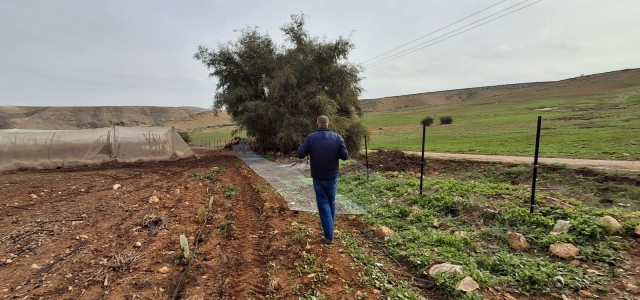
Above: A Palestinian farmer tends to his farm in the Jordan Valley
Dear John,
The suffering in the Holy Land has gone on for far too long. One of the greatest obstacles to building peace is the ongoing expansion of illegal settlements across occupied Palestinian territory.
As settlements expand, Palestinian families are driven from their homes, often amid repeated violent attacks, and are forced to watch while settlers take over. The result is widespread poverty and suffering.
That is why we are calling on the trade secretary, Jonathan Reynolds, to ban trade with settlements, including ending the import of produce grown on illegally occupied land.
CAFOD works closely with human rights organisations in the region who are witnessing this violence first hand. They need our solidarity and support to put an end to the expansion of illegal Israeli settlements in Palestinian territory.
Foreign trade with settlements sustains the occupation and contributes to the humanitarian crisis in the region. These settlements have long been recognised as illegal under international law, a position recognised by successive British Governments.
Despite this recognition, every year produce from these illegal settlements, from boxes of dates to bottles of wine, is sold in shops around the world, including here in Britain.
Our government must act to prevent the import of all goods and services from illegally occupied Palestinian land. Several countries, including Spain and Ireland have already taken steps to ban trade with illegal settlements.
As Bishop Jim Curry, Lead Bishop for the Holy Land, recently said:
"Lasting peace can only be built on a foundation of equal human and civil rights; justice and mutual respect for all Israelis, Palestinians and people of every religious belief."
Together, we can send a clear message that we want our government to root Britain’s trade policy in respect for international law and human rights.
With our prayers and best wishes Aisha and the CAFOD Campaigns Team
To ensure your email newsletter reaches you every time, add [email protected] to your address book or contacts list. We protect your privacy and don’t share personal data with third parties. Read our privacy notice here.