August is National Breastfeeding Month: Supporting Minnesota’s lactating employees at work

August is National Breastfeeding Month, a good time to recognize the importance of supporting working parents as they return to the workplace after the birth of a child.
In this issue, we highlight protections for lactating employees under the Women’s Economic Security Act (WESA) and recognize Farmworker Appreciation Day on Aug. 6.
Among other protections, WESA provides workplace protections for employees who express breast milk during the workday. Employers are responsible for implementing lactating employee protections and other provisions of WESA in their workplaces.
Know the law
Under Minnesota’s WESA law, all employers must:
- provide reasonable break times each day for employees to express breast milk;
- provide a private, secure, and clean room other than a bathroom that is shielded from view, free from intrusion, in close proximity to the work area, and has access to an electrical outlet to express milk;
- provide a notice about WESA rights at the time of hire and when an employee makes an inquiry about or requests parental leave; and
- avoid retaliation against employees for exercising their WESA rights.
While breaks to express breast milk may run concurrently with break time an employer already provides, employers can’t reduce an employee's pay or require an employee to make up time used to express breast milk.
Minnesota workplaces can be recognized for their commitment to supporting lactating employees by participating in the Minnesota Department of Health’s breastfeeding friendly workplaces program. The Department of Labor and Industry (DLI) is proud to be a recognized workplace in this program.
For questions about WESA requirements, employees and employers can call DLI’s Labor Standards Division at 651-284-5075, email [email protected], or visit our Pregnant workers and new parents webpage.
|
August and September webinars
- National Breastfeeding Month: State and federal workplace protections for pregnant and nursing parents, along with programs that support and recognize employer best practices.
- Working while learning: What to know about youth employment during the school year, Sept. 10, from 10:30-11:30 a.m. Register for the webinar.
- Conozca sus derechos laborales: Lo que toda persona trabajadora debe saber, 17 de septiembre, de 2-3 p.m. Regístrese para el seminario web.
- Guía Esencial de la Ley Laboral para Pequeños Negocios en Minnesota, 22 de septiembre, de 11 a.m.-noon. Regístrese para el seminario web.
- Know your workplace rights, Sept. 23, from 2-3 p.m. Register for the webinar.
- Employment law basics for small businesses in Minnesota, Sept. 24, from 2:30-3:30 p.m. Register for the webinar.
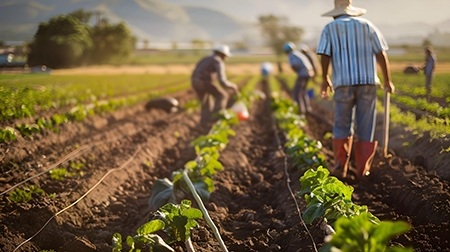
Aug. 6 is Farmworker Appreciation Day
Minnesota recognizes Aug. 6 as Farmworker Appreciation Day, honoring the individuals whose work helps feed our communities.
Farmworkers perform physically demanding work that is essential to Minnesota’s agricultural economy. DLI encourages employers and workers to become familiar with workplace rights and responsibilities that apply to agricultural employment, including overtime protections, specific requirements for recruited migrant agricultural workers, youth employment requirements and other applicable labor standards.
Visit our Agricultural workers page for more information.
|

Workplace Rights Week 2026
Join us for Minnesota’s Workplace Rights Week Sept. 13-19, 2026. This statewide initiative helps workers and employers understand their rights and responsibilities, strengthening workplaces and communities. Last year, DLI connected with thousands of Minnesotans through business visits, events and virtual presentations.
We invite you to partner with us in 2026 by hosting or cohosting an event, webinar or outreach activity. If interested, email Diana Salas at [email protected].
Learn more at mn.gov/rights-week.
|
Labor Standards hiring additional investigators
DLI’s Labor Standards Division is hiring several investigator positions, with Spanish bilingual skills required. These roles offer an opportunity to support workers, employers and the public by helping prevent labor standards violations and carrying out enforcement activities.
For more information or to apply, visit mn.gov/mmb/careers and enter Job ID 95830.
August featured case
DLI received a complaint from a teacher that she was not allowed to express breast milk at work as needed and was required to make up time spent expressing milk.
DLI educated the employer about WESA-related requirements, and the employer adjusted the teacher’s work schedule to allow enough time for her to express milk and discontinued the practice of requiring her to make up time.
Questions of the month
What are some of the workplace rights of agricultural workers in Minnesota?
Agricultural workers in Minnesota are entitled to overtime after 48 hours in a workweek and must be paid at least the Minnesota minimum wage. They also earn paid sick and safe time under most circumstances, have the right to pregnancy and nursing accommodations, and may qualify for Paid Leave for childbirth, bonding or medical needs if they meet the state’s eligibility requirements.
Recruited migrant agricultural workers have additional rights, including a written employment statement in their preferred language at recruitment and a 70-hour pay guarantee.
Visit our worker rights and employer requirements in agriculture page for more information.
Wage and Hour Bulletin archive
Access past editions of the Wage and Hour Bulletin.
Questions?
The Labor Standards Division serves the people of Minnesota by providing
information about the state's wage, hour and employment laws.
Phone: 651-284-5075 or 800-342-5354
Email: [email protected]
Website: dli.mn.gov
|