| Unsubscribe |
Editor's Note: Please see the following from Dr. David Eifrig, a former Goldman Sachs Vice President and professional trader. He has just released an urgent investigative exposé on the $7.2 Trillion "Mar-a-Lago Trade" -- an idea Bloomberg has said may cause "a dire shift of fortunes for America."
Dear Reader,
Have you heard about the $7.2 TRILLION "Mar-a-Lago Trade"?
It's doubling retirement accounts across America.
It has nothing to do with AI, space, or risky IPOs...
And yet, my research shows it could jump as high as 10x from here.
So, I urge you to get all the details NOW, right here.
Be warned:
This opportunity (and this free broadcast) won't be around for very long.
Click here now for the full story.
Here's to our health, wealth, and a great retirement,
Dr. David Eifrig, MD, MBA
Senior Partner, Stansberry Research
CEO, MarketWise
P.S. Over 500,000 people pay for my firm's research because we uncover opportunities and the biggest market events before they go mainstream.
In 2016, one of our analysts recommended Nvidia – long before AI was on anyone’s radar.
And I called the 2022 crash, warning my readers to raise cash months in advance.
Bloomberg has said this may cause "a dire shift of fortunes for America."
And the Financial Times says, "the unimaginable is becoming imaginable"...
But if you want to stay up to speed with how this developing situation could affect you, it's critical you pay attention now.
In fact, this plan which was laid out point-by-point by a senior advisor in Washington and who had a seat at the Federal Reserve, is already underway.
If you stay on the sidelines, your chance to prepare could slip away.
So click here now to learn more. It's completely free.
AST SpaceMobile Stock Sinks as SpaceX Fallout Rattles Space Sector
Author: Jessica Mitacek. Published: 7/17/2026.

Key Points
- AST SpaceMobile shares have fallen more than 18% in a week and nearly 60% since their May 28 all-time high amid a broader space stock selloff.
- The decline follows a poorly received $1 billion convertible notes offering and concerns over heavy capital spending, with free cash flow not expected until at least 2028.
- Wall Street holds a consensus Reduce rating on ASTS, with high short interest of 21%, despite an $87 price target implying significant upside.
- Special Report: Forget SpaceX. Buy the company Musk can't replace.
Space stocks are being battered this week, and AST SpaceMobile (NASDAQ: ASTS) is no exception. Shares of the Midland, Texas-based company have plummeted more than 18% since the market closed on Wednesday, July 15, with souring investor sentiment in the sector appearing to be the primary culprit.
With SpaceX (NASDAQ: SPCX) now trading below its IPO price, the Elon Musk-led firm’s poor performance has reverberated throughout the industry. Key rivals—including space-based direct-to-device (D2D) cellular broadband provider AST SpaceMobile, launch services provider Rocket Lab (NASDAQ: RKLB), and commercial lunar exploration services provider Intuitive Machines (NASDAQ: LUNR)—have posted losses ranging from 18% to 26% over the past five days.
They proved it worked in '76. Then buried it. (Ad)
In 1976, Chevron tapped an energy source with no fuel costs, no carbon, and no supply chain - then killed the project. Unocal and Texaco did the same. All three buried the results because it threatened their core business.
Now one company has spent sixty years developing what Big Oil refused to touch. Google locked in a 15-year contract, Bill Gates wrote a $100 million check, and on August 18th the government hands it a competitive edge no other energy source receives.
Discover the company that spent 60 years proving this technology worksFor ASTS shareholders, elevated volatility has become the expectation. However, this recent decline builds on a more concerning, prolonged downtrend that has seen the stock slide nearly 60% since hitting its all-time high (ATH) on May 28.
AST SpaceMobile Is a Secondhand Victim of Both SpaceX’s Fallout and Success
On Thursday, July 16, shares of SPCX traded around 42% below their post-IPO high. That performance reflects the broader, ongoing pullback in CapEx-intensive technology stocks, which has had an outsized impact on the AI infrastructure trade.
For space stocks, however, the pullback has taken the form of an outright correction. As a D2D competitor to SpaceX, AST SpaceMobile has suffered some of the sector’s worst losses as deteriorating sentiment has coincided with the company’s poorly received offering of $1 billion in convertible senior notes due in 2034. This has led to speculation that the capital-intensive nature of its business could pose a concern going forward.
With SpaceX faltering, the spotlight has also turned to AST SpaceMobile’s balance sheet.
The company is forecast to spend roughly $3 billion this year and next, with positive free cash flow not expected until at least 2028.
Scaling to this extent is capital-intensive for AST SpaceMobile. In Q1, that contributed to a year-over-year (YOY) net income contraction of more than 292%, despite YOY revenue growth of more than 1,952%.
As a result, earnings per share (EPS) have suffered. In Q1, diluted EPS came in at negative 66 cents, missing the negative 23-cent consensus estimate and marking the company’s worst performance since it went public in April 2021.
Meanwhile, SpaceX’s Starlink D2D dominance is fueling concerns that AST SpaceMobile’s BlueBird deployments are failing to keep pace with the company’s 2026 launch target of putting 45 satellites into low Earth orbit by early next year.
A New AST SpaceMobile 2x Leveraged ETF Fails to Attract Inflows
While investors have plenty of fundamental reasons for concern, another is the poorly timed debut of a leveraged exchange-traded fund (ETF).
On June 23, Leverage Shares launched nine new 2x single-stock leveraged ETFs, one of which was the Leverage Shares 2X Long ASTG Daily ETF (NASDAQ: ASTG). According to a press release, “the new Cboe-listed ETFs are tailored to target 200% exposure to the daily performance of their underlying stocks.”
Since reaching its post-debut peak on July 2, the ETF has therefore magnified ASTS’ losses and fallen around 63%. The poor timing of its issuance has discouraged inflows into the fund and added another sell-the-news headwind for AST SpaceMobile, much to the benefit of short sellers (more on that below).
Wall Street’s Outlook Remains Rightfully Reserved
Aside from being SpaceX’s foremost competitor, AST SpaceMobile’s most distinguishing characteristic may be its exceptionally high volatility, as demonstrated by its current beta of 2.69.
For speculative investors who are comfortable with the company operating at a sizable loss—both currently and for the foreseeable future—ASTS’ crash from its ATH may present an ideal entry point. The stock’s $87 consensus price target implies roughly 58% upside from current prices.
That may partly explain bullish buying among institutional investors. In Q2, inflows of $110 million easily surpassed outflows of $1.77 million, building on the momentum seen in Q1, when inflows totaled $329 million versus $19 million in outflows.
For Wall Street analysts, however, AST SpaceMobile’s heightened volatility is a red flag.
Overall, ASTS receives a consensus Reduce rating. Of the 11 analysts currently covering the stock, three assign it a Sell rating, six assign it a Hold rating, and just two assign it a Buy rating. Current short interest remains concerningly high at more than 21%, or 64.7 million shares out of approximately 388 million shares outstanding.
3 Nuclear Stocks for Investors Willing to Wait Out the Dip
Author: Bridget Bennett. Published: 7/20/2026.
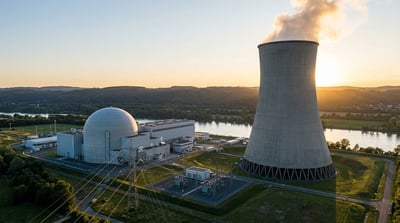
Key Points
- Nuclear stocks, including Constellation Energy and Centrus Energy, have fallen sharply over the past year even as long-term power demand keeps climbing.
- Long reactor build timelines mean revenue from the AI-driven demand boom hasn't reached company earnings yet, creating a gap between investor sentiment and underlying fundamentals.
- Options for investors range from established generators to smaller supply-chain names and a diversified nuclear-focused ETF, each with a different risk profile.
- Special Report: Forget SpaceX. Buy the company Musk can't replace.
Nuclear stocks spent last year near their highs. This year, most of them haven't stopped falling.
That decline has left many investors nursing losses and wondering whether the nuclear story is already over. Kuran Francis, host of the FinTek Channel, doesn't see it that way. He argues that falling share prices and improving sector fundamentals are currently two separate stories—and that's exactly what makes the setup interesting.
Falling Prices, Rising Demand
They proved it worked in '76. Then buried it. (Ad)
In 1976, Chevron tapped an energy source with no fuel costs, no carbon, and no supply chain - then killed the project. Unocal and Texaco did the same. All three buried the results because it threatened their core business.
Now one company has spent sixty years developing what Big Oil refused to touch. Google locked in a 15-year contract, Bill Gates wrote a $100 million check, and on August 18th the government hands it a competitive edge no other energy source receives.
Discover the company that spent 60 years proving this technology worksThe International Energy Agency projects that electricity demand from data centers will roughly double by 2030, with AI-specific demand growing even faster, largely driven by the buildout of AI infrastructure across the United States.
Nuclear reactors take years to build. That mismatch is the whole story. Companies like Meta Platforms (NASDAQ: META), Microsoft (NASDAQ: MSFT), and Amazon.com (NASDAQ: AMZN) signed major power agreements in 2024, and the resulting enthusiasm pushed nuclear stocks well ahead of their actual revenue. Now that the excitement has faded, Francis says the pullback looks less like a broken thesis and more like a reset.
Regulation adds another layer. For decades, the Nuclear Regulatory Commission's role was largely to restrict and slow new nuclear development, especially after high-profile disasters abroad. That posture is shifting.
The agency's mandate now includes actively facilitating new nuclear capacity, not just policing it. That could shorten some of the approval timelines that have historically dragged projects out for a decade or more.
Long Timelines Cut Both Ways
A standard nuclear reactor still takes six to eight years to bring online, and often longer in the United States given that regulatory history. Smaller "small modular reactors," built at a fraction of the scale, could begin reaching commercial operation as soon as 2027, though most timelines point to the early 2030s.
That patience requirement has hit small modular reactor names hardest. Oklo Inc. (NYSE: OKLO) and NuScale Power Corp. (NYSE: SMR) both surged in late 2025 before giving back much of those gains this year. Francis notes that smaller companies swing more sharply in both directions and that volatility is the tradeoff for getting in before a story becomes obvious to everyone.
Nuclear already ranks among the safest sources of power generation by deaths per gigawatt, safer than coal, wind, or natural gas. The stocks have never really been priced for that reality.
Constellation Energy: The Steady Bet
Constellation Energy (NASDAQ: CEG) anchors Francis's list. The company already holds multibillion-dollar power agreements with Meta and Microsoft, recently acquired a major natural gas generation business to help meet near-term demand, and trades at a price-to-earnings ratio in the low 20s.
Constellation is already profitable, which softens the risk associated with a long buildout. The market cares less about a good idea here than about proof that the cash flow already exists. That combination of income and growth makes the current pullback look more like an opportunity than a warning sign.
Centrus Energy: The High-Risk Supply Play
For more upside and more risk, Francis points to Centrus Energy Corp. (NYSE: LEU), the only U.S.-based producer of high-assay low-enriched uranium, or HALEU, the fuel type most small modular reactors are expected to rely on.
Centrus is also showing real revenue growth as its Technical Solutions and HALEU operations ramp up, with management raising full-year 2026 revenue guidance on the back of that progress.
Wall Street has recently trimmed price targets on the stock even as its long-term outlook remains bullish. That split fits the same disconnect playing out across the sector. This stock could double or go to zero, so it isn't suited to be a core holding.
A Simpler Way In
For investors who'd rather not pick a single name, Francis's third pick is the VanEck Uranium and Nuclear ETF (NYSEARCA: NLR), which spreads roughly $4 billion in assets across nuclear and uranium companies globally. Constellation and Centrus are both among its largest holdings, so choosing either the fund or the individual names, rather than both, keeps exposure from doubling up.
The fund isn't a shortcut around volatility. NLR has fallen more than 25% over the past three months, in line with the broader sector, and its relatively small size means a single large investor moving in or out can swing the price meaningfully.
The Long Game
Nothing about nuclear energy moves on a retail investor's timeline. The upside is a decade-long buildout of demand that isn't going away. The risk is holding through years in which the stock price may not reflect that demand.
The fear driving the sector down right now and the fundamentals driving it forward are telling two different stories. Long-term investors have to decide which one they believe.
This message is a sponsored message provided by Stansberry Research, a third-party advertiser of DividendStocks.com and MarketBeat.
This ad is sent on behalf of Stansberry Research, 1125 N Charles St, Baltimore, MD 21201. If you would like to optout from receiving offers from Stansberry Research please click here.
If you need assistance with your newsletter, please feel free to contact our U.S. based support team at [email protected].
If you no longer wish to receive email from DividendStocks.com, you can unsubscribe.
© 2006-2026 MarketBeat Media, LLC.
345 N Reid Place #620, Sioux Falls, South Dakota 57103. U.S.A..