| Unsubscribe |
Dear reader,
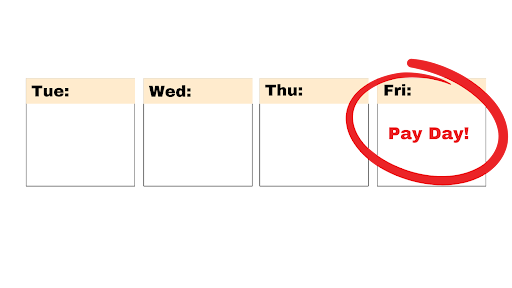
Most investors run from volatility. The method I have used for the last decade turns it into a weekly paychecks.
Instead of betting on which way the market moves, this strategy harvests income from the swings themselves.
One setup. Once a week. Designed to pay, week after week — without guessing direction or day trading.
[See how volatility becomes cash flow →]
Intel Earnings Reveal Whether the Chip Selloff Created a Buy
Authored by Chris Markoch. Article Posted: 7/24/2026.

Key Points
- Intel reported Q2 2026 revenue of $16.1 billion, up 25% year-over-year, and adjusted EPS of 42 cents, both well above analyst estimates, sending shares sharply higher after hours.
- Data Center and AI Group revenue grew 59% year-over-year, and management said demand still outstrips supply due to substrate and memory shortages, suggesting AI demand remains intact.
- Intel Foundry revenue rose 31%, but external customers accounted for only about 5% of segment revenue, leaving its leading-edge 18A business largely unproven despite raised guidance and capital spending.
- Special Report: SpaceX is offering you shares. Don't take them.
The importance of an earnings report can become overstated. However, it’s hard to understate what Intel Corporation (NASDAQ: INTC) faced heading into its Q2 2026 earnings report. The PHLX Semiconductor Index had fallen roughly 19% from its June 22 peak, with every constituent in the red. Nearly $2 trillion in sector value had been erased.
The sell-off occurred because investors questioned whether AI infrastructure spending could justify the current multiples assigned to chip stocks. Investors needed Intel’s results to answer one question: Was this a healthy reset or early proof that demand was cracking?
A 17-year investing experiment investigated in Dublin (Ad)
Porter Stansberry flew the Porter and Co. team 3,300 miles to Dublin to investigate a 17-year investing experiment called Project Prophet - and documented everything on film.
Rooted in the laws of physics, this quantitative approach challenges conventional wealth-building wisdom. With 17 years of verified data behind it, Porter calls it unlike anything he has seen in nearly 30 years in the business.
Watch the full investigation and decide for yourselfThe headline numbers from the report were encouraging. Revenue reached $16.1 billion, up 25% year over year and roughly $1.8 billion above the midpoint of guidance. It was also Intel’s fastest growth rate since 2011.
Adjusted earnings per share (EPS) of 42 cents doubled the 21 cents analysts expected. Gross margin expanded to 41.8%, nearly 280 basis points above management’s own guidance. The stock jumped as much as 12% to 13% after hours, briefly reaching levels above $112.
For a sector trading on fear throughout the month, the earnings report appeared to demand a repricing. However, the details underneath still leave room for caution.
Data Center Demand Looks Real, Not Like a Rebound Story
The clearest signal came from the company’s Data Center and AI Group segment. Revenue jumped 59% year over year to $6.3 billion. Management said AI-linked businesses grew more than 70% year over year and now make up roughly 70% of total revenue.
Chief Financial Officer (CFO) David Zinsner told analysts that server CPU demand has improved since last quarter. He pointed to double-digit industry unit growth through 2028. Intel also disclosed 10 long-term supply agreements with customers. Some customers want to lock in pricing, while others are focused primarily on securing volume.
Here’s why that matters: Intel said demand is still outstripping available supply. It cited industrywide shortages of substrates and memory that are expected to persist into next year. That’s a different story from the bear case behind July’s sell-off, which centered on fears that hyperscalers might pull back on AI capital spending. Intel’s numbers suggest that the bottleneck is hardware supply, not fading demand.
Margins Are Recovering, but Foundry Still Isn’t Fully Proven
Margin recovery is another pillar of the bull case, and it’s real. Non-GAAP gross margin came in at 41.8%, compared with just 29.7% a year ago. For a chip company, that improvement reflects scale, a richer product mix and disciplined pricing.
Foundry is where caution still belongs. Intel Foundry revenue rose 31% to $5.8 billion. 18A wafer output grew more than 50% quarter over quarter, with yields ahead of internal targets. However, external Foundry revenue was just $293 million, or about 5% of the segment’s total. The Foundry operating loss narrowed to roughly $2.1 billion but remains substantial.
Intel landed Fortinet (NASDAQ: FTNT) as a named foundry customer this week. That agreement involves an older node, though, rather than the leading-edge 18A business that investors need to see validated. Until a marquee customer commits meaningful volume to 18A or 14A, Foundry will remain a story of internal progress, not proven outside demand.
Guidance Suggests the Beat Wasn’t a One-Quarter Fluke
Intel guided for third-quarter revenue of $15.8 billion to $16.8 billion and non-GAAP EPS of 38 cents. Both figures came in well above Wall Street estimates of roughly $15.1 billion and 27 cents, respectively. Management also raised its 2026 capital expenditure (CapEx) outlook from $18 billion to more than $20 billion, with 2027 spending set to climb further.
This marks Intel’s seventh straight quarter of beating its own outlook. That looks like a management team that has recalibrated expectations below what it can actually deliver.
The Tougher Comp Problem Ahead
Intel has now strung together two quarters of exceptional, AI-fueled growth. The Data Center and AI segment’s 59% year-over-year jump follows strong growth last quarter, making the next few comparisons much harder.
However, beating a 25% growth quarter against an easy prior-year base is one thing. Beating it again against a quarter that grew 25% is another. Some deceleration in year-over-year growth rates should be expected over the next two or three quarters, even if the underlying business remains healthy. That’s not necessarily a red flag, but it does raise the bar for future beats.
Buy the Dip or Stay Cautious?
This report was bullish for INTC. Demand strength, margin recovery and raised guidance all point to real AI-driven growth. The main unresolved risk is specific to its Foundry business. In that regard, Intel remains a story stock until external 18A customers show up.
Valuation is an interesting wrinkle. Even if the stock pops in the sessions following earnings, Intel wouldn’t look expensive relative to its new earnings power. If anything, shares look modestly undervalued relative to the growth just reported. That’s a reasonable setup for patient buyers, but not necessarily one to chase into strength.
Given the tougher comparisons ahead, this looks like a hold rather than a chase. A pullback toward more attractive levels would offer a better entry point. That’s not a bearish call on the business; it’s a preference for a better price on a company that has proved it can execute.
For the broader chip dip, Intel’s results support the bullish view on demand. Supply constraints, long-term agreements and raised CapEx all argue that the AI buildout isn’t stalling. However, Intel is just one data point in a 30-stock index. The sharpest damage has concentrated in memory and hypergrowth momentum names that don’t share Intel’s specific demand mix.
Investors reacting to this print have a reasonable case for viewing Intel as attractive on a pullback. Diversified semiconductor ETF exposure remains a sensible way to play the broader recovery. Intel’s strength doesn’t automatically clear every beaten-down chip stock of the concerns that drove this sell-off.
No Space For Panic: T-Mobile Shrugs Off The Starlink Threat
Authored by Jeffrey Neal Johnson. Article Posted: 7/14/2026.

Key Points
- Market fears that satellite internet from Starlink will disrupt telecoms have unfairly dragged down T-Mobile, despite its distinct terrestrial 5G advantages.
- T-Mobile is strengthening its position through FCC-approved spectrum swaps, a direct-to-device partnership with SpaceX, and a strategic pivot toward enterprise and B2B clients.
- Analyst upgrades, strong Q1 2026 earnings, and solid profitability metrics suggest T-Mobile shares may be undervalued ahead of its July 23 earnings report.
- Special Report: SpaceX is offering you shares. Don't take them.
Institutional capital is gripped by a narrative that space-based internet will dismantle traditional telecommunications. Low-Earth-orbit satellite constellations, championed by SpaceX's (NASDAQ: SPCX) Starlink, are being rapidly deployed, prompting analysts to cut their ratings and price targets for legacy carriers. The sheer speed of Starlink's launch schedule creates the illusion that ground-based networks will soon become obsolete.
The market is treating this shift as a systemic threat to all broadband and wireless operators, punishing the telecom sector indiscriminately. However, fear often outpaces logic, creating pockets of opportunity for investors willing to examine the actual science behind network infrastructure.
Grounded Reality: Separating 5G Fact From Space Fiction
A 17-year investing experiment investigated in Dublin (Ad)
Porter Stansberry flew the Porter and Co. team 3,300 miles to Dublin to investigate a 17-year investing experiment called Project Prophet - and documented everything on film.
Rooted in the laws of physics, this quantitative approach challenges conventional wealth-building wisdom. With 17 years of verified data behind it, Porter calls it unlike anything he has seen in nearly 30 years in the business.
Watch the full investigation and decide for yourselfLumping a pure-play wireless operator like T-Mobile US (NASDAQ: TMUS) into the same risk category as legacy wireline and cable operators reveals a fundamental mispricing.
While aging wireline infrastructure faces genuine existential pressure from satellite alternatives, terrestrial 5G networks operate according to entirely different physical and economic realities.
T-Mobile does not carry the burden of decaying copper phone lines or unprofitable media spinoffs.
The current technical weakness in the telecom sector provides a window to evaluate T-Mobile as a business generating robust free cash flow while the broader market remains distracted by satellite hype.
Expanding the Signal: Spectrum Swaps and Direct-to-Device Deals
Consider the physics of data transmission. Low-Earth-orbit satellites provide an excellent solution for rural bandwidth gaps, offering connectivity where laying fiber is economically unviable. However, these satellites lack the localized infrastructure needed to handle the concentrated data consumption of high-density metropolitan areas. The physics of latency and bandwidth make satellite internet a limited threat to urban 5G networks.
T-Mobile commands an enviable mid-band 5G spectrum moat that can handle the density of urban data consumption. The Federal Communications Commission recently approved T-Mobile's authorization to exchange 800 MHz licenses for 600 MHz spectrum with Grain Management. This swap fortifies the firm's low-band coverage, which is critical because low-frequency signals travel farther and penetrate thick concrete buildings in cities more efficiently. It allows T-Mobile to expand its rural footprint and reinforce urban density without requiring significant new capital expenditures.
Positioning Starlink solely as a competitor also misrepresents T-Mobile's strategic position. The company maintains a direct-to-device partnership with SpaceX. This alliance inherently hedges the disruption risk facing AT&T (NYSE: T) and Verizon (NYSE: VZ). By integrating satellite connectivity to eliminate dead zones for existing mobile customers, T-Mobile is co-opting the technology rather than fighting it.
Ground Troops: T-Mobile's Strategic B2B Assault
Consumer wireless is a saturated, highly competitive market. For years, T-Mobile operated as a loss leader, using aggressive keep-and-switch promotions to steal market share from the legacy duopoly. Its network advantage now supports organic retention, allowing management to quietly restrict those expensive customer-acquisition offers. The focus has shifted from subscriber land grabs toward increasing average revenue per user and protecting operating margins.
To find its next major growth opportunity, T-Mobile is pivoting aggressively toward enterprise clients. The recent appointment of Chris Sambar as chief enterprise officer illustrates this ambition. Sambar replaces veteran executive Mike Katz, bringing a specific and formidable pedigree to the role. Having architected AT&T's FirstNet and scaled enterprise B2B sales, Sambar's arrival signals a direct assault on the lucrative corporate connectivity and Internet of Things total addressable market. T-Mobile wants to power fleet tracking, smart cities and automated manufacturing hubs.
To support this enterprise push, the board elevated Chief Technology Officer John Saw to oversee a newly integrated unit combining engineering, IT and cybersecurity. Consolidating infrastructure command under a single leader minimizes operational bloat and streamlines deployments ahead of capital expenditure cycles for artificial intelligence and new 6G spectrum. Enterprise clients demand rigorous cybersecurity integration alongside connectivity, and this internal restructuring aligns with the requirements of high-margin corporate contracts.
Gravity-Defying Margins: Arbitrage in a Panicked Sector
The broad satellite panic recently prompted Bernstein to issue downgrades and price-target cuts across the telecom space, citing subscriber cannibalization. Conversely, Bank of America upgraded T-Mobile from Neutral to Buy and set a new $220 price target, representing more than 15% upside from current trading levels.
Morgan Stanley explicitly noted that T-Mobile's back-book pricing remains roughly 10% below that of its peers while slightly adjusting its price target to $230.
The back-book pricing metric shows that T-Mobile still has a vital cushion. At 10% below its peers, the company can raise prices on legacy plans to drive revenue growth while reducing the risk of customer churn.
T-Mobile's underlying financial health supports a premium valuation. The company delivered first-quarter 2026 earnings of $2.27 per share, beating consensus estimates by 26 cents, alongside aggressive top-line revenue growth of 10.6% year over year.
T-Mobile trades at a trailing price-to-earnings ratio of 2, while its forward multiple compresses to about 18.
A PEG ratio of 1.11 indicates that earnings growth is largely keeping pace with its valuation premium.
Profitability ratios demonstrate remarkable operational efficiency for a capital-intensive business, marked by a return on equity of 19.47% and a net margin of 11.65%. T-Mobile also yields 2.2%, comfortably supported by $22.46 per share in cash flow.
Investors should always weigh the realities of the balance sheet. Telecom operators carry heavy leverage, and T-Mobile is no exception, with a debt-to-equity ratio of 1.58. A quick ratio of 0.97 indicates that liquid assets closely match short-term obligations. While T-Mobile is positioned far better than peers burdened by aging copper lines, its capital structure requires flawless execution in a higher-for-longer interest-rate environment.
Staying Grounded: Capitalizing on Misguided Orbital Fears
The market often struggles to separate sector threats from idiosyncratic strengths. Low-Earth-orbit broadband will certainly alter the economics of rural internet service providers and legacy wireline companies. However, it is unlikely to replace the terrestrial 5G infrastructure required to power mobile devices and enterprise networks in major economic hubs.
T-Mobile is leveraging strategic spectrum swaps, a direct SpaceX partnership and key executive hires to aggressively capture B2B market share. Generating $88.31 billion in annual sales with accelerating postpaid phone additions, T-Mobile is operating from a position of considerable strength. Investors seeking to capitalize on unwarranted sector pessimism might view the current $188 price level as a discounted entry point for this structurally insulated wireless operator ahead of the July 23 earnings report.
This email content is a sponsored email provided by Traders Edge Network, a third-party advertiser of InsiderTrades.com and MarketBeat.
If you need assistance with your newsletter, feel free to contact MarketBeat's South Dakota based support team at [email protected].
If you no longer wish to receive email from InsiderTrades.com, you can unsubscribe.
© 2006-2026 MarketBeat Media, LLC. All rights reserved.
345 N Reid Place #620, Sioux Falls, S.D. 57103-7078. United States..