| Unsubscribe |
Small Colorado Company (Backed by Sam Altman) Could Save U.S. Power Grid

A small Colorado company now owns rights to a tech that could save the entire public power grid from collapse. And billionaire Sam Altman is now an investor.
Click here to learn this company's name for free.
3 Dividend Stocks with Growth on Tap for the Second Half
By Chris Markoch. Originally Published: 7/13/2026.

Key Points
- Amid stock market volatility, geopolitical tension, and sticky inflation, dividend-paying stocks offer investors a balance of safety and steady growth.
- IBM has grown its dividend for 30 consecutive years while expanding into AI and quantum computing, delivering a five-year total return exceeding 170%.
- Kinder Morgan and the Templeton Emerging Markets Fund both offer growing dividends and strong total returns despite volatile oil prices and global market swings.
- Special Report: SpaceX is offering you shares. Don't take them.
In the 30 days ending July 8, the S&P 500 moved directionally by 1% or more four times. Some analysts may dismiss that as a consequence of large numbers. After all, the S&P 500 is now above 7,500 points. Five years ago, it was around 4,300, and 10 years ago it was around 2,100.
But investors perceive that as volatility, and many are seeking safety outside the artificial intelligence trade. That’s hard to fault. Investors (who are also consumers) are dealing with sticky inflation, which affects the outlook for interest rates and consumer sentiment.
3 AI stocks to buy before August 2026 (Ad)
Alexander Green bought Apple in 1996, recommended Nvidia at a split-adjusted 66 cents in 2004, and picked up Amazon and Netflix under $3 per share in 2005.
Now the chief investment strategist at The Oxford Club has identified three AI stocks he believes could be the most profitable investments of the next decade.
Click here to get all three AI stock names from Alexander GreenThat would be enough on its own, but investors also have to consider a tense geopolitical environment in the Middle East and Europe, which suggests there may be many more directional moves of 1% or more in the S&P 500 for the remainder of 2026.
Dividend Stocks Balance Safety With Growth
Despite the market gyrations, many investors sleep well at night. Their investment strategy includes dividend-paying stocks, so their portfolio generates regular passive income.
Many investors will dismiss dividend stocks as being too boring. It’s true that many of the best dividend stocks will not beat the performance of the S&P 500. That math doesn’t work for growth-oriented investors.
But for investors looking for safety in a turbulent market, dividend stocks offer an attractive balance of growth and a safe, growing dividend. Whether investors reinvest the dividends or use the cash as supplemental income, these stocks do what they’re designed to do. Here are three names that have an attractive total return outlook in the second half of 2026.
IBM Delivers Dividend Growth Alongside AI Innovation
IBM (NYSE: IBM) has successfully pivoted from its hardware roots into a major player in cloud computing.
The company’s 2025 acquisition of Confluent is pushing it into the application layer of the AI stack, which gives IBM a direct role in how enterprises feed live, real-time data into their AI models instead of just supplying the infrastructure underneath them.
IBM is also one of the large-cap names staking its claim in the quantum computing space. Not every name in this space will make it, but with its reputation and balance sheet, IBM shouldn’t be counted out.
Over the last five years, IBM has delivered stock price growth of more than 100%. However, total return, which includes its dividend, is over 170%. IBM increased that dividend for its 30th consecutive year in April 2026.
For investors looking for a growth and value play in the technology sector, IBM is a name to consider.
Kinder Morgan Offers Reliable Income Despite Energy Price Volatility
The U.S. conflict with Iran has caused oil prices to move from above $100 to around $60 in the first half of the year. That kind of price movement in the underlying commodity has made some energy stocks as volatile as tech stocks.
That’s why investors may want to consider Kinder Morgan (NYSE: KMI). The company is a midstream business. It’s responsible for transporting oil and natural gas through its extensive pipeline network, and its business is largely agnostic to oil and natural gas prices. The work is contracted and predictable, which is good for its customers as well as investors.
KMI is up approximately 17% in 2026 and has delivered a total return of over 150% in the last five years. It’s trading within about 7% of its consensus price target of $34.71. However, UBS Group recently reiterated its $43 price target for the stock.
Plus, Kinder Morgan’s dividend yields 3.7% as of this writing, and the company has increased the dividend for nine consecutive years.
Templeton Emerging Markets Fund Adds Global Growth and Dividend Income
The Templeton Emerging Markets Fund (NYSE: EMF) is another avenue for investors looking to balance growth and safety. Heading into 2026, emerging markets were seen as a place to seek outsized performance. EMF is up about 34% in 2026.
Investing in emerging markets is important for a diversified portfolio. However, investing in companies outside the United States does require a different level of due diligence.
The Emerging Markets Fund uses a bottom-up, fundamental research approach to identify undervalued opportunities across local stock exchanges. The fund’s holdings span a range of industries, reducing the risk tied to any one country or sector.
The EMF pays a quarterly dividend that currently comes out to 90 cents per share on an annual basis.
However, the fund just increased its dividend to 24 cents per share in May. With a share price that’s around $22 as of this writing, investors have time to build a sizable position.
Baggage Claim: Apollo’s $7.7 Billion Bid to Acquire easyJet
By Jeffrey Neal Johnson. Originally Published: 7/14/2026.
Key Points
- Apollo Global Management offered roughly $7.7 billion in cash for easyJet, sending shares up more than 46% in 30 days to $8.81.
- The deal faces an August 7, 2026, deadline under EU acquisition rules and must navigate strict foreign ownership restrictions on airline control.
- Analysts believe the easyJet buyout sets a new valuation floor that could prompt institutional re-rating of peers like Ryanair and Wizz Air.
- Special Report: SpaceX is offering you shares. Don't take them.
European budget aviation has spent much of the year navigating heavy turbulence. Rising jet fuel costs and geopolitical route disruptions have battered public valuations, pushing market sentiment toward distress levels.
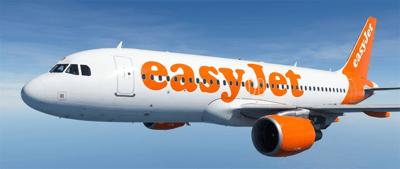
Alternative asset managers see a sharp disconnect between public equity pricing and actual free cash flow generation. The recent £5.7 billion (approx. $7.7 billion) cash offer from Apollo Global Management (NYSE: APO) for easyJet (OTCMKTS: EJTTF) highlights the rapid deployment of dry powder into hard-transport assets.
Catching Falling Knives at 30,000 Feet
3 AI stocks to buy before August 2026 (Ad)
Alexander Green bought Apple in 1996, recommended Nvidia at a split-adjusted 66 cents in 2004, and picked up Amazon and Netflix under $3 per share in 2005.
Now the chief investment strategist at The Oxford Club has identified three AI stocks he believes could be the most profitable investments of the next decade.
Click here to get all three AI stock names from Alexander GreenWhen public markets apply steep discounts across entire sectors amid macroeconomic fears, private equity often steps in to close the valuation gap.
The Apollo Global Management bid fundamentally changes how investors should view the current pricing of European low-cost carriers.
This acquisition attempt shows that strategic buyers are willing to catch falling knives when the underlying business model remains sound.
Prior to this buyout premium, public markets heavily discounted easyJet. The airline traded at remarkably low price-to-sales and price-to-book ratios of 0.51 and 1.46, respectively.
Investors assessed the geopolitical challenges affecting European airspace and saw systemic risk, while private equity examined the same balance sheet and identified highly resilient, deeply discounted cash flows.
Altitude Adjustment: The 46% easyJet Rally
When Apollo Global Management superseded a competing bid from Castlelake, the move triggered an immediate repricing event. Shares of easyJet rallied aggressively from a $6 base, gaining more than 46% in 30 days to reach $8.81. This bidding war confirms that institutional capital views current aviation headwinds as cyclical pricing inefficiencies rather than terminal business declines. Apollo Global Management's willingness to deploy billions in cash suggests that underlying demand for budget travel remains intact, even when operating margins face temporary compression.
Upgrading the Itinerary: Expanding Profit Margins
Acquiring an airline in a high-fuel-cost environment requires a specific operational roadmap. Apollo Global Management is not stepping in to execute standard cost-cutting measures. The management team intends to scale easyJet's package holiday division, which offers higher profit margins and more predictable revenue than standalone flight bookings.
Apollo Global Management also plans to expand ancillary revenues. Services such as seat selection, checked baggage, and in-flight catering have transformed the economics of low-cost carriers over the past decade.
By upgauging the easyJet Airbus fleet and maximizing aircraft utilization on popular routes, private equity operators can extract significant margin expansion. This multi-layered approach to revenue generation acts as a natural hedge against volatile energy markets, helping operations generate cash regardless of broader economic friction.
Ground Stop: The August 7 Compliance Deadline
A hard valuation floor sounds robust on paper, but executing a transnational buyout carries substantial friction. Under European Union acquisition protocols, Apollo Global Management has until August 7, 2026, to make a legally binding offer or walk away from the table. Currently, the £7.15 (approx. $9.68) per share proposal remains an agreement in principle.
Non-EU entities acquiring controlling stakes in EU-based airlines historically face severe regulatory scrutiny. Strict foreign ownership and control limits dictate that EU airlines must be majority-owned and effectively controlled by EU nationals to retain operating licenses. Apollo Global Management will likely have to navigate significant compliance restructuring to finalize the deal without compromising the established route network.
To mitigate the risk of forced divestment upon delisting, the prospective buyers plan to preserve the existing brand license agreement. The proposed deal structure would allow easyJet founder Stelios Haji-Ioannou, who holds a stake exceeding 15%, to remain invested. This strategic structuring shows how carefully Apollo Global Management must tread to satisfy both shareholders and international regulators.
Cleared for Expansion: Apollo's Upside Potential
Investors monitoring the acquiring side of this transaction should also consider the internal mechanics of Apollo Global Management. Shares of the company have declined roughly 18% year to date, currently trading near $118. A capital outlay of this magnitude introduces near-term execution risk, prompting noticeable insider selling among key executives leading up to the bid.
Analysts maintain a moderate buy consensus on Apollo Global Management, with a $149.50 price target that implies over 25% upside. The investment manager sports a trailing price-to-earnings ratio near 75, but a forward price-to-earnings ratio of 14 suggests that Wall Street anticipates significant earnings growth. The market will closely evaluate how this airline acquisition might affect near-term liquidity and dividend strength before those operational improvements materialize.
Final Call: Will Private Capital Save Budget Travel?
When a company gets acquired at a premium, it establishes a comparative baseline for its entire industry. Regional ultra-low-cost carriers and low-cost carriers are now trading in the shadow of this new multiple. Institutional models will use this transaction print to adjust enterprise value-to-EBITDA ratios across the board.
Competitors like Ryanair (NASDAQ: RYAAY) and Wizz Air (OTCMKTS: WZZZY) operate with distinct balance sheets but share the same geopolitical airspace and fuel constraints. Ryanair maintains a structurally superior margin profile, while Wizz Air has navigated similar routing disruptions. Because the easyJet premium re-anchors sector multiples, these non-dividend-paying peers reliant strictly on capital appreciation become prime candidates for institutional re-rating.
Competitors facing similar macroeconomic pressures are underpriced relative to the newly established private-market valuation. Retail and institutional traders often scan the remaining independent carriers for deep-value entry points, creating sympathetic pricing action. The $7.7 billion buyout figure acts as a hard valuation floor, signaling that private capital is ready to step in if public equity markets continue to undervalue transport networks.
Investors may want to add European budget carriers to their watchlists to monitor for multiple expansions as the August 7 deadline approaches. Cautious traders might prefer to wait for clear regulatory approval on the easyJet acquisition before increasing exposure to the broader regional airline space.
This email is a paid sponsorship for Altimetry, a third-party advertiser of MarketBeat. Why was I sent this email?.
This ad is sent on behalf of Altimetry, 110 Cambridge Street, Cambridge, MA 02141. If you would like to optout from receiving offers from Altimetry please click here.
If you have questions or concerns about your newsletter, feel free to contact MarketBeat's South Dakota based support team at [email protected].
If you would no longer like to receive promotional emails from MarketBeat advertisers, you can unsubscribe or manage your mailing preferences here.
© 2006-2026 MarketBeat Media, LLC.
345 N Reid Pl., Sixth Floor, Sioux Falls, S.D. 57103-7078. USA..