 Dear Friend, One company has been building for sixty years. No competition. No rivals. No one else even tried. They were drilling toward an energy source the International Energy Agency measured at 140 times global electricity demand. The world ignored it because reaching it seemed impossible - three miles underground, through solid rock. Last year, their crew proved everyone wrong. Sixteen days to drill what the government said would take 64. Now the phone is ringing. Google locked in a 15-year deal. Bill Gates invested $100 million. The Pentagon put it at the top of the priority list. On August 18th, Washington adds another advantage - one this company's non-existent competitors can't match. Sixty years of building. And the world just figured out what they've been building for. See the company with a 60-year monopoly >> “The Buck Stops Here,”
Kelly Maguire
Behind the Markets
Exclusive Content Archer and Anduril Put ACHR Stock on a New Defense Flight PathAuthored by Jeffrey Neal Johnson. Article Published: 7/22/2026. 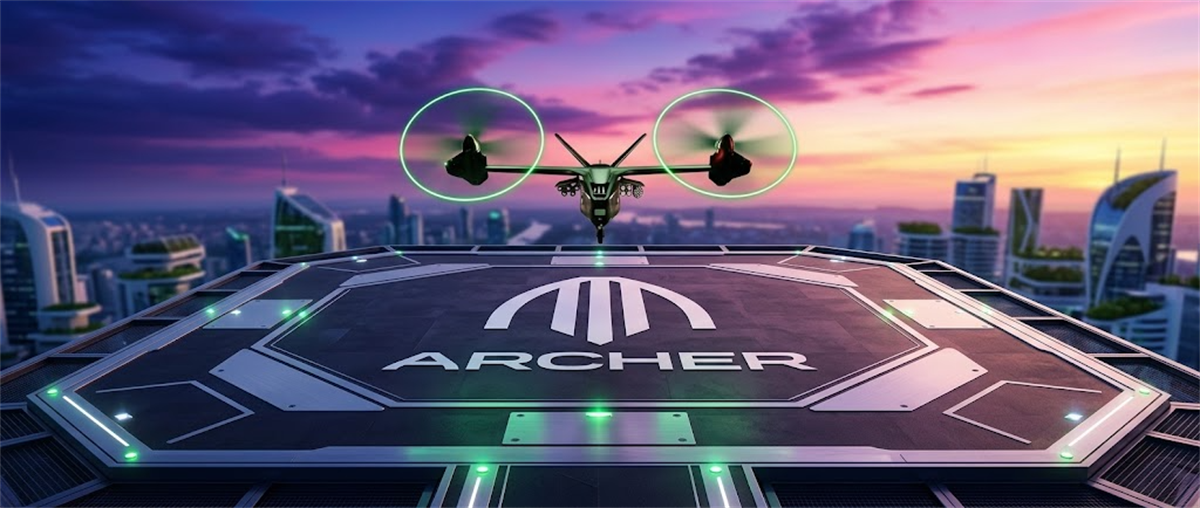
Key Points- Archer Aviation and Anduril unveiled Thunder, a hybrid-electric autonomous rotorcraft aimed at defense applications.
- The defense pivot could give Archer a second path beyond the slower regulatory timeline for civilian air taxis.
- Archer still faces heavy cash burn, certification risk and a long commercialization runway despite its strong liquidity position.
- Special Report: Trump is replacing the U.S. dollar
The civilian electric vertical takeoff and landing market remains stuck in a regulatory holding pattern. Building a functional urban air-taxi network requires widespread consumer adoption, major infrastructure upgrades, and grueling Federal Aviation Administration approvals. For pre-revenue developers in the aerospace sector, that means heavy cash burn and an uncertain timeline for meaningful commercial deployment. The capital needed to take a clean-sheet aviation design from prototype to passenger-ready status is staggering, leaving early investors exposed to years of dilutive funding rounds. Navigating these early-stage aviation equities requires spotting structural pivots before they are fully priced into the market. A pure-play focus on civilian urban air mobility creates a high-risk setup tied almost entirely to municipal regulations and retail demand. To survive the long road to commercialization, an aerospace developer needs a secondary source of capital to validate its core flight architecture. Entering the Arsenal: A Tactical AllianceArcher Aviation (NYSE: ACHR) just changed that trajectory, prompting a structural repricing across the sector. Partnering with defense technology heavyweight Anduril, Archer Aviation unveiled its Thunder autonomous rotorcraft at the Farnborough International Airshow on July 20, 2026. By adapting its core flight architecture for contested defense environments, Archer Aviation is bypassing civilian regulatory gridlock and tapping into immediate Department of War demand. This strategic shift from a speculative civilian air-taxi provider to a manufacturer of artificial intelligence (AI)-powered kinetic warfare hardware fundamentally changes Archer Aviation’s risk profile. The underlying flight technology is no longer waiting for consumer validation. It is being validated on the battlefield. Securing a dual-use military application shifts the narrative from cash-burning consumer tech to essential national security infrastructure. Stealth and Stature: Flying Under the RadarWhen evaluating aerospace developers, identifying total addressable market expansion is a crucial fundamental metric. The Thunder platform is not a personnel transport vehicle. It is explicitly classified as a Group 5 autonomous attack rotorcraft, engineered to serve as a loyal wingman alongside crewed combat platforms like the AH-64 Apache. The technical specifications align closely with modern asymmetric warfare requirements. Thunder integrates Archer Aviation's series-hybrid electric powertrain and dual tiltrotors with the Lattice mission autonomy software developed by Anduril. The hardware supports runway-independent operations and heavy modular payload delivery. Crucially, the electric propulsion reduces the aircraft's acoustic signature, enabling nap-of-the-earth flight to help bypass radar in contested airspace. From a capital structure perspective, the Department of War operates on a completely different budget paradigm than the retail consumer market. Military contracts offer structured milestone payments and established procurement volume, providing a pathway to non-dilutive capital. Traditional pre-revenue developers survive by issuing secondary shares, heavily diluting existing shareholders to fund ongoing research. Securing early defense spending insulates the balance sheet from consumer macroeconomic headwinds and validates intellectual property in a way civilian prototypes cannot. Desert Departure: Joby's Retail RunwayUnderstanding the gravity of this pivot requires looking at the broader competitive landscape. While Archer Aviation develops its defense applications, its peer, Joby Aviation (NYSE: JOBY), currently dominates the civilian market. Joby Aviation has locked in a commercial launch in Dubai slated for 2026, working directly with established ride-sharing networks to launch a functional urban air mobility ecosystem. The imminent revenue realization from Joby Aviation creates existential pressure on the rest of the sector. Competing on price and timing for civilian adoption against an entrenched rival is a fast track to margin compression and capital exhaustion. Archer Aviation recognized this threat and executed a strategic maneuver to capture a non-correlated revenue stream. Rather than fighting Joby Aviation for early market share in saturated urban centers, Archer Aviation is focusing on contested logistics and precision weapon deployment. This removes the company from direct civilian competition and positions it to capture government defense allocations, a sector that has remained historically resilient regardless of broader economic conditions. Burning Capital: The Liquidity EquationNavigating these specific equities requires strict attention to liquidity and capital runway. Archer Aviation ended the first quarter of 2026 with approximately $1.8 billion in total liquidity, combining cash and short-term investments. This robust cash position is an absolute necessity given an elevated burn rate. The company currently posts an earnings before interest, taxes, depreciation, and amortization loss of roughly $200-$225 million per quarter, driven almost entirely by intensive research and development costs. While the $1.8 billion provides a substantial buffer, the timeline remains extended. The first flight for Thunder is scheduled for 2027, delaying immediate revenue recognition. The market responded enthusiastically to the Anduril partnership, sending shares up 19% on heavy options volume, with traders purchasing 77,081 call options in a single session. Despite this retail momentum, structural overhead remains a major factor. Short interest sits between 15% and 17% of the free float, representing roughly 108 million shares sold short. With days-to-cover metrics ranging from 2.5 to 4.6, the stock has the potential for short-covering rallies during high-volume catalyst events. However, careful investors must reconcile this options-driven momentum with recent executive actions. Recent Form 4 filings reveal a persistent pattern of insider liquidations. Key executives executed numerous open-market sales over the trailing six months with zero open-market purchases. While insider selling often occurs for tax purposes or basic portfolio diversification, steady distribution during a major positive catalyst warrants close monitoring. It suggests management recognizes the lengthy commercialization timeline ahead and prefers immediate liquidity while waiting for defense contracts to translate into hard revenue. Final Approach: The Future of FlightThe integration of commercial electric aviation into military operations marks a definitive shift in defense procurement. Archer Aviation has successfully demonstrated that its proprietary propulsion and rotor designs have significant value beyond the highly speculative air-taxi market. The partnership with Anduril legitimizes the hardware, offering a viable path to government-backed funding that bypasses the friction of early retail adoption. Market dynamics validate the need for this defense pivot, even if the timeline for capital realization remains extended into 2027. This structural shift provides a compelling narrative for long-term valuation expansion, provided Archer Aviation can efficiently manage its cash burn through the upcoming testing phases. Investors seeking exposure to next-generation aerospace technologies might consider monitoring upcoming quarterly filings for any material shifts in research expenditures or definitive timelines regarding initial Department of War delivery milestones. . | 


