
|
 |



 |
It’s the first - and arguably the most important - task for any new Prime Minister.
After Andy Burnham’s new-look cabinet took shape this week, what could his choice of appointments mean for the UK’s relationship with Europe? We took a quick look at a few key ministers…
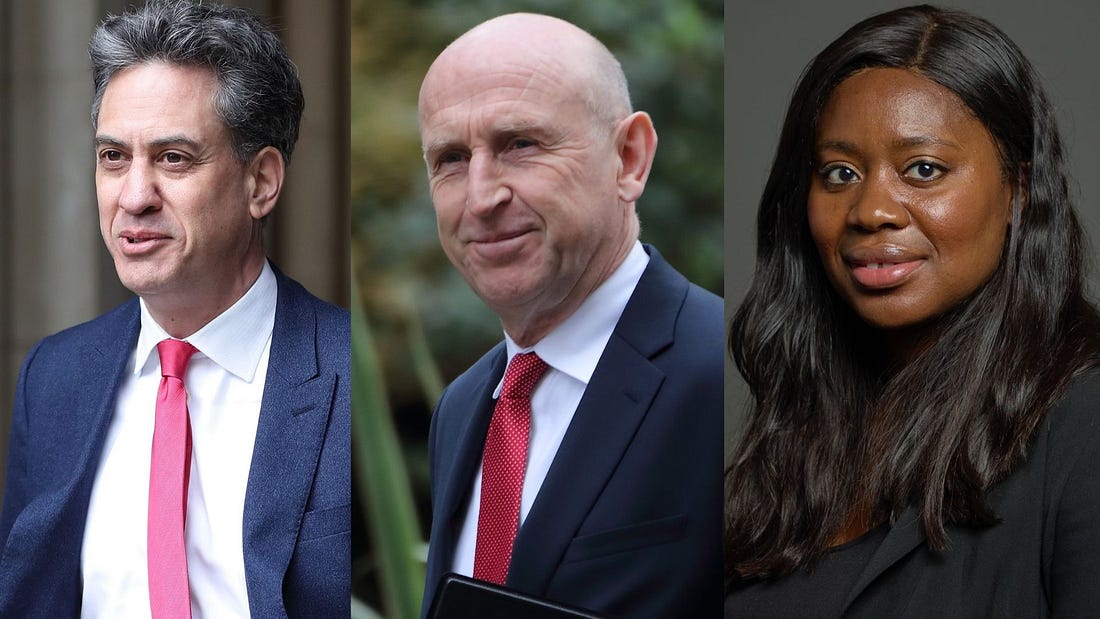 |
Andy Burnham - Prime Minister
The newly anointed Labour leader and Prime Minister has long supported deeper UK-EU integration. Burnham told last year’s Labour conference he hoped Britain would rejoin the EU in his lifetime and that “people prosper more when they’re part of unions”, adding: “That’s my belief, and I’ll say it clearly.”
Burnham has pledged his government will have a distinct focus on delivering economic growth to every postcode in the UK. If this is to be the driving mission of the Burnham era, then there is no better place to start than EU membership. Analysis by Frontier Economics, commissioned by Best for Britain shows that membership will benefit every region and nation in the UK, boosting Britain’s GDP by at least £92bn and restoring up to 90% of the economic hit from Brexit.
Moreover, the greatest benefits will be felt outside of London, in the former industrial heartlands of the UK that Burnham is determined to reindustrialise. If the Prime Minister is serious about addressing the impact of the collapse of British manufacturing, then he cannot afford to overlook the growth on offer from restoring the UK’s EU membership. As Burnham himself said, just last year: “Look at the last decade – shouldn’t we start calling out the disaster that Brexit has been more directly?
“I think we should. We’ve been stuck now with sluggish growth, and all of our aspirations now are harder to achieve as a country. We are in a bad position, the growth isn’t there.”
Ed Miliband - Foreign Secretary
The former Labour leader has been promoted from the Department of Energy Security and Net-Zero (DESNZ) to one of the three great offices of state, taking charge of the Foreign Office. In an open letter upon his appointment, Miliband promised to “deepen and strengthen our strategic alliance with the European Union which is so important for our prosperity and security”.
During the 2016 EU referendum, Miliband was a staunch supporter of Remain, driven by the experience of his mother and father, who fled Nazi occupation to settle in the UK and make it their home. Britain was, in Miliband’s words, “a sanctuary and beacon of hope” – a spirit he may carry forward into his new role, alongside intending to focus on the UK’s international climate goals.
Whilst working at DESNZ, Miliband spoke highly of the importance of generating investment in the UK economy to drive further growth and job creation. Frontier Economics’ research, commissioned by Best for Britain, suggests that EU membership could reduce uncertainty surrounding investment in the UK, meaning that the £92bn economic boost could be even greater.
Hamish Falconer - EU Relations Minister
Falconer takes over from outgoing minister Nick Thomas-Symonds, who oversaw the first two years of the Labour government’s UK-EU reset and the inaugural UK-EU Summit in May last year. Unlike Thomas-Symonds, the EU Relations Minister will report to both the Cabinet Office and the Foreign Office, suggesting that Ed Miliband’s department may exert greater influence over the reset’s direction than previously.
Prior to this appointment, Falconer worked as a junior minister in the Foreign Office, in charge of the Middle East and Africa brief. Before becoming an MP, he had worked extensively within the department as a diplomat.
 |
Miatta Fahnbulleh - Energy and Net-Zero Secretary
Fahnbulleh enters cabinet in one of the most relevant - and oft-controversial - offices of modern times. Before becoming an MP, she was director of policy and research at the think-tank IPPR and led the New Economics Foundation for six years, up to the end of 2023.
Fahnbulleh has been a strong advocate for improved UK-EU relations, sitting on the board of Best for Britain for three years until her election in 2024. She has previously praised the UK-EU reset as a way to “boost the economy, strengthen trade with our closest allies, remove unnecessary red tape on business and drive down prices”.
Miatta has spoken about the importance of devolution to create economic growth in regions across the UK. Frontier Economics’ research suggests that EU membership would present important growth opportunities for all of the nations and regions of the UK - revitalising ‘left behind’ areas.
Sir Chris Bryant - Northern Ireland Secretary
Sir Chris replaces the outgoing Hilary Benn, on the Northern Ireland brief at a crucial time for both UK-Irish and UK-EU relations. On his appointment, Bryant argued that Northern Ireland’s position as in both the UK and the Single Market means that the country has “the best of both worlds” and that “we need to exploit these economic opportunities”.
As a prominent Remainer, Bryant has been outspoken in his previous roles in government - namely as a junior minister for Creative Industries, Arts and Tourism - in the need for the UK-EU reset to go further and faster and to undo some of the trade barriers put in place by Brexit. Bryant described Brexit in December last year as “a self-inflicted shock…it’s as if they decided to throw the three-bar electric fire into the bath whilst it was plugging in and they were sitting in it”.
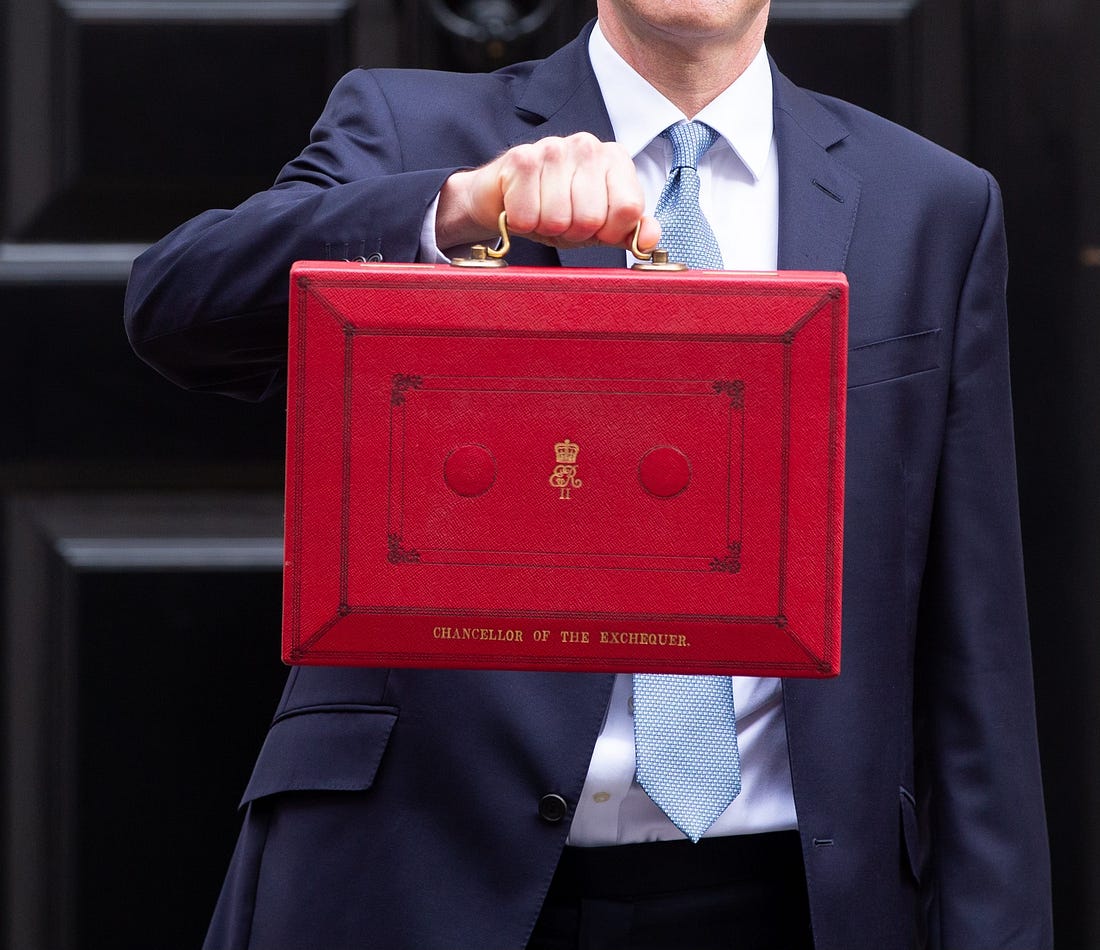
John Healey - Chancellor of the Exchequer
The popular former Defence Secretary was something of a surprise appointment to run the Treasury. Under Tony Blair, Healey served in the Brown Treasury – first as the then Chancellor’s PPS in 1999, then as Economic Secretary to the Treasury in 2002, and finally as Financial Secretary to the Treasury from 2005 to 2007.
While Defence Secretary, Healey took extensive interest in rebuilding bilateral ties between the UK and our European neighbours, signing the Trinity House Agreement with Germany in October 2024 and overseeing the Lancaster House Agreement with France in April 2026. Speaking about Brexit in January, he stated: “(Since the election) we were recognising that Britain had burnt its relations in the Brexit process and had left Britain without the strength of alliances that we need for the future.”
Healey has spoken extensively about the regional divides that face Britain - he worked on Regional Development Agencies when he was last in the Treasury. EU membership could be particularly important in bridging the gap between London and the rest of the country: Frontier Economics’ analysis suggests that the sector which will benefit the most from membership is manufacturing. As the majority of this sector is based in the Midlands or North, reintegrating the UK within the EU could deliver the change that Healey has previously desired.
 |
Lucy Powell - Education Secretary and Deputy Leader of the Labour Party
Powell has returned to the cabinet, less than a year after being sacked in a reshuffle by Keir Starmer from her post as Leader of the House of Commons. Shortly afterwards she won Labour’s deputy leadership election, beating then-education secretary Bridget Phillipson.
At the beginning of her career, Powell worked for the pro-European pressure group Britain in Europe, and later campaigned for the UK to remain in the EU. Upon winning the Labour Deputy leadership, Powell said: “We won’t win by trying to out Reform, Reform, but by building a broad, progressive consensus. I’ll work day in day out, from day one, to help us with that fight.” Seen as being close to Burnham, she nominated him as leader as far back as 2015, Powell is likely to be an influential figure in his cabinet.
Wes Streeting - Defence Secretary
Former Health Secretary and Labour leadership hopeful Streeting has been outspoken in his belief that Brexit was “a catastrophic mistake”, and during the early leadership jostling in the Labour Party called for the UK to rejoin the EU. Streeting argued: “We need a new special relationship with the EU, because Britain’s future lies with Europe, and one day, one day, back in the European Union”.
Streeting has previously argued that a deeper trading relationship with the EU is the best way of growing the UK’s economy. He said: “the reason why leaving the EU hit us so hard as a country is because of the enormous economic benefits that came with being in the single market and the customs union.”
So…what’s next?
It’s important to note that, on any issue, predicting future outcomes based on politicians’ past statements can be - let’s say - an unreliable metric. Convictions can and do shift, depending on changes and circumstances, and the world we live in is arguably changing faster than ever before.
We may not be completely certain how Burnham’s government will approach UK-EU relations, or how they will deliver on the Prime Minister’s stated ambitions for devolution, good growth and reindustrialisation. What we can be sure of, is the economic potential on the table, and the impact it could have on the country as a whole.
However, at Best for Britain, we’ll continue to read the runes, to provide expert briefings and analysis, and make the economic, social and political case for the UK’s membership of the EU, no matter who sits around the cabinet table.
Joshua Edwicker is a Senior Content Officer at Best for Britain.
You’re currently a free subscriber to The Best for Britain Wire. For the very latest analysis, expert commentary and political intrigue, upgrade your subscription.
| ||||||||||


