Dear Reader,
My name is Alexander Green.
I've been the chief investment strategist of one of America's oldest private investment research groups for over two decades.
I bought Apple in 1996. A decade before the iPhone.
In 2004, I recommended Nvidia… at a split-adjusted 66 cents.
In 2005, I bought Amazon and Netflix, under $3 pre share split-adjusted.
I don’t tell you this to brag.
I tell you this to show you my track record when it comes to identifying big technology trends, and getting them right.

These three stocks could change your life.
Click here to get all three stock names.
Good investing,
Alexander Green
Chief Investment Strategist, The Oxford Club
Gold and Silver Recovery—3 Precious Metals Stocks for H2 2026
By Chris Markoch. First Published: 7/3/2026.
Key Points
- Central banks bought 474 tonnes of gold in Q1 2026, the second-highest quarterly total on record, signaling sustained institutional demand.
- Nearly 90% of central banks plan to add to gold reserves in the next 12 months, driven partly by concerns over counterparty risk following Russia's frozen dollar assets.
- Silver's structural supply deficit and industrial demand from solar panels, electric vehicles, and electronics give it a distinct price catalyst heading into the second half of 2026.
- Special Report: SpaceX is offering you shares. Don't take them.
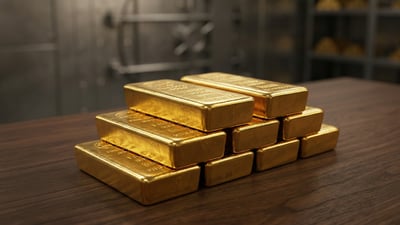
After climbing to an all-time high of over $5,300 per troy ounce in January 2026, the spot price of gold fell to around $4,100 on July 1, highlighted by a 10% drop in June. That marked its fourth straight monthly decline. A similar story has played out in silver.
To say that’s shaken out many weak hands would be an understatement. However, that may be shortsighted. While predicting market tops or bottoms is a fool’s errand, there are a couple of catalysts suggesting gold prices may be ready to reverse course and bounce higher.
Elon’s big $266,000 per second purchase (Ad)
Elon Musk bought Super Bowl ad time at $266,000 per second - something he has never done before. 125 million Americans watched, but Whitney Tilson, former manager of a $200 million hedge fund, says most investors missed what it actually means.
With 1 in 3 Super Bowl viewers using buy-now-pay-later services and 40% of Americans carrying more credit card debt than savings, Tilson believes Elon's message reveals a major economic current - and a clear signal for where smart money should be positioned.
Watch Tilson's free presentation to see what he thinks you should do nowThe most important data point to consider is central bank buying. These are institutions with the longest time horizon, and in the first quarter of 2026, they bought 474 tonnes of gold, the second-highest quarterly amount on record.
Why Gold Is Regaining Its Role as Sound Money
The European Central Bank’s annual report on global reserve assets revealed that, as a percentage, central banks owned more gold than U.S. Treasuries or the Euro at the end of 2025. In the interest of accuracy, that’s due in large part to the surge in gold’s price. At 2023 prices, U.S. Treasuries would still outweigh gold.
But here’s what many investors overlook. Unlike many retail investors, nearly 90% of central banks say they plan to keep adding to their gold reserves over the next 12 months. If gold were trading above $4,000 an ounce and no country wanted it, central banks would sell. That’s not happening. In fact, central bank gold buying has been above historical norms since 2022.
And the key reason for that came from the U.S. government’s decision to freeze Russia’s dollar reserves after it invaded Ukraine in 2022. This raised the question of counterparty risk for countries that may end up on the wrong side of a U.S. foreign policy decision. Since gold can’t be sanctioned or seized, its appeal becomes obvious.
Governments that could have rebalanced back into Treasuries are choosing not to. That choice reveals a preference. Which is why investors may want to rethink the outlook for gold in the second half of 2026.
Industrial Demand Could Fuel Silver Prices in H2 2026
Silver plays a different role than gold, and that's part of its appeal. Roughly half of annual silver demand now comes from industrial uses, including solar panels, electric vehicles, and electronics. That gives silver a growth driver gold doesn't have.
The Silver Institute has projected a structural supply deficit for several consecutive years, as mine production struggles to keep pace with demand. When investment demand returns to a market already running a deficit, price moves can happen quickly.
Investors also watch the gold-silver ratio, which measures how many ounces of silver it takes to buy one ounce of gold. That ratio has been running well above its long-term historical average, a sign some analysts point to as evidence that silver is undervalued relative to gold.
The Easiest Way to Invest in Gold: SPDR Gold Shares ETF
For investors who are only interested in capturing the price action in gold, the SPDR Gold Shares ETF (NYSEARCA: GLD) tracks the price of physical gold.
Investors will have to pay fees, with an expense ratio of around 0.40%, and there are counterparty risks to consider.
But they avoid the custody and insurance costs of owning physical metal.
Newmont Stock Offers Value If Gold Prices Rebound
Another way to invest in higher gold and silver prices is through mining stocks. Junior miners may carry the most asymmetric risk/reward for aggressive traders. But long-term investors may want to look at Newmont Corp. (NYSE: NEM), which is one of the largest miners with a strong track record of performance.
Mining stocks like NEM are down this year in sympathy with the decline in gold. However, the drop in Newmont stock is only around 3% through the first half of 2026. And at around 12x earnings, NEM shares trade at a discount to their historic value as well as the S&P 500.
Adding to its appeal, as of July 1, the stock is trading about 44% below its consensus price target of $139.35.
Wheaton Precious Metals Offers Lower-Risk Exposure to Gold
Wheaton Precious Metals (NYSE: WPM) is a different way to invest in a rebound in gold and silver prices.
The company finances miners in exchange for the right to buy gold and silver at fixed, below-market prices for the life of the mine.
The success of that business model showed up in the company’s Q1 2026 numbers, which included record revenue of $901.5 million and earnings of $582 million.
As of July 1, WPM traded about 35% below its consensus price target of $154.73.
First Majestic Silver Is a High-Conviction Silver Stock for H2 2026
For investors who want direct exposure to silver prices without gold as a hedge, First Majestic Silver Corp. (NYSE: AG) is worth a look.
The company operates primarily in Mexico and generates the majority of its revenue from silver production, making it more sensitive to swings in the metal's price than diversified miners.
That sensitivity cuts both ways. First Majestic tends to outperform larger, diversified miners when silver rallies, but it can also underperform during pullbacks like the one seen in June.
For investors who believe the setup described above favors higher silver prices into year-end, that volatility may be the point rather than a drawback.
Why Gold and Silver Still Belong in a Diversified Portfolio
Most gold and silver investors aren’t speculators. They are looking for assets that can’t be printed, diluted, or controlled. Yes, gold and silver don’t produce a yield, prices are volatile, storage is expensive, and supply can’t expand quickly to meet demand. But in a world where many investors are looking to return to sound money, those are reasons to trust gold and silver, not dismiss them.
One Short- and One Long-Term ETF for Quantum Computing Bulls
By Nathan Reiff. First Published: 7/13/2026.

Key Points
- Pure-play quantum computing stocks like D-Wave Quantum and IonQ have declined sharply this year, even as broader enthusiasm for the sector remains strong.
- The WisdomTree Quantum Computing Fund offers a narrow, less liquid basket of quantum-focused companies suited to long-term, higher-risk investors.
- The Defiance Quantum ETF diversifies into machine learning and AI holdings, providing greater liquidity and stronger year-to-date returns for shorter-term investors.
- Special Report: SpaceX is offering you shares. Don't take them.
Share declines for companies with an exclusive focus on quantum computing have been significant this year—D-Wave Quantum Inc. (NYSE: QBTS), for instance, has dropped a dismal 23% year-to-date (YTD), while even better-performing rivals like IonQ Inc. (NYSE: IONQ) are still down 5%. A perfect storm of threats from larger rivals (or up-and-coming new names), continued struggles with marketability and profitability, and uneven revenue performance have pushed many companies in the space lower.
This isn't to say that quantum computing as a sector is dead. In fact, enthusiasm for the industry may be as high as ever, based on the influx of federal funding and renewed attention from major tech firms. The bigger issue for many investors is timing—quantum computing may still be years away from becoming widespread and consistently lucrative.
Elon’s big $266,000 per second purchase (Ad)
Elon Musk bought Super Bowl ad time at $266,000 per second - something he has never done before. 125 million Americans watched, but Whitney Tilson, former manager of a $200 million hedge fund, says most investors missed what it actually means.
With 1 in 3 Super Bowl viewers using buy-now-pay-later services and 40% of Americans carrying more credit card debt than savings, Tilson believes Elon's message reveals a major economic current - and a clear signal for where smart money should be positioned.
Watch Tilson's free presentation to see what he thinks you should do nowThis is why investors seeking broad-based quantum exchange-traded funds (ETFs) to access the industry must consider their time horizon. Fortunately, funds exist for both long- and short-term approaches.
A Long-Term Candidate: WQTM
For investors looking at quantum as a buy-and-hold or otherwise long-term strategy, an ETF like the WisdomTree Quantum Computing Fund (BATS: WQTM) may be a place to start. WQTM only launched in the fall of 2025, making it one of the newer tech funds available to investors. It has a narrow focus on quantum computing, with a basket of fewer than 50 companies dedicated to the technology.
That focus is exactly what makes WQTM a candidate for investors with longer time horizons. While WQTM does hold larger tech firms including Dell Technologies Inc. (NYSE: DELL) and Intel Corp. (NASDAQ: INTC), it primarily targets companies directly involved in the development of quantum technology. Investors should therefore expect volatility in these constituent stocks—and in WQTM—as the industry continues to grow.
Another reason WQTM may be a good fit for traders planning to hold is that it is not the most liquid tech fund available. It has about a third of a billion dollars in managed assets and a one-month average trading volume below 500,000 shares. Neither figure is tiny, but broader tech funds are available with much larger asset bases and trading volumes for investors who are more focused on liquidity.
With an expense ratio of 0.45%, WQTM is in the middle of the road for niche tech-sector funds, though it is more expensive than many investors will want in the broader ETF world. It may be an option for investors with a higher risk tolerance or for those who believe it will continue to outperform—it currently boasts YTD returns above 30%.
Notably, the fund may have been buoyed by holdings with broader roles beyond quantum in the tech space.
A Shorter-Term Play: QTUM
The ups and downs of the quantum space in its earlier stages can create the potential for short-term gains for investors willing to take the risk. The Defiance Quantum ETF (NASDAQ: QTUM) has performed quite well, with 38% YTD returns despite sector-wide volatility, making it an attractive option for investors seeking quicker wins.
One reason QTUM's performance has diverged from the share-price declines of individual quantum companies is that it also focuses on machine learning companies. This fund provides access to quantum firms, yes, but also to makers of embedded AI chips and to software firms building tools for data management, perception, and more. With 86 holdings, QTUM has a broader basket than WQTM but still represents just a small slice of the tech space overall.
QTUM also places a greater emphasis on equal weighting than WQTM. The fund has no single position accounting for more than about 2.4% of the portfolio, which may help it capture positive returns when they are available and cushion against declines.
This fund's managed asset base of $5.4 billion and one-month average trading volume above 540,000 shares also support a stronger liquidity case than WQTM, although it is far from the largest or most heavily traded tech fund. Part of this advantage could be due to its lower expense ratio of 0.4%, while performance may also be a factor, as it has solidly outperformed both WQTM and the S&P 500 so far this year. QTUM has been down over the last month amid the industry-wide dip, showing that it cannot entirely avoid these pressures. However, those willing to take on this volatility may be well rewarded.
This email is a sponsored message from The Oxford Club, a third-party advertiser of Earnings360 and MarketBeat.
This ad is sent on behalf of The Oxford Club. 105 W Monument St, Baltimore, Maryland 21201. If you would like to optout from receiving offers from The Oxford Club please click here
If you need help with your account, feel free to contact MarketBeat's U.S. based support team at [email protected].
If you no longer wish to receive email from Earnings360, you can unsubscribe.
Copyright 2006-2026 MarketBeat Media, LLC.
345 N Reid Place #620, Sioux Falls, SD 57103-7078. USA..