Dear Neighbor,
In the two weeks since I last wrote to you, so much has happened, in our community and across our country.
Two weeks ago, on July 4, we celebrated Independence Day, a day when our founders declared that all men are created equal, and have unalienable rights to life, liberty, and the pursuit of happiness. And just a few days later, on July 7, agents of the federal government took the life of Lorenzo Salgado Araujo on the streets of Houston, denying him all three. Last week and this week, I joined members of Houston’s congressional delegation and other members of Congress in demanding answers and an independent investigation; I visited the site where he was killed; and I gathered with labor leaders, elected officials, and people from across our community to honor and remember him, to pledge our support for his family and for our community, and to share our commitment to seeking truth and justice. Our community is in pain, and my thoughts are with the Salgado Araujo family and all who are grieving today. |
Before I returned to Washington on Monday morning, I joined Southside Place Mayor Andy Chan, West University Place Mayor Susan Sample, State Representative Ann Johnson, Harris County Commissioner Rodney Ellis, Harris County Flood Control District Executive Director Marcus Stuckett, and community leaders to break ground on the Poor Farm Ditch project. |
The Poor Farm Ditch project reminds us how government is supposed to work. This project has been years in the making, and it only happened because passionate advocates made sure it got done by building a coalition, engaging community members, addressing concerns, and working with people on both sides of the aisle at every level of government. Thanks to the leadership of Southside Place Mayor Andy Chan and West U Mayor Susan Sample, who championed this project, and the partnership of many, we are making real progress in protecting residents and making our community more resilient.
In 2022, I requested and secured nearly $10 million in federal funding to reconstruct the Poor Farm Ditch through the Community Project Funding (CPF) process in Congress. The funding was included in the Consolidated Appropriations Act, a bipartisan government funding bill that funds essential programs and projects, including the Poor Farm Ditch project. President Biden signed the bill into law on December 29, 2022. The project will repair one of the county’s oldest stormwater drainage ditches, increasing the channel’s capacity from a 10-year storm event to a 50-year storm event, providing enhanced flood protection for West University Place, Southside Place, and the entire area. (You can watch the full press conference by clicking here.) |
Fatal ICE shootings. Following last week’s shooting of Lorenzo Salgado Araujo in Houston, ICE agents fatally shot Johan Sebastián Guerrero in Biddeford, Maine on Tuesday. Since the start of President Trump’s second term, Renee Good, Alex Pretti, Ruben Ray Martinez, and more than 50 people have died in ICE custody. I joined the Houston Democratic delegation and nearly 200 Members of Congress in demanding immediate, independent investigations into these deaths and the agency. More on this below in Legislation and Letters.
Iran War. This weekend, President Trump notified Congress that the United States has resumed its war with Iran, formally ending the ceasefire and claiming this proclamation grants his administration a 60-day clock to continue hostilities in the region without Congressional approval. Earlier this week, the United States launched a series of renewed strikes against Iran, escalating tensions and threatening prospects of a resolution to the conflict. The President also reimposed a naval blockade of Iranian ports, implying the United States would take over the Strait of Hormuz, initially claiming the United States would collect a percentage of cargo passing through the strait, something that is against the law and that the U.S. denounced just a few weeks ago. According to U.S. officials, the total military cost for the Iran War could exceed $100 billion—more than triple the Pentagon’s most recent estimate of $30 billion. Congress has already passed a War Powers resolution (H.Con.Res.86) condemning the President’s entry into this war without authorization, and directed President Trump to terminate the use of U.S. Armed Forces from hostilities in Iran.
Senate Nominations. This week, the Senate considered two high-profile nominations, Acting Attorney General (AG) Todd Blanche to serve as the Attorney General of the United States and Jay Clayton to serve as the Director of National Intelligence (DNI). Democratic members of the Senate Judiciary Committee questioned Acting AG Blanche over the Justice Department's handling of the Epstein files and the Trump administration's nearly $2 billion slush fund and the related agreement between Trump and the Department of Justice promising to drop any pending claims against Trump, his oldest sons, or the Trump Organization for past illegalities in tax returns.
Election Security. Last night, President Trump delivered a White House address, and made outlandish and unsubstantiated claims about the security of American elections. He selectively drew from newly declassified–but heavily redacted–documents to insinuate that foreign actors have compromised U.S. elections for years and that officials suppressed the evidence. Dozens of investigations, audits, recounts, and court proceedings at every level of government have already debunked these claims. President Trump’s own administration previously determined the 2020 election was secure. The Ranking Member of the House Permanent Select Committee on Intelligence (the top Democrat) Jim Himes posted a useful thread that explains the intelligence confirming the conclusion that the 2020 election was secure, fair, and accurate. By casting doubt on the integrity of our democratic systems and the will of the American people, these comments set the stage for undermining the results of the midterm elections in November. |
The House was back in session on Monday for debate on several bills. On Tuesday, the House passed the Sunshine Protection Act of 2025 (H.R. 139), which makes Daylight Savings Time (DST) permanent across the country. This bill would end the twice-a-year practice of changing clocks every spring and fall. We’ve gotten lots of calls over the years on this issue, and I’ve surveyed readers of this weekly email. About 82 percent of people responding said they want to stop changing the clocks twice a year, 15 percent want to keep things as they are, and 3 percent are unsure. Last November, the Energy & Commerce Committee held a hearing and heard testimony on how the extra hour of sunlight boosts economic activity and how the biannual changing of clocks is a highway safety concern (as well as a nuisance). For these reasons, I voted for this bill, which passed 308-117. States can permanently exempt themselves from observing year-round Daylight Savings Time by opting to remain on standard time year-round, provided the state legislature passes legislation to do so before enactment of the Sunshine Protection Act. Next stop: the Senate.
Also on Tuesday, the House considered the Protecting Privacy in Purchases Act (H.R. 1181), which, if enacted, would bar payment networks and financial institutions from applying a Merchant Category Code (MCC), a four-digit code that identifies the type of business processing a transaction, to firearm and ammunition retailers and preempt state laws requiring them to do so. MCCs identify that type of retailer (never the item purchased) and allows banks to file suspicious activity reports and flag warning patterns that often precede an attack. This bill strips law enforcement of a key tool for detecting gun trafficking, mass shooting plots, and other violent crime before it happens. For these reasons, I voted no on this bill, which passed 221-201.
On Wednesday, the House considered the Fiscal Year 2027 National Security, Department of State, and Related Programs Appropriations Act (H.R. 8595), and several amendments to it. I voted against the bill and all of the proposed amendments, including one to prohibit Israel from receiving any of the funding authorized in the bill, including funds for humanitarian aid, refugee resettlement, and peace-building and relationship-building programs between Israelis and Palestinians. While people in our community and in Congress are engaged in a critical dialogue about our values, priorities, and interests as well as our ability to conduct meaningful oversight of how U.S. assistance is used, this amendment offered by Rep. Thomas Massie (R-KY), was not a good-faith part of that discussion. People from across Texas’ Seventh Congressional District care deeply about the ongoing conflict in Israel, Gaza, the West Bank and across the region and share a hope for peace, stability, and prosperity there. I have heard from many people with differing views about the conflict, but who share the view that we must work to achieve a lasting peace that makes it possible for people to live side by side in peace and dignity. I share their hope for peace, dignity, and self-determination as well as their concerns about the ongoing violence and security threats, the humanitarian crisis for Palestinian civilians in Gaza, and the need to ensure that the conduct of military operations—and any American aid—is used consistent with the laws of armed conflict and our values as Americans. We nee to address these concerns, but this amendment that dismantles decades of cooperation and undermines our ability to shape constructive policies and reduce regional tension—including weakening our ability to confront Hamas, Hezbollah, and other terrorist organizations in the region—was not the answer. And it was not brought in good faith. I will continue to engage in good faith efforts to address these matters of concern with the seriousness they deserve.
I also voted against the bill, which is traditionally intended to strengthen the United States’ leadership and international alliances on the global stage but instead weakens our national security, undercuts foreign assistance, undermines global health programs, and hinders our ability to support women and people around the world. The bill eliminates funding for the United Nations (UN) and other international organizations, cuts global health security, family planning, and HIV/AIDS prevention programs, and contains several partisan “poison pills,” including provisions to further restrict support for women, ban funding for LGBTQ+ support programs, prohibit funding for refugee resettlement efforts, bar assistance to Mexico, and restrict funding for certain special envoys. The bill continues this administration’s trend of undermining U.S. leadership and diplomacy, and further turns its back on international alliances and vital partnerships that our country has fostered for decades. In addition, the bill also included the totally unrelated Safeguard American Voter Eligibility Act (SAVE) America Act (S. 1383), which restricts voting access for American citizens, which the Speaker of the House attached to placate members of the House Republican Conference. For these reasons, I voted against the bill, which passed the House by 217-209.
On Thursday, the House was scheduled to vote on a veterans benefits bill opposed by many veterans groups and organizations, the Take Care of America’s Veterans Act (H.R. 9237). This bill would have cut future disability benefits and increased VA home loan fees in exchange for other programs, but so many people and organizations opposed the bill that it did not have the votes to pass. A motion to send the bill back to committee almost passed, and then the Speaker chose not to put the bill on the floor.
The House also considered several bills under suspension of the rules, all of which passed, including a bill to require the Department of Homeland Security (DHS) to enhance collective domestic preparedness for a terrorist attack during an extreme cold weather event, the Weatherizing Infrastructure in the North and Terrorism Emergency Readiness Act of 2025 (H.R. 3106). The House also passed a bill directing the Transportation Security Administration (TSA) to establish a pilot program to implement alternative security screenings for passengers traveling with children who are 12 years old and younger, the Improving Travel for American Families Act (H.R. 8897).
As a reminder, you can always find a list of all of the votes I have taken for the district on my website.
|
Last week, after federal agents shot and killed Lorenzo Salgado Araujo in Houston and Joan Sebastian Guerrero in Biddeford, Maine, I joined my colleagues in sending two separate letters to Department of Homeland Security (DHS) Secretary Markwayne Mullin and U.S. Immigrations and Customs Enforcement (ICE) Acting Director David Venturella calling for immediate, independent, and transparent investigations into their deaths. The letters can be found here and here.
In May, the White House Office of Management and Budget (OMB) proposed changes that would give political appointees final say over all federal grant decisions and sideline the longstanding and trusted peer-review process. This proposed rule makes it easier for agencies to cancel grants that are already in progress, weakens the role of expert scientific review in funding decisions, gives the public fewer opportunities to weigh in when agencies set their own grant policies, and limits how much flexibility agencies have to tailor those policies to the communities they serve. Before it can implement this rule, OMB is required to accept public comments. This week, I submitted a public comment opposing this rule on behalf of our district, and I joined my colleagues in sending several letters to OMB Director Russ Vought opposing this rule, including: - a public comment letter opposing OMB’s proposed rule, which would concentrate political control over federal spending, undermine constitutionally protected rights, disrupt billions of dollars in existing awards, and increase the compliance burden on organizations and governments that serve the public;
- another public comment letter with members of the House Democratic Caucus opposing the proposed OMB rule; and
- another public comment letter with my colleagues on the House Energy & Commerce Committee Health Subcommittee opposing proposed OMB rule and the Trump administration’s efforts to politicize the federal grantmaking process.
I also joined my colleagues in sending several other letters to Congressional leaders and the Trump administration, including: - a letter to Postmaster General David Steiner urging the Postal Service to reject its proposed rule restricting ballot mail in federal elections;
- a letter to Health and Human Services (HHS) Secretary Robert F. Kennedy Jr. demanding the immediate reversal of HHS’s cancellation of 53 active Teen Pregnancy Prevention Program grants, totaling approximately $68 million; and
- a letter to Health and Human Services (HHS) Secretary Robert F. Kennedy Jr. and Office of Refugee Resettlement Acting Director Angie Salazar expresses concern about attempts to undermine unaccompanied minors' access to counsel or expedite their removal and urges the administration to reconsider relocating minors away from their current homes, legal representation, and support systems, and to release the overdue funds to the legal service providers that are already providing these children with the legal representation; and
- a letter to Homeland Security Secretary Markwayne Mullin urging DHS to end family detention and shut down the Dilley Immigration Processing Center in South Texas. 111 members who represent districts across the country signed the letter, which highlighted the conditions at the facility and DHS’s violations of court ordered protections of children’s rights.
In addition to letters, I joined my colleagues as an original co-sponsor of the Patients First Act, H.R. 9693, to provide to provide comprehensive reforms to the Medicare Access and CHIP Reauthorization Act and Medicare physician payments. I have heard from many of our neighbors about the problems with the current Medicare physician payment structure and I am glad that this bill takes meaningful steps to address some of these concerns, including tying physician reimbursement to an inflationary measure, establishing a physician and clinician-led task force to develop quality metrics for physicians that are streamlined and reduce administrative burdens, and increasing the budget neutrality threshold for the Medicare Physician Fee Schedule. |
Our committee was busy this week. We had a bill on the House floor, and several markups and hearings.
On Tuesday, the Energy & Commerce Subcommittee on Energy held a markup of six bills to support the deployment of nuclear energy. These bills streamline the Nuclear Regulatory Commission’s licensing process and increase transparency of reactor approvals. All six of these bills passed the subcommittee unanimously. On Wednesday, the Energy & Commerce Subcommittee on Health held a markup of three bills addressing problems with the supply chains that allow for illicit chemicals to be turned into dangerous counterfeit pills. All three bills passed the subcommittee unanimously.
Also on Wednesday, the Energy & Commerce Subcommittee on Health held a hearing on the Food and Drug Administration’s (FDA) role in advancing drug development in the United States. This hearing on maintaining the United States’ leadership in biomedical innovation comes at a time when the Trump administration has cut funding and staff across the Department of Health and Human Services, including at the FDA, which has threatened the United States’ standing as a leader in biomedical innovation. It is important that we work to reverse these devastating cuts to protect biomedical innovation here in our community and across the country.
One more big thing. My former committee, the House Committee on Transportation & Infrastructure, passed the Water Resources Development Act (WRDA) of 2026. Together with Congressman Morgan Luttrell (TX-08), I led the effort to include a provision directing the U.S. Army Corps of Engineers (USACE) to expedite a Chief’s Report evaluating a single large underground water conveyance tunnel to reduce flood risk around the Addicks and Barker reservoirs and along Buffalo Bayou.
The version of this bill that Congress passed in 2024, WRDA 2024, required the Army Corps of Engineers to complete a Chief’s Report on the Buffalo Bayou and Tributaries Resiliency Study (BBTRS), which is a requirement to authorizing any new project. Instead, however, it produced a “report of findings” that presented three options: take no action, construct one large tunnel, or construct a series of smaller, modular tunnels, requesting additional funding to study the difference between the large-tunnel and modular-tunnel options, rather than completing the required Chief’s Report.
WRDA 2026 closes that gap. The bill's new language specifically directs the Corps to expedite the Chief’s Report on the single large tunnel option—the solution regional stakeholders have identified and supported as the most effective way to protect Houston-area communities from flooding, whether from a single catastrophic storm or the cumulative impact of frequent, smaller flood events. This project reflects an effort to think big about how to protect our entire community from the cumulative toll of rain and storms. I’m grateful to Congressman Luttrell for his partnership in this effort, and to community leaders across Texas’ Seventh Congressional District for their years of collaboration and advocacy. I’m glad WRDA 2026 will finally require USACE to deliver the Chief’s Report on the solution our community has identified and supported. |
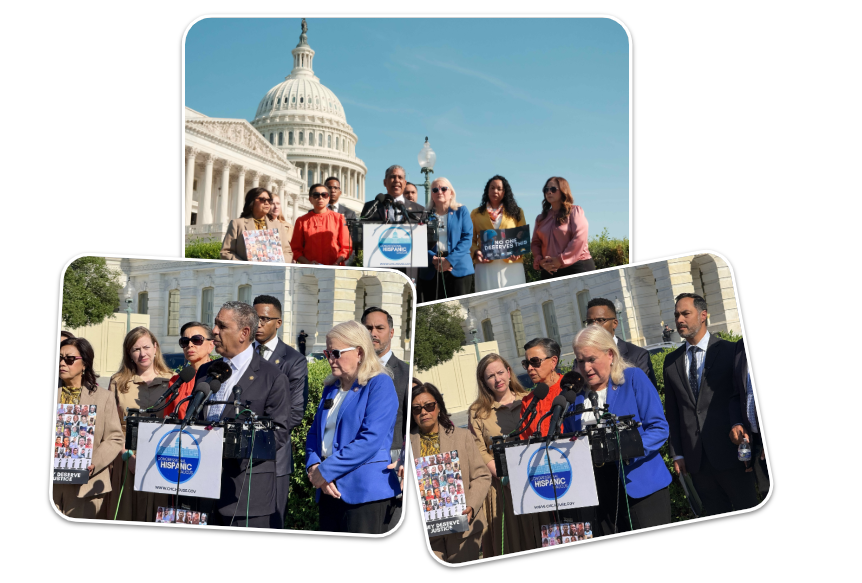
In Washington, I joined leaders in the Congressional Hispanic Caucus in speaking out against the killing of Lorenzo Salgado Araujo with my Houston colleagues, Congresswoman Sylvia Garcia and Congressman Christian Menefee, and announcing plans for a congressional hearing in Houston next Friday, June 24. |
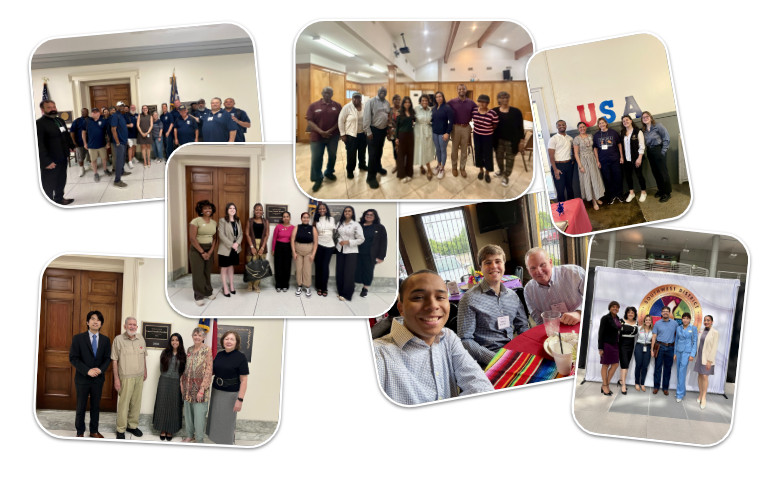
In Washington, Team TX-07 held nearly two dozen meetings with constituents and groups advocating on their behalf, including the United Steelworkers, Unite for Reproductive & Gender Equity (URGE), and RESULTS Houston, which are pictured below. Back home in the district, our team was out and about, assisting constituents and attending community events, including the Greater Houston LGBTQ+ Chamber of Commerce's Community & Connections Breakfast, the Exchange Club of Sugar Land's Synchronized Reading of the Declaration of Independence, neighborhood meetings in the Heights, Rice Military, and Piney Point, the Southwest Management District meeting, and meetings with the offices of State Representative Gene Wu, Council Member Mario Castillo, Council Member Tiffany Thomas, and Harris County Precinct 4, pictured below. |
Save the date! Tomorrow, July 18, our team will host another passport fair for (1) first-time passport or passport card applicants and (2) renewal and replacement passports or passport cards at the City of Bellaire Civic Center. Representatives from the Houston Passport Agency will be present to answer questions and accept applications. Please RSVP here or by clicking the image below. Walk-ins are welcome, but signing up in advance is better! |
On Thursday, July, 30, TX-07 Constituent Advocates will be at the Montrose Center to meet with residents and help answer questions about issues and matters with federal agencies. Stop by anytime between 10 a.m. and 12 p.m. |
Next week, the House will be back in session and I will be back in Washington. There is a lot on the agenda, including a continuing resolution to fund the government until November (funding runs out September 30), the National Defense Authorization Act, and the SAVE America Act, the last two of which will be presented with no time for debate. The Energy & Commerce Committee is marking up several bills starting on Monday. And the House is scheduled to conclude its work on Thursday, in time for us to return home for the congressional hearing in Houston on Friday. (We will share details on the hearing once they are finalized on social media channels and with the press).
As I write, we are watching the continuing flooding in the Hill Country, and all those in harm’s way, as well as the brave first responders ready to assist them are in my thoughts.
I will send you another update at the end of the week. Until then, please remember that I am proud to represent you and I am here to help you. Please call my office at (713) 353-8680 or (202) 225-2571 or email here at any time to ask for assistance or share your thoughts. I look forward to hearing from you.
Best wishes, |
|