In this mailing:
- Pierre Rehov: After Khamenei, Nothing Has Changed - But It Might
- Amir Taheri: Iran: Management of Uncertainty
by Pierre Rehov • July 12, 2026 at 5:00 am
Iran, in exchange, reaffirmed that it would not develop nuclear weapons and agreed to leave its nuclear program exactly as it stands -- meaning with its nuclear installations and centrifuges to enrich uranium safely under Pickaxe Mountain. The last four months were the exhaustion of a method rather than a failure of nerve. The Trump method flattered the adversary, let him believe he had won, dragged him to the table under threat of force, changed course without warning and staged unpredictability as strategy. All that might work remarkably well in the West, where leaders answer to electorates, markets and quarterly reports. It presupposes, however, an interlocutor who counts costs the way Washington counts costs. The Islamic Republic counts by another arithmetic.... A power such as the US that cries wolf on Tuesday and extends the deadline on Thursday teaches a system such as Iran's exactly one lesson: that the wolf does not exist. Iran's rulers read the American desire for a deal, especially before a midterm election, as weakness, which by that arithmetic it was. Trump, who kept repeating that he wanted a deal -- in that way raising the price for one -- seemed genuinely trying to test ways not to destroy more of Iran. Last week, he gave up on that. After Khamenei, nothing has changed in Iran, where the doctrine, the gallows and the wager on Western fatigue are those of February. What finally changed, last week, is Washington.
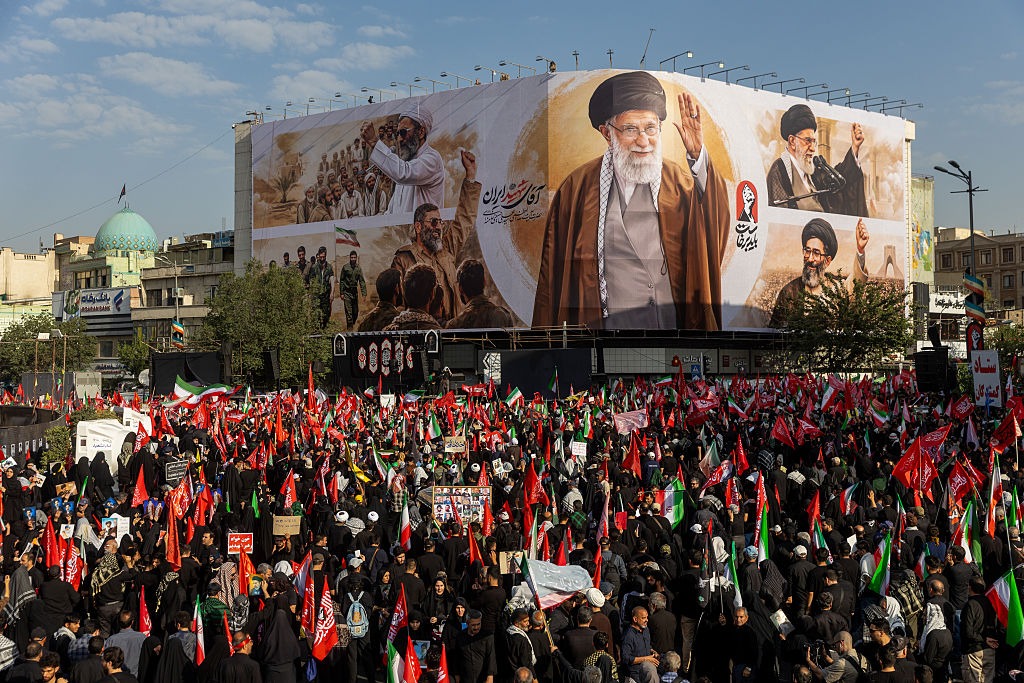
After the death of Supreme Leader Ayatollah Ali Khamenei, nothing has changed in Iran, where the doctrine, the gallows and the wager on Western fatigue are those of February. What finally changed, last week, is Washington. Pictured: People gather beneath a billboard of Ali Khamenei and his son and successor, Mojtaba Khamenei, during the third day of the elder Khamenei's funeral on July 6, 2026 in Tehran, Iran. (Photo by Majid Saeedi/Getty Images)
The West has long nurtured the conviction that a regime dies with its ruler. On February 28, American and Israeli aircraft, in a joint operation prepared over months, killed Iran's Supreme Leader Ali Khamenei together with the chief of staff of the armed forces, the commander of the Revolutionary Guard Corps, the defense minister and Khamenei's closest adviser, thereby erasing the command structure of the Islamic Republic in a single morning. US President Donald Trump promised to "annihilate their navy" and level Iran's missile industry. Across the West, and among Iranians whose January uprising had been drowned in blood only weeks earlier, an immense hope took hold. The theocracy, at last, seemed gone.
Continue Reading Article
by Amir Taheri • July 12, 2026 at 4:00 am
The snag in Iran is that those who wish to make a deal dare not do so because they lack a popular street base within the Khomeinist movement. And those who can make a deal because they have such a base won't do so because if they do, they risk losing not only that support but also the wealth and position they have illegally acquired. Beyond the stretchable 60-day "hostile truce," what is needed is a Plan B for Iran that takes into account the realities on the ground and the opportunity for positive change.
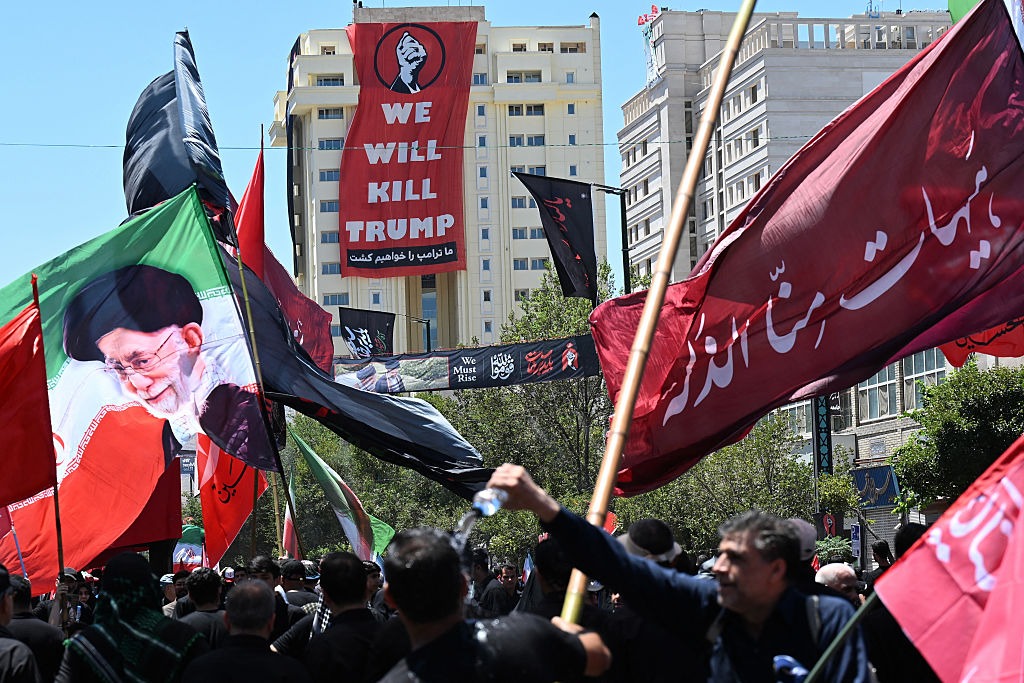
The snag in Iran is that those who wish to make a deal dare not do so because they lack a popular street base within the Khomeinist movement. And those who can make a deal because they have such a base won't do so because if they do, they risk losing not only that support but also the wealth and position they have illegally acquired. Pictured: Crowds gather for the funeral procession of Iran's late Supreme Leader Ali Khamenei, in Mashhad, on July 9, 2026. (Photo by Wakil Kohsar/AFP via Getty Images)
Is the 60-day ceasefire with Iran declared by President Donald Trump last month over? As is often the case with what the mercurial leader of the world's only superpower says, the answer is: yes -- but not quite. In his tongue-lashing of Iran on the margin of the NATO summit in Ankara, Trump compared the present regime in Tehran to cancer that has to be cut off and thrown away. He labeled Tehran's leader as "liars" and claimed to have halted negotiations with them. So, where do we go from here? A good piece of advice comes from NATO Secretary-General Mark Rutte, acknowledged as the best Trumpologist around: Always take what Trump says seriously but not literally!
Continue Reading Article
|
|
|
|